 ワークシート
 ぬりえ
 迷路
イルカが引く貝の車で海を走る!大富豪の別荘をかざった、海のニンフの大パレード。Racing over the sea in a shell pulled by dolphins! A sea nymph's parade in a banker's villa.
 美術館アンテナ:ラファエロ・サンツィオの作品に会える展覧会
この作品のお話
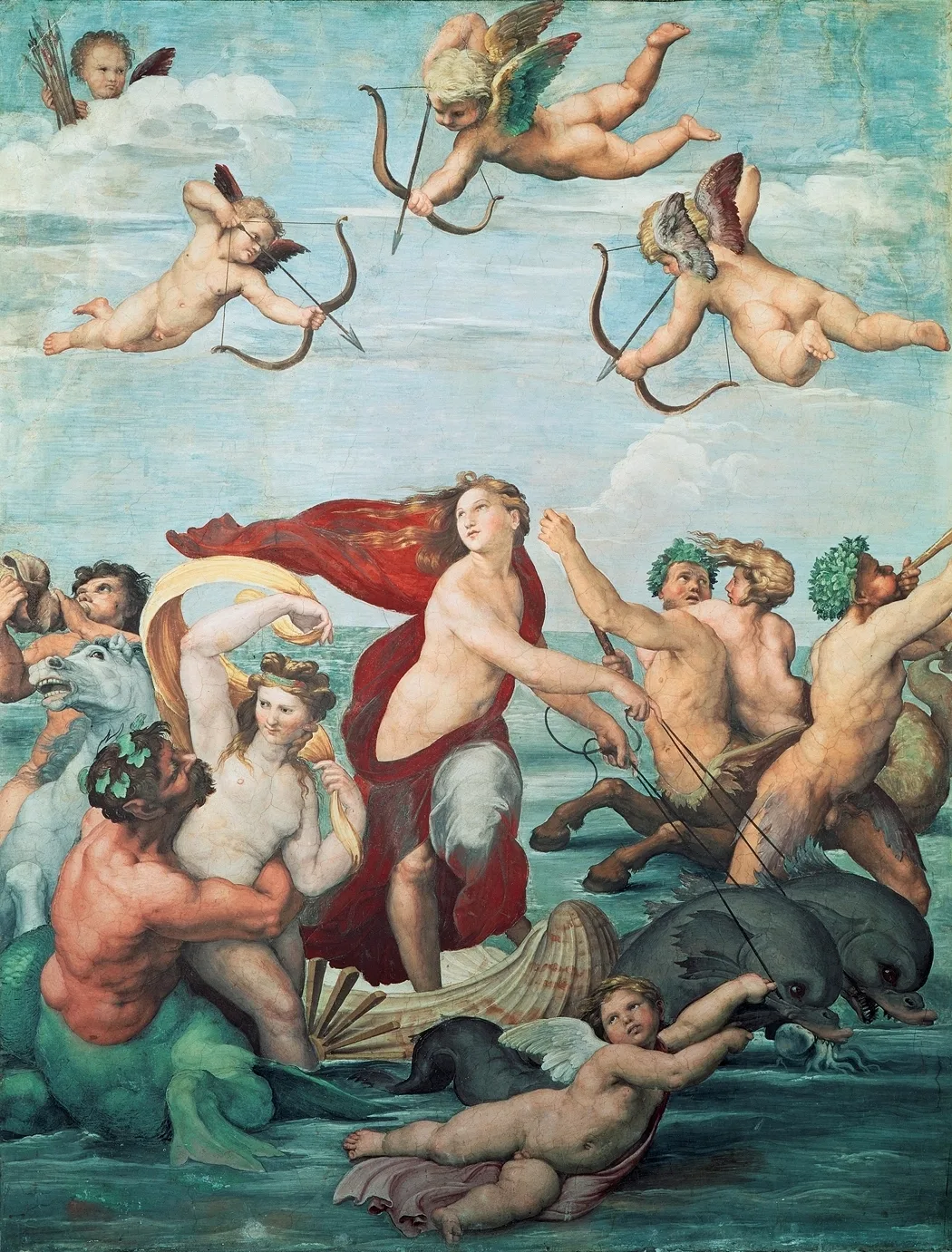
Story赤いマントをなびかせ、2頭のイルカが引く貝がらの車に乗って海を走る女性。ギリシャ神話の海のニンフ(精霊)ガラテアです。まわりでは、海の神々やニンフたちがはしゃぎ、左はしではほら貝をふく者もいます。空からは、弓矢をかまえたキューピッドたちがガラテアをねらっています。ラファエロが1512年ごろ、ローマの別荘の壁に描いたフレスコ画です。
A woman in a red cloak races over the sea in a shell chariot pulled by two dolphins. She is Galatea, a sea nymph from Greek myth. Around her, sea gods and nymphs have fun, and one on the far left blows a conch shell. In the sky, cupids aim their arrows at her. Raphael painted this fresco on the wall of a villa in Rome around 1512.
この別荘は、ローマ一の大富豪といわれた銀行家アゴスティーノ・キージのものでした。神話では、一つ目の巨人ポリュフェモスがガラテアに恋をしますが、ガラテアは相手にしません。この絵のすぐとなりの壁には、画家セバスティアーノ・デル・ピオンボが描いた巨人ポリュフェモスがいます。
The villa belonged to Agostino Chigi, a banker said to be the richest man in Rome. In the myth, the one-eyed giant Polyphemus falls in love with Galatea, but she ignores him. On the wall right next to it, the painter Sebastiano del Piombo painted Polyphemus.
別荘はのちにファルネーゼ家のものとなり、「ヴィラ・ファルネジーナ」とよばれるようになりました。ラファエロは友人への手紙で、美しい女性を描くには多くの美人を見る必要があるが、美人も目ききも少ないので、心の中の「ある理想」を使っている、と書いています。この絵は、その理想の美の代表とされます。
The villa later belonged to the Farnese family and became known as the Villa Farnesina. In a letter to a friend, Raphael wrote that to paint a beautiful woman he would need to see many beauties, but since there were few beauties and few good judges, he used 'a certain idea' in his mind. This painting is seen as a model of that ideal beauty.
ガラテアが海の上を走っています。2頭のイルカが貝の舟を引いています。赤いマントが風になびいています。空の小さなキューピッドたちは弓矢を持っています。みんなガラテアをねらっているのです!
Galatea rides on the sea. Two dolphins pull her shell boat. Her red cloak flies in the wind. Little cupids in the sky have bows and arrows. They all aim at Galatea!
英語のレベルは上の「やさしい/ふつう」で切りかえられます。
えっ!?な裏ネタ
Secrets空の3人のキューピッドが向ける矢の向きを目でたどると、まん中のガラテアの頭のあたりへ集まっていきます。見る人の目が自然に主人公へ導かれる、計算された構図なのです。
Follow the arrows of the three flying cupids with your eyes. They lead toward Galatea's head in the center. It is a carefully planned design that guides our eyes to the main figure.
この絵のすぐとなりには、セバスティアーノ・デル・ピオンボが描いた一つ目の巨人ポリュフェモスがいます。2人の画家の作品が並び、片思いの物語が壁をこえてつながっているのです。
Right next to this painting is the one-eyed giant Polyphemus by Sebastiano del Piombo. The two artists' works sit side by side, and the story of one-sided love continues across the walls.
別荘の主キージは、宴会のあと銀の皿をテヴェレ川に投げこませて客をおどろかせた、という話が伝わります。ただし川にはこっそり網がしかけてあり、皿は回収されていた、とも言われます。
There is a story that Chigi had silver plates thrown into the Tiber River after a feast to amaze his guests. But it is also said that nets were hidden in the river, so the plates were collected again.
ガラテアの乗る貝がらの車をよく見ると、水をかく羽根車のようなものがついています。イルカに引かれ、羽根車で進む、ファンタジーの乗り物です。細かいところまで見ると、ラファエロの遊び心が見つかります。
Look closely at Galatea's shell chariot. It has something like a paddle wheel. Pulled by dolphins and pushed by paddles, it is a fantasy vehicle.
ここを見て!
Look Closer1ガラテアGalatea
赤いマントをなびかせ、ふり返って空を見上げる海のニンフ。体のひねりが動きを生んでいます。
The sea nymph turns to look up at the sky as her red cloak flies. The twist of her body creates movement.
2矢をかまえるキューピッドCupid with a bow
空の上からガラテアをねらうキューピッド。ほかの2人も同じように矢を向けています。
A cupid aims at Galatea from above. Two others aim their arrows too.
3貝がらの車Shell chariot
ガラテアの足もとの大きな貝。羽根車のようなものがついています。
The big shell under Galatea. It has something like a paddle wheel.
4車を引くイルカDolphins pulling the chariot
手綱につながれた2頭のイルカ。その横では小さなキューピッドが波に乗っています。
Two dolphins are harnessed to the chariot. A little cupid rides the waves next to them.
英語で名画を語ろう
Talk about Art in EnglishGalatea's shell is pulled by two dolphins.
ガラテアの貝は2頭のイルカに引かれています。
💡 pull(引く)の受け身。馬車やそりなど、乗り物を何が引いているかを言うときの形です。
英語で説明すると… Describe it
これは海の上のにぎやかな場面です。まん中で、赤いマントの女性が貝に乗っています。貝は2頭のイルカに引かれています。まわりには、海の神々やニンフがいます。空では、3人のキューピッドが彼女に矢を向けています。
This is a busy scene on the sea. In the center, a woman in a red cloak is riding in a shell. The shell is pulled by two dolphins. Around her, there are sea gods and nymphs. In the sky, three cupids are aiming their arrows at her.
考えてみよう Think & Talk
- ガラテアはなぜ空を見上げているのだと思いますか?Why do you think Galatea is looking up at the sky?
- 「美しい顔」とは何だと思いますか?理想は1つだけでしょうか?What do you think makes a face 'beautiful'? Is there one ideal?
この作品の英単語
WordsTwo dolphins pull the shell.
2頭のイルカが貝を引いています。
She rides in a large shell.
彼女は大きな貝がらに乗っています。
The cupids aim their arrows at Galatea.
キューピッドたちはガラテアに矢をねらっています。
Raphael painted his ideal of beauty.
ラファエロは自分の理想の美を描きました。
ミニクイズ
QuizQ. ガラテアの乗り物を引いているのは?What is pulling Galatea's chariot?
2頭のイルカが、手綱で貝がらの車を引いています。
Two dolphins pull the shell chariot with reins.
ウソ?ホント? この絵は、キャンバスに描いて別荘に運ばれた。This was painted on canvas and then taken to the villa.
別荘の壁に直接描いたフレスコ画です。
It is a fresco painted directly on the villa's wall.
ウソ?ホント? この絵のとなりの壁には、ガラテアに恋する巨人が描かれている。A giant who loves Galatea is painted on the next wall.
セバスティアーノ・デル・ピオンボが描いたポリュフェモスがいます。
Polyphemus, painted by Sebastiano del Piombo, is there.
 画像の出典とライセンス / Image credit
- PDGalatea Raphael.jpg(Wikimedia Commons)
ライセンス:Public domain(パブリックドメイン)/作者・撮影者の表記:Raphael
この作品は、作者の死後長い年月がたち著作権の保護期間が終わった「パブリックドメイン」の作品です。画像は平面の作品を忠実に写したもので、新しい著作権は生じません(Wikimedia Commons の PD-Art の考え方)。 所蔵:ヴィラ・ファルネジーナ(Villa Farnesina)。画像は表示のために縮小・WebP 形式に変換しています。
ラファエロ・サンツィオのほかの作品