

 宇宙・NASA
小惑星が地球にぶつかる確率は?「3.1%」で世界が騒いだ2024 YR4のその後
 2026.10.02
 English Corner(A2〜B2・4択クイズ)
 読む前に予想してみよう!
小惑星の衝突確率が一時的に上がったら、それは衝突がほぼ確実になったということだ
観測が少ない段階では確率が上下しやすい。追加観測で軌道が絞られると、多くは0に近づく。
 研究カード(どんな研究?)
- 対象
- 地球近傍小惑星
- 規模
- 数万個の天体の軌道監視
- 研究の種類
- 観測と軌道計算
- 確かさ
- ★★★★☆
2025年、小惑星2024 YR4の地球衝突確率が一時3.1%に上がったが、追加観測で0.004%に。NASAは地球に近づく小惑星を常に監視している。
ひとことで言うと危ない小惑星は、毎日見張られている!
「小惑星が地球にぶつかる確率、3.1%」
2025年2月、こんなニュースが世界をかけめぐりました。映画のような話ですが、これは本物のNASAの発表です。その後どうなったのか、そして私たちはどれくらい心配すべきなのかを見ていきましょう。
012024 YR4:確率が上がって、下がった
さらに、一時は月にぶつかる確率が4%ほどまで上がりましたが、2026年3月、ウェッブ宇宙望遠鏡の追加観測によって、月への衝突の可能性もなくなったとNASAは発表しています。
02なぜ確率は上がったり下がったりするのか
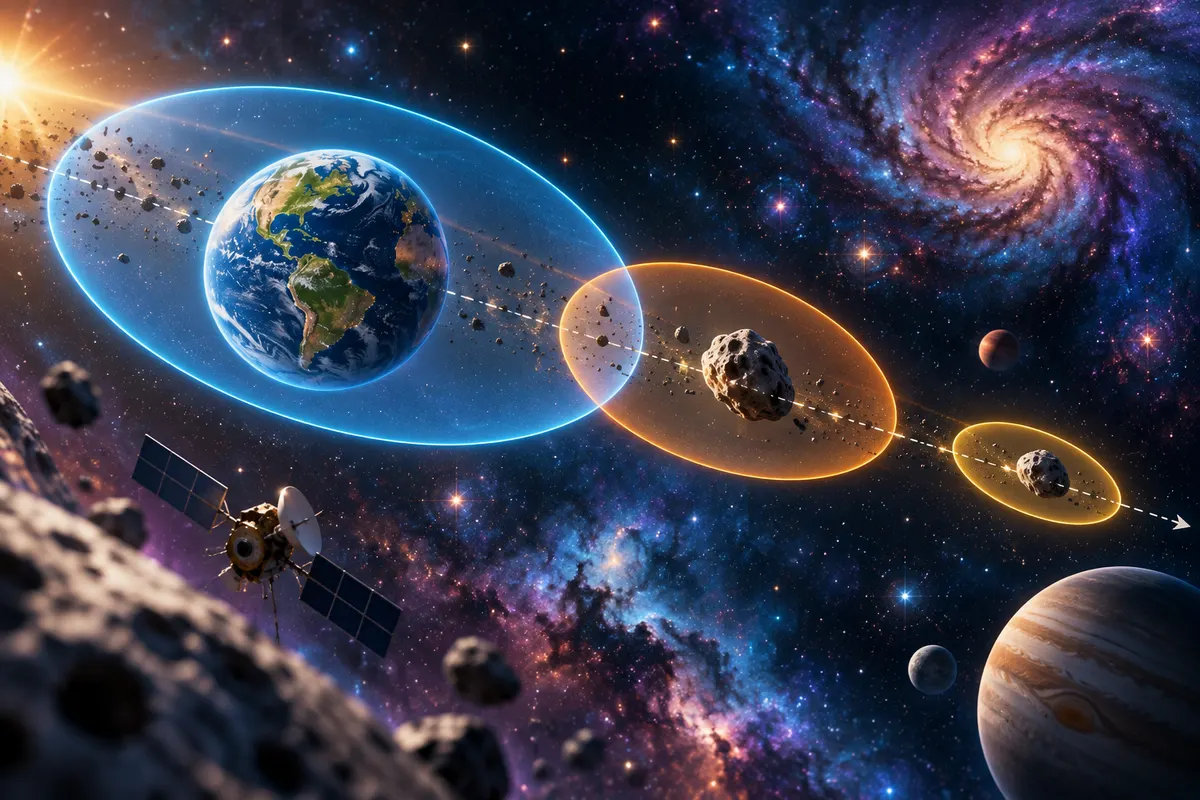
小惑星が見つかったばかりのころは、観測の数が少なく、軌道に大きな「ぼやけ」があります。
天気予報の「台風の予報円」をイメージしてください。最初は大きな円で、その中に地球が入っていれば、衝突確率はゼロではありません。観測が増えて円が小さくなると、地球がまだ円の中に残っている間は確率が上がって見えることがあります。そしてさらに円が小さくなり、地球が円の外に出た瞬間、確率は一気に0に近づくのです。
つまり、確率が上がってから下がるのは、観測がうまくいっている証拠でもあるのです。
03危険度を表す「トリノスケール」
NASAなどは、天体衝突の危険度を0〜10の11段階で表すトリノスケールを使っています。1999年に国際天文学連合が採用したもので、マサチューセッツ工科大学のビンゼル(Binzel)さんが提案しました。
- 0:衝突の可能性はない、または無視できる
- 1:通常の発見。心配はいらない
- 2〜4:天文学者の注意が必要
- 5〜7:脅威あり
- 8〜10:衝突が確実
NASAのジェット推進研究所は、セントリーというシステムで、今後100年間に地球に衝突する可能性がある天体を自動で計算し続けています。
042029年、アポフィスが「ニアミス」
もう一つ注目の小惑星が、アポフィスです。大きさは約340m。NASAによると、2029年4月13日に地球の表面から約3万2,000kmのところを通過します。これは静止衛星の軌道より内側です。
ただし、NASAは少なくとも今後100年間、衝突の危険はないと発表しています。ヨーロッパやアフリカなどでは、肉眼で見える可能性があると考えられています。
05まとめ
「衝突確率3.1%」は、怖がるための数字ではなく、観測を続けるための合図でした。そして実際、追加観測で危険はほぼなくなりました。
地球を守る第一歩は、早く見つけて、よく見ること。今夜も世界中の望遠鏡が、空を見張っています。
この研究を英語で読もう原田英語の English CornerIn February 2025, news spread around the world that an asteroid called 2024 YR4 had a 3.1 percent chance of… 音声
音声 4択クイズ9問A2・B1・B2タップして開く
原田英語の English Corner
この研究を英語で読もう
In December 2024, scientists found an asteroid called 2024 YR4. It is about as big as a 10-story building. In February 2025, the chance that it would hit Earth in 2032 went up to 3.1 percent. Many people were worried.
But scientists watched it more, and the chance went down to almost zero. Every day, NASA watches the sky for asteroids that come near Earth.
65 words ・ CEFR A2
和訳を見る
2024年12月、科学者たちは2024 YR4という小惑星を見つけました。大きさは10階建てのビルくらいです。2025年2月、それが2032年に地球にぶつかる確率は3.1%まで上がりました。多くの人が心配しました。
しかし科学者たちがさらに観測すると、確率はほぼゼロまで下がりました。NASAは毎日、地球に近づく小惑星がないか空を見張っています。
4択リーディングクイズ
Q1. What is the passage mainly about?
小惑星2024 YR4の衝突確率が上がって下がった話が主題なので B。
Q2. What was the highest chance that the asteroid would hit Earth?
the chance ... went up to 3.1 percent とあるので C。
Q3. In the passage, "worried" means people felt ...
worried は「心配した」。衝突確率が上がって人々が不安になった文脈なので A。
In February 2025, news spread around the world that an asteroid called 2024 YR4 had a 3.1 percent chance of hitting Earth in 2032. The asteroid is about 53 to 67 meters wide, and 3.1 percent was the highest risk NASA had ever recorded for an object of that size. However, after more observations, the chance dropped to just 0.004 percent within a week.
Why did this happen? When an asteroid is first found, its path is uncertain, like the large circle in a typhoon forecast. As more data come in, the circle becomes smaller. When Earth falls outside the circle, the chance quickly drops to almost zero. So rising and falling odds show that observation is working.
118 words ・ CEFR B1
和訳を見る
2025年2月、2024 YR4という小惑星が2032年に地球に衝突する確率は3.1%だというニュースが世界中に広まりました。この小惑星は幅約53〜67mで、3.1%は、NASAがその大きさの天体についてこれまでに記録した中で最も高い危険度でした。しかし、追加の観測の後、確率は1週間以内にわずか0.004%まで下がりました。
なぜこうなったのでしょうか。小惑星が最初に見つかったとき、その進路は不確かで、台風の予報の大きな円のようなものです。データが増えるにつれて、円は小さくなります。地球が円の外に出ると、確率は急速にほぼゼロまで下がります。つまり、確率が上がったり下がったりするのは、観測がうまくいっていることを示しているのです。
4択リーディングクイズ
Q1. Why was the 3.1 percent figure special?
3.1 percent was the highest risk NASA had ever recorded for an object of that size とあるので A。
Q2. What does the writer compare an asteroid's uncertain path to?
like the large circle in a typhoon forecast とあるので B。
Q3. What is the writer's main message about changing odds?
最終文 rising and falling odds show that observation is working とあるので D。
In February 2025, headlines warned that asteroid 2024 YR4, discovered in December 2024, had a 3.1 percent chance of hitting Earth on December 22, 2032. Estimated at 53 to 67 meters across, roughly the size of a 10-story building, it briefly held the highest impact probability NASA had ever recorded for an object of its size.
Within a week, however, further observations reduced the figure to 0.004 percent, and NASA concluded that it posed no significant threat. Such reversals are not signs of incompetence but a predictable feature of orbit calculation. A newly found asteroid has a large region of possible positions, comparable to a typhoon's forecast cone. If Earth lies inside that region, the probability is not zero, and as the region shrinks while Earth remains within it, the probability can actually rise.
Once Earth falls outside, it collapses toward zero. To communicate risk, astronomers use the Torino scale, which ranges from 0, meaning no hazard, to 10, meaning certain collision with global consequences. NASA's Sentry system keeps calculating impact chances for the next century. The episode suggests that alarming early numbers should prompt observation rather than panic, since planetary defense depends on finding hazardous objects early.
198 words ・ CEFR B2
和訳を見る
2025年2月、2024年12月に発見された小惑星2024 YR4が2032年12月22日に地球に衝突する確率は3.1%だ、と報道の見出しが警告しました。直径53〜67m、10階建てのビルほどの大きさと推定されるこの小惑星は、一時、NASAがその大きさの天体についてこれまでに記録した中で最も高い衝突確率を示しました。
しかし1週間のうちに、追加の観測によって数値は0.004%まで下がり、NASAは重大な脅威ではないと結論づけました。このような逆転は無能さの表れではなく、軌道計算の予測可能な特徴です。新しく見つかった小惑星には、位置の可能性がある大きな領域があり、台風の予報円にたとえられます。地球がその領域の中にあれば確率はゼロではなく、地球が中に残ったまま領域が縮むと、確率は実際に上がることがあります。そして地球が外に出ると、確率はゼロに向かって一気に下がります。
危険度を伝えるために、天文学者たちはトリノスケールを使います。これは、危険なしを意味する0から、地球規模の影響を伴う確実な衝突を意味する10までの尺度です。NASAのセントリー・システムは、今後100年間の衝突確率を絶えず計算しています。この一件は、最初の驚くような数字は、パニックではなくさらなる観測をうながすべきものだと示しています。地球防衛は、危険な天体を早く見つけることにかかっているからです。
4択リーディングクイズ
Q1. According to the passage, why can an impact probability rise before it falls?
as the region shrinks while Earth remains within it, the probability can actually rise とあるので B。
Q2. What does a rating of 10 on the Torino scale mean?
to 10, meaning certain collision with global consequences とあるので C。
Q3. What does the author suggest people should do when early numbers are alarming?
alarming early numbers should prompt observation rather than panic とあるので D。
重要単語
- asteroidB2名詞小惑星The asteroid will pass close to Earth in 2029.
 aster(星:asterisk「*」と同語源)+-oid(~のようなもの)。comet(彗星)、meteor(流星)と区別。
 - impact probabilityC1名詞(句)衝突確率The impact probability dropped after new observations. impact は「衝撃・影響」の多義語。have an impact on ~「~に影響を与える」も入試超頻出。
- planetary defenseC1名詞(句)地球防衛(天体衝突から地球を守ること)Planetary defense starts with finding asteroids early. planetary は planet の形容詞。英国式つづりは defence。
- near-Earth objectC1名詞(句)地球近傍天体Telescopes search the sky for near-Earth objects. 略して NEO。ニュースでは NEO の形でもよく見かける。
- observationB1名詞観測More observations made the orbit clearer. 動詞 observe。observatory は「天文台」。observance(遵守)と混同しないこと。
- hazardB2名詞危険(要因)The asteroid poses no hazard to Earth. hazard map(ハザードマップ)でおなじみ。形容詞 hazardous(危険な)。pose a hazard「危険をもたらす」。
- promptB2動詞うながす、引き起こすThe news prompted more observations. prompt A to do「A に~するよううながす」の型が頻出。形容詞では「即座の」。
 入試に出る順の単語帳を印刷する →
 全5903語の「科学英単語カード」で復習する →
 動画でもっと知る
動画は各チャンネルの公式埋め込みで表示しています(YouTube)。
 公式・一次情報をチェック
- Sentry: Earth Impact Monitoring(NASA JPL CNEOS)cneos.jpl.nasa.gov
- Torino Impact Hazard Scale(NASA JPL CNEOS)cneos.jpl.nasa.gov
- Apophis(NASA Science)science.nasa.gov
このネタ、誰かに教えたくなった?
2025年2月、小惑星「2024 YR4」が2032年に地球にぶつかる確率が一時3.1%まで上がり、世界がざわついた。でも追加観測で0.004%に。確率が上がって下がるのは、実は「観測がうまくいっている証拠」らしい。
押すと「マジかリスト」に保存されます
 出典・参考文献(5件)タップで表示
- Binzel (2000) The Torino Impact Hazard Scale, Planetary and Space Sciencedoi.org
- Brown et al. (2002) The flux of small near-Earth objects colliding with the Earth, Naturedoi.org
- NASA: Latest Calculations Conclude Asteroid 2024 YR4 Now Poses No Significant Threat to Earth in 2032 and Beyondscience.nasa.gov
- NASA: New NASA Asteroid Observations Eliminate Chance of 2032 Lunar Impactscience.nasa.gov
- NASA JPL CNEOS: Sentry Earth Impact Monitoringcneos.jpl.nasa.gov

※本記事は上記の研究・公開資料をもとに、原田英語が独自の言葉で解説したものです。引用は著作権法第32条の範囲で行い、出典を明記しています。画像はすべてオリジナルのイメージです。研究結果には限界や個人差があります。誤りのご指摘は原田英語のお問い合わせフォームから。
 これも「マジか!?」
 宇宙
宇宙
小惑星ベンヌの砂に、DNA・RNAの材料になる塩基5種類がそろっていた。しかも塩水の跡まで
 宇宙
宇宙
NASAは小惑星に宇宙船を体当たりさせ、本当に軌道を変えてしまった
 宇宙
宇宙
2024年春、月に直径222mのクレーターが誕生。最近できたと確認されたクレーターとしては、太陽系で発見された最大のもの
 宇宙
宇宙
中性子星はスプーン1杯で「10億トン」。山ひとつ分の重さがティースプーンに

 宇宙
宇宙
2024年秋、地球に「2つ目の月」が2か月だけいた。しかも正体は“月のかけら”らしい
 宇宙
宇宙