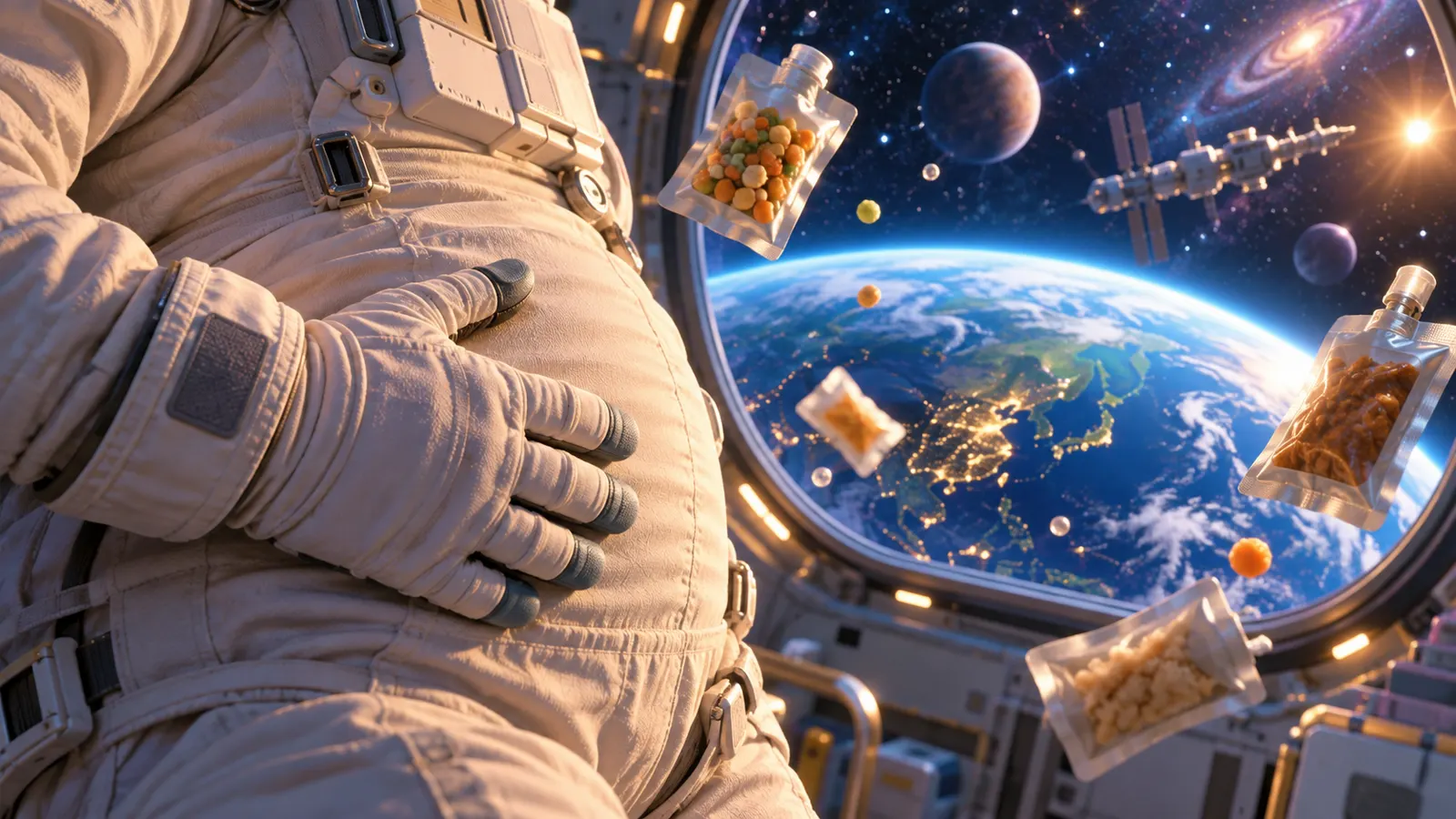


 宇宙・NASAホント
宇宙に半年いると、眼球の後ろが平たくなる人がいる。近くが見えにくくなることも
 2026.10.02
 English Corner(A2〜B2・4択クイズ)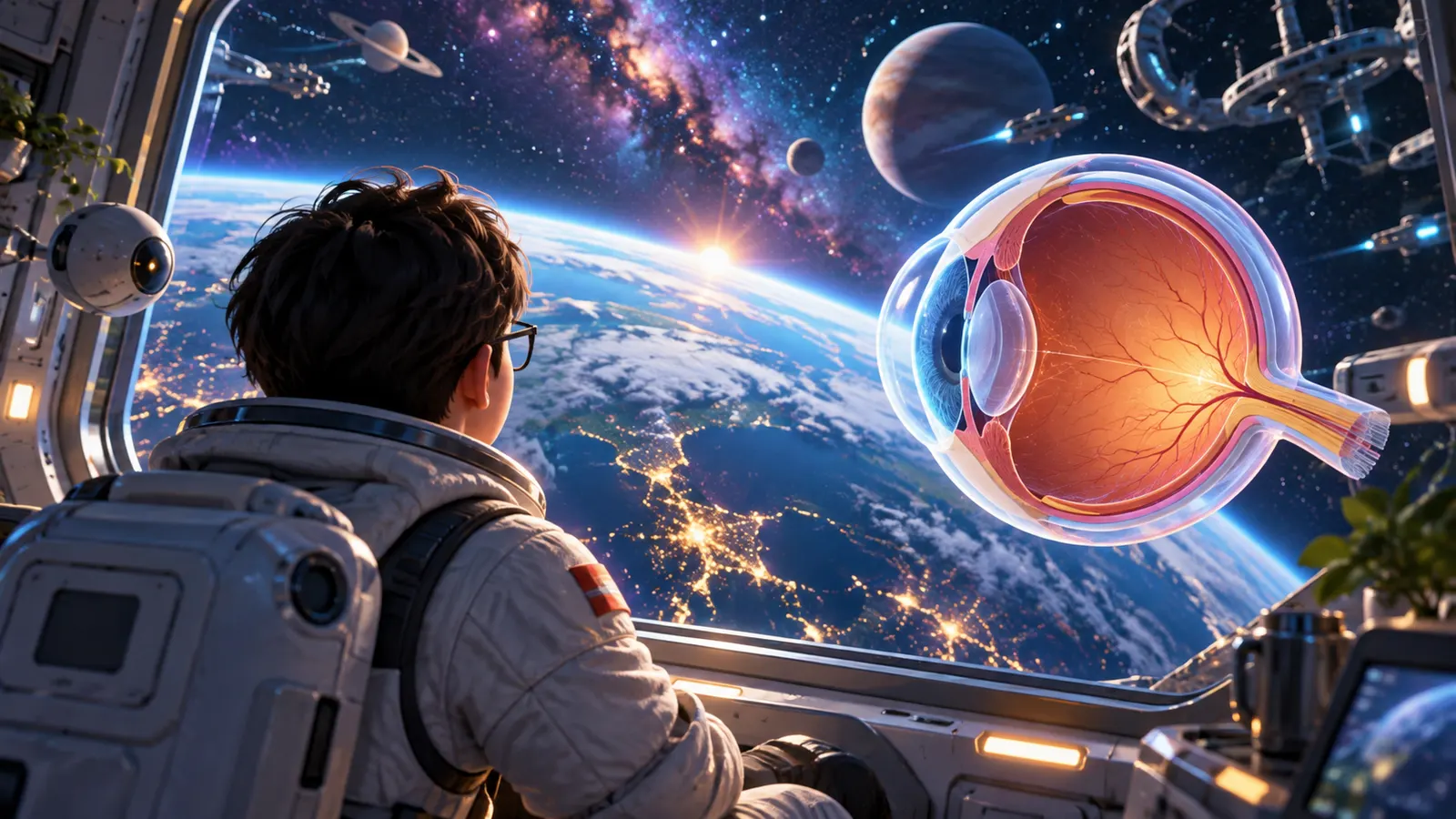
 読む前に予想してみよう!
宇宙に長く滞在すると、目のピントが変わってしまう宇宙飛行士がいる
眼球の形の変化などで遠視寄りになる例があり、ISSには度の違うメガネが用意されている。
 研究カード(どんな研究?)
- 対象
- ISS長期滞在の宇宙飛行士
- 規模
- 詳しい検査7人+アンケート約300人ほか
- 研究の種類
- 症例報告・観察研究・レビュー
- 確かさ
- ★★★☆☆
長期滞在の宇宙飛行士の一部で、眼球の後ろが平たくなる・視神経がむくむなどの変化が起きる。SANSと呼ばれ原因は研究中。
ひとことで言うと宇宙に長くいると、目の形が少し変わって見えにくくなる人がいるよ。
宇宙から帰ってきた宇宙飛行士が、「なんだか近くの文字が見えにくい」と言う。そんな報告が、少しずつ積み重なってきました。
調べてみると、長く宇宙にいた宇宙飛行士の一部で、目に変化が起きていました。眼球の後ろ側が平たくなる、視神経(目で受けた光の情報を脳へ送る神経)の根元がむくむ、といった変化です。
この現象には名前がついています。SANS(サンズ)=宇宙飛行関連神経眼症候群。宇宙飛行で目と視神経に起きる変化をまとめた呼び名です。人類が火星へ行くための、大きな壁のひとつです。
01何が起きているの? 4つの主な変化
SANSで見られる代表的な変化は、次のようなものです。
- 視神経乳頭のむくみ:目の奥で視神経が出ていく部分がはれる
- 眼球の後ろ側が平たくなる:丸いはずの眼球の後ろがつぶれたようになる
- 網膜や脈絡膜(目の奥の膜)のしわ
- 遠視寄りへの変化:ピントの位置がずれて、近くが見えにくくなる
眼球の後ろが平たくなると、カメラでいえば「レンズと、像を写すセンサーの距離」が短くなるようなもの。だからピントがずれてしまうのです。
02どれくらいの人に起きる?
マダーらが分析した約300人の宇宙飛行士の飛行後アンケートでは、短期飛行で約3割、長期滞在で約6割の人が「遠くや近くが見えにくくなった」と答えていました。中には、飛行から何年たっても見え方が戻らない例もあったと報告されています。ただし程度には大きな個人差があり、ほとんど自覚がない人もいます。また、自覚症状のある人の数と、検査で見つかる変化のある人の数は、必ずしも一致しません。
ISSには、ピントの変化に備えて度数の違うメガネがあらかじめ用意されているそうです。宇宙飛行士の持ち物に「度の違うメガネ」が入っているのは、ちょっと親近感がわきますね。
03原因は「体液が頭にのぼる」こと?
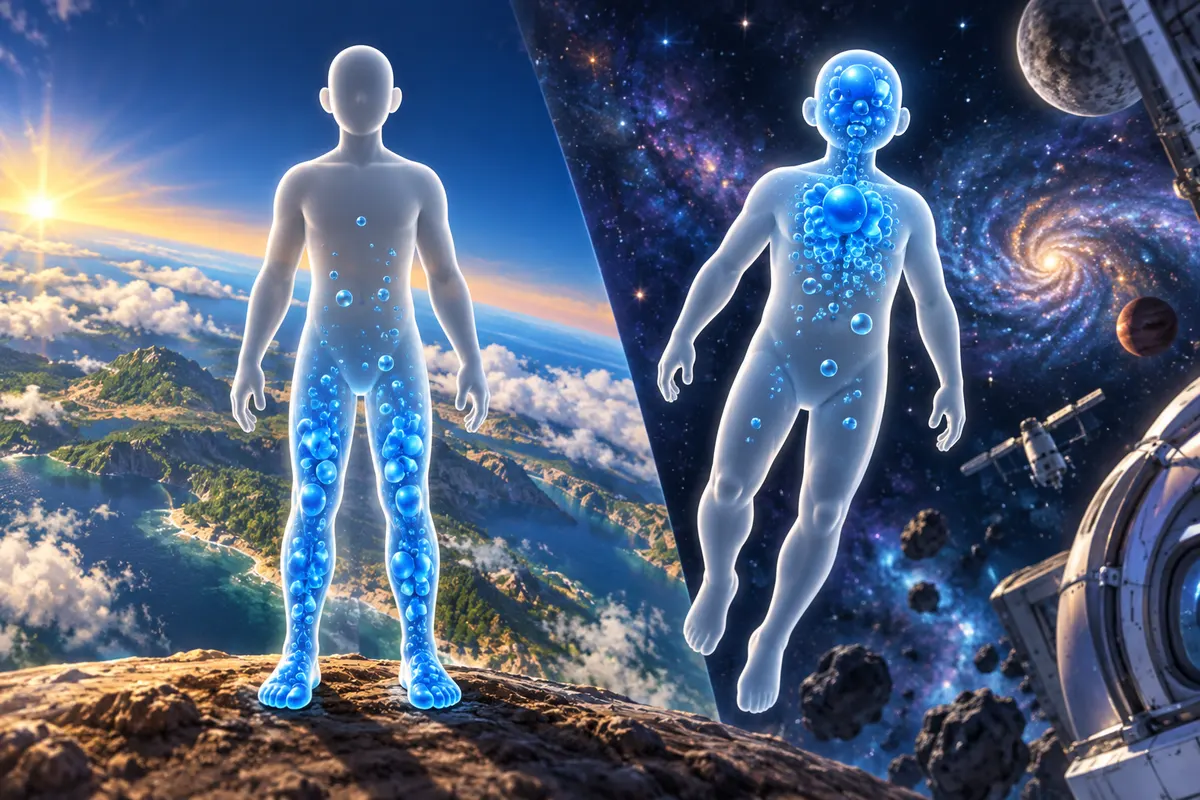
いちばん有力な説は、体液シフトです。
地球では重力のおかげで、血液や体液は足のほうにたまりがち。ところが宇宙では重力をほとんど感じないので、体液が頭のほうへ移動します。宇宙飛行士の顔がむくんで丸くなる「ムーンフェイス」もその一例です。
頭にのぼった体液が、目の奥や脳のまわりの圧力を変え、眼球を後ろから押す──そんなイメージです。ただし、それだけでは説明しきれないことも分かってきました。遺伝的な体質、栄養(ビタミンB群の代謝)、船内の二酸化炭素濃度など、複数の要因が関わっている可能性も議論されています。
04対策は「体液を足のほうへ引き戻す」装置
研究者たちは、SANSを防ぐ方法も探しています。2023年、オングらは学術誌『British Journal of Ophthalmology』で、SANSの原因の説や対策をまとめました。その中で有望な対策として挙げられているのが、下半身陰圧(LBNP)という方法です。下半身を筒のような装置に入れて空気を抜き、体液を足のほうへ引き戻すというアイデアです。
ほかにも、太ももをベルトで締めて血液を足に留める装置や、遠心機で人工的な重力を作る方法などが検討されています。
05まとめ
- 長期滞在の宇宙飛行士の一部で、眼球が平たくなる・視神経がむくむなどの変化が起きる
- 主な原因は体液が頭にのぼることと考えられているが、まだ研究中
- 火星への長旅では、目の健康を守ることが大きな課題になる
宇宙へ行くには、ロケットだけでなく「目のメンテナンス」まで考えないといけない。人体と宇宙の付き合い方は、まだまだ発展途上なのです。
この研究を英語で読もう原田英語の English CornerOver the years, some astronauts have returned from space saying that they had trouble reading text up close. 音声
音声 4択クイズ9問A2・B1・B2タップして開く
原田英語の English Corner
この研究を英語で読もう
Some astronauts have problems with their eyes after a long stay in space. The back of the eye can become flat, and the area where a nerve leaves the eye can swell.
Then it may be hard to see things that are close. This is called SANS. Scientists think one reason is that body fluids move up to the head in space. But they are still studying the cause.
69 words ・ CEFR A2
和訳を見る
宇宙に長く滞在した後、目に問題が起きる宇宙飛行士がいます。眼球の後ろ側が平たくなったり、神経が目から出ていく部分がはれたりすることがあります。
すると、近くのものが見えにくくなることがあります。これはSANSと呼ばれています。科学者たちは、その理由のひとつは宇宙で体液が頭のほうへ移動することだと考えています。しかし、原因はまだ研究中です。
4択リーディングクイズ
Q1. What is the passage mainly about?
長期滞在した宇宙飛行士の目に起きる変化(SANS)についての文章なので B。
Q2. What may become hard for astronauts with SANS?
it may be hard to see things that are close とあるので C。
Q3. In this passage, "swell" means to ...
swell は「はれる・むくむ」。体液などでふくらむという意味なので A。
Over the years, some astronauts have returned from space saying that they had trouble reading text up close. Doctors found that after long missions, the back of some astronauts' eyeballs had become flatter and the place where the optic nerve leaves the eye had swollen. This condition is now called SANS.
In 2011, an eye doctor named Mader and his colleagues described these changes in seven astronauts who had spent about six months on the ISS. In a survey of about 300 astronauts, around 30 percent of those on short flights and about 60 percent on long missions reported vision problems. The leading explanation is that body fluids move toward the head in weightlessness. However, other factors may also be involved.
121 words ・ CEFR B1
和訳を見る
これまでに、近くの文字が読みにくくなったと言って宇宙から帰ってくる宇宙飛行士がいました。医師たちは、長期ミッションの後、一部の宇宙飛行士の眼球の後ろ側が平たくなり、視神経が目から出ていく部分がはれていることを発見しました。この状態は現在SANSと呼ばれています。
2011年、マダーという眼科医とその同僚たちは、ISSに約6か月滞在した宇宙飛行士7人に見られたこれらの変化を報告しました。約300人の宇宙飛行士を対象としたアンケートでは、短期飛行の人の約30%、長期ミッションの人の約60%が、見え方の問題を報告しました。最も有力な説明は、無重力で体液が頭のほうへ移動するというものです。しかし、ほかの要因も関係しているかもしれません。
4択リーディングクイズ
Q1. What did doctors find in some astronauts' eyes?
the back of some astronauts' eyeballs had become flatter とあるので B。
Q2. According to the survey, about what percentage of astronauts on long missions reported vision problems?
about 60 percent on long missions reported vision problems とあるので D。30% は短期飛行の値。
Q3. What can we infer about the cause of SANS?
体液移動が最も有力な説明だが other factors may also be involved とあるので、唯一の原因ではないかもしれないと推論できる。A。
Spaceflight-associated neuro-ocular syndrome, or SANS, refers to a set of eye changes seen in some astronauts after long missions: swelling where the optic nerve leaves the eye, flattening of the back of the eyeball, folds in the layers at the back of the eye, and a shift toward farsightedness. Because a flatter eyeball shortens the distance between lens and retina, near objects can become blurry. The first detailed report, published in 2011 by Mader and colleagues, described seven astronauts who had spent about six months on the ISS, and a survey of roughly 300 astronauts found vision complaints in about 30 percent of short-flight and 60 percent of long-duration crew members.
The main suspect is the upward shift of body fluids in weightlessness, but genetics, B-vitamin metabolism and the station's high carbon dioxide levels may also contribute. Raised pressure inside the skull cannot explain every finding, such as swelling in only one eye, and ground-based bed-rest studies reproduce only some features. Reported rates also vary with sample size and with when eye-scanning equipment was introduced. Meanwhile, researchers are testing countermeasures, notably lower body negative pressure, which draws fluid back toward the legs.
192 words ・ CEFR B2
和訳を見る
宇宙飛行関連神経眼症候群、つまりSANSとは、長期ミッションの後に一部の宇宙飛行士に見られる一連の目の変化を指します。視神経が目から出ていく部分のむくみ、眼球の後ろ側の平たん化、目の奥の層のしわ、そして遠視寄りへの変化です。眼球が平たくなるとレンズと網膜の距離が短くなるため、近くのものがぼやけることがあります。最初の詳しい報告は、2011年にマダーらが発表したもので、ISSに約6か月滞在した宇宙飛行士7人について述べています。
また、約300人の宇宙飛行士を対象としたアンケートでは、短期飛行の乗組員の約30%、長期滞在の乗組員の約60%に見え方の訴えがありました。最大の原因と疑われているのは無重力での体液の上方移動ですが、遺伝的要因、ビタミンB群の代謝、ステーション内の高い二酸化炭素濃度も関わっている可能性があります。頭蓋内の圧力の上昇だけでは、片目だけのむくみなどすべての所見を説明できず、地上でのベッドレスト研究では一部の特徴しか再現できません。報告される発生率も、サンプル数や目の検査機器が導入された時期によって変わります。そうした中で研究者たちは対策を試しており、とくに体液を脚のほうへ引き戻す下半身陰圧が注目されています。
4択リーディングクイズ
Q1. Why can near objects become blurry for astronauts with SANS?
Because a flatter eyeball shortens the distance between lens and retina, near objects can become blurry. とあるので B。
Q2. What does lower body negative pressure aim to do?
lower body negative pressure, which draws fluid back toward the legs とあるので C。
Q3. Which limitation does the author mention?
ground-based bed-rest studies reproduce only some features とあるので A。
重要単語
- optic nerveC1名詞(句)視神経The optic nerve connects the eye to the brain.
 optic は「目の・視覚の」。optical illusion「目の錯覚」、optician「眼鏡屋」も同語源。
 - swellingB2名詞むくみ・はれSwelling of the optic disc was found after the flight. swell(ふくらむ)の名詞形。swell - swelled - swollen の活用も確認。
- farsightedB2形容詞遠視のSome astronauts became slightly farsighted. 近視は nearsighted / shortsighted。farsighted には「先見の明がある」という比喩の意味もある。
- fluid shiftC1名詞(句)体液シフトFluid shift makes astronauts' faces puffy. shift は「移動・変化」。宇宙医学の文章で必ず出てくるキーワード。
- countermeasureC1名詞対策Scientists are testing countermeasures for SANS. counter-(対抗)+measure(手段)。take countermeasures「対策を講じる」。
- blurryB2形容詞ぼやけたNear objects can look blurry. blur(ぼやける・ぼかす)の形容詞形。写真の「ブレ・ボケ」にも使う。
- retinaC1名詞網膜Light is focused on the retina. カメラのフィルム(センサー)に当たる部分。複数形は retinas / retinae。
 入試に出る順の単語帳を印刷する →
 全5903語の「科学英単語カード」で復習する →
 動画でもっと知る
動画は各チャンネルの公式埋め込みで表示しています(YouTube)。
 公式・一次情報をチェック
- Risk of Spaceflight Associated Neuro-ocular Syndrome (SANS)(NASA Human Research Roadmap)humanresearchroadmap.nasa.gov
このネタ、誰かに教えたくなった?
ISSに半年ほど滞在した宇宙飛行士の一部で、眼球の後ろ側が平たくなったり視神経がむくんだりする変化が見つかっている。名前はSANS。火星に行くための大きな壁のひとつらしい。
押すと「マジかリスト」に保存されます
 出典・参考文献(4件)タップで表示
- Mader et al. (2011) Optic Disc Edema, Globe Flattening, Choroidal Folds, and Hyperopic Shifts Observed in Astronauts after Long-duration Space Flight, Ophthalmologydoi.org
- Lee et al. (2020) Spaceflight associated neuro-ocular syndrome (SANS) and the neuro-ophthalmologic effects of microgravity: a review and an update, npj Microgravitydoi.org
- Ong et al. (2023) Spaceflight associated neuro-ocular syndrome: proposed pathogenesis, terrestrial analogues, and emerging countermeasures, British Journal of Ophthalmologydoi.org
- NASA Human Research Program, Risk of Spaceflight Associated Neuro-ocular Syndrome (SANS), NASAhumanresearchroadmap.nasa.gov

※本記事は上記の研究・公開資料をもとに、原田英語が独自の言葉で解説したものです。引用は著作権法第32条の範囲で行い、出典を明記しています。画像はすべてオリジナルのイメージです。研究結果には限界や個人差があります。誤りのご指摘は原田英語のお問い合わせフォームから。