

 宇宙・NASAビミョー
宇宙ではお腹の中が「渋滞」している? 宇宙飛行士52人の血液に出ていたサイン
 2026.10.02
 English Corner(A2〜B2・4択クイズ)
 読む前に予想してみよう!
この研究では、宇宙飛行による血液中の物質の変化は、地球に帰ってからも何か月も続いた
変化は打ち上げ直後から見られ、着陸後は数日以内に落ち着いていった。
 研究カード(どんな研究?)
- 対象
- ISSに長期滞在した宇宙飛行士
- 規模
- 52人(血液試料488点)
- 研究の種類
- 飛行の前・中・後の血液の成分を追った分析(観察研究と食事の試験で集めた血液)
- 確かさ
- ★★★☆☆
ISSに滞在した宇宙飛行士52人の血液を分析。腸内細菌がタンパク質を発酵させてできる物質が、打ち上げ直後から増えていた。腸の動きが遅くなっている可能性。
ひとことで言うと宇宙では、お腹の中の食べ物がゆっくり進むのかも。
宇宙飛行士の悩みといえば、骨や筋肉が弱ること、目の変化……。でも実は、お腹の調子も見逃せない問題です。論文によると、宇宙飛行士には便秘がよく見られることが知られています。
2026年6月、科学誌『Nature Communications』に、コペンハーゲン大学とNASAジョンソン宇宙センターなどのチームが、宇宙飛行士52人の血液を分析した論文を発表しました。血液には、お腹の中で何かが「渋滞」していることをうかがわせるサインが表れていたのです。
01宇宙飛行士52人の血液488点を分析
02血液中の約40種類の物質が、打ち上げ直後から変化
結果、宇宙飛行によって約40種類の物質の量が変わっていました。変化は打ち上げ後すぐに現れ、着陸後は数日以内に落ち着いていきました。
増えた物質には、次のようなものがありました。
- p-クレゾール硫酸
- フェニルアセチルグルタミン
- 4-エチルフェノール硫酸
これらは、腸内細菌がタンパク質を発酵(分解)するときにできる物質に由来します。
03「腸の通過時間」が長くなっている?
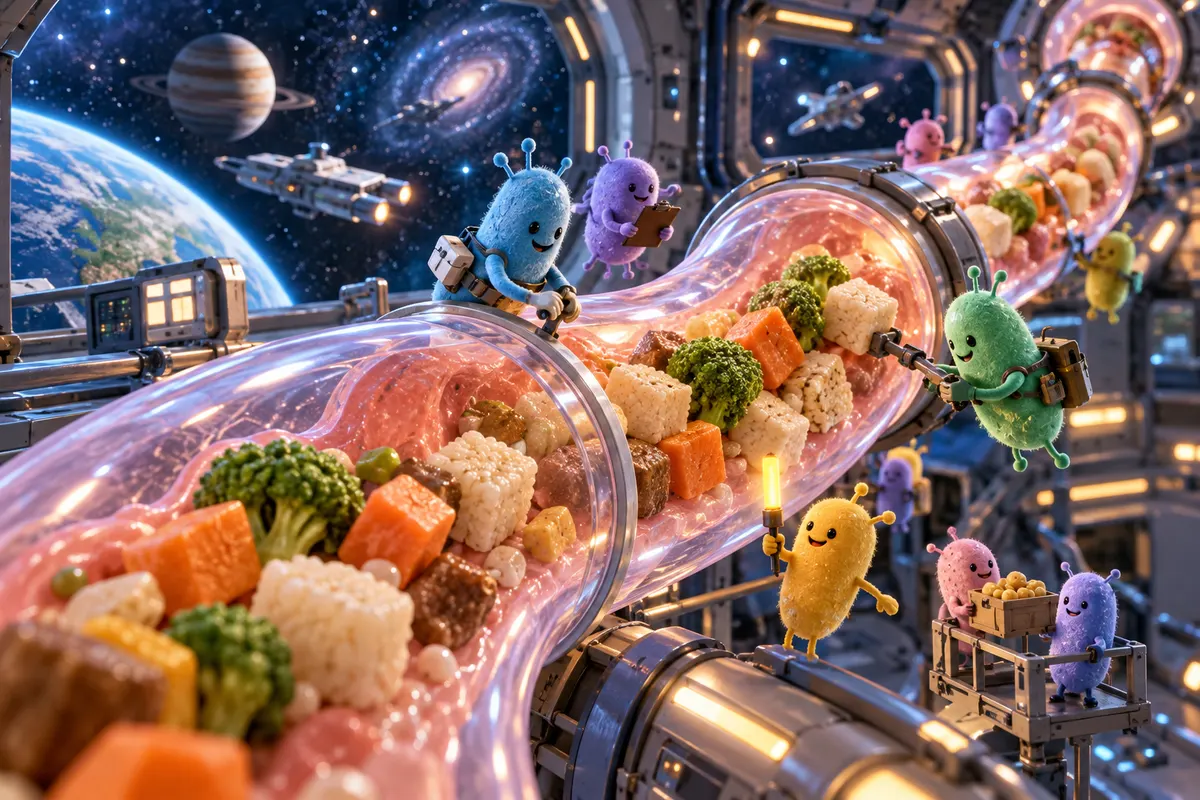
腸の中で食べ物がゆっくり進むと、大腸の奥で細菌がタンパク質を発酵させる時間が長くなり、こうした物質が増えやすいことが知られています(Roager et al., 2016)。
研究チームは、微小重力のせいで、食べた物が腸を通り抜けるのにかかる時間(腸管通過時間)が長くなっているのではないか、と考えています。それが今回の変化の背景にある、という見立てです。
一方、食事の変化(カフェイン、魚、一部の脂肪など)で説明できる変化は、宇宙飛行に反応した物質の3分の1未満。男女で大きな違いも見られませんでした。
04宇宙食にも「ゆっくり発酵する炭水化物」を
研究チームは、将来の長期宇宙飛行(月や火星への旅)に向けて、ISSでの食事にゆっくり発酵する炭水化物(食物繊維の一種など)を増やすことで、タンパク質の発酵を減らし、お腹の健康を守れるかもしれないと提案しています。
ちなみに、NASAの「双子研究」でも、宇宙に約1年滞在した弟と地上の兄の間で、血液中の物質に違いが報告されていました(Garrett-Bakelman et al., 2019)。今回増えた物質のうち3つは、その研究でも違いが見られたものだったそうです。
05まとめ
無重力では、体の中の「流れ」まで変わってしまうのかもしれません。月や火星を目指す時代、宇宙飛行士の健康を守るカギは、腸内細菌が握っている可能性があります。宇宙での体の変化は骨や筋肉の記事もどうぞ。
この研究を英語で読もう原田英語の English CornerConstipation is a common problem for astronauts, and microgravity may affect how the gut works. 音声
音声 4択クイズ9問A2・B1・B2タップして開く
原田英語の English Corner
この研究を英語で読もう
Astronauts often have stomach problems in space. Scientists studied blood from 52 astronauts who stayed on the International Space Station for two to nine months. Soon after launch, some chemicals in their blood went up. These chemicals are made when gut bacteria break down protein.
Food may move more slowly through the body in space. After the astronauts came back to Earth, their blood returned to normal within a few days.
71 words ・ CEFR A2
和訳を見る
宇宙飛行士は宇宙でお腹の不調を抱えることがよくあります。科学者たちは、国際宇宙ステーションに2〜9か月滞在した宇宙飛行士52人の血液を調べました。打ち上げ後すぐに、血液中のいくつかの化学物質が増えました。これらの物質は、腸内細菌がタンパク質を分解するときにつくられます。
宇宙では、食べ物が体の中をよりゆっくり進むのかもしれません。宇宙飛行士が地球に戻ったあと、彼らの血液は数日以内に普通の状態に戻りました。
4択リーディングクイズ
Q1. What is the passage mainly about?
宇宙飛行士の血液の変化から、宇宙で食べ物がゆっくり進む可能性を示した研究なので B が正解。
Q2. How long did the astronauts stay on the space station?
stayed on the International Space Station for two to nine months とあるので C。52 は人数。
Q3. In this passage, "returned to normal" means the blood ...
return to normal は「元の普通の状態に戻る」なので A。
Constipation is a common problem for astronauts, and microgravity may affect how the gut works. A team from the University of Copenhagen and NASA's Johnson Space Center analyzed 488 blood samples from 52 astronauts who had spent two to nine months on the International Space Station. About 40 compounds changed during spaceflight.
Many of those that increased are produced when gut bacteria ferment protein, a process that becomes more common when food moves slowly through the intestines. The changes appeared soon after launch and faded within days after landing. Changes in diet explained less than one third of them. The researchers suggest that adding slowly fermented carbohydrates to space food might help protect astronauts' gut health.
116 words ・ CEFR B1
和訳を見る
便秘は宇宙飛行士によくある問題で、微小重力は腸のはたらきに影響するかもしれません。コペンハーゲン大学とNASAジョンソン宇宙センターのチームは、国際宇宙ステーションで2〜9か月を過ごした宇宙飛行士52人の血液試料488点を分析しました。宇宙飛行中に約40種類の物質が変化しました。
増えた物質の多くは、腸内細菌がタンパク質を発酵させるときにつくられるもので、この過程は食べ物が腸の中をゆっくり進むときに起こりやすくなります。変化は打ち上げ後すぐに現れ、着陸後数日以内に薄れました。食事の変化で説明できたのは、そのうちの3分の1未満でした。研究者たちは、ゆっくり発酵する炭水化物を宇宙食に加えることが、宇宙飛行士の腸の健康を守る助けになるかもしれないと提案しています。
4択リーディングクイズ
Q1. What did the research team analyze?
analyzed 488 blood samples from 52 astronauts とあるので D。
Q2. When did the changes in the blood appear?
The changes appeared soon after launch and faded within days after landing. とあるので B。
Q3. Why do the researchers think diet was not the main cause?
Changes in diet explained less than one third of them とあるので C。食事以外(腸の動きの遅れ)が主な背景と考えられる。
Constipation is frequently reported among astronauts, and microgravity may affect gastrointestinal function during spaceflight. In a study published in Nature Communications, researchers from the University of Copenhagen, NASA's Johnson Space Center and other institutions conducted a longitudinal metabolomic analysis of 488 blood samples from 52 astronauts who spent two to nine months aboard the International Space Station between 2006 and 2018. Roughly 40 compounds responded to spaceflight, shifting soon after launch and recovering within days of landing. Several that increased, such as p-cresol sulfate and phenylacetylglutamine, are derived from protein fermentation by gut bacteria and are known markers of longer intestinal transit time.
The authors therefore propose that microgravity slows the passage of food through the gut, giving bacteria more time to ferment protein. Dietary changes accounted for fewer than a third of the responsive compounds, and no major differences between men and women were found. However, transit time was inferred from blood chemistry rather than measured directly, and astronauts are a highly selected group whose diets and fitness differ from those of the general population. Testing slowly fermentable carbohydrates in space food could be a practical next step.
189 words ・ CEFR B2
和訳を見る
便秘は宇宙飛行士の間でよく報告されており、微小重力は宇宙飛行中の消化管の機能に影響するかもしれません。『Nature Communications』に発表された研究で、コペンハーゲン大学、NASAジョンソン宇宙センターなどの研究者たちは、2006年から2018年の間に国際宇宙ステーションで2〜9か月を過ごした宇宙飛行士52人の血液試料488点について、時間を追った代謝物の分析を行いました。約40種類の物質が宇宙飛行に反応し、打ち上げ後すぐに変化して、着陸後数日以内に回復しました。増えた物質のうちp-クレゾール硫酸やフェニルアセチルグルタミンなどいくつかは、腸内細菌によるタンパク質の発酵に由来し、腸の通過時間が長いことを示す既知の指標です。
そのため著者らは、微小重力が腸の中の食べ物の通過を遅くし、細菌がタンパク質を発酵させる時間が長くなっていると提案しています。食事の変化で説明できたのは反応した物質の3分の1未満で、男女の間に大きな違いは見られませんでした。ただし、通過時間は直接測ったのではなく血液の化学から推測したものであり、宇宙飛行士は食事や体力が一般の人々とは異なる、高度に選ばれた集団です。宇宙食でゆっくり発酵する炭水化物を試すことが、現実的な次の一歩になりうるでしょう。
4択リーディングクイズ
Q1. What do the authors propose as the main explanation for the changes?
The authors therefore propose that microgravity slows the passage of food through the gut とあるので A。
Q2. What is special about compounds such as p-cresol sulfate?
are derived from protein fermentation by gut bacteria and are known markers of longer intestinal transit time とあるので D。
Q3. Which is a limitation of the study?
transit time was inferred from blood chemistry rather than measured directly とあるので C。食事の影響は3分の1未満と検討されているので D は誤り。
重要単語
- microgravityC1名詞微小重力Astronauts live in microgravity on the space station.
 micro-(ごく小さい)+gravity(重力)。宇宙では重力がゼロではなく「ごく小さい」という意味でこの語を使う。
 - fermentationC1名詞発酵Gut bacteria break down food through fermentation. 動詞 ferment(発酵する・させる)。fermented foods(発酵食品)は納豆やヨーグルト。
- metaboliteC1名詞代謝物Blood tests can measure many metabolites. metabolism(代謝)の過程でできる物質。metabolomics は代謝物をまとめて調べる研究法。
- constipationC1名詞便秘Eating more fiber can help prevent constipation. con-(一緒に)+stip(詰める)。「詰まっている」イメージ。形容詞 constipated。
- intestinalC1形容詞腸のIntestinal health is important for long missions. 名詞 intestine(腸)。small intestine(小腸)、large intestine(大腸)。gut はよりくだけた語。
- inferC1動詞推論する、推測するTransit time was inferred from blood chemistry. 名詞 inference。infer A from B「BからAを推測する」。入試の設問 What can be inferred ...? で必ず見る語。
 入試に出る順の単語帳を印刷する →
 全5903語の「科学英単語カード」で復習する →
 公式・一次情報をチェック
このネタ、誰かに教えたくなった?
ISSに2〜9か月滞在した宇宙飛行士52人の血液を調べたら、腸内細菌がタンパク質を発酵させてできる物質が、打ち上げ直後から増えていたらしい。無重力でお腹の中の流れが遅くなっているのかも。帰還後数日で元に戻ったとか。
押すと「マジかリスト」に保存されます
 出典・参考文献(3件)タップで表示
- La Barbera et al. (2026) Longitudinal metabolomics profiles reveal increased gut microbial protein fermentation during Spaceflight, Nature Communicationsdoi.org
- Garrett-Bakelman et al. (2019) The NASA Twins Study: A multidimensional analysis of a year-long human spaceflight, Sciencedoi.org
- Roager et al. (2016) Colonic transit time is related to bacterial metabolism and mucosal turnover in the gut, Nature Microbiologydoi.org

※本記事は上記の研究・公開資料をもとに、原田英語が独自の言葉で解説したものです。引用は著作権法第32条の範囲で行い、出典を明記しています。画像はすべてオリジナルのイメージです。研究結果には限界や個人差があります。誤りのご指摘は原田英語のお問い合わせフォームから。