


 宇宙・NASAビミョー
宇宙の寿命、「10の1100乗年」から「10の78乗年」へ大幅短縮? オランダの物理学者の計算
 2026.10.02
 English Corner(A2〜B2・4択クイズ)
 読む前に予想してみよう!
この研究によると、宇宙はあと数十億年で終わってしまう
計算された時間は10の78乗年。現在の宇宙の年齢(約138億年)とは比べものにならないほど長い。
 研究カード(どんな研究?)
- 対象
- 白色矮星・中性子星・ブラックホールなど(理論モデル)
- 規模
- 観測データなし
- 研究の種類
- 理論計算
- 確かさ
- ★☆☆☆☆
ホーキング放射に似た「蒸発」がブラックホール以外の天体にも起きるとすると、最後まで残る星の燃えかす(白色矮星)も約10の78乗年で消える計算に。理論上の仮説。
ひとことで言うと宇宙の星の残りカスは、思っていたよりずっと早く「蒸発」するかも!
宇宙は、いつか終わるのでしょうか?
星はいつか燃え尽き、あとには白色矮星(はくしょくわいせい)や中性子星、ブラックホールといった「星の燃えかす」が残ります。中でも白色矮星は、とてつもなく長く残り続けると考えられてきました。
ところが2025年、オランダの物理学者たちが、その寿命は思っていたよりずっと短いという計算結果を発表しました。
01ブラックホールの「蒸発」が、ほかの星にも起きると計算
1974〜75年、物理学者スティーブン・ホーキングは、ブラックホールはゆっくり粒子を放出して、最後は蒸発すると予言しました(ホーキング放射)。
このチームは2023年、ブラックホールでなくても、重力で時空が曲がっていれば、似たような「蒸発」が起きるという理論を発表していました。今回は、それを白色矮星や中性子星などに当てはめて、どれくらいで蒸発しきるかを計算したのです。
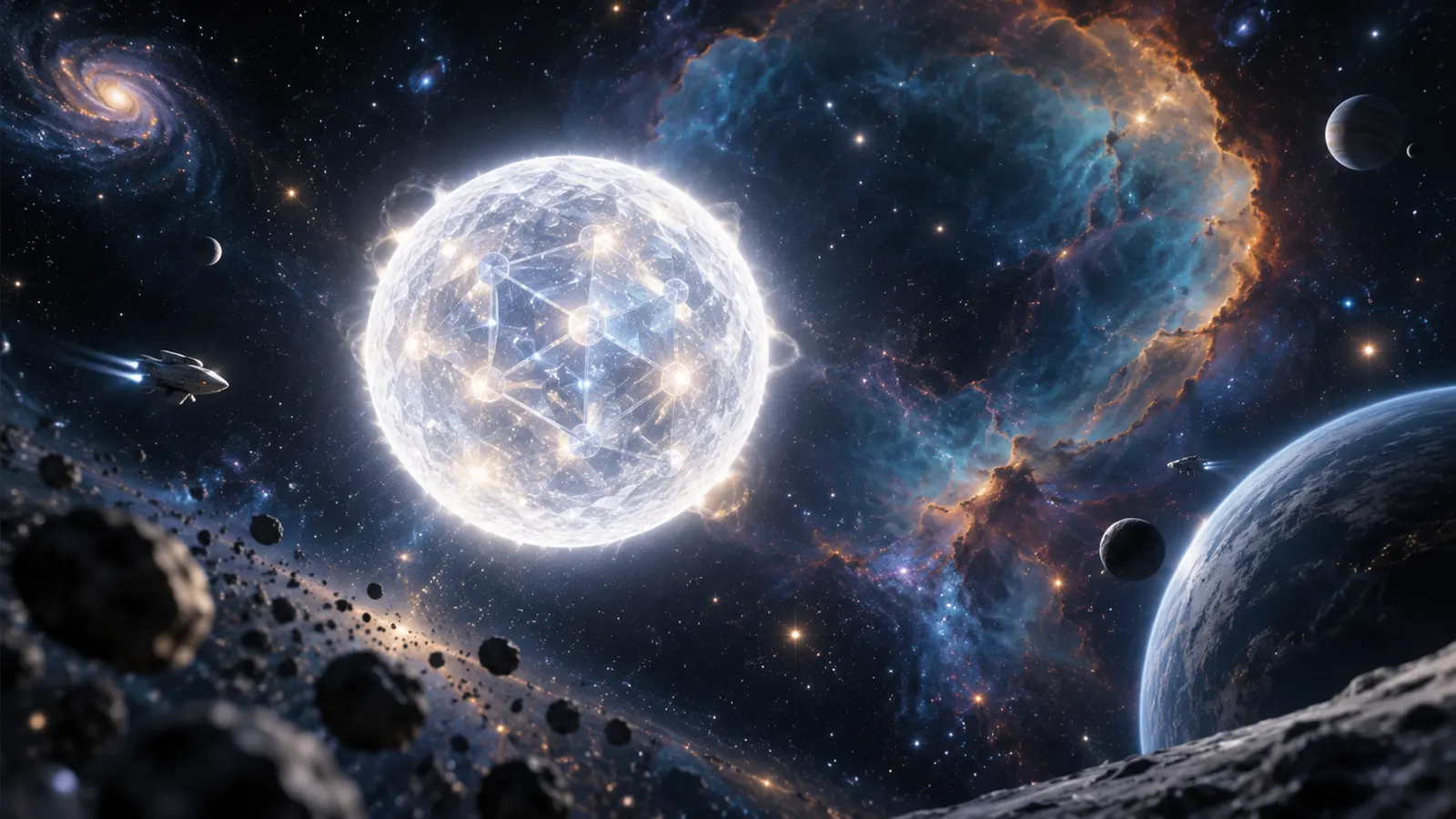
02白色矮星は約10の78乗年で消える
計算の結果は、
- 白色矮星:約10の78乗年(これまでの見積もりは10の1100乗年)
- 中性子星と、恒星くらいの重さのブラックホール:約10の67乗年(論文では、中性子星の寿命の上限を約10の68乗年としています)
- 人の体や月:約10の90乗年(もちろん理論上の話)
蒸発にかかる時間は、天体の密度だけで決まり、密度が高いほど早く蒸発するという計算です。人や月が白色矮星より長くかかるのは、ぎゅっと詰まった白色矮星に比べて、密度がずっと低いからです。
白色矮星は、最後まで残る「星の燃えかす」と考えられています。そのため、この数字が宇宙の「最後の星」の寿命の目安になります。
また、中性子星とブラックホールがほぼ同じ時間で蒸発するという計算結果も出ました。ブラックホールの方が重力が強いのですが、表面がないため、出ていく粒子の一部を自分で吸い込み直してしまいます。そのぶん蒸発が遅くなるのだそうです。
0310の78乗年って、どれくらい?
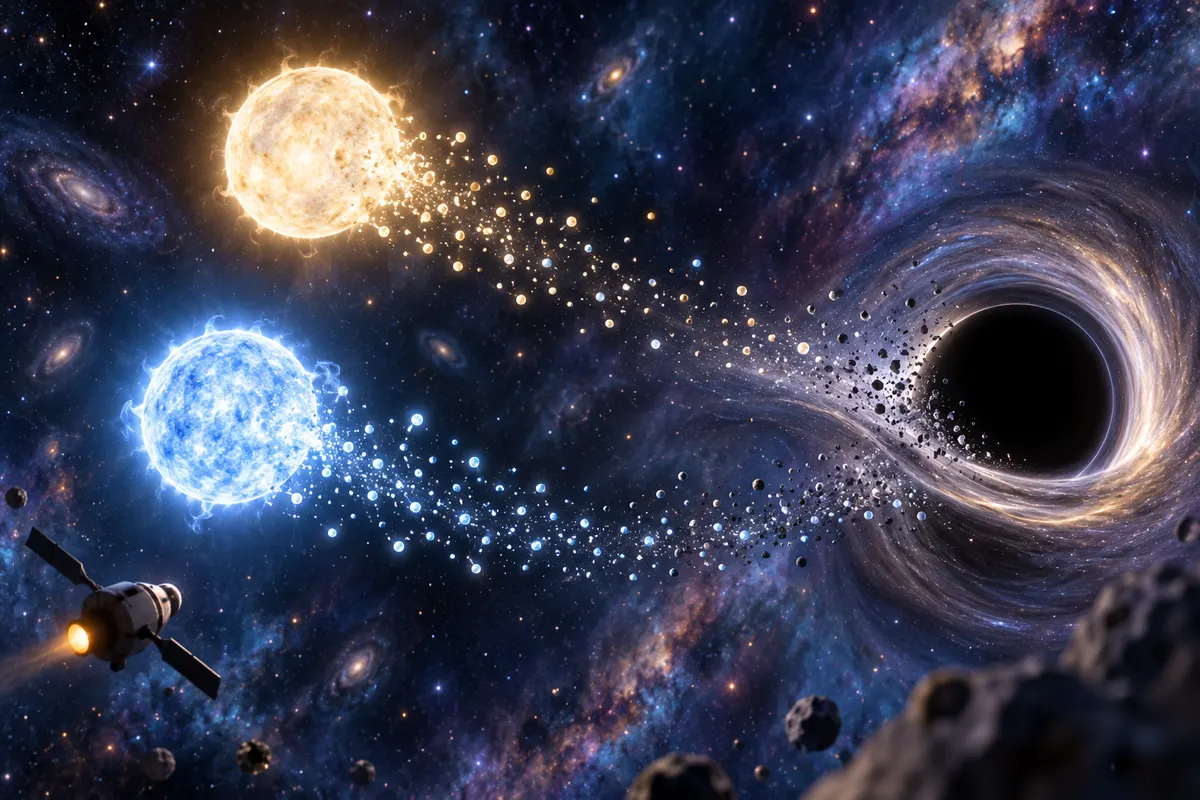
10の78乗年は、1のあとに0が78個並ぶ年数。現在の宇宙の年齢は約138億年(10の10乗年くらい)なので、想像を絶するほど長い時間です。
「短くなった」と言っても、10の1100乗が10の78乗になったという話。私たちの暮らしには、まったく影響ありません。
04まとめ
宇宙には始まりがあり、そしてたぶん終わりもある。その終わりの時期が、桁違いに早まったかもしれない(それでも気が遠くなるほど先の話です)、というお話でした。
10の78乗年後の宇宙を見届けることはできませんが、そんな途方もない時間を、紙とペンと数式で見積もれてしまう人間の頭脳こそ、いちばんの「マジか」かもしれません。
この研究を英語で読もう原田英語の English CornerIn 1974 and 1975, Stephen Hawking predicted that black holes slowly lose particles and eventually evaporate. 音声
音声 4択クイズ9問A2・B1・B2タップして開く
原田英語の English Corner
この研究を英語で読もう
When a star dies, it can leave behind a small object called a white dwarf. Scientists thought white dwarfs could last for 10 to the power of 1,100 years.
In 2025, physicists in the Netherlands calculated a much shorter time. They got about 10 to the power of 78 years. They think these objects slowly "evaporate." This is still a very, very long time. Also, nobody has seen this happen. It is only a calculation.
75 words ・ CEFR A2
和訳を見る
星が死ぬと、白色矮星と呼ばれる小さな天体が残ることがあります。科学者たちは、白色矮星は10の1100乗年もつと考えていました。
2025年、オランダの物理学者たちは、ずっと短い時間を計算しました。答えは約10の78乗年でした。彼らは、こうした天体がゆっくりと「蒸発」すると考えています。それでも、これはとてつもなく長い時間です。また、これが起きるのを見た人はいません。計算にすぎないのです。
4択リーディングクイズ
Q1. What is the passage mainly about?
白色矮星がどれくらいで消えるかを新しく計算した、という内容なので C。
Q2. According to the new calculation, about how long do white dwarfs last?
They got about 10 to the power of 78 years とあるので B。1,100乗年は以前の考え。
Q3. In this passage, "calculation" means ...
calculation は「計算」(calculate の名詞形)。数を使って答えを出すことなので D。本文では、実際に見た人はいない、計算にすぎないと言っている。
In 1974 and 1975, Stephen Hawking predicted that black holes slowly lose particles and eventually evaporate. In 2023, a team at Radboud University in the Netherlands suggested that something similar could happen to any object that bends space-time with its gravity, not just black holes. In 2025, the same team calculated how long different objects would take to disappear in this way.
White dwarfs, which are thought to be the last stars left in the universe, would last about 10 to the power of 78 years. This is much shorter than the earlier estimate of 10 to the power of 1,100 years. Neutron stars and black holes would take about 10 to the power of 67 years.
117 words ・ CEFR B1
和訳を見る
1974年から1975年にかけて、スティーブン・ホーキングは、ブラックホールはゆっくりと粒子を失い、最後には蒸発すると予言しました。2023年、オランダのラドバウド大学のチームは、ブラックホールだけでなく、重力で時空を曲げるどんな天体にも似たことが起こりうると提案しました。2025年、同じチームは、さまざまな天体がこのようにして消えるまでにどれくらいかかるかを計算しました。
宇宙で最後まで残る星と考えられている白色矮星は、約10の78乗年もつとされました。これは、以前の見積もりである10の1100乗年よりずっと短いものです。中性子星とブラックホールは、約10の67乗年かかるとされました。
4択リーディングクイズ
Q1. What did Stephen Hawking predict?
第1文 Hawking predicted that black holes slowly lose particles and eventually evaporate とあるので A。
Q2. How long would neutron stars take to disappear?
Neutron stars and black holes would take about 10 to the power of 67 years. とあるので D。78乗年は白色矮星。
Q3. Why is the lifetime of white dwarfs especially important?
which are thought to be the last stars left in the universe とあり、その寿命が「最後の星」が消える時期の目安になるので C。
In the mid-1970s, Stephen Hawking showed that black holes should slowly emit particles and eventually evaporate, a process now known as Hawking radiation. In 2023, physicists at Radboud University in the Netherlands proposed that a similar process could occur wherever gravity curves space-time, even without the event horizon of a black hole. In a 2025 paper in the Journal of Cosmology and Astroparticle Physics, the team applied this idea to stellar remnants. They calculated that white dwarfs, expected to be the last surviving stars, would evaporate in about 10 to the power of 78 years, compared with a previous estimate of 10 to the power of 1,100 years.
Neutron stars and stellar-mass black holes would take about 10 to the power of 67 years; black holes evaporate more slowly than expected because, lacking a surface, they reabsorb some of the particles they emit. However, the work is purely theoretical, cannot be tested by observation, and rests on a disputed premise: a published response has challenged the team's 2023 calculation. Even if correct, the timescale vastly exceeds the universe's current age of about 13.8 billion years.
185 words ・ CEFR B2
和訳を見る
1970年代半ば、スティーブン・ホーキングは、ブラックホールはゆっくりと粒子を放出し、最後には蒸発するはずだと示しました。この過程は現在、ホーキング放射として知られています。2023年、オランダのラドバウド大学の物理学者たちは、ブラックホールの事象の地平線がなくても、重力が時空を曲げているところならどこでも似た過程が起こりうると提案しました。2025年に『Journal of Cosmology and Astroparticle Physics』で発表した論文で、チームはこの考えを星の燃えかす(恒星の残骸)に当てはめました。彼らは、最後まで残る星と考えられている白色矮星が、以前の見積もりである10の1100乗年に対して、約10の78乗年で蒸発すると計算しました。中性子星と恒星質量のブラックホールは約10の67乗年かかります。
ブラックホールが予想より遅く蒸発するのは、表面がないため、放出した粒子の一部を自分で吸いこみ直してしまうからです。しかし、この研究は純粋に理論的なもので、観測で確かめることはできず、議論のある前提に基づいています。チームの2023年の計算には、異議を唱える反論論文も発表されているのです。たとえ正しいとしても、その時間の長さは、現在の宇宙の年齢である約138億年をはるかに超えています。
4択リーディングクイズ
Q1. How does the Radboud team's idea differ from Hawking's original prediction?
a similar process could occur wherever gravity curves space-time, even without the event horizon of a black hole とあるので B。
Q2. Why do black holes evaporate more slowly than one might expect?
because, lacking a surface, they reabsorb some of the particles they emit とあるので A。
Q3. Which statement best describes the status of these findings?
purely theoretical, cannot be tested by observation, and rests on a disputed premise とあるので D。時間は宇宙の年齢をはるかに超えるので B も誤り。
重要単語
- evaporateB2動詞蒸発するBlack holes may slowly evaporate.
 水だけでなく「消えてなくなる」の比喩でも使う(His hopes evaporated.)。名詞 evaporation。
 - white dwarfC1名詞(句)白色矮星Our Sun will become a white dwarf someday. dwarf は「小人・小さいもの」。複数形は dwarfs(dwarves とも)。red giant(赤色巨星)と対で覚える。
- radiationB2名詞放射(線)Hawking radiation has never been observed. radiate(放射する)の名詞形。radio, radius と同じ「光線・半径」の語源。
- densityB2名詞密度The lifetime depends only on the object's density. 形容詞 dense(密な)。population density「人口密度」は地理の頻出語。
- estimateB1名詞・動詞見積もり/見積もるThe new estimate is much shorter. 名詞は /ˈestɪmət/(エスティメット)、動詞は /ˈestɪmeɪt/(エスティメイト)と発音が変わる。
- theoreticalB2形容詞理論上のThe result is purely theoretical. theory(理論)の形容詞形。反対は practical(実際的な)や experimental / observational(実験・観測による)。
 入試に出る順の単語帳を印刷する →
 全5903語の「科学英単語カード」で復習する →
 動画でもっと知る
動画は各チャンネルの公式埋め込みで表示しています(YouTube)。
 公式・一次情報をチェック
 4コマでわかる
このネタ、誰かに教えたくなった?
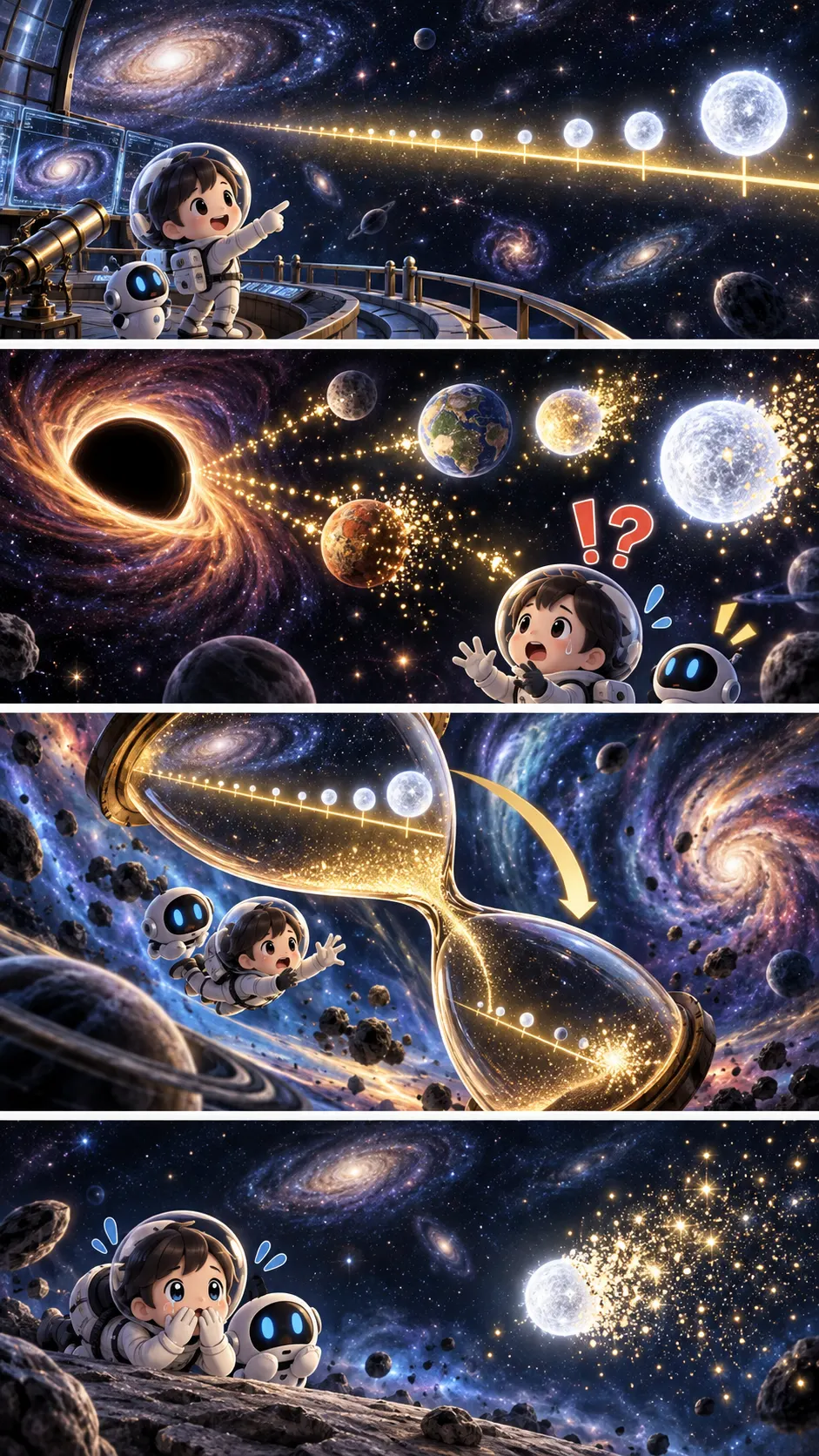
宇宙で最後まで残る星の燃えかすも、10の1100乗年はもつと思われていたのに、新しい計算では「たった」10の78乗年で蒸発するらしい。ちなみに人の体や月も、理論上は10の90乗年で蒸発する計算。
押すと「マジかリスト」に保存されます
 出典・参考文献(4件)タップで表示
- Falcke, Wondrak & van Suijlekom (2025) An upper limit to the lifetime of stellar remnants from gravitational pair production, Journal of Cosmology and Astroparticle Physicsdoi.org
- Wondrak, van Suijlekom & Falcke (2023) Gravitational Pair Production and Black Hole Evaporation, Physical Review Lettersdoi.org
- Ferreiro, Navarro-Salas & Pla (2024) Comment on "Gravitational Pair Production and Black Hole Evaporation", Physical Review Lettersdoi.org
- Hawking (1975) Particle creation by black holes, Communications in Mathematical Physicsdoi.org

※本記事は上記の研究・公開資料をもとに、原田英語が独自の言葉で解説したものです。引用は著作権法第32条の範囲で行い、出典を明記しています。画像はすべてオリジナルのイメージです。研究結果には限界や個人差があります。誤りのご指摘は原田英語のお問い合わせフォームから。
 これも「マジか!?」
 宇宙
宇宙
燃えつきた星に、鉄の見つからない不思議な材料が降っていた。星が死にぎわに生んだ惑星から?
 宇宙
宇宙
2024年春、月に直径222mのクレーターが誕生。最近できたと確認されたクレーターとしては、太陽系で発見された最大のもの
 宇宙
宇宙
星が燃え尽きても、木星サイズの惑星は生き延びていた。ウェッブ望遠鏡が見た「太陽系の遠い未来」の予告編
 宇宙
宇宙
小惑星ベンヌの砂に、DNA・RNAの材料になる塩基5種類がそろっていた。しかも塩水の跡まで
 宇宙
宇宙
火星の岩の「ヒョウ柄」は生命の痕跡? NASAが「候補」と呼んだ理由
 宇宙
宇宙