
 睡眠・休息ホント
起きて17時間の脳は「ほろ酔い」と同じ? 寝不足とお酒を真剣に比べた研究
 2026.10.02
 English Corner(A2〜B2・4択クイズ)
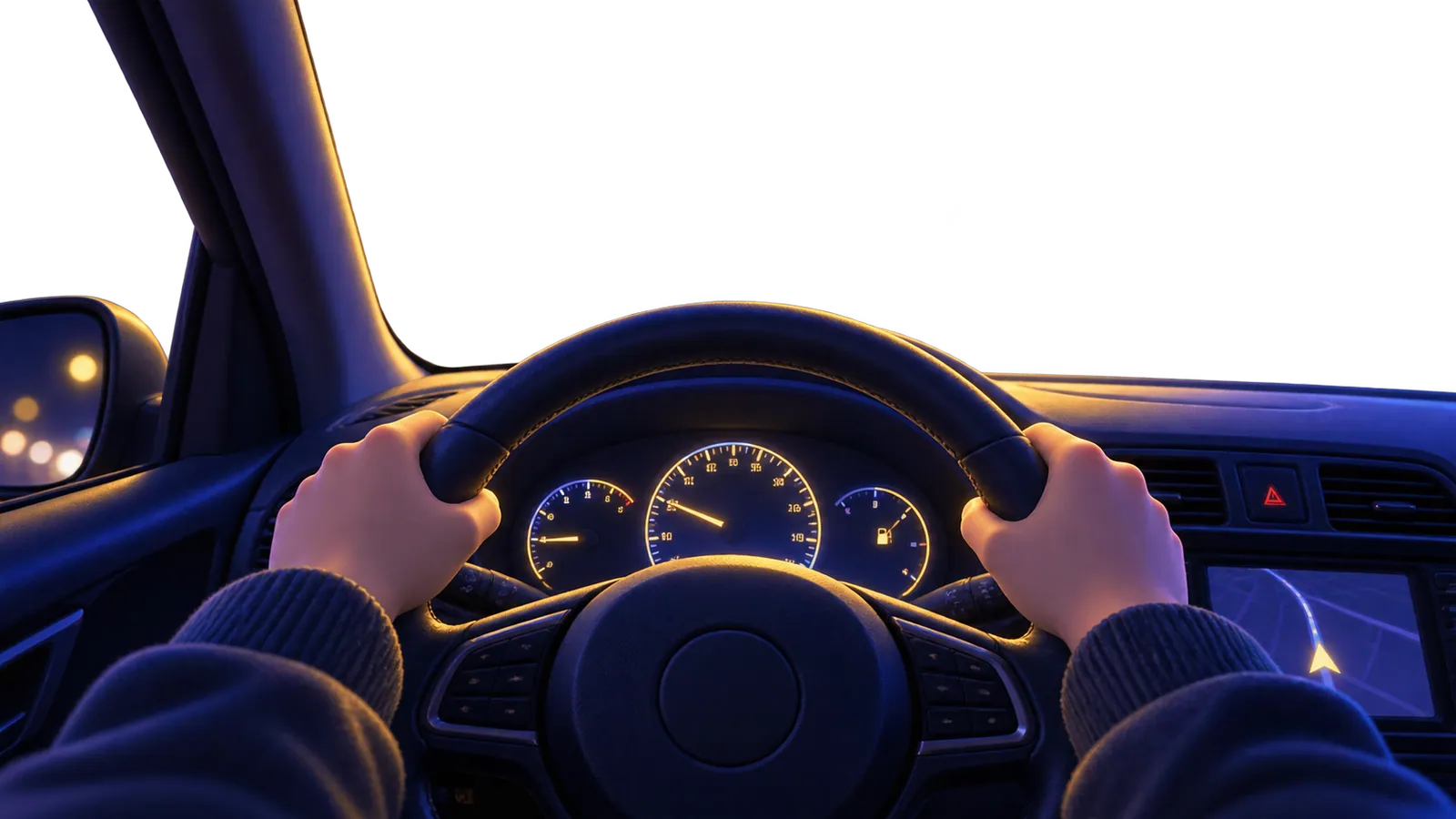
 読む前に予想してみよう!
朝7時に起きた人は、深夜0時ごろには飲酒時並みに反応が鈍ることがある
約17〜19時間の連続覚醒で、血中アルコール濃度0.05%相当の成績低下が報告されている。
 研究カード(どんな研究?)
- 対象
- 健康な成人・運輸業従事者など
- 規模
- 18〜40人規模
- 研究の種類
- 断眠と飲酒の影響を比べた実験(複数)
- 確かさ
- ★★★☆☆
約17〜19時間起き続けると、一部の課題の成績が、血中アルコール濃度0.05%までお酒を飲んだときと同じくらいまで落ちたという研究がある。
ひとことで言うと起きて17時間たった脳は、お酒を少し飲んだときと同じくらい鈍くなる!
「眠いけど、お酒を飲んだわけじゃないし大丈夫」。そう思って夜遅くまで作業したり、運転したりしていませんか?
実は、長時間起き続けた脳は、お酒を飲んだときと同じくらいまで一部の能力が落ちることが、研究で確かめられています。その目安はなんと「起きてから17〜19時間」。朝7時に起きた人なら、深夜0〜2時ごろです。
01研究者が「寝不足」と「お酒」をガチで比べてみた
02ただし「完全に同じ」ではない
カナダのチームが運転シミュレーターで行った研究(2001年)では、ふらつきなどの指標で約18.5時間の覚醒が0.05%、約21時間が0.08%の飲酒と同じくらいの悪化でした。一方で、道路からはみ出す回数や制限速度とのずれは、お酒のほうが変化が大きかったのです。
つまり「寝不足=飲酒」と丸ごとイコールで結べるわけではなく、ある種の能力の落ち方を、身近な物差し(アルコール濃度)で表したというのが正確なところです。それでも、深夜の運転が「酒気帯び並み」に危ないかもしれない、という警告としては十分な重みがあります。
血中アルコール濃度0.05%というのは、日本の酒気帯び運転の基準(血液1mLあたり0.3mg=0.03%)より高いレベルです。もちろん、寝不足の運転が法律上の酒気帯び運転になるわけではありません。でも成績の落ち方だけを比べれば、深夜まで起きたあとの運転は、酒気帯び運転と同じくらい危ないかもしれないのです。
03なぜ寝不足だと、酔ったように成績が落ちるのか
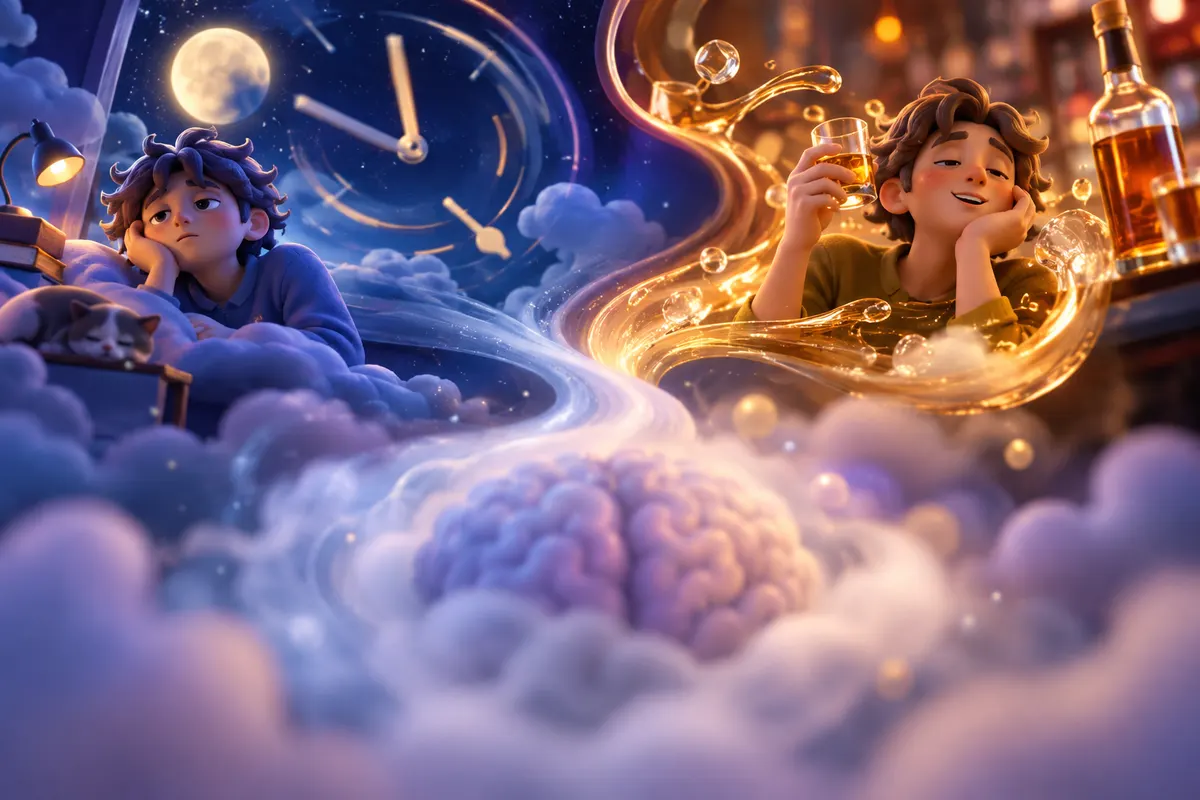
起きている時間が長くなるほど、脳には「休め」というサインを出す物質(アデノシンなど)がたまっていきます。これがたまりすぎると、脳が短い時間だけ勝手に眠ってしまうことがあります。これを「マイクロスリープ」(数秒ほどのうっかり居眠り)と呼びます。
本人は起きているつもりでも、ほんの一瞬、脳が“まばたき”するように意識が途切れる。時速60kmの車なら、数秒で何十mも「目をつぶったまま」進むことになります。
さらに怖いのは、寝不足が続くと、自分の能力の落ち具合に気づきにくいこと。お酒に酔った人が「まだ酔ってない」と言うように、寝不足の人も「まだいける」と思いがちです。アメリカのVan Dongenさんらが2003年に報告した実験では、睡眠を2週間削り続けました。すると、成績は日ごとに落ちていくのに、本人が感じる眠気は、最初に上がったあとはあまり増えませんでした。
「コーヒーを飲めば、眠気は消えて元どおり」と思われがち。カフェインで眠気をごまかすことはできても、眠ることの代わりにはなりません。また、窓を開ける・音楽を大音量にするといった対策は、効いても短い時間だけだとされています。
04夜ふかしの“ほろ酔い脳”から身を守るには
05まとめ
起きて17〜19時間の脳は、一部の能力がほろ酔いと同じくらいまで落ちている。これは気合いでは覆せない、脳の仕組みです。
「まだお酒は飲んでないから平気」ではなく、「今日はもう何時間起きている?」と時計を見る習慣を。夜ふかしの帰り道ほど、慎重にいきましょう。
この研究を英語で読もう原田英語の English CornerFeeling sleepy may seem harmless if you have not been drinking. 音声
音声 4択クイズ9問A2・B1・B2タップして開く
原田英語の English Corner
この研究を英語で読もう
If you get up at 7 a.m., how is your brain at midnight? Scientists in Australia compared staying awake with drinking alcohol. After about 17 hours without sleep, people did a task as badly as they did after drinking some alcohol.
After 24 hours, they did even worse. Tired people often think, "I'm fine," but they are not. So, do not drive late at night when you have been awake for a long time.
74 words ・ CEFR A2
和訳を見る
朝7時に起きたら、真夜中にはあなたの脳はどうなっているでしょうか?オーストラリアの科学者たちは、起き続けることとお酒を飲むことを比べました。約17時間眠らずにいると、お酒を少し飲んだときと同じくらい課題の成績が悪くなりました。
24時間後には、さらに悪くなりました。疲れた人はよく「大丈夫」と思いますが、そうではありません。だから、長い時間起きているときは、夜遅くに運転しないようにしましょう。
4択リーディングクイズ
Q1. What is the passage mainly about?
長時間起きていることとお酒を飲むことの影響を比べた研究の話なので C。
Q2. After about how many hours awake did people do as badly as they did after drinking some alcohol?
After about 17 hours without sleep, people did a task as badly as they did after drinking some alcohol. とあるので D。
Q3. In this passage, "compared" means ...
compare は「比べる」。起き続けることと飲酒を比べたという意味なので A。
Feeling sleepy may seem harmless if you have not been drinking. However, research shows that a brain that has been awake for a long time can perform much like a drunk brain. In a 1997 study in Australia, 40 people experienced both staying awake and drinking alcohol on different days.
After about 17 hours awake, their performance on a hand-eye task dropped to the same level as with a blood alcohol level of 0.05 percent. After about 24 hours, it was similar to 0.1 percent. One possible reason is the microsleep, a lapse of a few seconds when parts of the brain switch off. Sleepy people also tend to believe they are still fine, which makes the situation more dangerous.
120 words ・ CEFR B1
和訳を見る
お酒を飲んでいなければ、眠いことはたいしたことではないように思えるかもしれません。しかし研究によると、長い時間起きている脳は、酔った脳とよく似た成績になることがあります。1997年のオーストラリアの研究では、40人が別々の日に、起き続けることとお酒を飲むことの両方を体験しました。
約17時間起きていると、手と目を使う課題の成績は、血中アルコール濃度0.05%の時と同じレベルまで落ちました。約24時間後には、0.1%と同じくらいになりました。考えられる理由の一つはマイクロスリープで、これは脳の一部がオフになる数秒間の途切れです。また、眠い人は自分がまだ大丈夫だと思いがちで、それが状況をさらに危険にしています。
4択リーディングクイズ
Q1. In the 1997 study, what was performance after about 24 hours awake similar to?
After about 24 hours, it was similar to 0.1 percent. とあるので B。
Q2. What is a microsleep?
a lapse of a few seconds when parts of the brain switch off と定義されているので C。
Q3. Why does the writer say the situation is "more dangerous"?
Sleepy people also tend to believe they are still fine, which makes the situation more dangerous. とあるので D。
Most people recognize drink-driving as dangerous, but fewer realize that prolonged wakefulness can impair performance to a comparable degree. In a 1997 study published in Nature, 40 participants completed a hand-eye coordination task on separate occasions while staying awake and while consuming alcohol. After roughly 17 hours of wakefulness, their performance had declined to the level seen at a blood alcohol concentration of 0.05 percent, and after about 24 hours it matched 0.1 percent.
A 2000 study of 39 transport and military workers found that 17 to 19 hours awake produced impairment equivalent to or worse than 0.05 percent on several tests, with responses up to 50 percent slower on some. One possible mechanism is the microsleep, a brief lapse in which parts of the brain go offline.
However, the comparison is not exact. In a 2001 driving-simulator study, alcohol caused more road departures than sleep loss did. So each figure applies only to the measures used in that study. Because vulnerability to sleep loss varies between individuals, an average from these studies is not a safe personal limit for anyone.
181 words ・ CEFR B2
和訳を見る
ほとんどの人は飲酒運転が危険だと認識していますが、長時間起き続けることが同程度に能力を損ないうることに気づいている人は多くありません。『Nature』誌に発表された1997年の研究では、40人の参加者が、起き続ける日とお酒を飲む日という別々の機会に、手と目の協調を必要とする課題に取り組みました。約17時間起きていると、成績は血中アルコール濃度0.05%で見られるレベルまで落ち、約24時間後には0.1%に相当しました。
運輸業と軍の39人を対象とした2000年の研究では、17〜19時間の覚醒が、いくつかのテストで0.05%と同等かそれ以上の能力低下をもたらし、テストによっては反応が最大50%遅くなりました。考えられる仕組みの一つはマイクロスリープで、これは脳の一部がオフラインになる短い途切れです。
しかし、この比較は厳密なものではありません。2001年の運転シミュレーター研究では、道路からのはみ出しは睡眠不足よりもアルコールのほうが多く引き起こしました。つまり、それぞれの数値は、その研究で使った指標にだけ当てはまるものです。睡眠不足への弱さには個人差があるため、こうした研究の平均値は、誰にとっても安全な個人の目安にはなりません。
4択リーディングクイズ
Q1. What is the main point of the passage?
第1文で長時間覚醒が飲酒と同程度に能力を損ないうると述べ、研究で裏づけているので B。
Q2. According to the 2000 study, how much slower were responses on some tests?
with responses up to 50 percent slower on some とあるので C。
Q3. Why does the author say an average is not a safe personal limit?
Because vulnerability to sleep loss varies between individuals とあるので D。
重要単語
- wakefulnessC1名詞覚醒(起きている状態)Long periods of wakefulness slow down your reactions.
 wakeful(目が覚めている)+-ness。prolonged wakefulness「長時間の覚醒」で頻出。
 - impairmentC1名詞(能力の)低下、障害Alcohol causes impairment in judgment. 動詞 impair「損なう」。visual impairment「視覚障害」など医療系でも使う。
- intoxicationC1名詞酩酊、酔った状態Signs of intoxication include slurred speech. toxic(有毒な)と同語源。「中毒」の意味もある。
- microsleepC1名詞数秒間の瞬間的な居眠りA microsleep at the wheel can be deadly. micro-(微小な)+sleep。at the wheel は「運転中に」。
- equivalentB2形容詞・名詞同等の/同等のものSeventeen hours awake was equivalent to a BAC of 0.05%. be equivalent to ~「~に相当する」。equi-(等しい)+valent(価値)。
- prolongedC1形容詞長引いた、長期のProlonged stress can harm your health. prolong「長引かせる」の過去分詞から。long が隠れていると覚えると簡単。
- vulnerabilityC1名詞弱さ、影響の受けやすさVulnerability to sleep loss differs from person to person. 形容詞 vulnerable to ~「~に弱い・影響を受けやすい」は入試頻出。
 入試に出る順の単語帳を印刷する →
 全5903語の「科学英単語カード」で復習する →
 動画でもっと知る
動画は各チャンネルの公式埋め込みで表示しています(YouTube)。
この話題を TED で聞く
同じテーマの TED・TED-Ed を、 TED HACK で。英語の見どころ・使える表現・学習ミッションつきの日本語ガイドです。(運営:原田英語)

 公式・一次情報をチェック
- Sleep Deprivation and Deficiency(NIH 国立心肺血液研究所)nhlbi.nih.gov
 4コマでわかる
このネタ、誰かに教えたくなった?
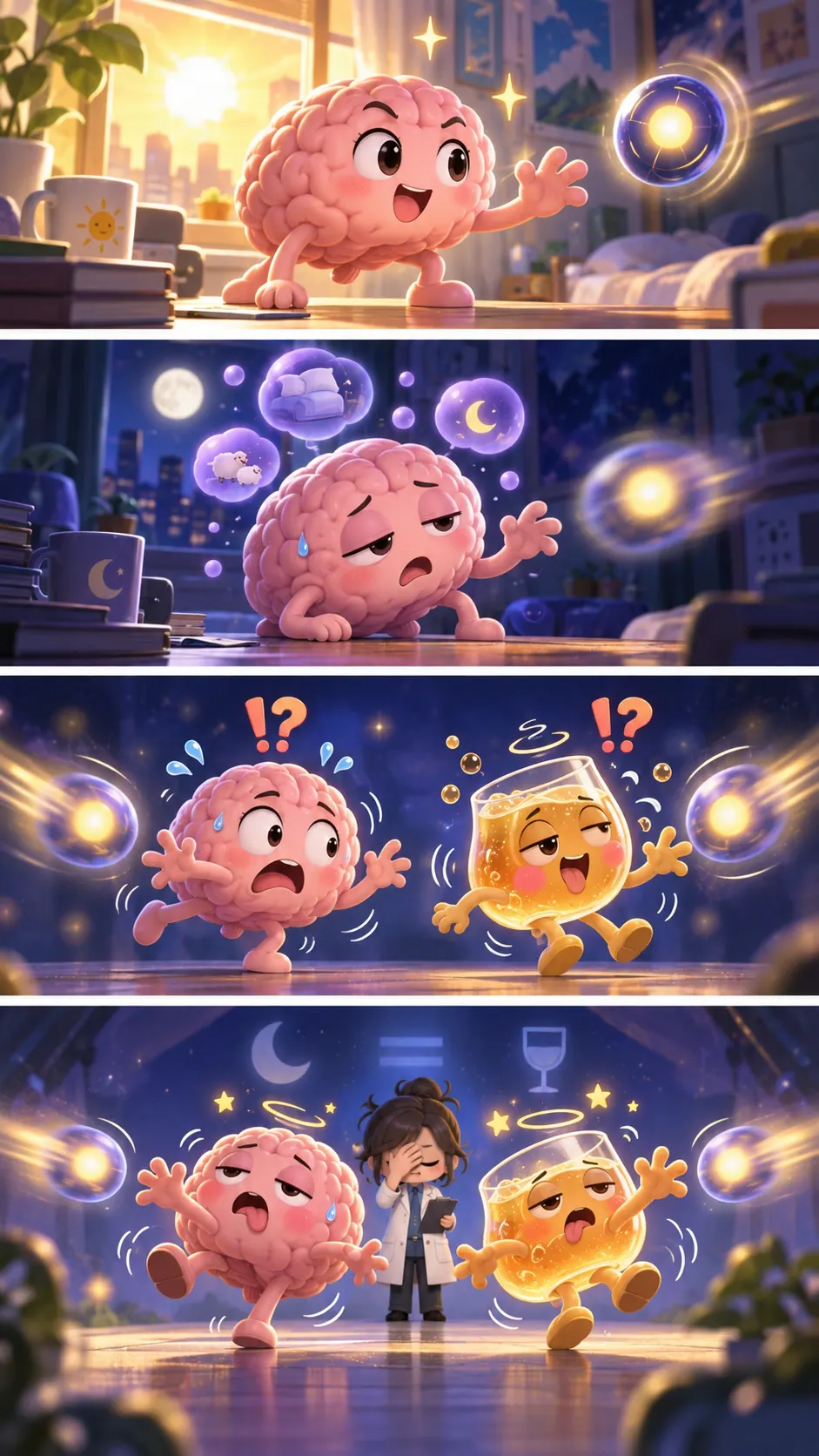
朝7時に起きた人が深夜0時を過ぎたら、脳の成績は「ほろ酔い」並みに落ちているかもしれない。寝不足とお酒の影響を真面目に比べた研究、ちょっと怖い。
押すと「マジかリスト」に保存されます
 出典・参考文献(4件)タップで表示
- Dawson & Reid (1997) Fatigue, alcohol and performance impairment, Naturedoi.org
- Williamson & Feyer (2000) Moderate sleep deprivation produces impairments in cognitive and motor performance equivalent to legally prescribed levels of alcohol intoxication, Occupational and Environmental Medicinedoi.org
- Arnedt et al. (2001) How do prolonged wakefulness and alcohol compare in the decrements they produce on a simulated driving task?, Accident Analysis & Preventiondoi.org
- Van Dongen et al. (2003) The cumulative cost of additional wakefulness, Sleepdoi.org

※本記事は上記の研究・公開資料をもとに、原田英語が独自の言葉で解説したものです。引用は著作権法第32条の範囲で行い、出典を明記しています。画像はすべてオリジナルのイメージです。研究結果には限界や個人差があります。誤りのご指摘は原田英語のお問い合わせフォームから。
 これも「マジか!?」
 睡眠
睡眠
寝不足の日にお菓子が止まらないのは、意志だけのせいじゃない。食欲ホルモンや脳の変化も関わっていそう
 睡眠
睡眠
寝不足のイライラは性格のせいじゃない? 徹夜した脳では、危険を知らせる扁桃体の反応が約6割も強かった
 睡眠
睡眠
NASAが旅客機で本気の昼寝実験。平均26分の仮眠で着陸まで頭がさえた
 睡眠
睡眠
徹夜明けに「ボーッ」とする瞬間、脳では睡眠中の“洗浄”に似た動きが起きていた
 睡眠
睡眠
「6時間寝てれば十分」は危ない。2週間続けたら、注意力が徹夜明けと同じくらいまで落ちた
 睡眠
睡眠