

 心理学ホント
【早稲田の入試に出た】知らない人との「ちょうどいい距離」、いちばん近い国と遠い国で約1.7倍の差。42か国調査
 2026.10.02
 English Corner(A2〜B2・4択クイズ)
 読む前に予想してみよう!
脳の扁桃体を失った人は、他人がすぐそばに近づいても不快を感じにくかった
両側の扁桃体を損傷した人は、パーソナルスペースの感覚がほとんどなかったと報告されている。
 研究カード(どんな研究?)
- 対象
- 42か国の成人
- 規模
- 8,943人
- 研究の種類
- 国際比較調査(質問紙)
- 確かさ
- ★★★★☆
42か国・約9,000人に「知らない人とどのくらい離れたいか」を聞くと、国によって大きな差。年齢や性別、気温とも関係していた。
ひとことで言うと人との「ちょうどいい距離」は、住んでいる国によってかなり違うらしい!
海外旅行や留学で、「この人、なんか近い……!」と感じたことはありませんか? 逆に、相手から「よそよそしい」と思われているかもしれません。
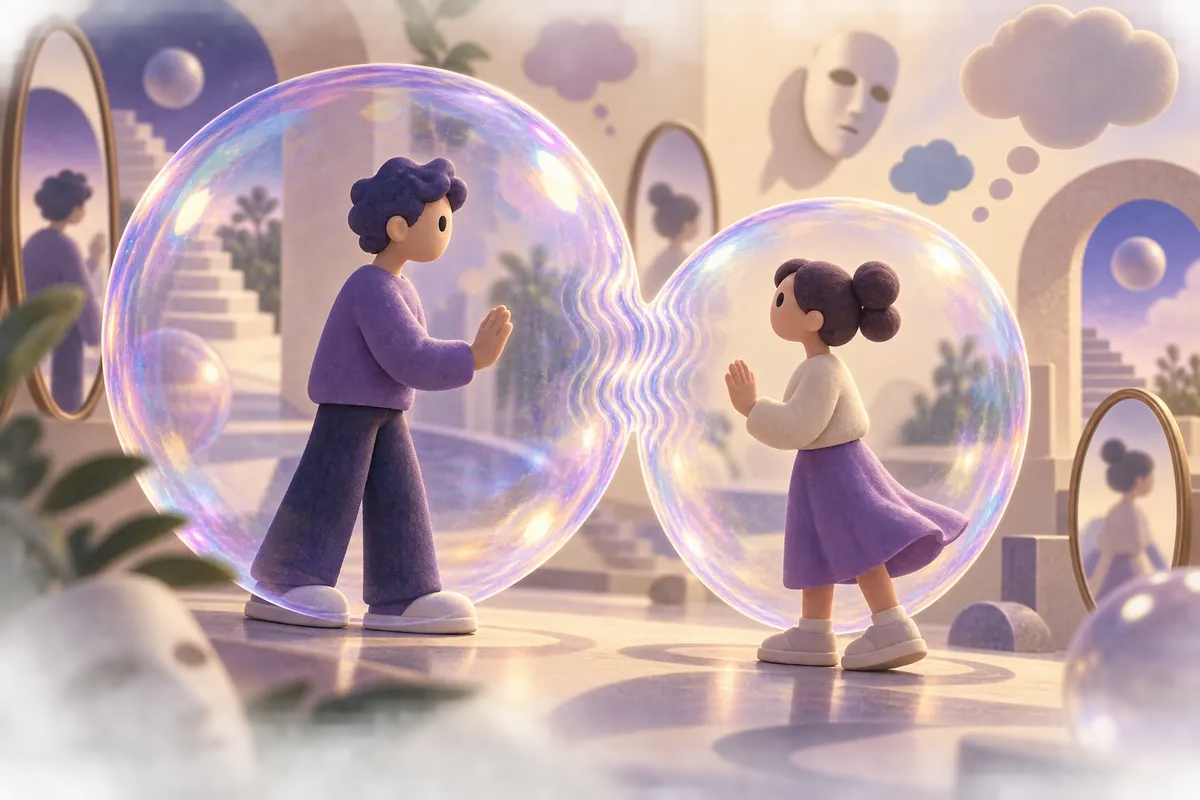
他人に入ってこられたくない、自分のまわりの見えない空間を「パーソナルスペース」と呼びます。その広さが国によってどれくらい違うのかを、世界規模で調べた研究があります。
「国による対人距離の違い」は、2026年度の早稲田大学(人間科学部)の英語で読解の題材になりました(代々木ゼミナールの解答速報・概評で確認)。
0142か国・約9,000人に「距離」を聞いた
論文のグラフを読むと、知らない人との距離が最も近かったのはアルゼンチン(80cm弱)、最も遠かったのはルーマニア(1.3m強)。同じ「知らない人と話す」場面でも、約1.7倍の差があったことになります。
日本で「ふつう」と思っている距離感も、世界から見れば数ある基準のひとつにすぎない、ということです。
02距離感は、脳の中の「警報」で守られている
そもそも、なぜ人は近づかれすぎると不快になるのでしょう。カギを握るのは、脳の奥にある扁桃体です。
米カリフォルニア工科大学のケネディらは、病気で両側の扁桃体を失った女性を調べました(Nature Neuroscience, 2009)。すると彼女には、パーソナルスペースの感覚がほとんどありませんでした。実験者が鼻先が触れそうなほど近づいても、不快に感じなかったのです。一方、健康な人を脳の装置(fMRI)で調べると、他人がすぐ近くにいると知っただけで、扁桃体の活動が高まりました。
つまりパーソナルスペースは、ただの「マナー」ではなく、脳の警報システムに支えられた感覚でもあるようです。
03「距離の文化」を知ると、すれ違いが減る
アメリカの人類学者ホールは1960年代に、人と人の距離を「密接距離・個体距離・社会距離・公衆距離」の4つに分ける考え方(近接学)を提案しました。その後、多くの研究者がパーソナルスペースを調べてきましたが、方法や対象がバラバラで比べにくいという課題がありました(Hayduk, 1978)。
ソロコフスカらの調査は、同じ方法で世界中を比べられるデータを作った点で画期的でした。相手の距離感が自分と違っても、それは失礼なのではなく、文化の違いかもしれないのです。
04まとめ
人との「ちょうどいい距離」は、世界共通ではありませんでした。国によって1.7倍ほど違うこともあるのです。
もし海外の人に「近いな」と感じたら、それは相手がもっと近い距離がふつうの文化で育ったからかもしれません。距離の違いを知ることは、相手を理解する第一歩です。
この研究を英語で読もう原田英語の English CornerPersonal space is the invisible area around us that we do not want others to enter. 音声
音声 4択クイズ9問A2・B1・B2タップして開く
原田英語の English Corner
この研究を英語で読もう
How close do you like to stand when you talk to a stranger? Researchers asked almost 9,000 people in 42 countries. The answers were very different. People in Argentina liked to stand the closest, at a little under 80 cm.
People in Romania wanted the most space, a little over 1.3 m. That is about 1.7 times as far! Age, gender and even the local temperature were also connected to these answers.
72 words ・ CEFR A2
和訳を見る
知らない人と話すとき、どれくらい近くに立つのが好きですか?研究者たちは、42か国の約9,000人に尋ねました。答えはとても違っていました。アルゼンチンの人々はいちばん近く、80cm弱に立つのを好みました。
ルーマニアの人々はいちばん広い空間、1.3m強を望みました。それは約1.7倍の距離です!年齢や性別、さらにはその地域の気温も、こうした答えと関係していました。
4択リーディングクイズ
Q1. What is the passage mainly about?
知らない人との好ましい距離が国によって大きく違う、という調査の話なので B。C の「内気」は本文にない。
Q2. In which country did people like to stand the closest?
People in Argentina liked to stand the closest とあるので C。ルーマニアは最も遠かった国。
Q3. In this passage, a "stranger" is ...
stranger は「見知らぬ人」。strange(なじみのない)と同じ語源の語なので A。「よそ者」の意味もある。
Personal space is the invisible area around us that we do not want others to enter. Researchers at the University of Wroclaw in Poland showed 8,943 people in 42 countries a picture of two people facing each other. Participants marked how close they would let a stranger, an acquaintance and a close person come.
Preferred distances differed greatly between countries and were linked to age, gender and local temperature. In the study's results, Argentinians preferred the closest distance from strangers and Romanians the farthest. Brain research also shows why we feel uncomfortable when someone is too close. A woman who had lost both amygdalae, parts of the brain that act like an alarm, felt almost no personal space.
118 words ・ CEFR B1
和訳を見る
パーソナルスペースとは、他人に入ってきてほしくない、私たちの周りの見えない領域のことです。ポーランドのヴロツワフ大学の研究者たちは、42か国の8,943人に、2人の人物が向かい合っている絵を見せました。参加者は、知らない人、知り合い、親しい人をどこまで近づかせてよいかを書き込みました。
好ましい距離は国によって大きく異なり、年齢、性別、その地域の気温と関係していました。調査の結果では、知らない人との距離はアルゼンチンの人々が最も近く、ルーマニアの人々が最も遠いものでした。脳の研究も、誰かが近すぎると居心地が悪くなる理由を示しています。警報装置のように働く脳の部位である扁桃体を両側とも失った女性は、パーソナルスペースの感覚がほとんどありませんでした。
4択リーディングクイズ
Q1. What did the participants do in the survey?
showed ... a picture of two people facing each other と Participants marked how close ... とあるので D。実際に歩いたわけではない点に注意。
Q2. Which factors were linked to preferred distances?
were linked to age, gender and local temperature とあるので A。
Q3. What does the case of the woman suggest?
扁桃体を失った女性はパーソナルスペースの感覚がほとんどなかったので、脳がこの感覚に関わっていると推論できる。C が正解。
How close is too close? In the 1960s, the anthropologist Hall proposed that people use four zones of distance, from intimate to public, but later studies of personal space used such varied methods and samples that they were difficult to compare. In 2017, Sorokowska and colleagues addressed this problem by giving 8,943 people in 42 countries the same task: on a diagram of two figures, participants indicated how close a stranger, an acquaintance and a close person could come. Preferred distances varied substantially across countries and were associated with age, gender and local temperature.
According to the paper's graph, the preferred distance from strangers ranged from just under 80 cm in Argentina to a little over 1.3 m in Romania, about a 1.7-fold difference. Neuroscience helps explain why such boundaries matter. A 2009 study found that a woman with damage to both amygdalae had almost no sense of personal space, while in healthy people the amygdala became more active when they knew someone was close by. But the survey measured imagined rather than actual behavior, respondents were not chosen at random, and the link with temperature is a correlation that may reflect other cultural factors.
195 words ・ CEFR B2
和訳を見る
どれくらい近いと近すぎるのでしょうか。1960年代、人類学者のホールは、人は密接距離から公衆距離まで4つの距離帯を使い分けていると提案しましたが、その後のパーソナルスペース研究は方法も対象もばらばらで、比較するのが困難でした。2017年、ソロコフスカらは、42か国の8,943人に同じ課題を与えることでこの問題に取り組みました。2人の人物の図の上で、参加者は知らない人、知り合い、親しい人がどこまで近づいてよいかを示したのです。好ましい距離は国によってかなり異なり、年齢、性別、地域の気温と関連していました。
論文のグラフによると、知らない人との好ましい距離は、アルゼンチンの80cm弱からルーマニアの1.3m強までの幅があり、約1.7倍の差がありました。神経科学は、こうした境界がなぜ重要なのかを説明する助けになります。2009年の研究では、両側の扁桃体に損傷のある女性はパーソナルスペースの感覚がほとんどなく、一方、健康な人では、誰かがすぐ近くにいると知ると扁桃体の活動が高まることがわかりました。しかし、この調査は実際の行動ではなく想像上の行動を測ったものであり、回答者は無作為に選ばれたわけではありませんでした。また、気温との結びつきは相関であり、他の文化的要因を反映している可能性もあります。
4択リーディングクイズ
Q1. What problem with earlier research did the 2017 study try to solve?
used such varied methods and samples that they were difficult to compare の後に addressed this problem by giving ... the same task と続くので C。such ~ that ... 構文に注目。
Q2. What does "about a 1.7-fold difference" refer to?
直前の ranged from just under 80 cm in Argentina to a little over 1.3 m in Romania を受けているので D。1.7-fold は「1.7倍の」。
Q3. Which of the following is NOT mentioned as a limitation?
最後の文に挙がっているのは、想像上の行動・回答者が無作為に選ばれていないこと・気温との相関の3点。「参加者が全員60歳以上だった」という限界は書かれていないので B。
重要単語
- personal spaceB1名詞(句)パーソナルスペース(他人に入られたくない空間)Everyone needs some personal space.
 invade someone's personal space「人のパーソナルスペースに踏み込む」の形でよく使う。
 - interpersonalC1形容詞対人の、人と人とのInterpersonal distance varies across cultures. inter(間の)+personal。interpersonal skills(対人能力)も頻出。
- proxemicsC1名詞近接学(人と人の距離の研究)Proxemics studies how people use space. proximity(近さ)と同語源。人類学者ホールが提唱した分野名。
- acquaintanceB2名詞知り合いWe keep a bit more distance from acquaintances than from friends. make the acquaintance of ~「~と知り合いになる」。friend より浅い関係を表す。綴りの c に注意。
- intimateC1形容詞親密なIntimate distance is for family and close friends. 発音は /ˈɪntɪmət/。ホールの4距離 intimate / personal / social / public の最も近い距離。
- violateB2動詞侵害する、破るStanding too close can violate someone's personal space. violate a rule / a law「規則・法律を破る」。名詞 violation。violent(暴力的な)とは別語。
- amygdalaC1名詞扁桃体(脳の情動に関わる部位)The amygdala reacts to possible danger. 複数形は amygdalae。ギリシャ語の「アーモンド」が語源で、形が似ていることから。脳科学系の長文で出る。
 入試に出る順の単語帳を印刷する →
 全5903語の「科学英単語カード」で復習する →
 動画でもっと知る
動画は各チャンネルの公式埋め込みで表示しています(YouTube)。
 公式・一次情報をチェック
- 2026年度 早稲田大学(2/18 実施 人間科学)英語 概評(「国による対人距離の違い」がテーマの英文)(代々木ゼミナール 解答速報)sokuho.yozemi.ac.jp
このネタ、誰かに教えたくなった?
知らない人と話すとき「何cm離れたいか」を42か国・約9,000人に聞いた調査があるらしい。国によって大きく違い、最も近い国と遠い国では約1.7倍の差。年齢や性別、気温とも関係していた。海外で距離感に戸惑うのは当たり前かも。
押すと「マジかリスト」に保存されます
 出典・参考文献(3件)タップで表示
- Sorokowska et al. (2017) Preferred interpersonal distances: a global comparison, Journal of Cross-Cultural Psychologydoi.org
- Kennedy et al. (2009) Personal space regulation by the human amygdala, Nature Neurosciencedoi.org
- Hayduk (1978) Personal space: an evaluative and orienting overview, Psychological Bulletindoi.org

※本記事は上記の研究・公開資料をもとに、原田英語が独自の言葉で解説したものです。引用は著作権法第32条の範囲で行い、出典を明記しています。画像はすべてオリジナルのイメージです。研究結果には限界や個人差があります。誤りのご指摘は原田英語のお問い合わせフォームから。
 これも「マジか!?」

 心理学
心理学
【同志社の入試に出た】1歳半の赤ちゃんは、頼まれなくても人を助ける。でもご褒美で逆効果


 心理学
心理学
【東北大の入試に出た】「どうせ無駄」は学んで身につく、という説。50年後に提唱者自身が「逆だった」と認めた

 心理学
心理学
【同志社の入試に出た】サンタの正体を知った子どもより、親のほうが悲しんでいた
 心理学
心理学
【同志社の入試に出た】表情が豊かな人ほど好かれやすい。1,300人超のビデオ通話を分析
 心理学
心理学
【慶應の入試に出た】「忙しい自慢」はなぜ生まれた?忙しさがステータスになった理由
 心理学
心理学