

 心理学ビミョー
【東北大の入試に出た】「どうせ無駄」は学んで身につく、という説。50年後に提唱者自身が「逆だった」と認めた
 2026.10.02
 English Corner(A2〜B2・4択クイズ)

 読む前に予想してみよう!
学習性無力感の提唱者たちは、50年後に元の説明が「逆だった」と認めた
2016年の論文で、受け身になるのは生まれつきの反応で、学習されるのは「コントロールできる」という感覚だと修正した。
 研究カード(どんな研究?)
- 対象
- 犬(1967年)・大学生(1975年)・神経科学研究のレビュー
- 規模
- 小規模な実験+総説
- 研究の種類
- 動物実験・人の実験・レビュー
- 確かさ
- ★★★☆☆
「どうせ無駄」と学習して動けなくなる、と説明された学習性無力感。50年後、提唱者たちは「無力は生まれつきの反応で、学ぶのは『自分で変えられる』という感覚のほう」と修正した。
ひとことで言うと「どうせムリ」は学ぶものじゃなく、最初からある反応だったかもしれない!
何度がんばってもうまくいかないと、「どうせ無理だ」とあきらめてしまう。心理学では、この状態を「学習性無力感」と呼びます。教科書にも載っている超有名な理論です。
ところが2016年、この理論を生み出した本人たちが、「元の説明は逆だった」とする論文を発表しました。提唱者自身が自分の説を改めた、珍しい例です。
この「学習性無力感」は、2026年度の東北大学(前期)の英語で長文のテーマになりました(代々木ゼミナールの解答速報・概評で確認)。
011967年、逃げようとしない犬たち
二人はこう考えました。②の犬は「何をしても結果は変わらない」と学習してしまい、逃げる努力をやめたのだ、と。これが「学習性無力感」の誕生です。
※現在の基準では、動物への倫理的配慮の点で大きな議論がある実験です。
02人間でも同じことが起きた
1975年には、大学生を対象にした実験も行われました(Hiroto & Seligman)。
止められない不快な音を聞かされたり、答えのない問題を解かされたりした学生は、その後の別の課題(不快な音を止める課題やアナグラム)でも、失敗しやすくなりました。無力感は、ひとつの場面から別の場面へと「広がる」ことが示されたのです。
この理論はやがて、うつ病を理解する手がかりとしても注目されるようになりました。

0350年後の大どんでん返し
それから約50年。脳科学が進み、無力感の「仕組み」が詳しく調べられるようになりました。
2016年、マイヤーとセリグマンは論文「学習性無力感から50年」で、主にネズミなどを使った脳の研究をもとに、こう結論づけました。
- 長く続くつらい出来事に対して受け身になるのは、学習ではなく生まれつきの「初期設定」の反応。脳の奥の背側縫線核という部分が関わっている
- 学習されるのは無力ではなく、「自分でコントロールできる」という感覚のほう。おでこの奥の内側前頭前野がそれを察知し、受け身の反応にブレーキをかける
つまり私たちは、「無力を学ぶ」のではなく、「自分で状況を変えられる」と学ぶことで、生まれつきの無力から抜け出しているのかもしれません。
04まとめ
「どうせ無理」という受け身の反応は、もともと脳に備わった初期設定かもしれません。だからこそ、小さくても「自分で変えられた」経験を積み重ねることが、そこから抜け出すカギになるのかもしれません。
今日、ひとつだけ「自分で決めて、やり切れること」をやってみませんか。
この研究を英語で読もう原田英語の English CornerIn 1967, Seligman and Maier at the University of Pennsylvania divided dogs into three groups. 音声
音声 4択クイズ9問A2・B1・B2タップして開く
原田英語の English Corner
この研究を英語で読もう
In 1967, scientists did an experiment with dogs. Some dogs could stop electric shocks, but others could not. Later, many dogs in the second group did not try to escape, even when they could. The scientists said the dogs had learned that nothing they did mattered. They called it learned helplessness.
But about 50 years later, the same scientists said they had it backward. They said giving up is natural, and we learn that we have control.
77 words ・ CEFR A2
和訳を見る
1967年、科学者たちは犬を使った実験をしました。ある犬は電気ショックを止めることができましたが、別の犬は止められませんでした。その後、2つ目のグループの犬の多くは、逃げられるときでさえ逃げようとしませんでした。科学者たちは、犬は「何をしても意味がない」と学んでしまったのだと言いました。彼らはそれを学習性無力感と呼びました。
しかし約50年後、同じ科学者たちが、それは逆だったと言いました。彼らによると、あきらめるのは生まれつきの反応で、私たちが学ぶのは「自分でコントロールできる」ということなのです。
4択リーディングクイズ
Q1. What is the passage mainly about?
学習性無力感という有名な考えが、約50年後に提唱者自身によって修正された話なので A。
Q2. When did the scientists change their idea?
But about 50 years later, the same scientists said they had it backward. とあるので D。
Q3. In this passage, "escape" means ...
escape は「逃げる」。電気ショックという嫌なことから逃れる、という文脈なので B。
In 1967, Seligman and Maier at the University of Pennsylvania divided dogs into three groups. The first group could stop electric shocks, the second received the same shocks but could not stop them, and the third received none.
Later, in a box where they could escape by jumping over a barrier, the first and third groups quickly learned to escape, but many dogs in the second group simply stayed where they were. The researchers concluded that these dogs had learned that their actions made no difference. A 1975 study showed that college students given unsolvable problems also did worse on later tasks. The theory was later used to help understand depression.
111 words ・ CEFR B1
和訳を見る
1967年、ペンシルベニア大学のセリグマンとマイヤーは犬を3つのグループに分けました。1つ目のグループは電気ショックを止めることができ、2つ目は同じショックを受けるものの止めることができず、3つ目はショックを受けませんでした。
その後、仕切りを飛び越えれば逃げられる箱の中で、1つ目と3つ目のグループはすぐに逃げ方を覚えましたが、2つ目のグループの犬の多くはただその場にとどまっていました。研究者たちは、これらの犬は自分の行動が何の違いも生まないと学んでしまったのだと結論づけました。1975年の研究では、解けない問題を与えられた大学生も、その後の課題で成績が悪くなることが示されました。この理論は後に、うつ病を理解する助けとしても使われました。
4択リーディングクイズ
Q1. Which group of dogs often failed to escape?
many dogs in the second group simply stayed とあり、2つ目は「止められないショックを受けた群」なので C。グループの区別を整理して読むのがコツ。
Q2. What happened to the college students in the 1975 study?
college students given unsolvable problems also did worse on later tasks とあるので B。
Q3. What did the researchers believe the second group of dogs had learned?
these dogs had learned that their actions made no difference とあるので D。
In 1967, Seligman and Maier gave dogs shocks they could stop, identical shocks they could not control, or no shocks. Later, each dog was placed in a box it could escape by jumping a barrier. Dogs from the inescapable condition mostly failed to try, while the others learned quickly. The researchers concluded that these dogs had learned that outcomes were independent of their behavior.
Human studies, such as a 1975 experiment in which students faced uncontrollable noise or unsolvable problems, appeared to confirm that this learned helplessness carries over from one situation to another, and the theory became an influential way to understand depression. In 2016, drawing on decades of neuroscience, Maier and Seligman argued that the original account had been backwards.
Passivity in the face of prolonged unpleasant events, they proposed, is the brain's default reaction, involving a deep brain region called the dorsal raphe nucleus. What is learned is not helplessness but control. The medial prefrontal cortex detects that a situation is controllable and puts a brake on the default passive response. The revised model rests mainly on animal studies, so how well it applies to people is less clear. The original dog experiments are now ethically controversial.
200 words ・ CEFR B2
和訳を見る
1967年、セリグマンとマイヤーは、犬に、止められるショック、止められない同一のショック、ショックなし、のいずれかを経験させました。その後、それぞれの犬は、仕切りを飛び越えれば逃げられる箱に入れられました。逃げられない条件の犬はほとんど逃げようとしなかったのに対し、他の犬はすぐに学習しました。研究者たちは、これらの犬は結果が自分の行動とは無関係だと学習したのだと結論づけました。
学生が制御できない騒音や解けない問題に直面した1975年の実験などの人間の研究は、この学習性無力感がある場面から別の場面へと持ち越されることを裏づけるように見え、この理論はうつ病を理解する上で影響力のある見方になりました。2016年、数十年にわたる神経科学の成果をもとに、マイヤーとセリグマンは元の説明は逆だったと主張しました。
長く続く不快な出来事に対して受け身になるのは脳の初期設定の反応であり、そこには背側縫線核と呼ばれる脳の深部の領域が関わっている、と彼らは提案したのです。学習されるのは無力ではなくコントロールです。内側前頭前野が状況はコントロール可能だと察知し、初期設定の受け身の反応にブレーキをかけるのです。この修正モデルは主に動物研究に基づいているため、人間にどれだけ当てはまるかはそれほどはっきりしていません。犬を使った元の実験は、現在では倫理的に議論の的となっています。
4択リーディングクイズ
Q1. What was the original explanation of the dogs' behavior?
The researchers concluded that these dogs had learned that outcomes were independent of their behavior. とあるので B。A は2016年の修正後の説明なので注意。
Q2. According to the 2016 paper, what is actually learned?
What is learned is not helplessness but control とあるので A。not A but B「AではなくB」は筆者の主張を示す定番構文。
Q3. Why is it less clear how well the revised model applies to people?
The revised model rests mainly on animal studies, so how well it applies to people is less clear. と理由が示されているので C。
重要単語
- helplessnessB2名詞無力感Repeated failure can lead to helplessness.
 help+-less(~がない)+-ness。learned helplessness は心理学系長文の超頻出テーマ。
 - inescapableC1形容詞逃れられないThe dogs were given inescapable shocks. in(否定)+escape+-able。uncontrollable とともに実験条件を表すキーワード。
- passivityC1名詞受け身、消極性Passivity may be the brain's default response to stress. passive(受け身の)の名詞形。反対は active / activity。文法の「受動態」も passive voice。
- controllableB2形容詞制御できるFeeling that a situation is controllable reduces stress. controllable は control の語末の l が重なって ll になる点に注意。sense of control(コントロール感)は心理・教育系で頻出。
- depressionB2名詞うつ病、落ち込みThe theory was used to explain depression. 経済の「不況」の意味もある多義語(the Great Depression=世界恐慌)。文脈で判断する。
- defaultB2名詞・形容詞初期設定(の)、既定The default setting of the app is silent mode. by default「初期設定で、自動的に」。経済では「債務不履行」の意味もある。
- prolongedC1形容詞長引く、長期にわたるProlonged stress can harm our health. prolong(延長する)の過去分詞形。pro(前へ)+long(長い)。
 入試に出る順の単語帳を印刷する →
 全5903語の「科学英単語カード」で復習する →
 動画でもっと知る
動画は各チャンネルの公式埋め込みで表示しています(YouTube)。
 公式・一次情報をチェック
- 2026年度 東北大学(前期)英語 概評(「学習性無力感」がテーマの長文)(代々木ゼミナール 解答速報)sokuho.yozemi.ac.jp
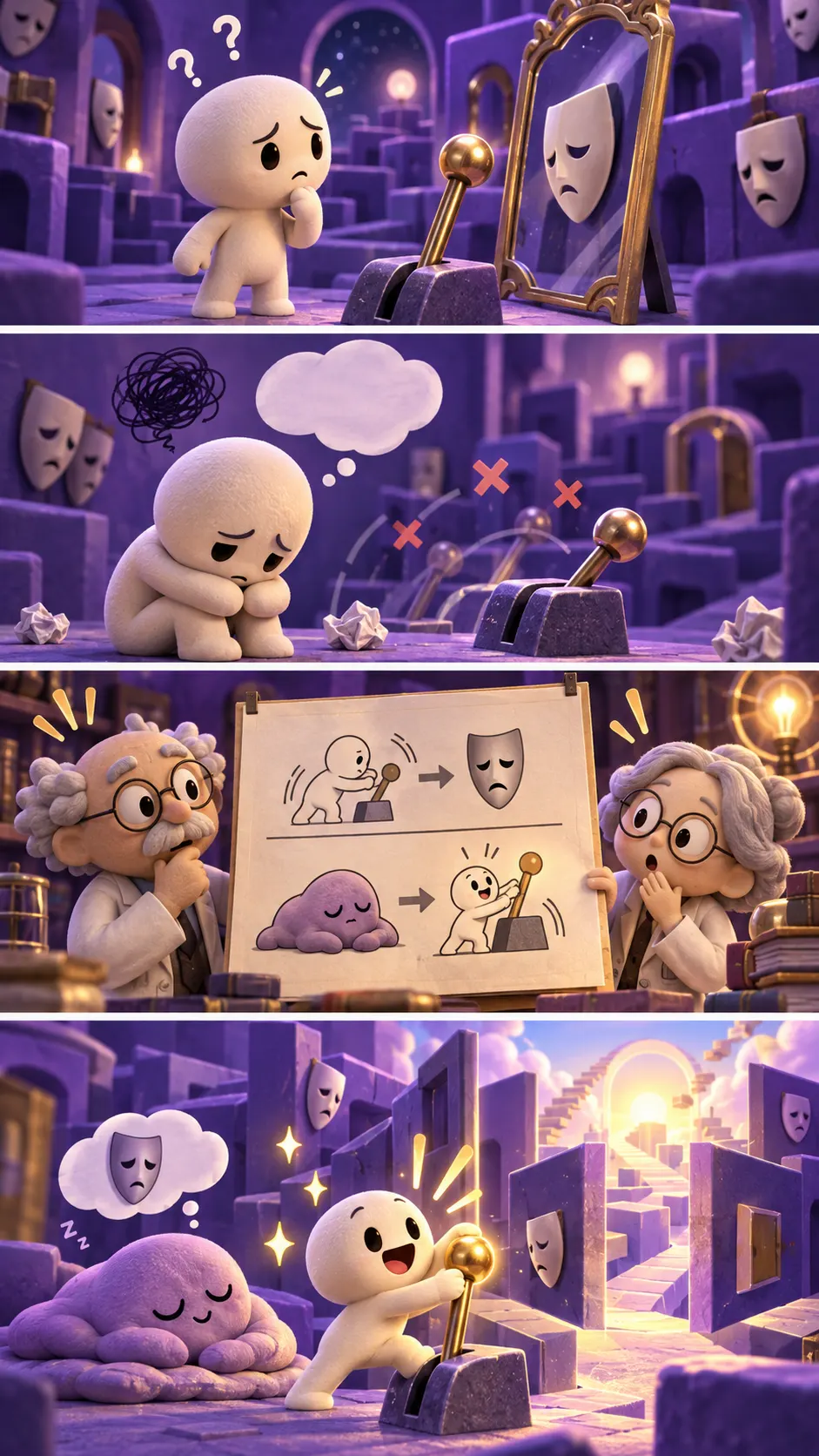
 4コマでわかる
このネタ、誰かに教えたくなった?
「何をしても無駄だと学ぶと、人も動物も動けなくなる」という有名な学習性無力感。実は50年後、提唱者本人たちが「逆だった」と論文で修正したらしい。無力は生まれつきの反応で、学ぶのは「自分で変えられる」感覚のほうだ、と。
押すと「マジかリスト」に保存されます
 出典・参考文献(3件)タップで表示
- Seligman & Maier (1967) Failure to escape traumatic shock, Journal of Experimental Psychologydoi.org
- Hiroto & Seligman (1975) Generality of learned helplessness in man, Journal of Personality and Social Psychologydoi.org
- Maier & Seligman (2016) Learned helplessness at fifty: insights from neuroscience, Psychological Reviewdoi.org

※本記事は上記の研究・公開資料をもとに、原田英語が独自の言葉で解説したものです。引用は著作権法第32条の範囲で行い、出典を明記しています。画像はすべてオリジナルのイメージです。研究結果には限界や個人差があります。誤りのご指摘は原田英語のお問い合わせフォームから。
 これも「マジか!?」


 心理学
心理学
【同志社の入試に出た】1歳半の赤ちゃんは、頼まれなくても人を助ける。でもご褒美で逆効果

 心理学
心理学
【同志社の入試に出た】サンタの正体を知った子どもより、親のほうが悲しんでいた
 心理学
心理学
【早稲田の入試に出た】知らない人との「ちょうどいい距離」、いちばん近い国と遠い国で約1.7倍の差。42か国調査
 心理学
心理学
【同志社の入試に出た】表情が豊かな人ほど好かれやすい。1,300人超のビデオ通話を分析
 心理学
心理学
【慶應の入試に出た】「忙しい自慢」はなぜ生まれた?忙しさがステータスになった理由
 心理学
心理学