

 動物・植物ホント
ミツバチは「おしりフリフリ」で、数km先の花畑の場所を仲間に教えている
 2026.10.02
 English Corner(A2〜B2・4択クイズ)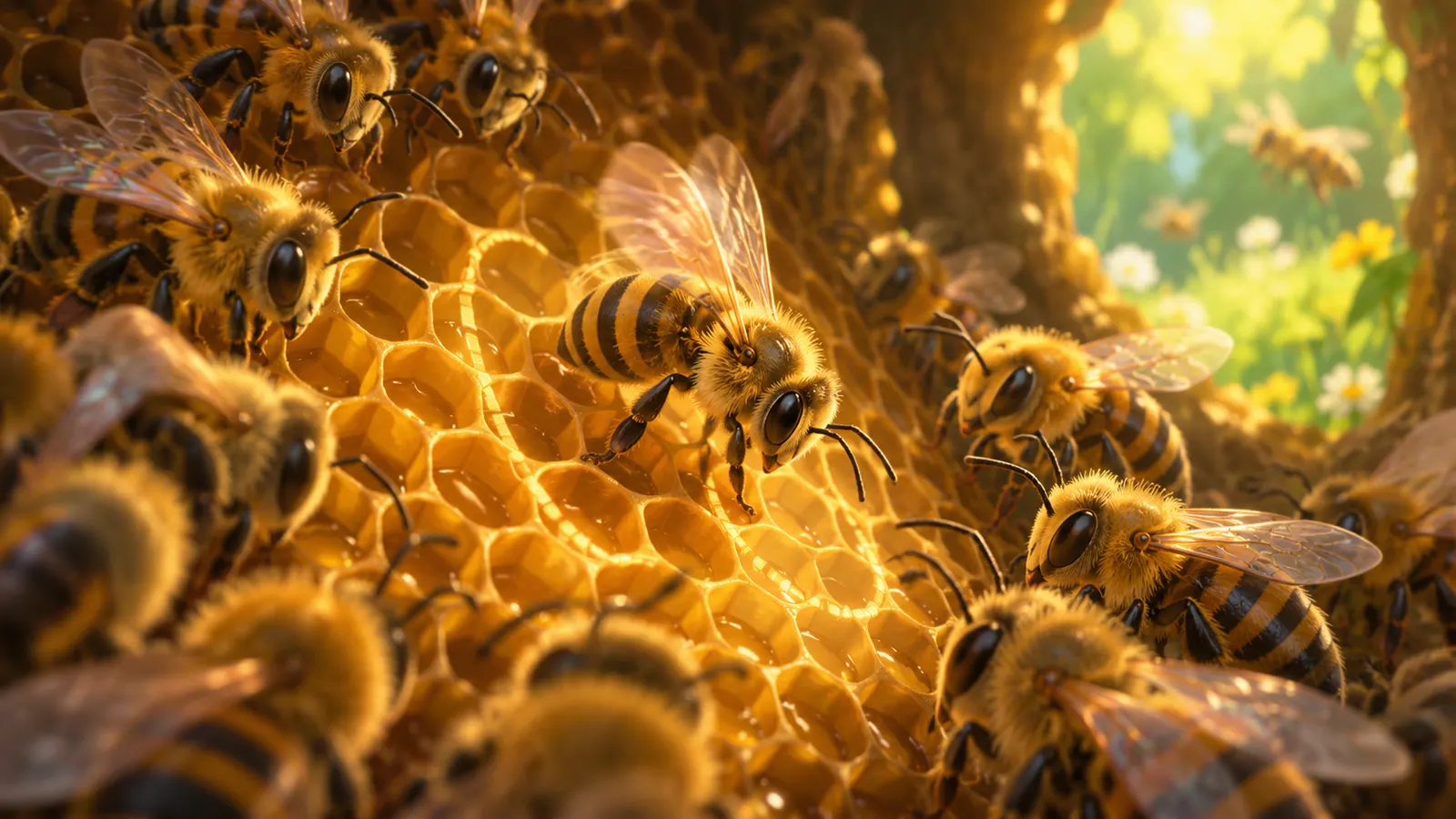
 読む前に予想してみよう!
ミツバチのダンスで、おしりを振る時間が長いほど、花は遠くにある
尻振り(ワグル)の時間は、エサ場までの距離と関係している。方角は、巣板の真上を太陽の方向に見立てて表す。
 研究カード(どんな研究?)
- 対象
- セイヨウミツバチのコロニー
- 規模
- 数十〜数百匹を追跡(各研究)
- 研究の種類
- 野外実験・レーダー追跡
- 確かさ
- ★★★★☆
ミツバチは8の字ダンスで、花の方角を「太陽との角度」、距離を「おしりを振る時間」で伝える。ノーベル賞にもなった発見。
ひとことで言うとミツバチのダンスは「あっちの方へ、これくらい遠く」という地図!
真っ暗な巣箱の中で、一匹のミツバチが、おしりを小刻みに振りながら歩き出す。くるっと回って、また同じところを振りながら歩く。
ただの気まぐれな踊りに見えますが、これは「花畑はあっち、ここから何km先」というかなり正確な道案内です。
この「8の字ダンス」の意味を解き明かしたのは、オーストリアの動物学者カール・フォン・フリッシュ。この業績などで、1973年にノーベル生理学・医学賞を受賞しました。
01真上が「太陽の方向」というルール
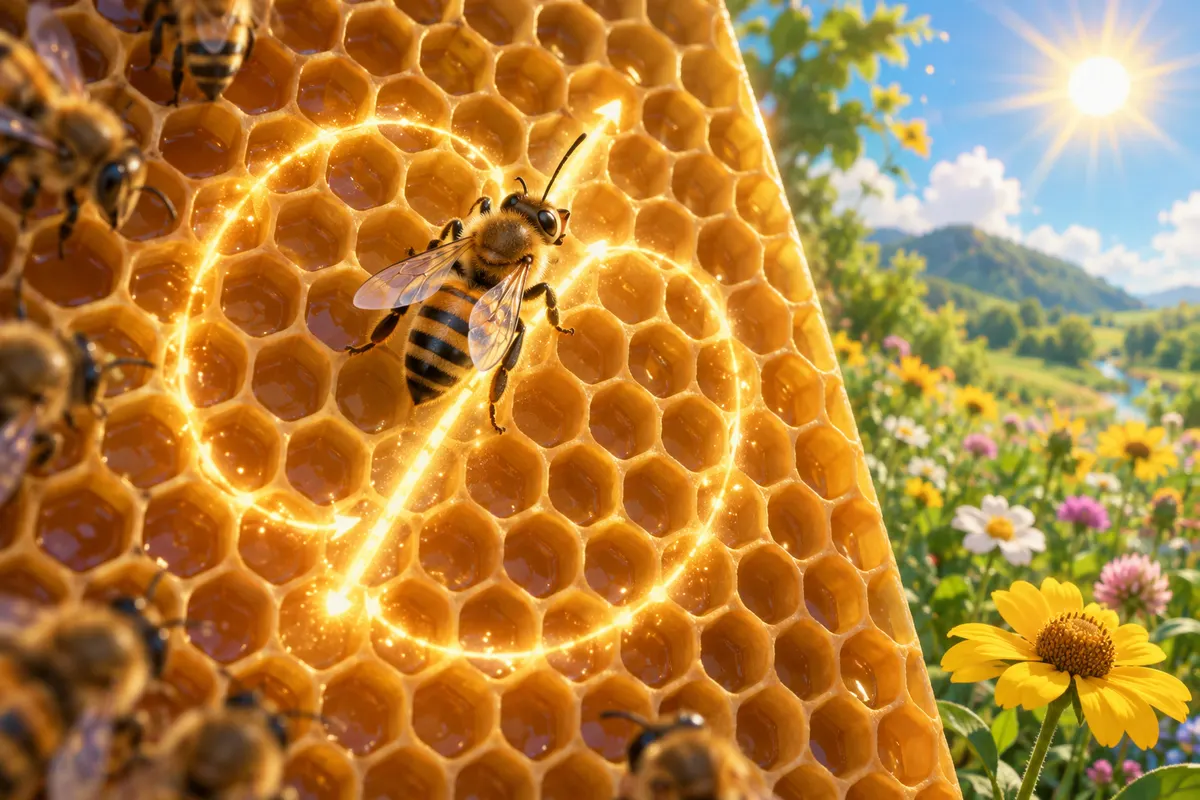
ダンスの形は、アルファベットの「8」や「∞」に近い形です。真ん中のまっすぐな部分で、ハチはおしりを左右にブルブル振りながら進みます。これを尻振り(ワグル)走行といいます。
方角の伝え方は、とても賢いルールでできています。
- 巣の中の壁(巣板)は縦向き。その真上を「太陽の方向」とみなす
- 尻振り走行が、真上から右に60度傾いていたら「太陽から右に60度の方向に花がある」
- 真下に向かって走れば「太陽と反対方向」
太陽の位置を、重力の「上」に置き換えて伝えているのです。暗い巣の中でも使える、すばらしい翻訳ルールです。
02距離は「おしりを振る時間」で伝える
では距離はどうやって伝えるのでしょうか。
答えは、尻振り走行の長さ(時間)です。遠い花畑ほど、長くおしりを振ります。ただし、何秒が何mに当たるかは決まっておらず、通り道の景色などによって変わります。
ハチは飛んだ距離を、羽ばたきの回数や使ったエネルギーではなく、目に流れる景色の量で測っています。2001年に『Nature』に載った研究(Esch ら)では、模様のついた細いトンネルの中を飛ばすと、ハチは実際よりずっと遠くまで飛んだかのようにダンスしました。景色がビュンビュン流れると、「たくさん飛んだ」と感じるらしいのです。
03本当に「ダンスを見て」飛んでいくの?
これで、ダンスが本当に情報として使われていることが、はっきり確かめられました。
04ダンスは先輩から学んで上手になる
ミツバチの社会では、生まれつきの本能と、見て学ぶ力の両方がダンスを支えているのです。
05まとめ
ミツバチの8の字ダンスは、方角を太陽との角度で、距離をおしりを振る時間で伝える、立派な「言葉」でした。しかもその言葉は、先輩から学んで上達していきます。
次に花に来たミツバチを見かけたら、その子が巣に帰ってどんなダンスを踊るのか、想像してみてください。
この研究を英語で読もう原田英語の English CornerHoneybees have a clever way of sharing information. 音声
音声 4択クイズ9問A2・B1・B2タップして開く
原田英語の English Corner
この研究を英語で読もう
When a honeybee finds flowers, it goes back to the hive and dances. This is called the waggle dance. The bee walks in a figure-eight and shakes its body.
The direction of the dance shows where the flowers are, compared with the sun. The time the bee shakes its body shows how far away they are. Other bees learn the way and fly to the flowers.
66 words ・ CEFR A2
和訳を見る
ミツバチは花を見つけると、巣に戻って踊ります。これは8の字ダンス(尻振りダンス)と呼ばれます。ハチは8の字を描いて歩き、体を振ります。
ダンスの向きは、太陽と比べて花がどこにあるかを示します。ハチが体を振る時間は、花がどれくらい遠くにあるかを示します。ほかのハチたちは道を覚えて、花へ飛んでいきます。
4択リーディングクイズ
Q1. What is the passage mainly about?
ダンスで花の場所を仲間に伝える話なので C。
Q2. What does the time the bee shakes its body show?
The time the bee shakes its body shows how far away they are. とあるので A。
Q3. In this passage, "direction" means ...
direction は「方向・方角」。ダンスの向きが花のある方角を示す、という意味なので B。
Honeybees have a clever way of sharing information. When a forager finds good flowers, it returns to the hive and performs a waggle dance on the vertical comb. During the straight part of the dance, it shakes its body from side to side. The angle of this run from straight up shows the direction of the food compared with the sun, and its length shows the distance.
The Austrian scientist Karl von Frisch discovered the meaning of this dance and shared a Nobel Prize in 1973. In 2005, researchers attached tiny antennas to bees and followed them with radar. Bees that had watched a dance flew almost straight toward the place it described. So the dance really works as a map.
121 words ・ CEFR B1
和訳を見る
ミツバチには情報を共有する賢い方法があります。採餌係のハチはよい花を見つけると、巣に戻り、縦向きの巣板の上で8の字ダンスを踊ります。ダンスのまっすぐな部分では、体を左右に振ります。この直進部分が真上からなす角度は太陽と比べたエサの方角を示し、その長さは距離を示します。
オーストリアの科学者カール・フォン・フリッシュはこのダンスの意味を発見し、1973年にノーベル賞を共同受賞しました。2005年、研究者たちはハチに小さなアンテナを付け、レーダーで追跡しました。ダンスを見たハチは、ダンスが示した場所に向かってほぼまっすぐ飛び、ダンスが本当に地図として働いていることが示されました。
4択リーディングクイズ
Q1. What does the angle of the waggle run show?
The angle of this run from straight up shows the direction of the food compared with the sun とあるので D。
Q2. What did the 2005 radar study show?
Bees that had watched a dance flew almost straight toward the place it described とあるので B。
Q3. Who discovered the meaning of the waggle dance?
The Austrian scientist Karl von Frisch discovered the meaning of this dance とあるので A。
A honeybee that has found a rich patch of flowers flies back to the dark hive and dances. On the vertical comb, she runs a figure-eight again and again, shaking her abdomen during the straight middle section, the "waggle run." The angle of that run relative to vertical encodes the direction of the food relative to the sun, and its duration encodes distance.
Very few animal signals refer to something out of sight. Karl von Frisch's work on this code contributed to his share of the 1973 Nobel Prize. Bees judge distance by optic flow, the amount of scenery passing their eyes, and not by how hard they work. In a 2001 experiment, bees that flew through a narrow patterned tunnel danced as if they had traveled much farther.
In 2005, harmonic radar tracking confirmed that recruits fly roughly along the advertised vector, even when released somewhere else. A 2023 study found that young bees denied the chance to watch experienced dancers produced less accurate dances, so the skill is partly learned. The dance is not always necessary. Where food is plentiful, colonies often do almost as well without it, because many foragers rely on their own memories.
198 words ・ CEFR B2
和訳を見る
花がたくさんある場所を見つけたミツバチは、暗い巣に飛んで戻り、踊ります。縦向きの巣板の上で何度も8の字を描き、まん中のまっすぐな部分、つまり「尻振り走行」の間に腹部を振るのです。その走行の垂直方向に対する角度は太陽に対するエサの方角を、その継続時間は距離を表します。
目に見えないものを指し示す動物の信号は、ごくわずかしかありません。カール・フォン・フリッシュによるこの暗号の研究は、1973年のノーベル賞の共同受賞につながりました。ハチは、どれだけ頑張って飛んだかではなく、オプティックフロー、つまり目の前を流れる景色の量で距離を判断します。2001年の実験では、模様のついた細いトンネルの中を飛んだハチは、実際よりずっと遠くまで移動したかのように踊りました。2005年には、ハーモニックレーダーでの追跡によって、ダンスを見たハチが、別の場所で放されたときでさえ、示されたベクトルにほぼ沿って飛ぶことが確かめられました。
2023年の研究では、経験のあるハチのダンスを見る機会を与えられなかった若いハチは不正確なダンスをすることがわかりました。つまり、この技能は部分的には学習されるのです。ダンスがいつも必要なわけではありません。エサが豊富な場所では、多くの採餌係が自分の記憶に頼るため、ダンスがなくてもコロニーはほとんど同じくらいうまくやっていけることが多いのです。
4択リーディングクイズ
Q1. What did the 2001 tunnel experiment show?
Bees judge distance by optic flow, the amount of scenery passing their eyes とあり、トンネル実験はその証拠なので A。
Q2. What does the 2023 study suggest about the dance?
so the skill is partly learned とあるので C。
Q3. What limitation of the dance does the author mention at the end?
The dance is not always necessary. Where food is plentiful, colonies often do almost as well without it とあるので D。
重要単語
- waggle danceC1名詞(句)8の字ダンス(尻振りダンス)A honeybee performs a waggle dance after finding flowers.
 waggle は「(小刻みに)振る」。wag(しっぽを振る)と同じ仲間。
 - foragerC1名詞採餌(さいじ)係のハチThe forager returned to the hive with nectar. 動詞 forage(エサを探し回る)。foraging behavior「採餌行動」。
- optic flowC1名詞(句)目に流れる景色の動きBees measure distance using optic flow. optic は「目の・視覚の」。optical illusion(目の錯覚)と同語源。
- recruitB2動詞(仲間を)呼び集めるThe dance recruits other bees to the food source. 名詞で「新入社員・新兵」。就職活動の「リクルート」はここから。
- verticalB2形容詞垂直の、縦向きのThe comb inside the hive is vertical. 反対は horizontal(水平の)。セットで覚える。
- encodeC1動詞(情報を)符号化する、表すThe length of the run encodes distance. en-(中に入れる)+code。反対は decode(解読する)。
 入試に出る順の単語帳を印刷する →
 全5903語の「科学英単語カード」で復習する →
 動画でもっと知る
動画は各チャンネルの公式埋め込みで表示しています(YouTube)。
この話題を TED で聞く
同じテーマの TED・TED-Ed を、 TED HACK で。英語の見どころ・使える表現・学習ミッションつきの日本語ガイドです。(運営:原田英語)

 公式・一次情報をチェック
このネタ、誰かに教えたくなった?
ミツバチの「8の字ダンス」、実は方角と距離を伝える立派な地図らしい。巣の壁の真上を「太陽の方向」に見立て、おしりを振る時間が「距離」。真っ暗な巣の中で、仲間は体に触れてダンスを読み取っている。
押すと「マジかリスト」に保存されます
 出典・参考文献(4件)タップで表示
- Riley et al. (2005) The flight paths of honeybees recruited by the waggle dance, Naturedoi.org
- Esch et al. (2001) Honeybee dances communicate distances measured by optic flow, Naturedoi.org
- Dong et al. (2023) Social signal learning of the waggle dance in honey bees, Sciencedoi.org
- The Nobel Prize in Physiology or Medicine 1973(Karl von Frisch ほか), NobelPrize.orgnobelprize.org

※本記事は上記の研究・公開資料をもとに、原田英語が独自の言葉で解説したものです。引用は著作権法第32条の範囲で行い、出典を明記しています。画像はすべてオリジナルのイメージです。研究結果には限界や個人差があります。誤りのご指摘は原田英語のお問い合わせフォームから。
 これも「マジか!?」
 動物・植物
動物・植物
ヘビの顔の「穴」は熱を見る第3の目。暗闇でもネズミの体温を感じるセンサーの正体
 動物・植物
動物・植物
ボノボは鳴き声を「単語」のように組み合わせていた。言葉のルーツは700万年前?


 動物・植物
動物・植物
「観葉植物で空気がキレイに」は幻想? 換気と同じ効果には床1㎡に10〜1000鉢が必要という計算
 動物・植物
動物・植物
ミツバチは「ゼロ」がわかる? 何も描かれていないカードを「1より少ない」と選んだ
 動物・植物
動物・植物
渡り鳥は目で地球の磁場を感じているかもしれない。カギは「量子」のふしぎな現象

 動物・植物
動物・植物