

 人間関係・お金・日常ビミョー
初対面の2人が45分で親密に。「恋に落ちる36の質問」、本当はどんな実験だった?
 2026.10.02
 English Corner(A2〜B2・4択クイズ)

 読む前に予想してみよう!
「36の質問」の元の実験では、最後に4分間見つめ合う手順が含まれていた
見つめ合いは後に広まったエッセイで紹介されたもの。元の実験は質問に答え合うだけだった。
 研究カード(どんな研究?)
- 対象
- 初対面の大学生ペア
- 規模
- 複数の実験
- 研究の種類
- 実験室実験(ランダム割り付け)
- 確かさ
- ★★★☆☆
少しずつ深くなる36の質問に答え合うと、初対面の2人でも親密さが高まった。ただし元の実験は「恋に落ちる」ための研究ではなく、4分間見つめ合う手順もなかった。
ひとことで言うとだんだん深い話をしていくと、知らない人とも仲良くなりやすい!
「この36の質問に答え合えば、誰とでも恋に落ちる」
10年ほど前、そんな触れ込みで世界中に広まったのが「36の質問」です。カップル向けの動画や記事で、見たことがある人もいるかもしれません。
でも、その元ネタはれっきとした心理学の論文。そして元の実験は、ネットで広まった話とは少し違うものでした。
01実験の目的は「親しさ」を研究すること
この実験を考えたのは、ニューヨーク州立大学ストーニーブルック校の心理学者アーサー・アロンらです。
研究の目的は、恋愛ではなく「人と人が親しくなるプロセスを、実験室で再現する方法」を作ることでした。親しさを研究するには、実験のたびに「親しい2人」を作り出せると便利だからです。
02質問は「浅い→深い」へ
36の質問は、こんなふうに少しずつ深くなっていきます(内容は要約です)。
- セット1:世界中の誰でも夕食に招けるなら誰? 「完璧な1日」ってどんな日?
- セット2:友情で一番大切にしていることは? 一番大切な思い出は?
- セット3:最後に人前で泣いたのはいつ? 相手のいいなと思ったところを、正直に伝えてみよう
ポイントはお互いに答えること、そして少しずつ深くしていくこと。いきなり重い話をするのではなく、階段を上るように心を開いていくのです。

03結果:雑談より、ぐっと親しく
45分後、36の質問をしたペアは、雑談をしたペアよりも、相手をずっと親しく感じていたのです。
この手順は「ファスト・フレンズ(すぐ友達)法」とも呼ばれ、その後も別の研究者たちが追試しています。2021年の研究(Sprecher)でも、アロンらの質問に答え合ったペアは、雑談をしたペアより親しさや好感が高まりやすいことが確認されました。この研究では、対面でもビデオ通話でも効果の大きさに差はありませんでした。
心理学では、自分のことを相手に話すことを自己開示と呼びます。そして、相手が自己開示してくれたら、自分も同じくらい開示する。このお互いさまの開示が、親しさを生むカギだと考えられています。
04「4分間見つめ合う」は元の実験にない
ここで、よくある誤解を正しておきましょう。
また、元の実験で測ったのは「親しさ」であって、「恋に落ちたかどうか」ではありません。36の質問は恋の魔法ではなく、仲良くなるための会話の設計図なのです。
05私たちは「深い話」を怖がりすぎ?
関連する2022年の研究(Kardas ら)では、人は初対面の相手と深い話をすると気まずくなると予想しがちですが、実際にやってみると思ったより楽しく、つながりを感じられることが報告されています。
私たちは、深い会話のハードルを実際より高く見積もっているのかもしれません。
06まとめ
「恋に落ちる36の質問」の正体は、人が親しくなる仕組みを調べるための実験ツールでした。
恋の保証はないけれど、少しずつ心を開き合えば、初対面の人とでも距離は縮まる。それだけでも、十分に「マジか!」な発見ですよね。
この研究を英語で読もう原田英語の English CornerThe famous "36 questions" come from a 1997 study led by psychologist Arthur Aron. 音声
音声 4択クイズ9問A2・B1・B2タップして開く
原田英語の English Corner
この研究を英語で読もう
Can 36 questions make two strangers feel close? In 1997, a team of psychologists tried it. Pairs of college students met for the first time.
For 45 minutes, they took turns answering questions. The first questions were easy, but later ones were more personal. Other pairs only made small talk.
At the end, the question pairs felt much closer to each other. The study was about closeness. It was not about falling in love.
74 words ・ CEFR A2
和訳を見る
36の質問で、知らない2人が親しくなれるのでしょうか。1997年、心理学者のチームがそれを試しました。大学生のペアが初めて会いました。
45分間、彼らは交代で質問に答えました。最初の質問は簡単でしたが、後の質問はより個人的なものでした。
別のペアは雑談をしただけでした。最後には、質問に答え合ったペアの方が、お互いをずっと親しく感じていました。この研究は親しさについてのもので、恋に落ちることについてではありませんでした。
4択リーディングクイズ
Q1. What is the passage mainly about?
初対面の2人が質問に答え合って親しくなる実験の話なので D。最終文でも「恋ではなく親しさの研究」と述べている。
Q2. How long did the pairs answer the questions?
For 45 minutes, they took turns answering questions. とあるので C。36は質問の数。
Q3. In this passage, "small talk" means ...
small talk は天気や趣味などの「世間話・雑談」。個人的な質問と対比されているので A。
The famous "36 questions" come from a 1997 study led by psychologist Arthur Aron. His team wanted a reliable way to create closeness between strangers in the lab. College students who had never met were put into pairs and spent 45 minutes taking turns answering three sets of questions.
The questions started light, such as who you would invite to dinner, and gradually became more personal. Other pairs spent the same time on small talk. Afterwards, the pairs who answered the 36 questions felt much closer.
Researchers believe the key is mutual self-disclosure. When one person opens up, the other tends to do the same. Contrary to popular belief, the original study did not include four minutes of silent eye contact.
121 words ・ CEFR B1
和訳を見る
有名な「36の質問」は、心理学者アーサー・アロンが率いた1997年の研究に由来します。彼のチームは、実験室で初対面の人どうしに親しさを生み出す確実な方法を求めていました。会ったことのない大学生がペアにされ、45分間、3セットの質問に交代で答えました。
質問は「夕食に誰を招きたいか」のような軽いものから始まり、だんだん個人的になっていきました。別のペアは同じ時間、雑談をしました。その後、36の質問に答えたペアの方がずっと親しさを感じていました。
研究者たちは、カギはお互いの自己開示だと考えています。一方が心を開くと、もう一方も同じようにしやすいのです。よく信じられているのとは違い、元の研究には4分間黙って見つめ合う手順は含まれていませんでした。
4択リーディングクイズ
Q1. Why did Aron's team create the 36 questions?
wanted a reliable way to create closeness between strangers in the lab とあるので B。恋愛が目的ではない。
Q2. Which statement is true according to the passage?
started light ... and gradually became more personal とあるので A。雑談のペアもいた、見つめ合いはなかった、初対面だった、ので他は誤り。
Q3. What does the author suggest about the "four minutes of eye contact"?
Contrary to popular belief, the original study did not include ... とあり、元の研究にはなかったと述べているので C。
The so-called "36 questions to fall in love" originated in a 1997 paper by Arthur Aron and colleagues, but its purpose was far less romantic than the internet suggests. The researchers needed a dependable procedure for generating interpersonal closeness in the laboratory, so that intimacy itself could be studied. Pairs of unacquainted college students spent 45 minutes alternately answering three sets of twelve questions that escalated from light topics to deeply personal ones, while comparison pairs engaged in small talk for the same period.
The question pairs reported substantially greater closeness, and later replications, including a 2021 study by Sprecher, have produced similar results. The underlying mechanism is thought to be reciprocal, gradual self-disclosure. Several caveats apply, however. What was measured was momentary closeness, not the formation of romantic relationships or their long-term survival, and the size of the effect may depend on participants' willingness to engage with the task.
Also, the widely shared step of staring into each other's eyes for four minutes was popularized by a 2015 newspaper essay and was never part of the original experiment. Related research by Kardas and colleagues suggests that people overestimate how awkward deep conversations will be.
195 words ・ CEFR B2
和訳を見る
いわゆる「恋に落ちる36の質問」は、アーサー・アロンらによる1997年の論文に由来しますが、その目的はネットで言われているよりずっと恋愛色の薄いものでした。研究者たちは、親密さそのものを研究できるように、実験室で対人的な親しさを生み出す確実な手順を必要としていたのです。面識のない大学生のペアが、軽い話題からとても個人的な話題へと段階的に深まる12問×3セットの質問に、45分間交互に答えました。一方、比較用のペアは同じ時間雑談をしました。
質問に答えたペアはかなり大きな親しさを報告し、2021年のスプレッカーの研究を含む後の追試でも同様の結果が得られています。根底にある仕組みは、相互的で段階的な自己開示だと考えられています。ただし、いくつか注意点があります。測定されたのはその場の親しさであり、恋愛関係の成立やその長期的な継続ではありません。また効果の大きさは、参加者が課題にどれだけ乗り気になれるかに左右される可能性があります。
また、広く知られている「4分間見つめ合う」という手順は2015年の新聞エッセイで広まったもので、元の実験には一度も含まれていませんでした。カーダスらの関連研究は、人は深い会話がどれほど気まずいかを過大に見積もっていることを示唆しています。
4択リーディングクイズ
Q1. What was the original purpose of the 36 questions?
needed a dependable procedure for generating interpersonal closeness in the laboratory, so that intimacy itself could be studied とあるので B。
Q2. Which of the following is mentioned as a limitation of the study?
What was measured was momentary closeness, not the formation of romantic relationships or their long-term survival とあるので A。追試は行われている。
Q3. What can be inferred from the research by Kardas and colleagues?
people overestimate how awkward deep conversations will be=実際より気まずさを大きく予想している、ということなので C。
重要単語
- self-disclosureC1名詞自己開示Gradual self-disclosure helps strangers feel closer. disclose(明らかにする)=dis-(反対)+close(閉じる)。「閉じていたものを開く」イメージ。
- intimacyC1名詞親密さSharing small secrets can build intimacy. 形容詞 intimate(親密な)。an intimate friend「親友」。build intimacy の形で使う。
- reciprocalC1形容詞相互の、お互いさまのGood friendships are usually reciprocal. 類義語 mutual。動詞 reciprocate「お返しをする」。心理学の「返報性」は reciprocity。
- strangerA2名詞見知らぬ人She talked with a stranger for 45 minutes. strange(見慣れない)+-er。I'm a stranger here.「この辺りは不案内です」は道案内の定番。
- escalateC1動詞段階的に高まるThe questions escalate from light to deep. escalator と同語源で「段を上がる」イメージ。対立が escalate(激化する)の意味でも頻出。
- closenessB2名詞親しさ、近さThe questions increased the feeling of closeness. close(近い・親しい)+-ness。形容詞の close は /kloʊs/ と濁らない点に注意。
- replicateC1動詞(実験を)再現する、追試するOther researchers replicated the results. 名詞 replication「追試・再現」。replica(複製品)と同語源。研究系長文の最重要語。
 入試に出る順の単語帳を印刷する →
 全5903語の「科学英単語カード」で復習する →
 動画でもっと知る
動画は各チャンネルの公式埋め込みで表示しています(YouTube)。
この話題を TED で聞く
同じテーマの TED・TED-Ed を、 TED HACK で。英語の見どころ・使える表現・学習ミッションつきの日本語ガイドです。(運営:原田英語)

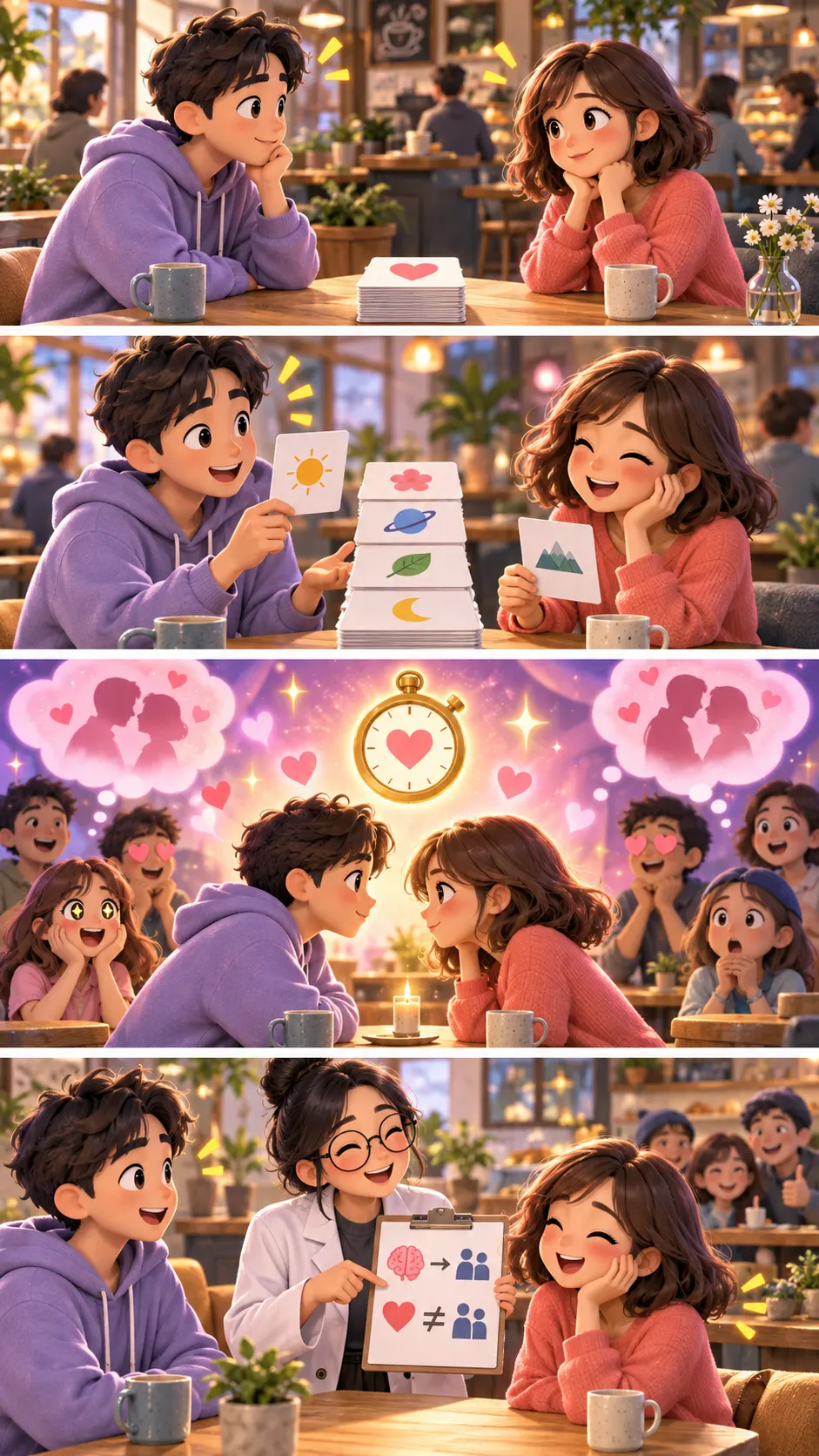
 4コマでわかる
このネタ、誰かに教えたくなった?
「恋に落ちる36の質問」の元ネタは1997年の心理学実験。初対面の2人が45分間、だんだん深くなる質問に答え合うと、雑談した2人よりずっと親しく感じたらしい。ただ「最後に4分見つめ合う」は元の実験にはない。
押すと「マジかリスト」に保存されます
 出典・参考文献(3件)タップで表示
- Aron et al. (1997) The experimental generation of interpersonal closeness: A procedure and some preliminary findings, Personality and Social Psychology Bulletindoi.org
- Kardas, Kumar & Epley (2022) Overly shallow?: Miscalibrated expectations create a barrier to deeper conversation, Journal of Personality and Social Psychologydoi.org
- Sprecher (2021) Closeness and other affiliative outcomes generated from the Fast Friends procedure: A comparison with a small-talk task and unstructured self-disclosure, Journal of Social and Personal Relationshipsdoi.org

※本記事は上記の研究・公開資料をもとに、原田英語が独自の言葉で解説したものです。引用は著作権法第32条の範囲で行い、出典を明記しています。画像はすべてオリジナルのイメージです。研究結果には限界や個人差があります。誤りのご指摘は原田英語のお問い合わせフォームから。
 これも「マジか!?」


 日常の科学
日常の科学
顔の第一印象は0.1秒でほぼ決まる。長く見ても、増えるのは主に「自信」

 日常の科学
日常の科学
孤独は「1日15本のタバコ」並み? 30万人のデータが示した、人づきあいと寿命の関係
 日常の科学
日常の科学
マネされると、なぜか相手を好きになりやすい。しぐさが無意識にうつる「カメレオン効果」とは
 日常の科学
日常の科学
友達は150人が限界? 有名な「ダンバー数」を計算し直したら、数人〜500人超とバラバラだった
 日常の科学
日常の科学
謝罪で一番効くのは「ごめんなさい」じゃなかった。研究で分かった謝り方の6要素
 日常の科学
日常の科学