


 地球・歴史・物理
雨の匂いの正体は「土の細菌」が作る物質だった。ペトリコールとゲオスミンの科学
 2026.10.02
 English Corner(A2〜B2・4択クイズ)

 読む前に予想してみよう!
雨の匂いは、雨水そのものの匂いである
雨水自体はほぼ無臭。土の中の細菌が作るゲオスミンや、地面にたまった油が雨で空中に運ばれて匂う。
 研究カード(どんな研究?)
- 対象
- 土壌・多孔質の表面28種類
- 規模
- 約600回の実験
- 研究の種類
- 実験研究(高速度撮影)
- 確かさ
- ★★★☆☆
雨上がりの匂いの主役は、土の中の放線菌が作る「ゲオスミン」と、乾いた地面にたまった油。雨粒が土に当たった時にできる小さな泡がはじけて、匂いを空中へ運ぶと考えられている。
ひとことで言うと雨のにおいは、土の中の小さな菌が作る「土のかおり」だった!
夕立のあと、ふわっと鼻をくすぐる「雨の匂い」。あれは雨水の匂いではありません。
答えを先に言うと、主役は土の中にいる細菌(放線菌)が作る「ゲオスミン」という物質と、晴れの日に地面にたまった植物由来の油です。雨粒が地面に当たった瞬間、それらが空中に打ち上げられて、私たちの鼻に届くと考えられています。
01「ペトリコール」と名づけた科学者
1964年、オーストラリアの研究機関CSIROのベア(Bear)さんとトーマス(Thomas)さんは、科学誌『Nature』に雨の匂いの研究を発表しました。乾いた岩や土を蒸留すると、黄色っぽい油が取れ、それが雨上がりのあの匂いを放っていたのです。
二人はこれをペトリコール(petrichor)と名づけました。ギリシャ語の「石(petra)」と、神話で神々の血管を流れる液体「イコル(ichor)」を組み合わせた、なかなかロマンチックな名前です。
02土の匂いの主役「ゲオスミン」
その少し後の1965年、アメリカのガーバー(Gerber)さんらが、土の中の放線菌(ストレプトマイセスなどの細菌)から「土くさい匂い」の物質を取り出し、ゲオスミン(geosmin=ギリシャ語で「大地の匂い」)と名づけました。
人間の鼻はゲオスミンにとても敏感で、ごく薄い濃度でも気づけることが知られています。実は日本の水道の水質基準にも、ゲオスミンの項目があります。水道水が「カビくさい」と感じるときの原因物質の一つだからです。
03雨粒の中の小さな泡が、匂いを空中へ運ぶ
でも、なぜ雨が降ると匂いが立つのでしょう?
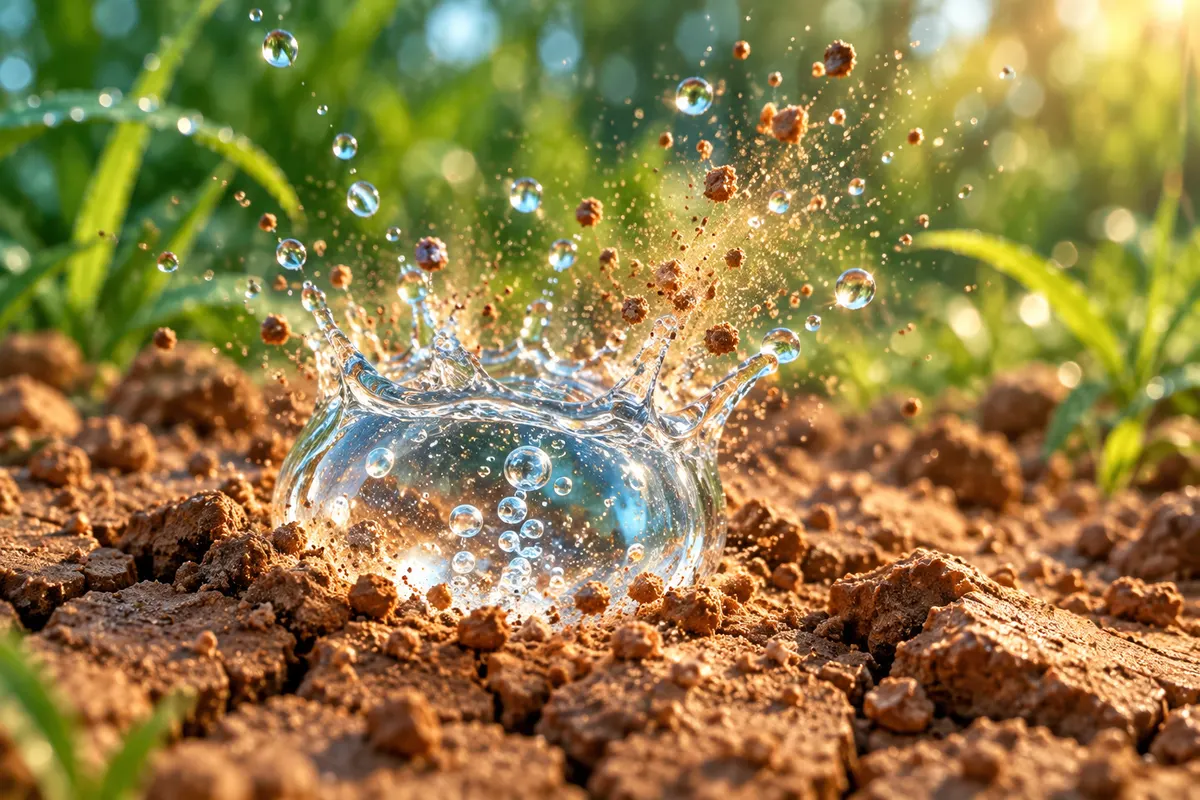
まるでシャンパンの泡がはじけて香りが立つように、雨粒が土の匂い成分を空中へ運んでいる、と考えられています。土砂降りより、降り始めのしとしと雨のほうが匂うと感じるのも、これで説明できるかもしれません。
04なぜ細菌は匂いを出す?
細菌はなぜ、わざわざ匂いを作るのでしょう。2020年、スウェーデンとイギリスの研究チームが一つの答えを出しました。
ゲオスミンなどの匂いは、土にすむ小さな虫トビムシを引き寄せていたのです。トビムシは放線菌を食べに集まり、胞子をふんに混ぜたり体にくっつけたりして、別の場所へ運んでいました。細菌にとって匂いは、「運び屋」を呼ぶための広告だったのかもしれません。
05まとめ
雨の匂いは、土の中の細菌が作るゲオスミンと、地面にたまった油が、雨粒の小さな泡で空中に運ばれたものでした。
次に夕立のあの匂いをかいだら、足元の土の中で、細菌と小さな虫と雨粒がくり広げている見えないドラマを思い出してみてください。
この研究を英語で読もう原田英語の English CornerThe pleasant smell after a summer shower is not the smell of rainwater, which has almost no odor. 音声
音声 4択クイズ9問A2・B1・B2タップして開く
原田英語の English Corner
この研究を英語で読もう
The smell after rain does not come from the rain itself. It comes from the soil. Tiny living things in the soil, called bacteria, make a chemical named geosmin. It has an earthy smell.
Dry ground also collects oils from plants. When raindrops hit the soil, small bubbles of air go up and pop.
The pops may throw the smell into the air. This happens most in light or normal rain. It rarely happens in heavy rain.
77 words ・ CEFR A2
和訳を見る
雨上がりの匂いは、雨そのものから来ているのではありません。土から来ているのです。土の中には細菌と呼ばれる小さな生き物がいて、ゲオスミンという化学物質を作ります。それは土のような匂いがします。
乾いた地面には、植物から出た油もたまります。
雨粒が土に当たると、空気の小さな泡が上がってはじけます。泡がはじけることで、匂いが空気中に放り出されると考えられています。これは弱い雨やふつうの雨のときに一番よく起こり、激しい雨ではめったに起こりません。
4択リーディングクイズ
Q1. What is the passage mainly about?
第1〜2文で、雨の匂いは雨ではなく土から来ると述べ、その仕組みを説明しているので D。
Q2. What makes geosmin?
Tiny living things in the soil, called bacteria, make a chemical named geosmin. とあるので A。
Q3. In this passage, "pop" means to ...
泡が go up and pop とあり、泡が「パチンとはじける」ことを表すので C。
The pleasant smell after a summer shower is not the smell of rainwater, which has almost no odor. In 1964, two Australian scientists collected a yellowish oil from dry rocks and soil and named the smell "petrichor," from Greek words for "stone" and the fluid in the veins of the gods. A year later, American researchers identified geosmin, an earthy-smelling chemical made by soil bacteria. Humans can notice it even at very low levels.
But how does the smell reach our noses? In 2015, researchers at MIT carried out about 600 experiments, filming water drops with a high-speed camera. When a drop hit the soil, tiny bubbles rose and burst, sending fine particles into the air.
116 words ・ CEFR B1
和訳を見る
夏の夕立の後の心地よい匂いは、雨水の匂いではありません。雨水にはほとんど匂いがないのです。1964年、オーストラリアの2人の科学者が乾いた岩や土から黄色っぽい油を取り出し、その匂いを「ペトリコール」と名づけました。「石」と「神々の血管を流れる液体」を表すギリシャ語に由来します。その1年後、アメリカの研究者たちが、土の細菌が作る土くさい匂いの化学物質、ゲオスミンを特定しました。
人間はごく低い濃度でもそれに気づくことができます。では、匂いはどうやって鼻まで届くのでしょうか。2015年、MITの研究者たちは約600回の実験を行い、水滴を高速度カメラで撮影しました。水滴が土に当たると、小さな泡が上がってはじけ、細かい粒を空気中に送り出していたのです。
4択リーディングクイズ
Q1. What is the passage mainly about?
匂いの正体(ペトリコール・ゲオスミン)と、それが空気中に運ばれる仕組み(泡)を説明しているので B。
Q2. What did the scientists do in 1964?
In 1964, two Australian scientists collected a yellowish oil from dry rocks and soil とあるので D。撮影は2015年のMIT。
Q3. What can we infer about rainwater from the passage?
第1文に rainwater, which has almost no odor とあり、匂いの元は土の物質だとわかるので A。
The distinctive scent that follows rain after a dry spell has a surprisingly complex origin. Rainwater itself is nearly odorless; the smell comes from compounds already present on the ground. In 1964, researchers at Australia's CSIRO extracted a yellowish oil from dry rocks and soil and coined the term "petrichor" to describe its smell. Shortly afterwards, geosmin, an earthy-smelling substance produced by soil bacteria such as Streptomyces, was identified, and the human nose turned out to be extremely sensitive to it.
The question of how these compounds become airborne was addressed in 2015, when MIT engineers ran roughly 600 experiments on 28 different surfaces using high-speed cameras. They observed that air trapped in porous soil formed bubbles that rose through each drop and burst, releasing fine aerosols, mainly during light or moderate rain rather than downpours. A 2020 study suggested why bacteria produce geosmin at all: it attracts tiny soil animals called springtails, which eat the bacteria and spread their spores. However, the MIT work described the physics of aerosol release without directly measuring odor molecules, and geosmin may well serve other ecological functions.
184 words ・ CEFR B2
和訳を見る
晴れが続いた後の雨に伴う独特の香りは、意外にも複雑な起源をもっています。雨水そのものはほぼ無臭で、匂いはもともと地面にある化合物から来ています。1964年、オーストラリアのCSIROの研究者たちは乾いた岩や土から黄色っぽい油を抽出し、その匂いを表す「ペトリコール」という言葉を作りました。その後まもなく、ストレプトマイセスなどの土壌細菌が作る土くさい物質ゲオスミンが特定され、人間の鼻がこれに非常に敏感であることがわかりました。これらの化合物がどうやって空気中に出るのかという問いには、2015年に答えが出されました。MITの技術者たちが、高速度カメラを使って28種類の表面で約600回の実験を行ったのです。
彼らは、すき間の多い土に閉じこめられた空気が泡となって水滴の中を上り、はじけて細かいエアロゾルを放出する様子を観察しました。これは土砂降りではなく、主に弱い雨やほどほどの雨のときに起きていました。2020年の研究は、そもそもなぜ細菌がゲオスミンを作るのかを示唆しました。ゲオスミンはトビムシという土の小さな生き物を引き寄せ、トビムシは細菌を食べて、その胞子を広めるのです。ただし、MITの研究はエアロゾル放出の物理を示したもので、匂いの分子を直接測ったわけではありません。また、ゲオスミンには他の生態的な役割もある可能性が十分にあります。
4択リーディングクイズ
Q1. What is the main purpose of the passage?
匂いの起源(油・ゲオスミン)と放出の仕組み(泡とエアロゾル)を順に説明しているので C。
Q2. According to the passage, when were aerosols mainly released?
mainly during light or moderate rain rather than downpours とあるので B。downpour=土砂降り。
Q3. Which statement reflects a limitation mentioned by the author?
最終文 without directly measuring odor molecules が研究の限界の指摘なので D。
重要単語
- petrichorC1名詞雨上がりの土の匂いI love the petrichor after a summer shower.
 petra(石)+ichor(神々の血)。1964年に作られた比較的新しい語。
 - geosminC1名詞ゲオスミン(土の匂いのもとになる物質)Geosmin gives soil its earthy smell. geo-(大地)+osme(匂い)。geography, geology の geo- と同じ。
- aerosolC1名詞空気中にただよう細かい粒Raindrops can release aerosols from the ground. aero-(空気)+sol(溶液)。感染症や気候の話題でも頻出。
- bacteriaB1名詞細菌(bacterium の複数形)Soil bacteria make many kinds of chemicals. 単数は bacterium。data / datum と同じくラテン語由来の複数形。
- sporeC1名詞胞子Insects can carry spores to new places. キノコ・シダ・カビなどが増えるための細胞。spread spores「胞子をまき散らす」。
- odorB2名詞匂い(特に強い・不快な匂い)Rainwater itself has almost no odor. イギリス英語は odour。odorless は「無臭の」。smell より硬い語。
 入試に出る順の単語帳を印刷する →
 全5903語の「科学英単語カード」で復習する →
 この話題を TED で聞く
同じテーマの TED・TED-Ed を、 TED HACK で。英語の見どころ・使える表現・学習ミッションつきの日本語ガイドです。(運営:原田英語)


 公式・一次情報をチェック
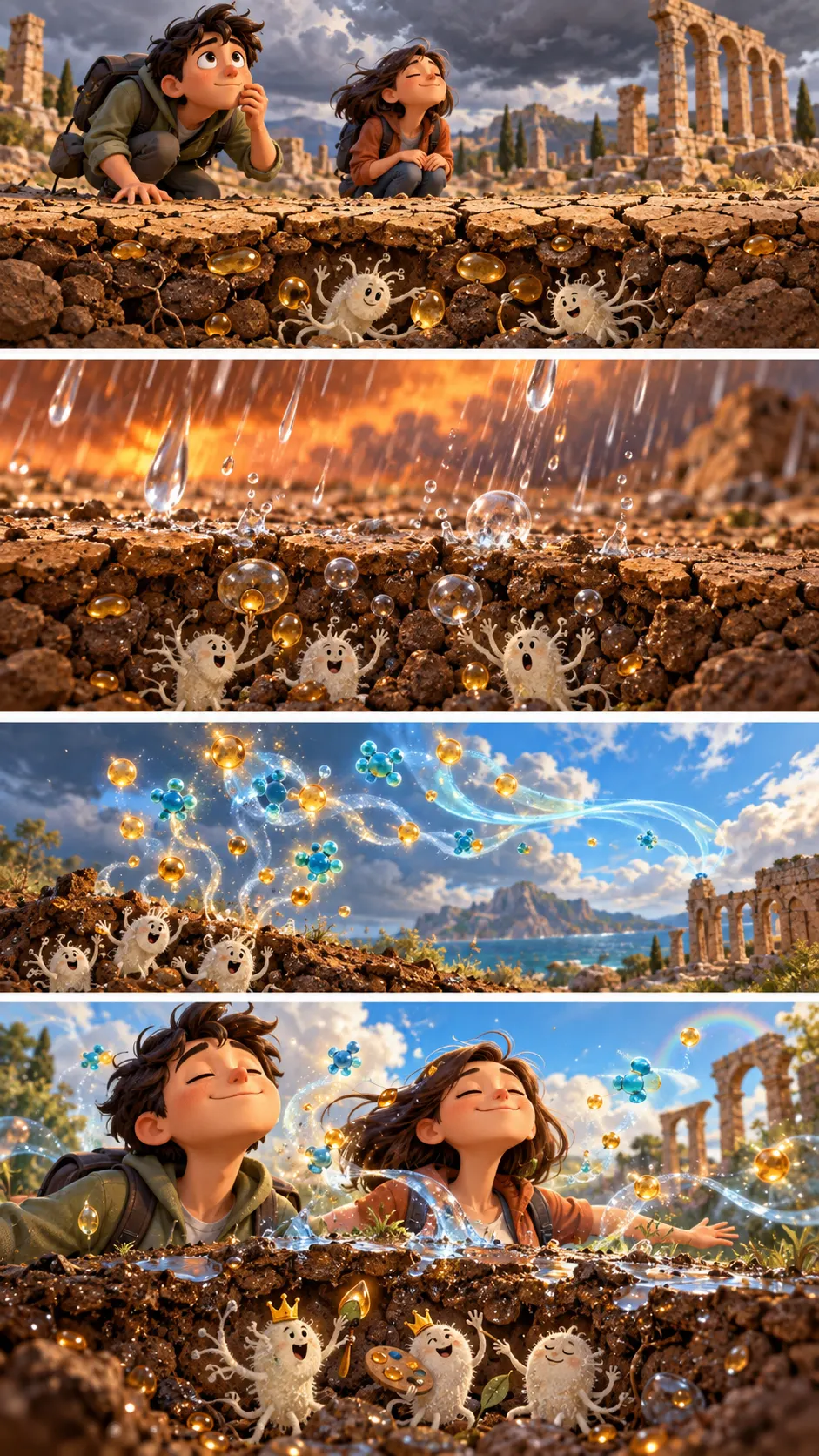
 4コマでわかる
このネタ、誰かに教えたくなった?
雨上がりの「あの匂い」、正体は土の中の細菌が作るゲオスミンという物質。MITの高速カメラ実験では、雨粒が土に当たった瞬間に小さな泡がはじけ、細かい粒(エアロゾル)を空中にまき散らしていたらしい。
押すと「マジかリスト」に保存されます
 出典・参考文献(4件)タップで表示
- Bear & Thomas (1964) Nature of Argillaceous Odour, Naturedoi.org
- Gerber & Lechevalier (1965) Geosmin, an Earthy-Smelling Substance Isolated from Actinomycetes, Applied Microbiologydoi.org
- Joung & Buie (2015) Aerosol generation by raindrop impact on soil, Nature Communicationsdoi.org
- Becher et al. (2020) Developmentally regulated volatiles geosmin and 2-methylisoborneol attract a soil arthropod to Streptomyces bacteria promoting spore dispersal, Nature Microbiologydoi.org
※本記事は上記の研究・公開資料をもとに、原田英語が独自の言葉で解説したものです。引用は著作権法第32条の範囲で行い、出典を明記しています。画像はすべてオリジナルのイメージです。研究結果には限界や個人差があります。誤りのご指摘は原田英語のお問い合わせフォームから。
 これも「マジか!?」

 地球・歴史
地球・歴史
5000年前、エジプト王の家来は"道連れ"にされた? 頭の骨46個中18個に死の前後の傷。100年前は「土のせいの割れ目」とされていた


 地球・歴史
地球・歴史
最古級のブーメランは「マンモスの牙」製だった。ポーランドの洞窟から出た、約4万年前の長さ72cmの1本
 地球・歴史
地球・歴史
沈没船から出た2000年前の「歯車コンピューター」。アンティキティラ島の機械は日食まで予測していた

 地球・歴史
地球・歴史
あなたの中にもネアンデルタール人がいる? DNAの約2%を受け継いでいた私たち
 地球・歴史
地球・歴史 ゼミ★★☆
ゼミ★★☆
オレンジの積み方の証明は「99%確か」?ケプラー予想に最後のお墨付きを与えたのは機械だった
 地球・歴史
地球・歴史