
 体と健康・食
冷たいものが歯に「キーン」としみるのはなぜ? 歯の中に“冷たさセンサー”を持つ細胞がいた
 2026.10.02
 English Corner(A2〜B2・4択クイズ)
 読む前に予想してみよう!
冷たいものが歯にしみるのは、歯の一番外側のエナメル質に神経が通っているからだ
エナメル質には神経がない。冷たさは内側の象牙質や、歯の中の細胞・神経を通じて感じている。
 研究カード(どんな研究?)
- 対象
- マウス・抜いた人の歯
- 規模
- 動物実験+組織の分析
- 研究の種類
- 実験研究
- 確かさ
- ★★★☆☆
エナメル質がすり減ったり歯ぐきが下がったりして象牙質が出ると、冷たさが神経に伝わりやすい。2021年には歯の中の細胞が冷たさセンサーを持つと判明。
ひとことで言うと歯の中には「つめたい!」を感じるセンサー細胞がいたんだ!
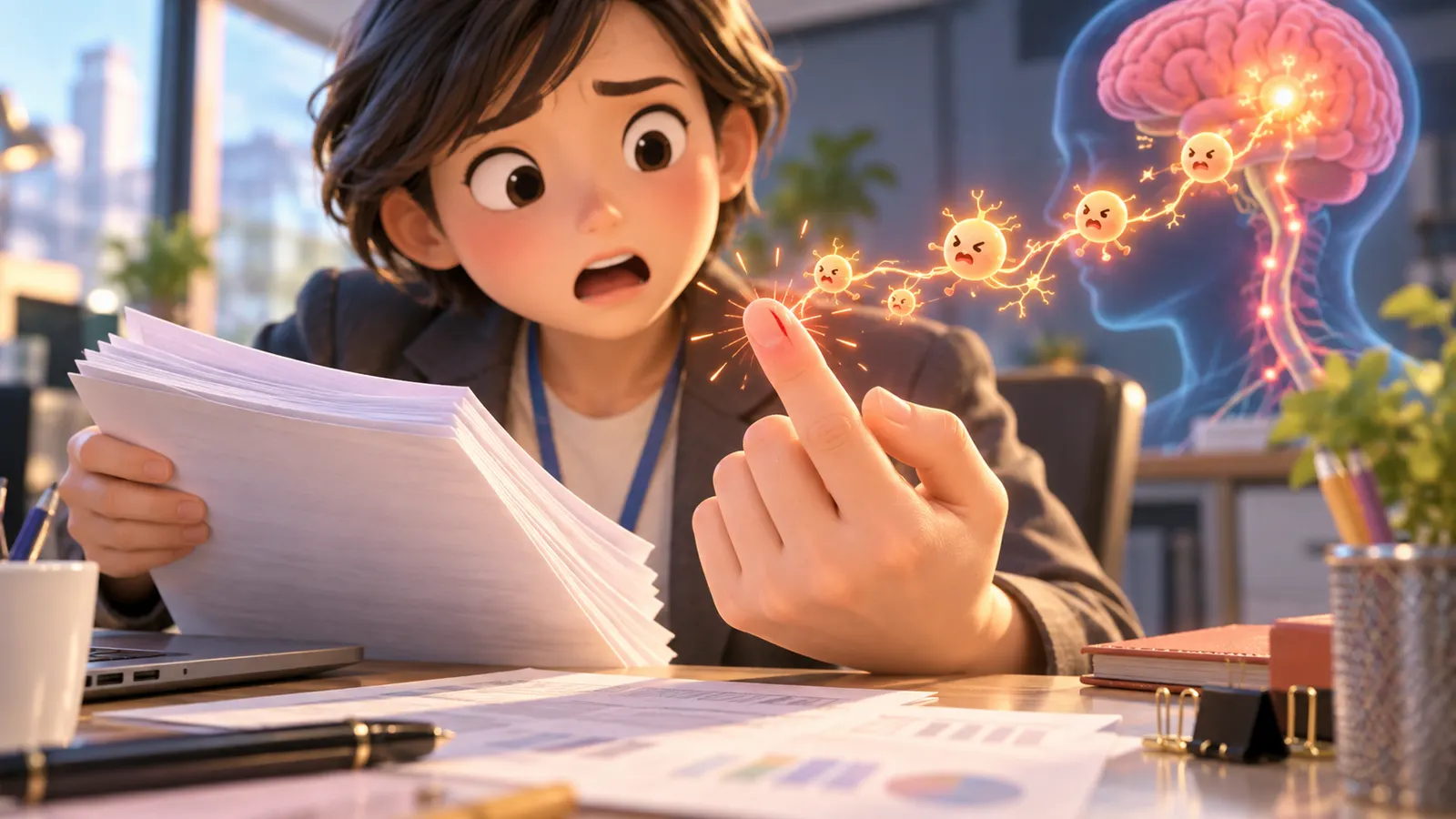
キンキンに冷えたアイスや氷水を口に入れた瞬間、歯に「キーン」と鋭い痛み。いわゆる「知覚過敏」です。
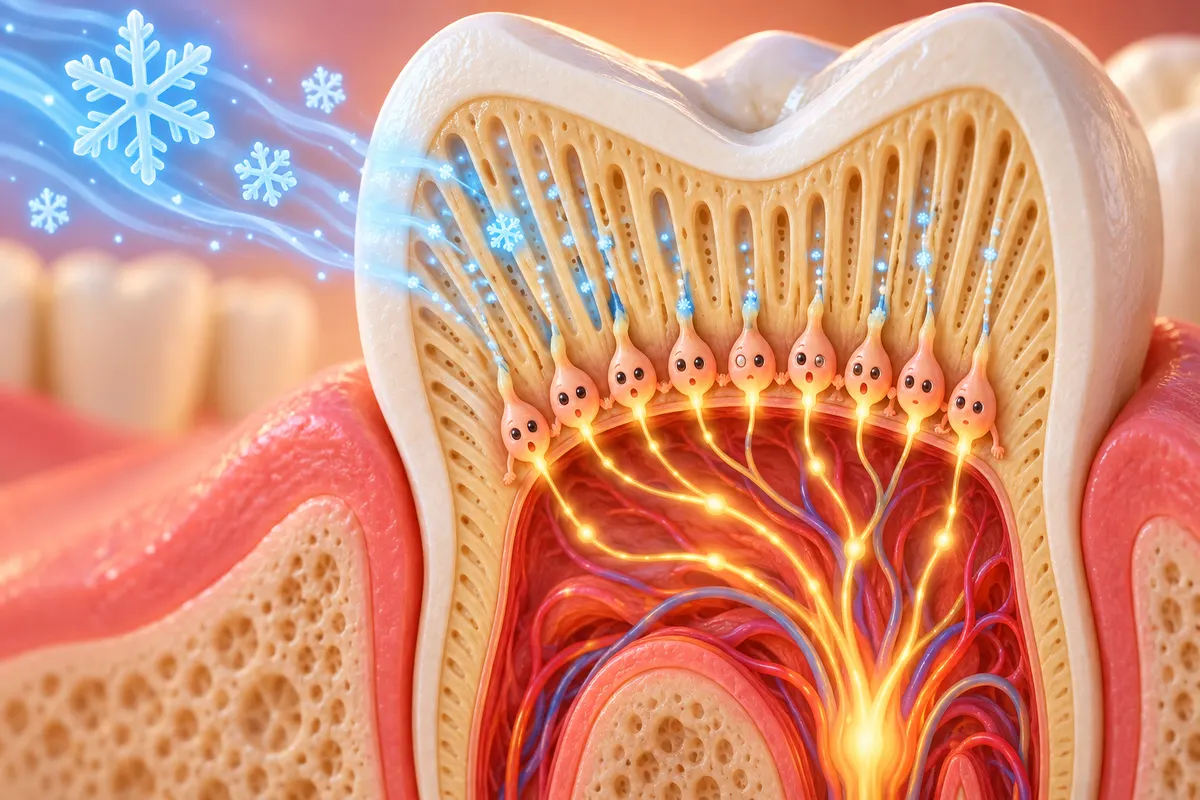
答えを先に言うと、歯がしみるのは、内側の「象牙質」がむき出しになっているからです。歯の表面を守るエナメル質がすり減ったり、歯ぐきが下がったりすると象牙質が出てきて、冷たさが歯の奥の神経に伝わりやすくなります。さらに2021年には、歯の内側の細胞そのものが「冷たさセンサー」を持っているという新しい発見もありました。
01歯は「3層構造」
歯は、外側から
- エナメル質:体の中で一番硬い組織。神経はない
- 象牙質:エナメル質の内側。ものすごく細い管(象牙細管)が無数に通っている
- 歯髄:いちばん奥。神経や血管が通る「歯の中身」
という3層になっています。ふだんはエナメル質と歯ぐきが象牙質をすっぽり覆っているので、冷たいものを口にしても強くしみることはありません。
02むき出しの象牙質から「冷たさ」が入る
ところが、強すぎる歯みがき、歯ぎしり、酸っぱい飲み物のとりすぎ、歯周病などで、歯の根もとの象牙質がむき出しになることがあります。
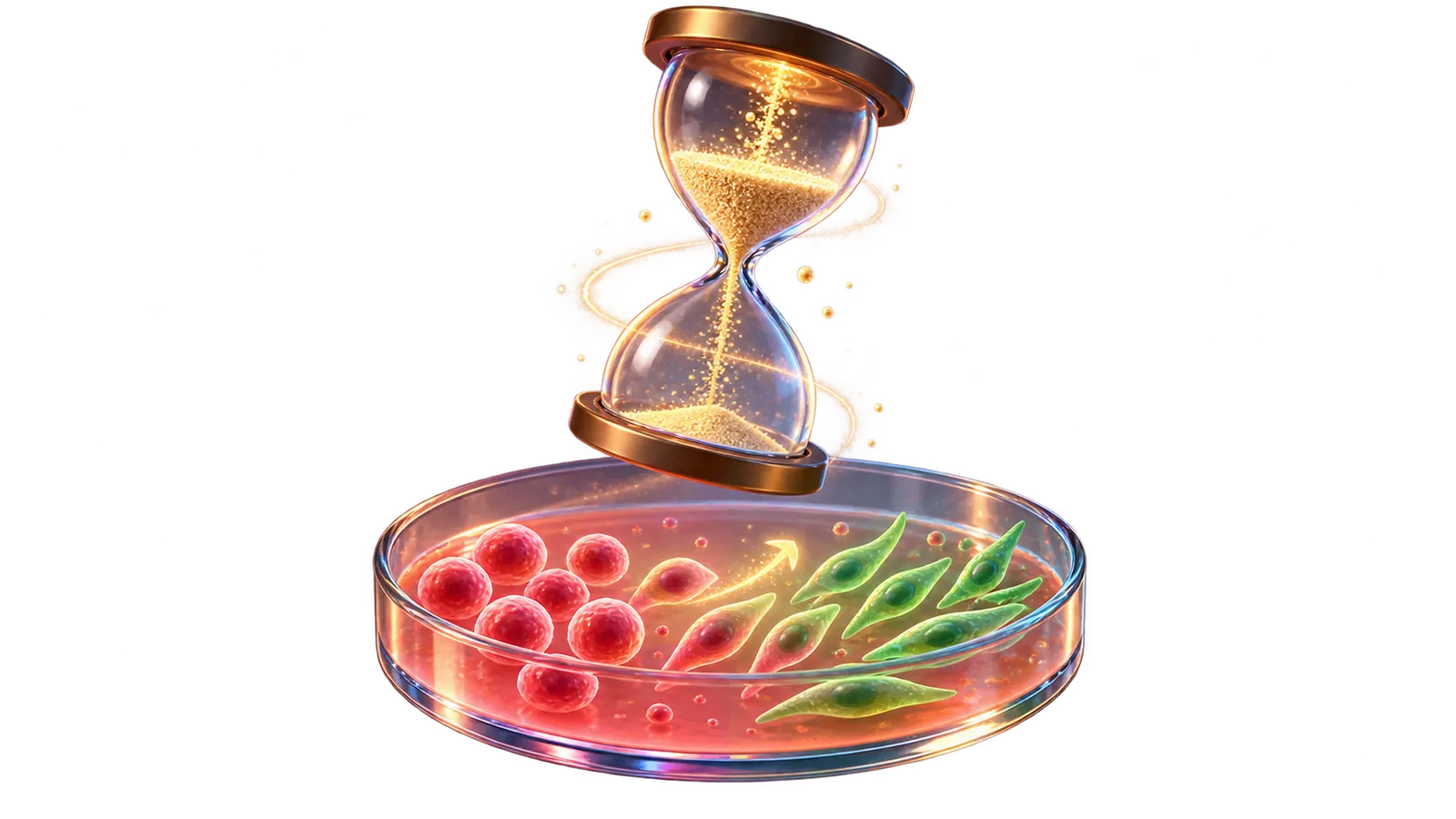
03歯の中に「冷たさセンサー」を持つ細胞がいた
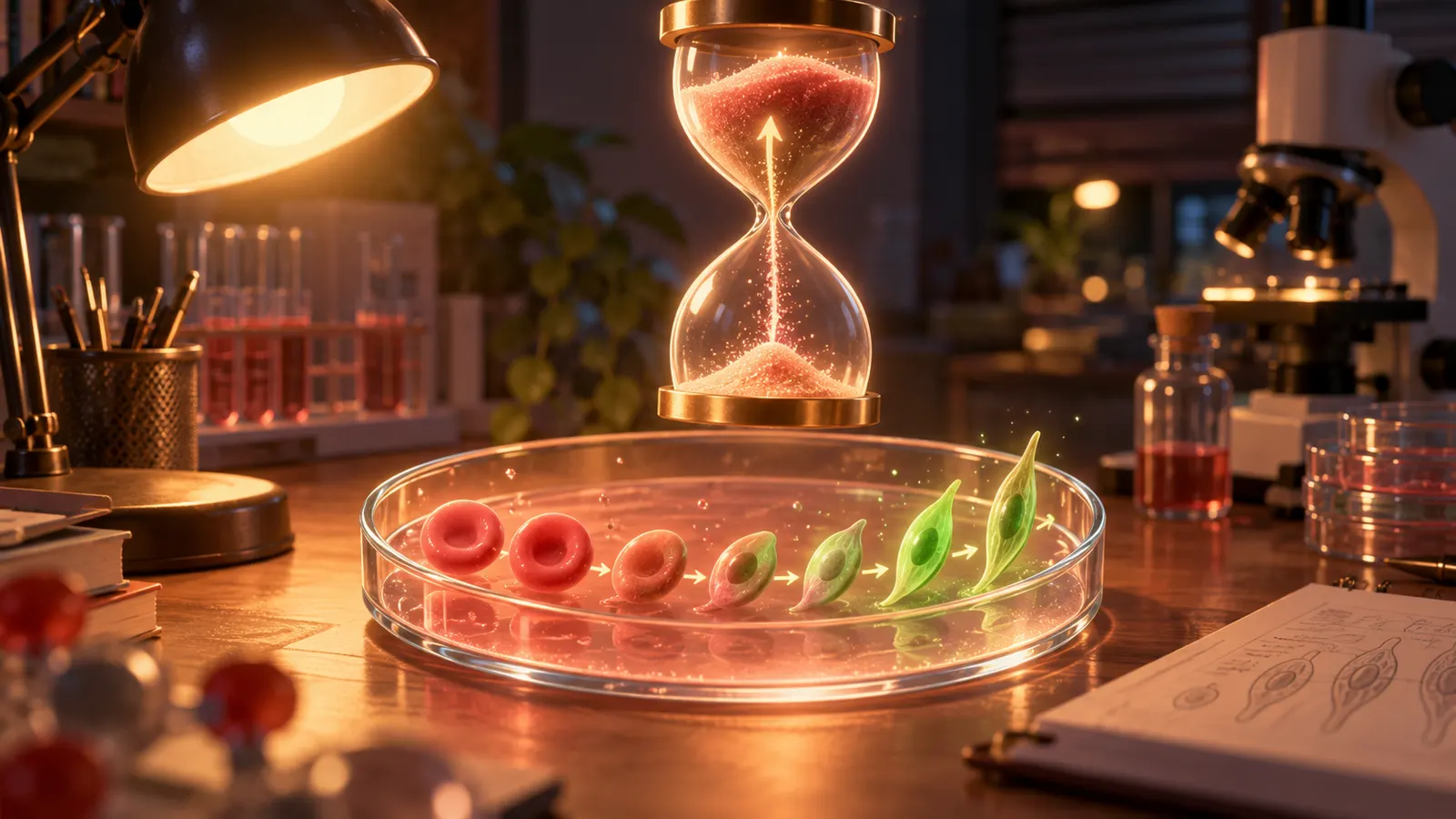
象牙芽細胞は、これまで「象牙質を作る細胞」と考えられてきました。それが、冷たさを感じて神経に知らせる感覚の細胞でもあったわけです。研究チームは、TRPC5は刺激に慣れにくい性質を持つため、冷たさの痛みが長く続くことにも関わっていると考えています。
04昔の歯痛薬とつながった
この研究には、ちょっとした歴史のオチもあります。
研究チームは、歯科で昔から使われてきた丁子(クローブ)油の主成分オイゲノールが、TRPC5の働きを抑えることも示しています。先人たちが経験的に使ってきた薬が、実は「冷たさセンサー」をブロックしていたのかもしれません。ただし、家庭で丁子油を歯に使うのは刺激が強く、おすすめできません。
05まとめ
冷たいものが歯にしみるのは、象牙質がむき出しになって冷たさが奥へ伝わりやすくなるから。そして歯の内側には、冷たさセンサーTRPC5を持つ象牙芽細胞が並び、痛みの信号を送っていました。
アイスがしみるのは、歯からの「ちょっと守りが弱くなってるよ」というお知らせ。やさしい歯みがきと歯医者さんで、応えてあげましょう。
この研究を英語で読もう原田英語の English CornerA spoonful of ice cream can make a tooth hurt sharply. 音声
音声 4択クイズ9問A2・B1・B2タップして開く
原田英語の English Corner
この研究を英語で読もう
Why do your teeth hurt when you eat ice cream? A tooth has three layers. The outside layer, enamel, is very hard and has no nerves. Under it is dentin, which has many tiny tubes.
If enamel wears away or your gums move down, the dentin is not covered. Then cold can reach the nerves. In 2021, scientists found cells inside teeth with a sensor for cold.
67 words ・ CEFR A2
和訳を見る
アイスクリームを食べると、なぜ歯が痛むのでしょうか。歯には3つの層があります。いちばん外側の層であるエナメル質はとてもかたく、神経がありません。その下には象牙質があり、とても細い管がたくさん通っています。
エナメル質がすり減ったり、歯ぐきが下がったりすると、象牙質が覆われなくなります。すると、冷たさが神経に届いてしまうのです。2021年、科学者たちは、冷たさを感じるセンサーを持つ細胞を歯の中に見つけました。
4択リーディングクイズ
Q1. What is the passage mainly about?
第1文の問い(アイスで歯が痛む理由)に、歯の構造から答えているので C。
Q2. Which layer has no nerves?
The outside layer, enamel, is very hard and has no nerves. とあるので B。
Q3. In this passage, "wears away" means ...
wear away は「すり減る」。エナメル質が少しずつ薄くなることなので A。
A spoonful of ice cream can make a tooth hurt sharply. Why does cold do this? A tooth has three layers. Hard enamel covers the outside. Dentin is in the middle, and the pulp, which contains nerves, is at the center.
Dentin has countless tiny tubes filled with fluid. When enamel wears away or gums pull back, the dentin becomes exposed. According to the most widely accepted theory, cold makes the fluid in the tubes move slightly, and this movement stimulates the nerves.
In 2021, an international team discovered that odontoblasts, cells along the inner edge of the dentin, have a cold sensor called TRPC5. Mice without this sensor showed much less pain behavior after a tooth injury.
118 words ・ CEFR B1
和訳を見る
アイスクリームをひと口食べただけで、歯が鋭く痛むことがあります。なぜ冷たさでこうなるのでしょうか。歯には3つの層があります。かたいエナメル質が外側を覆っています。真ん中には象牙質があり、中心には神経を含む歯髄があります。
象牙質には、液体で満たされた細い管が無数にあります。エナメル質がすり減ったり歯ぐきが下がったりすると、象牙質がむき出しになります。最も広く受け入れられている説によると、冷たさで管の中の液体がわずかに動き、その動きが神経を刺激します。
2021年、国際的な研究チームは、象牙質の内側の縁に並ぶ象牙芽細胞が、TRPC5という冷たさのセンサーを持っていることを発見しました。このセンサーを持たないマウスは、歯を傷つけたあとも、痛みを示す行動がずっと少なかったのです。
4択リーディングクイズ
Q1. What is the passage mainly about?
歯が冷たさにしみる仕組みと、2021年の冷たさセンサーの発見を説明しているので A。
Q2. What did the 2021 team discover?
odontoblasts, cells along the inner edge of the dentin, have a cold sensor called TRPC5 とあるので D。
Q3. Based on the passage, what might help prevent tooth sensitivity?
When enamel wears away or gums pull back, the dentin becomes exposed. とあるので、エナメル質と歯ぐきを守って象牙質を覆っておくことが予防になると推論できる。C。
Bite into ice cream and a tooth may answer with a sudden, sharp pain. This is dentin hypersensitivity, and it usually starts when dentin becomes exposed. A tooth has three layers. Enamel, the hardest tissue in the body, has no nerves.
Beneath it lies dentin, pierced by countless microscopic tubules, and at the center is the pulp, with its nerves and blood vessels. Aggressive brushing, tooth grinding, acidic drinks and gum disease can uncover dentin near the root. A 2012 dental review called the hydrodynamic theory the most widely accepted explanation.
Cold and other stimuli make the fluid inside the tubules shift slightly, and that movement excites nerve endings. How the nerves themselves respond was poorly understood. In 2021, an international team found that odontoblasts, the cells lining the boundary between dentin and pulp, carry TRPC5, a channel that responds to cold.
Mice without TRPC5 showed far less pain behavior after a tooth injury. Eugenol, the main component of the clove oil long used in dentistry, blocked TRPC5, though whether it eases pain in patients has not been tested. The channel was also found in human odontoblasts. The two theories are not mutually exclusive, and both could be at work.
200 words ・ CEFR B2
和訳を見る
アイスクリームをかじると、歯に突然、鋭い痛みが走ることがあります。これは象牙質知覚過敏で、たいていは象牙質がむき出しになったときに始まります。歯には3つの層があります。体で最もかたい組織であるエナメル質には、神経がありません。
その下には、無数の微細な管が通る象牙質があり、中心には神経と血管を含む歯髄があります。強すぎる歯みがき、歯ぎしり、酸性の飲み物、歯周病は、根もと付近の象牙質をむき出しにすることがあります。2012年の歯科のレビューは、「動水力学説」を最も広く受け入れられている説明だとしました。
冷たさなどの刺激によって管の中の液体がわずかに動き、その動きが神経の末端を興奮させるというものです。神経そのものがどう反応するのかは、よくわかっていませんでした。2021年、国際チームは、象牙質と歯髄の境目に並ぶ象牙芽細胞が、冷たさに反応するチャネルであるTRPC5を持つことを発見しました。
TRPC5を持たないマウスは、歯を傷つけたあとも、痛みを示す行動がずっと少なかったのです。歯科で古くから使われてきた丁子油の主成分オイゲノールはTRPC5の働きを抑えましたが、それが患者の痛みを和らげるかどうかは検証されていません。このチャネルは人の象牙芽細胞にも見つかりました。2つの説は互いに相いれないものではなく、両方が働いている可能性もあります。
4択リーディングクイズ
Q1. What is the passage mainly about?
知覚過敏の原因、動水力学説、2021年の TRPC5 の発見を扱っているので B。
Q2. According to the hydrodynamic theory, what causes the pain?
Cold and other stimuli make the fluid inside the tubules shift slightly, and that movement excites nerve endings. とあるので C。
Q3. What does the author mean by saying the two theories are "not mutually exclusive"?
mutually exclusive は「互いに相いれない」。それを否定し、both could be at work と続けているので D。
重要単語
- sensitiveB1形容詞敏感な、しみやすいMy teeth are sensitive to cold drinks.
 be sensitive to ~「~に敏感だ」。sensible(分別のある)との区別は入試の定番。
 - enamelC1名詞エナメル質Enamel is the hardest part of the body. 発音は /ɪˈnæməl/(イナメル)。食器や塗料の「ほうろう・エナメル」も同じ語。
- dentinC1名詞象牙質Dentin lies under the enamel. dent-(歯)はラテン語由来で、dentist(歯医者)、dental(歯の)と同じ仲間。
- gumB1名詞歯ぐきBrushing too hard can hurt your gums. 「チューインガム」の gum とつづりは同じだが別語源。gum disease は「歯周病」。
- sensorB2名詞感知器、センサーThis protein works as a cold sensor. sense(感じる)+-or。sensory(感覚の)は sensory cells「感覚細胞」のように使う。
- exposeB2動詞むき出しにする、さらすGum disease can expose the dentin. be exposed to ~「~にさらされる」は頻出。名詞 exposure。
 入試に出る順の単語帳を印刷する →
 全5903語の「科学英単語カード」で復習する →
 この話題を TED で聞く
同じテーマの TED・TED-Ed を、 TED HACK で。英語の見どころ・使える表現・学習ミッションつきの日本語ガイドです。(運営:原田英語)

 公式・一次情報をチェック
このネタ、誰かに教えたくなった?
アイスで歯がキーンとしみる理由に新しい答え。2021年の研究で、歯の内側に並ぶ細胞が「冷たさセンサー(TRPC5)」を持ち、冷たさを神経に伝えていたらしい。昔から歯科で使われた丁子油の成分が、このセンサーを抑えるとか。
押すと「マジかリスト」に保存されます
 出典・参考文献(3件)タップで表示
- Bernal et al. (2021) Odontoblast TRPC5 channels signal cold pain in teeth, Science Advancesdoi.org
- Sotelo-Hitschfeld, Bernal & Zimmermann (2021) Odontoblasts are cold sensory cells in teeth, Temperaturedoi.org
- West et al. (2012) Dentin hypersensitivity: pain mechanisms and aetiology of exposed cervical dentin, Clinical Oral Investigationsdoi.org

※本記事は上記の研究・公開資料をもとに、原田英語が独自の言葉で解説したものです。引用は著作権法第32条の範囲で行い、出典を明記しています。画像はすべてオリジナルのイメージです。研究結果には限界や個人差があります。誤りのご指摘は原田英語のお問い合わせフォームから。