原田英語の時事英語ジュニア|英語ニュース ワークシート(高校生レベル)
Class ____ No. ____ Name ____________________
手書きとタイピングで脳の働きはちがう?大学生36人の脳波を比べた研究
Norwegian Study Compares the Brain During Handwriting and Typing
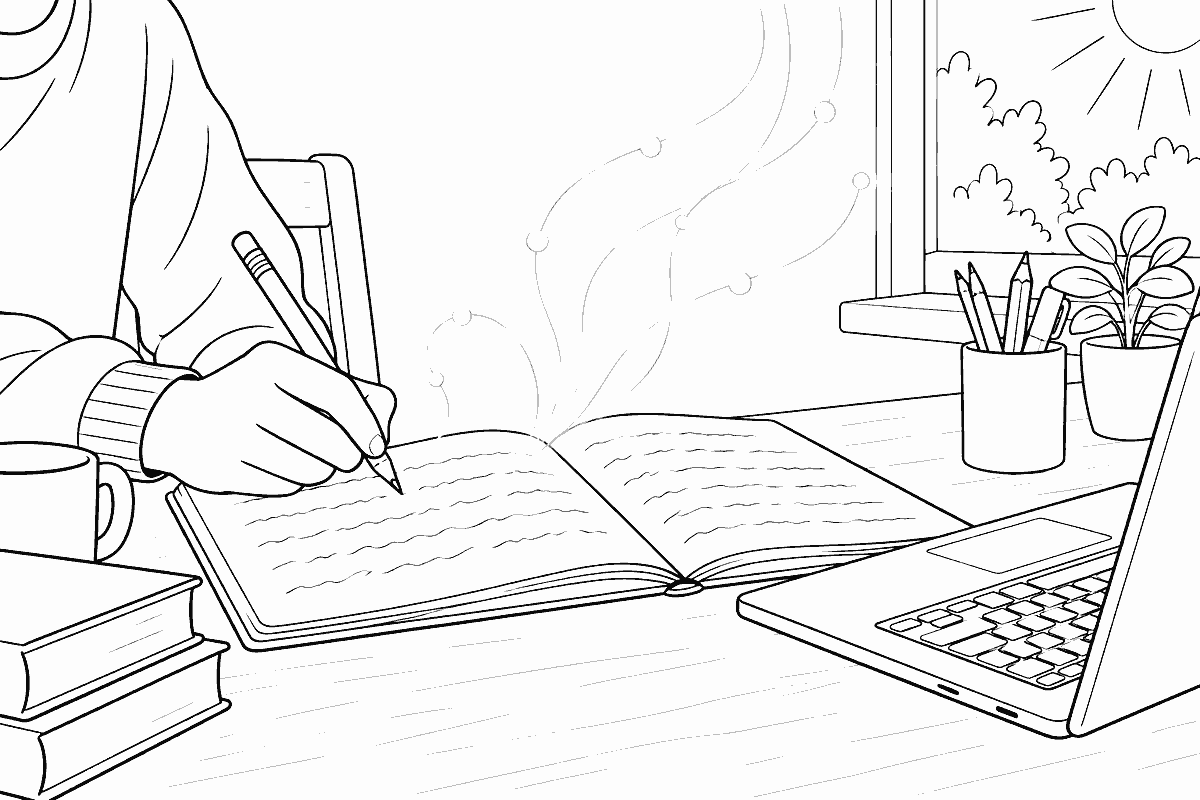
1Writing words by hand produced far more connections between brain regions than typing them, researchers in Norway have found. The team at the Norwegian University of Science and Technology (NTNU) published the study in the journal Frontiers in Psychology on January 26, 2024.
2The researchers recorded the brain activity of 36 university students using a cap fitted with 256 sensors. Words appeared on a screen one at a time, and the students had 25 seconds to write or type each word over and over. For handwriting, they wrote in cursive with a digital pen on a touchscreen. For typing, they pressed the keys with just one finger. The sensors measured brain activity during the first five seconds of each try.
3During handwriting, signals from different parts of the brain became more closely linked. Typing did not produce the same pattern. Professor Audrey van der Meer, who led the work, said wide connections like these play a key role in forming memories and learning new information. She linked the difference to the careful pen movements needed to shape each letter.
4The study was small, and all the participants were university students. It measured brain activity, not learning, so it did not show that handwriting helps people remember more. Ramesh Balasubramaniam, a scientist at the University of California, Merced, who was not involved, told NBC News it is unclear whether the brain patterns lead to better learning. The students used a digital pen, but the researchers said they expect similar results with a pen on paper.
5The researchers suggested that writing by hand may suit lecture notes, while a keyboard is more practical for long essays.
Words 単語
| regionsB1 | 名 | 部位、領域(region の複数形)parts or areas of something |
| fittedA2 | 形 | (~を)取りつけたhaving a part put on or in it |
| cursive外 | 名 | 筆記体a style of writing with joined letters |
| patternB1 | 名 | (決まった)形、型the way something usually happens or looks |
| roleA1 | 名 | 役わり(play a role in ~ で「~に役わりを果たす」)the job or part that something has |
| formingA1 | 動 | つくること、形成することmaking something start to exist |
| participantsB1 | 名 | 参加者(participant の複数形)people who take part in something |
| involvedB1 | 形 | 関わっているtaking part in an activity |
| unclearB1 | 形 | はっきりしない、わからないnot easy to know or understand |
| practicalB1 | 形 | 実用的な、便利なuseful and easy to use in real life |
単語のレベル:CEFR-J(『CEFR-J Wordlist Version 1.6』 東京外国語大学投野由紀夫研究室. (URL: https://www.cefr-j.org/download.html より 2026年8月ダウンロード))
1. Reading Quiz 本文の内容に合うものを選ぼう
When was the study published?
A. January 26, 2024B. January 26, 2023C. October 13, 2026D. May 9, 2024
How long did the students have to write or type each word?
A. 5 secondsB. 15 secondsC. 25 secondsD. 36 seconds
What did Professor van der Meer link the difference to?
A. The size of the screenB. The careful pen movements needed to shape each letterC. The number of keys on the keyboardD. The students' age
What did the study NOT measure?
A. Brain activity during handwritingB. Brain activity during typingC. Signals from different parts of the brainD. How much the students learned
What is a keyboard more practical for, according to the researchers?
A. Lecture notesB. Long essaysC. Drawing lettersD. Learning cursive
2. True or False 正しければ T、違っていれば F
( ) The students typed with all ten fingers.
( ) The students wrote in cursive on a touchscreen.
( ) The study proved that handwriting helps people remember more.
( ) The researchers expect similar results with a pen on paper.
3. Fill in the Blanks 下の語から選んで空らんをうめよう(形を変えずに)
fittedregionspatternparticipantscursiverole
Professor Audrey van der Meer, who led the work, said wide connections like these play a key _____ in forming memories and learning new information.
Typing did not produce the same _____.
The study was small, and all the _____ were university students.
For handwriting, they wrote in _____ with a digital pen on a touchscreen.
The researchers recorded the brain activity of 36 university students using a cap _____ with 256 sensors.
Writing words by hand produced far more connections between brain _____ than typing them, researchers in Norway have found.
4. Word Order 語を並べかえて正しい文にしよう
( the / Typing / not / same / did / produce / pattern ) .
( just / finger / with / typing, / For / they / keys / the / one / pressed ) .
( all / study / university / the / and / participants / The / students / was / small, / were ) .
5. Think and Write 英語で答えてみよう
Should schools use more tablets and fewer paper notebooks? Give your reasons.(学校は紙のノートを減らして、タブレットをもっと使うべきだと思いますか?理由を述べよう。)
This study did not test memory. How would you design a study to find out if handwriting helps students remember more?(この研究は記憶力を調べていません。手書きのほうがよく覚えられるかを確かめるには、あなたならどんな研究をしますか?)
Answers 解答
1. (1) A (2) C (3) B (4) D (5) B
2. (1) F (2) T (3) F (4) T
3. (1) role (2) pattern (3) participants (4) cursive (5) fitted (6) regions
4.
- Typing did not produce the same pattern.
- For typing, they pressed the keys with just one finger.
- The study was small, and all the participants were university students.
全文訳
1単語を手で書くと、キーボードで打つよりも、脳の部位どうしのつながりがずっと多く生まれることを、ノルウェーの研究者たちが明らかにしました。ノルウェー科学技術大学(NTNU)のチームが、2024年1月26日に学術誌「フロンティアーズ・イン・サイコロジー」でこの研究を発表しました。
2研究者たちは、256個のセンサーを取りつけたぼうしを使って、大学生36人の脳の活動を記録しました。画面に単語が1つずつ表示され、学生は25秒間、その単語をくり返し書くか打つかしました。手書きでは、タッチスクリーンの上にデジタルペンで筆記体を書きました。タイピングでは、1本の指だけでキーを押しました。センサーは、それぞれの回の最初の5秒間の脳の活動を測りました。
3手書きのあいだは、脳のさまざまな部分から出る信号どうしの結びつきが強くなりました。タイピングでは、同じような形は表れませんでした。研究を率いたオードリー・ファン・デル・メール教授は、こうした広いつながりは、記憶をつくったり新しいことを学んだりするのに大きな役わりを果たす、と述べました。教授は、このちがいは、文字を1つずつ形づくるのに必要な、ペンの細かい動きによるものだと考えています。
4この研究は小規模で、参加者は全員が大学生でした。測ったのは脳の活動で、学習の成果ではないため、手書きのほうがよく覚えられることを示したわけではありません。研究に関わっていないカリフォルニア大学マーセド校のラメシュ・バラスブラマニアム氏は、NBCニュースに対し、この脳の活動の形が学習の向上につながるかはわからない、と話しました。学生が使ったのはデジタルペンですが、研究者たちは、紙とペンでも同じような結果になるだろうと述べています。
5研究者たちは、講義のノートには手書きが向いているかもしれず、長い作文にはキーボードのほうが実用的だ、と提案しています。
文法ポイント:関係代名詞の非制限用法(, who ~,)
人の名前のあとにコンマ + who ~ を置いて、その人について説明を付け加える形。本文の Professor Audrey van der Meer, who led the work, said ... は「オードリー・ファン・デル・メール教授は、この研究を率いた人なのだが、…と述べた」。コンマがあるので、どの人かを区別するためではなく、おまけの情報を足している。
出典:Frontiers in Psychology、Frontiers(Science news)、NBC News ほか(記事は原田英語の時事英語ジュニアのオリジナル)|https://www.haradaeigo.com/jijieigo-junior/news/2026-10-13-handwriting-brain-connections/