原田英語の時事英語ジュニア|英語ニュース ワークシート(中学生レベル)
Class ____ No. ____ Name ____________________
手書きとタイピングで脳の働きはちがう?大学生36人の脳波を比べた研究
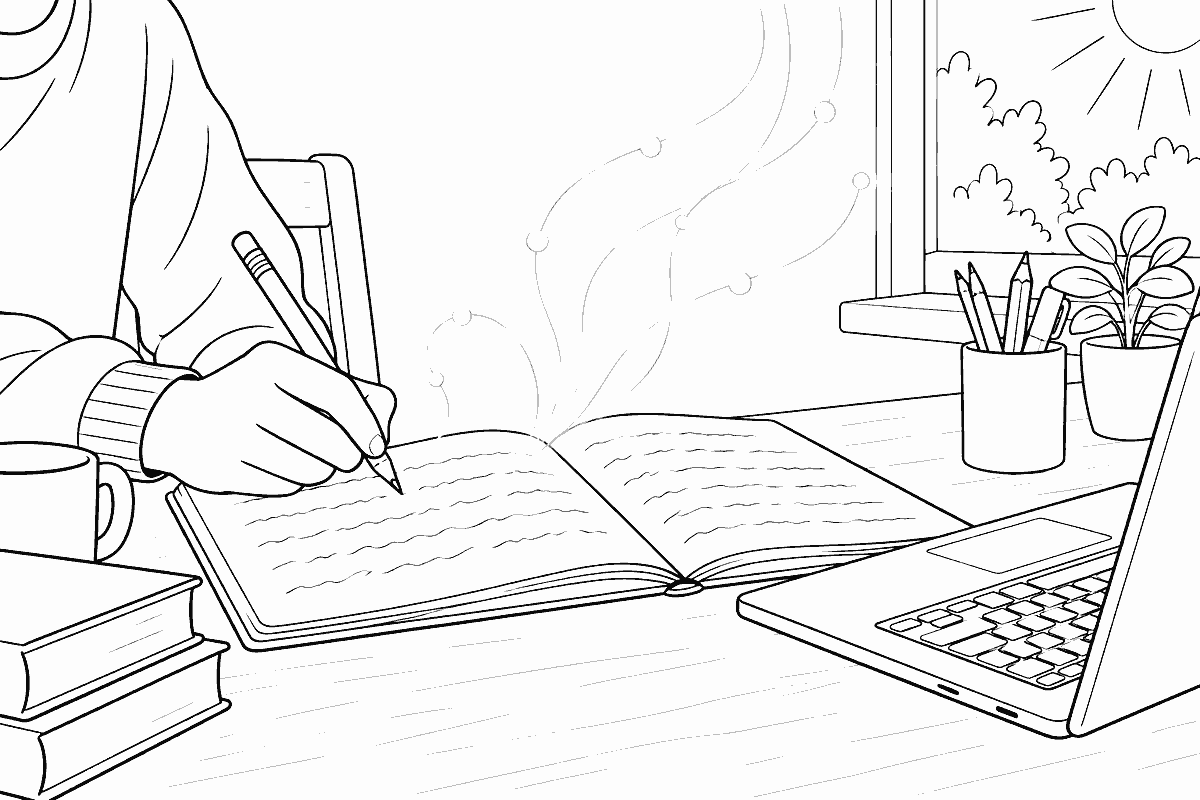
Writing by Hand and the Brain
1Writing by hand connects more parts of the brain than typing, a study found. Researchers at a university in Norway did the study.
2The team studied 36 university students. Each student wore a special cap with 256 sensors on it. The sensors recorded the activity of their brains. Words were shown on a screen one by one. Sometimes the students wrote each word with a digital pen. At other times, they typed it on a keyboard with one finger.
3When the students wrote by hand, different parts of the brain connected more. This did not happen when they typed. Professor Audrey van der Meer said these connections are important for memory.
4But the study was small, and it did not test what the students remembered. The researchers said it may be better to take notes in class by hand. They also said keyboards are useful for writing long essays.
Words 単語
| connectsB1 | 動 | つなぐ、つながるjoins two or more things together |
| typingA1 | 名 | (キーボードで)文字を打つことwriting words by pressing keys |
| sensors外 | 名 | センサー(sensor の複数形)small machines that notice heat, light, or movement |
| recordedA2 | 動 | 記録したkept information so people can check it later |
| activityA1 | 名 | 活動、働きthe things that are happening or moving |
| digitalB1 | 形 | デジタルのworking with computers and electronic data |
| memoryA1 | 名 | 記憶、記憶力the power to keep things in your mind |
| essaysA2 | 名 | 作文、小論文(essay の複数形)short pieces of writing about one topic |
単語のレベル:CEFR-J(『CEFR-J Wordlist Version 1.6』 東京外国語大学投野由紀夫研究室. (URL: https://www.cefr-j.org/download.html より 2026年8月ダウンロード))
1. Reading Quiz 本文の内容に合うものを選ぼう
How many university students did the team study?
A. 16B. 36C. 256D. 360
What did the sensors record?
A. The activity of the students' brainsB. The words on the screenC. How fast the students typedD. The students' test scores
How did the students type the words?
A. With both handsB. With a digital penC. With their voiceD. With one finger
What are keyboards useful for, according to the researchers?
A. Drawing picturesB. Taking notes in classC. Writing long essaysD. Making brain connections
2. True or False 正しければ T、違っていれば F
( ) The study was done by researchers in Norway.
( ) The brain connected more when the students typed.
( ) The study tested what the students remembered.
( ) The students wrote words with a digital pen.
3. Fill in the Blanks 下の語から選んで空らんをうめよう(形を変えずに)
digitalconnectstypedmemorysensorsrecorded
Professor Audrey van der Meer said these connections are important for _____.
Each student wore a special cap with 256 _____ on it.
Writing by hand _____ more parts of the brain than typing, a study found.
Sometimes the students wrote each word with a _____ pen.
The sensors _____ the activity of their brains.
At other times, they _____ it on a keyboard with one finger.
4. Word Order 語を並べかえて正しい文にしよう
( university / students / studied / The / 36 / team ) .
( one / on / shown / were / one / screen / by / Words / a ) .
( This / typed / they / not / happen / did / when ) .
5. Think and Write 英語で答えてみよう
Do you take notes by hand or on a tablet?(あなたはノートを手で書きますか?それともタブレットでとりますか?)
Which is easier for you to remember: words you write or words you type?(あなたにとって覚えやすいのは、手で書いた単語と、キーボードで打った単語のどちらですか?)
Answers 解答
1. (1) B (2) A (3) D (4) C
2. (1) T (2) F (3) F (4) T
3. (1) memory (2) sensors (3) connects (4) digital (5) recorded (6) typed
4.
- The team studied 36 university students.
- Words were shown on a screen one by one.
- This did not happen when they typed.
全文訳
1手で字を書くと、キーボードで打つよりも、脳の多くの部分がつながる、という研究が出ました。研究をしたのは、ノルウェーの大学の研究者たちです。
2研究チームは、36人の大学生を調べました。学生はそれぞれ、256個のセンサーがついた特別なぼうしをかぶりました。センサーが、学生の脳の活動を記録しました。画面には、単語が1つずつ映し出されました。学生は、デジタルペンで単語を書くこともありました。またあるときは、1本の指でキーボードを打って入力しました。
3学生が手で書いたときは、脳のいろいろな部分のつながりが強まりました。キーボードで打ったときは、そうなりませんでした。オードリー・ファン・デル・メール教授は、こうしたつながりは記憶にとって大切だと話しています。
4ただ、この研究は小さなもので、学生が何を覚えていたかは調べていません。研究者たちは、授業のノートは手で書いたほうがよいかもしれない、と話しています。一方で、長い作文を書くにはキーボードが便利だとも話しています。
文法ポイント:受け身(be動詞 + 過去分詞)
「~される」を表す形。本文の Words were shown on a screen one by one. は「単語が画面に1つずつ映し出された」。だれが映したかより、何が起きたかを伝えたいときによく使う。
出典:Frontiers in Psychology、Frontiers(Science news)、NBC News ほか(記事は原田英語の時事英語ジュニアのオリジナル)|https://www.haradaeigo.com/jijieigo-junior/news/2026-10-13-handwriting-brain-connections/