ume
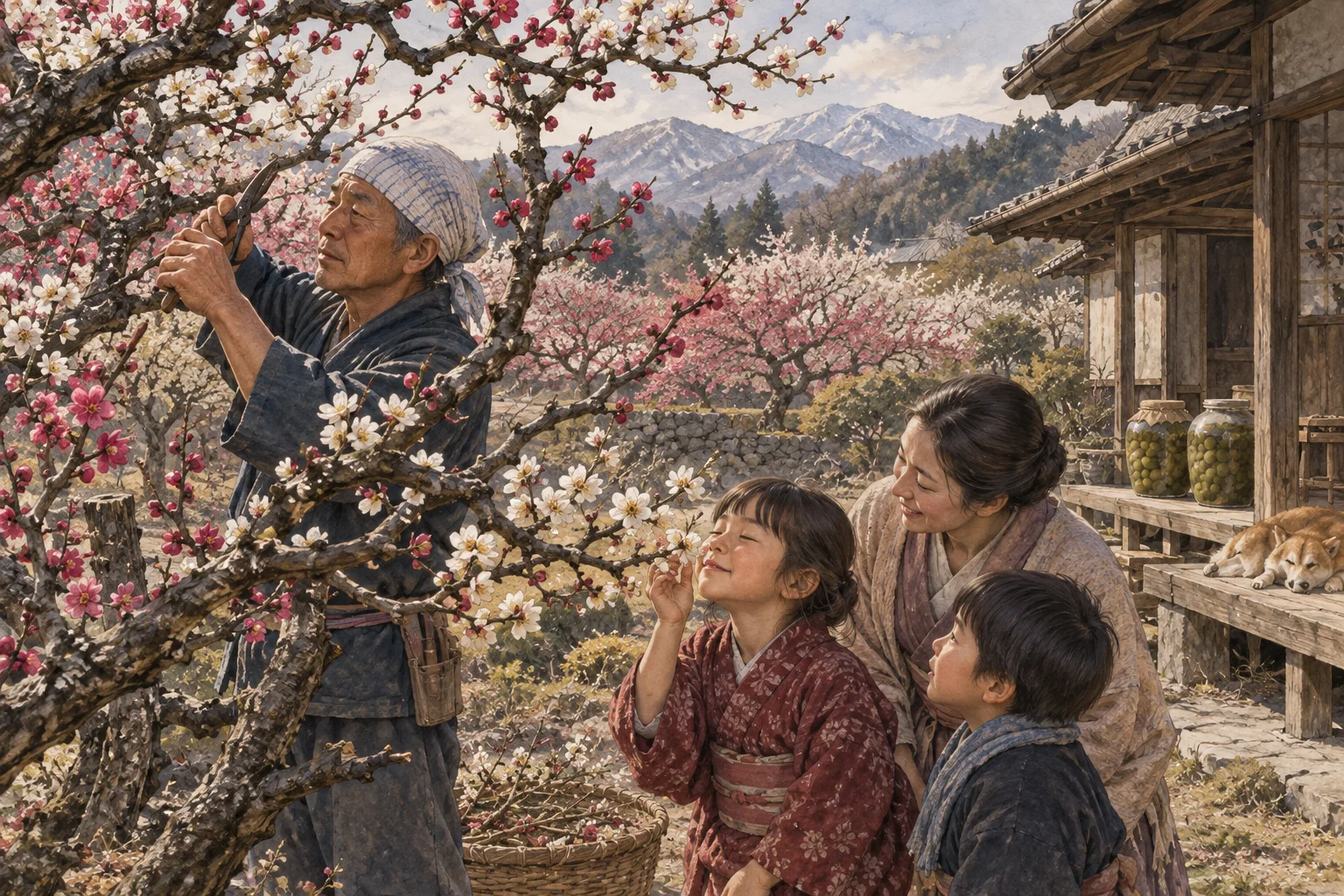
Japanese apricot blossom
梅(うめ)
In one line
The shortest answer that works
Ume blossoms open in late winter, before the cherries, and were once the flower Japan celebrated most.
梅の花は桜より早く、冬の終わりに咲き、かつては日本で最も愛でられた花でした。
In 30 seconds
The standard explanation
Ume, often translated as plum but botanically closer to apricot, blooms from February, while it is still cold and nothing else is out. The flowers have a strong sweet scent, unlike cherry blossoms. In eighth-century poetry the word flower is generally thought to have meant ume, and only later did cherry take that place. The fruit is used for pickles and a sweet liqueur.
梅は、英語では plum と訳されることが多いものの、植物としては杏に近い木で、2月から、まだ寒く何も咲いていない時期に花を開きます。桜と違って強く甘い香りがあります。8世紀の和歌では「花」といえばふつう梅を指したとされ、桜がその座につくのは後のことです。実は漬物や甘い酒に使われます。
As a short speech
A full paragraph you can read aloud
Ume is usually translated as plum, though it is botanically closer to an apricot. It blooms from February, in real cold, often with snow still on the branches, and that is the whole point of it: it is the flower of endurance and of the turn toward spring, not of spring itself.
Unlike cherry blossom it has a strong sweet scent, so you often smell a garden before you see it. In the poetry of the eighth century, when the word flower appears, it is generally taken to mean ume, and the shift to cherry came later, in the Heian period.
The fruit is never eaten raw. It is salted and dried into a sour pickle eaten with rice, or steeped in sugar and spirit to make a sweet liqueur that many households used to make at home each June.
梅は英語ではふつう plum と訳されますが、植物としては杏に近い木です。花は2月から、本当に寒い中で、枝に雪を載せたまま咲くこともあります。そこが肝心で、梅は春そのものの花ではなく、耐えることと、春へ向かう転換の花です。
桜と違って強く甘い香りがあるので、庭は見るより先に匂いで分かることがよくあります。8世紀の和歌で「花」という語が出てきたら、それはたいてい梅を指すと考えられています。
桜に移ったのは後の平安時代のことです。実は生では食べません。塩に漬けて干した酸っぱい漬物として米と食べるか、砂糖と酒に漬けて甘い酒にします。かつては多くの家庭が毎年6月に自分で漬けていました。
Questions people actually ask
And how to answer them.
How do I tell ume from sakura?
Look at the petals and the branch. Ume petals are rounded with no notch at the tip, and the flowers sit tight against the branch with almost no stalk. Cherry petals have a small split at the tip and hang on visible stalks. Ume also smells strongly and cherry barely does.
花びらと枝を見てください。梅の花びらは丸く、先に切れ込みがありません。花はほとんど柄がなく枝に直接ついています。桜の花びらは先が割れていて、見える柄の先についています。梅には強い香りがあり、桜にはほとんどありません。
Why is ume linked with shrines dedicated to study?
Because of Sugawara no Michizane, a ninth-century scholar and official who loved ume and was exiled from the capital. He is enshrined as the deity of learning, and the shrines that honor him almost always have ume trees, which students visit before exams.
9世紀の学者で官人の菅原道真が梅を愛し、都から左遷されたからです。彼は学問の神として祀られ、その神社にはほぼ必ず梅の木があります。受験生が試験の前に訪れます。
Phrases you can use
- Ume blooms before the cherry blossoms.梅は桜より先に咲きます。
- You can smell it from a distance.遠くからでも香りが分かります。
- The petals are round, with no notch.花びらは丸くて切れ込みがありません。
- The fruit is never eaten raw.実は生では食べません。
Words you need
- blossom花
- fragrance / scent香り
- branch枝
- pickled plum梅干し
Watch
From YouTubeBackground (Japanese)
『万葉集』では梅を詠んだ歌が桜より多く、当時の「花」は梅を指していたとされます。元号「令和」は『万葉集』の梅花の宴の序文から採られました。梅干しは塩と赤紫蘇で漬けて干したもので、保存食として長く使われてきました。家庭で漬ける梅酒は、法律上、自分で飲む範囲でつくることが認められています。天満宮に梅が多いのは菅原道真の伝承によるもので、道真を慕って梅が都から飛んできたという「飛梅」の話が伝わります。