Tenmangu
shrines of the deity of learning
天満宮と学問の神(てんまんぐうとがくもんのかみ)
In one line
The shortest answer that works
Tenmangu shrines enshrine a ninth-century scholar as the deity of learning, and students pray there before exams.
天満宮は9世紀の学者を学問の神として祀る神社で、受験生が試験の前に参拝します。
In 30 seconds
The standard explanation
Tenmangu shrines enshrine Sugawara no Michizane, a scholar and official who died in exile in 903. After a series of disasters was blamed on his angry spirit, he was enshrined to appease him, and over centuries became the deity of scholarship. Students now visit before entrance exams and hang wooden plaques with their wishes.
天満宮は、903年に左遷先で亡くなった学者で官人の菅原道真を祀ります。相次ぐ災いが彼の怒れる霊のせいとされ、鎮めるために神として祀られ、やがて何世紀かのうちに学問の神になりました。今では受験生が入試の前に参拝し、願いを書いた絵馬を掛けます。
As a short speech
A full paragraph you can read aloud
Tenmangu shrines are where Japanese students go before an exam, and the story behind them is stranger than the cheerful atmosphere suggests. Sugawara no Michizane was a scholar and high official of the ninth century, famous for his learning, who lost a political struggle, was demoted and sent to Kyushu, and died there in 903.
Afterwards the capital suffered a run of disasters: lightning striking the palace, epidemics, the deaths of his rivals. These were attributed to his resentful spirit, and he was enshrined as a deity in order to calm him. Over the centuries the fear faded and the scholarship remained, and he became the deity of learning.
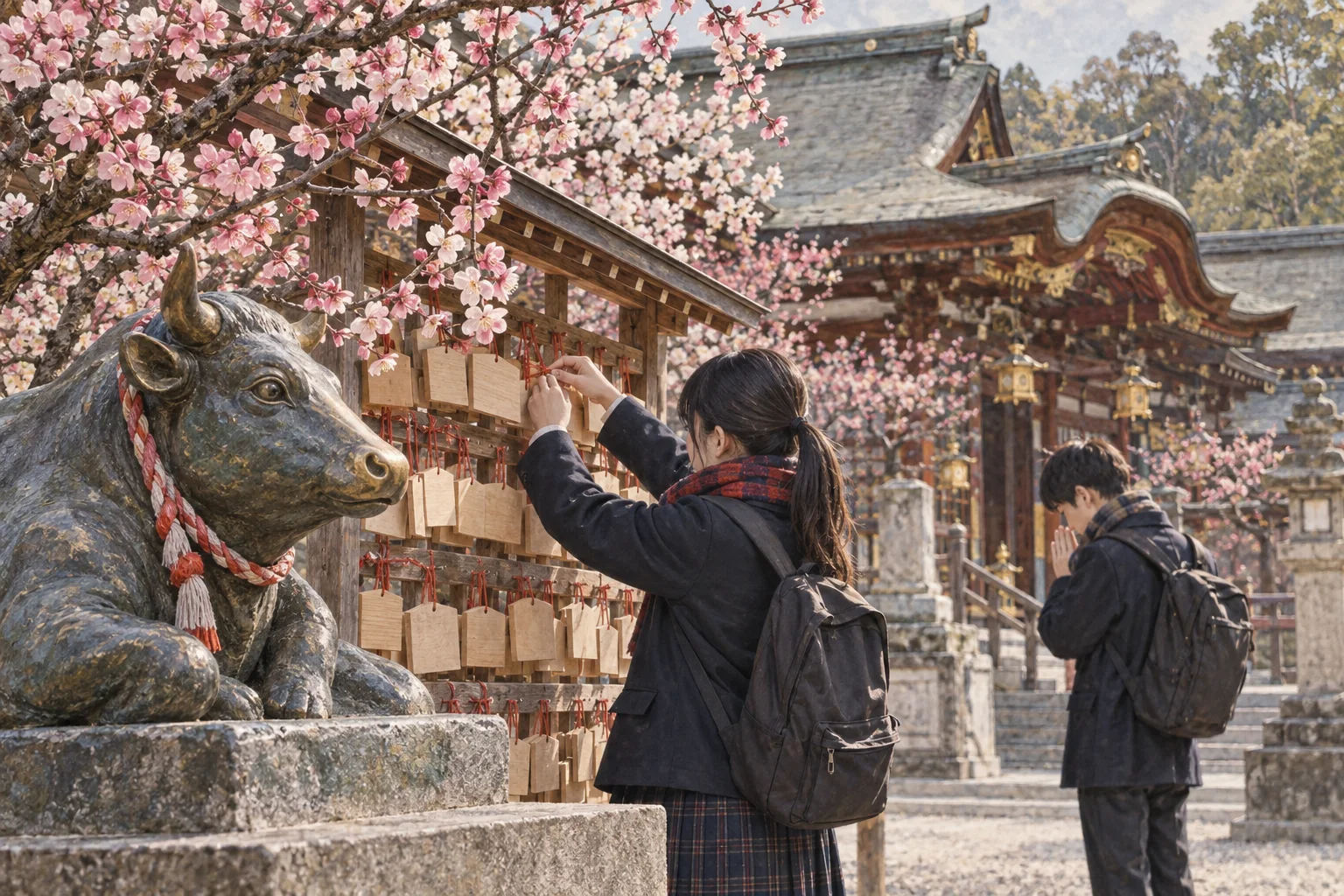
Now, in January and February, the shrines fill with teenagers buying charms and hanging wooden plaques with the name of the school they want to get into. Plum trees, which he loved, are planted at these shrines, and a statue of a reclining ox stands in the grounds, which visitors rub for luck.
天満宮は日本の受験生が試験の前に行く場所ですが、その背後にある話は、明るい雰囲気から想像されるより奇妙なものです。菅原道真は9世紀の学者で高い官職にあった人物で、学識で知られましたが、政争に敗れて左遷され、九州で903年に亡くなりました。
その後、都では災いが続きます。宮中への落雷、疫病、彼を追いやった側の人々の死。これらは彼の怨霊の仕業とされ、鎮めるために神として祀られました。何世紀かのうちに恐れは薄れ、学識のほうが残り、彼は学問の神になりました。
今では一月と二月、天満宮は志望校の名を書いた絵馬を掛け、お守りを買う十代でいっぱいになります。彼が愛した梅の木が境内に植えられ、伏せた牛の像があり、参拝者はそれを撫でていきます。
Questions people actually ask
And how to answer them.
Why is there an ox statue?
Several explanations are given: the ox pulling his funeral cart stopped and would not move, marking where he should be buried; he was born in an ox year. Visitors rub the part of the ox corresponding to what they want helped, often the head.
いくつか説明があります。葬送の牛車の牛が動かなくなり、そこを墓所と定めたという話や、彼が丑年の生まれであったという話です。参拝者は、よくしてほしい部分に当たる牛の場所を撫でます。頭が多いようです。
What do students write on the plaques?
The name of the school or university they are applying to, their own name, and a request to pass. They hang them on a rack at the shrine, and in January the racks are covered with them, which is a good place to see what schools are in demand.
志望する学校や大学の名、自分の名、そして合格の願いです。境内の掛け所に吊るします。一月にはそこが絵馬で埋まり、どこが人気かがよく分かる場所になります。
Phrases you can use
- Students come here before exams.受験生が試験の前に来ます。
- He was enshrined to calm his spirit.怒りを鎮めるために祀られました。
- Rub the ox where you want help.よくしてほしい所と同じ場所を撫でます。
- The plum trees are connected to him.梅の木は彼にゆかりがあります。
Words you need
- deity of learning学問の神
- votive plaque絵馬
- to enshrine祀る
- entrance exam入学試験
Watch
From YouTubeBackground (Japanese)
菅原道真は845年に生まれ、903年に大宰府で亡くなりました。福岡の太宰府天満宮は墓所の上に建てられたとされ、京都の北野天満宮とともに代表的な天満宮です。全国に一万を超える天満宮、天神社があるとされます。道真が都を去るときに詠んだとされる梅の歌から、「飛梅」の伝説が生まれました。怨霊を神として祀って鎮める考え方は御霊信仰と呼ばれ、道真はその代表例とされます。