umeboshi
salted pickled plums
梅干し(うめぼし)
In one line
The shortest answer that works
Umeboshi are Japanese plums pickled in salt, intensely sour and salty, and used to preserve food.
梅干しとは、梅を塩に漬けたもので、強く酸っぱく塩辛く、食べ物の保存にも使われます。
In 30 seconds
The standard explanation
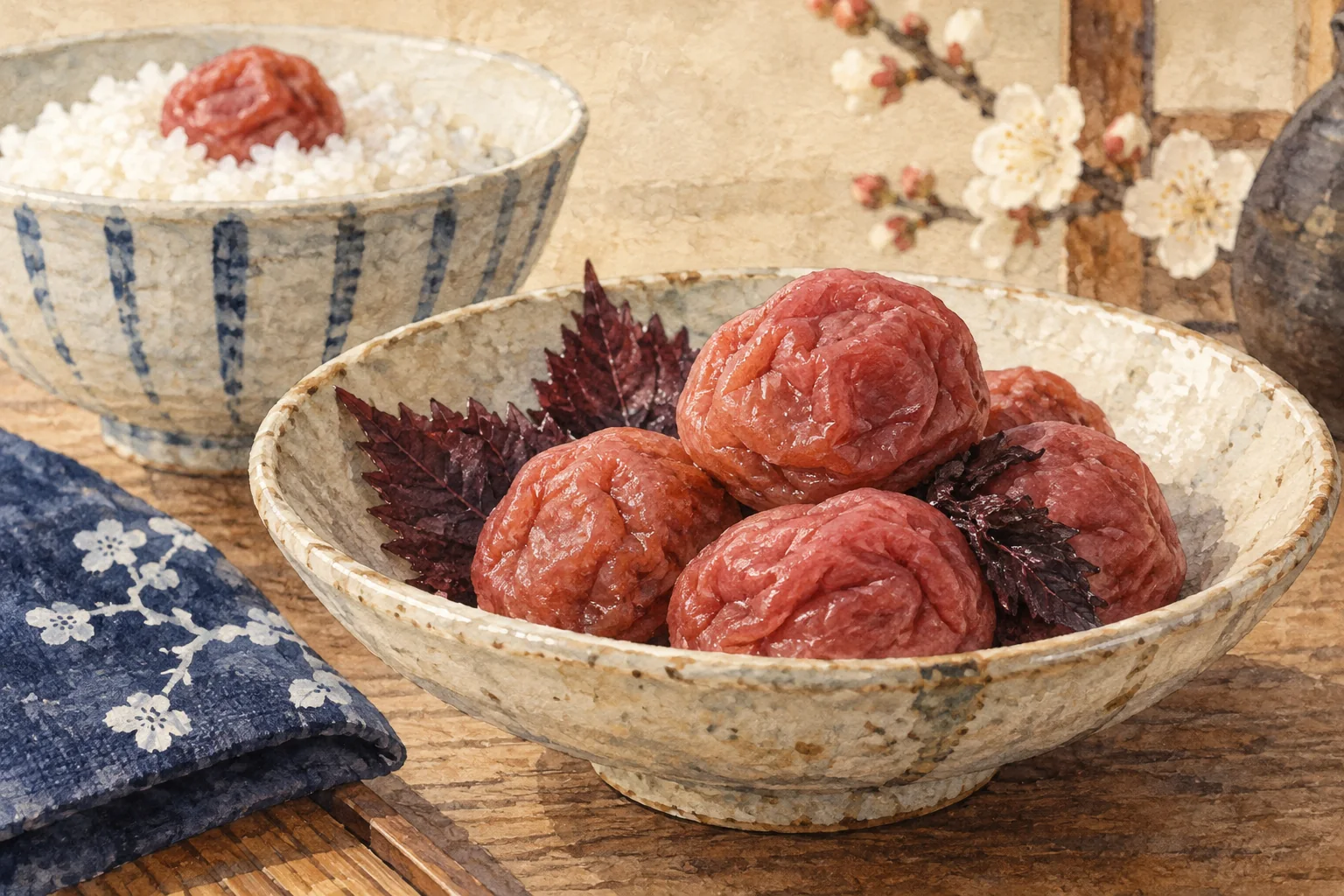
Umeboshi are ume fruit, a relative of the apricot, salted and dried until they are soft, wrinkled and extremely sour. One is often placed in the center of white rice in a lunch box. That is not only decoration: the acidity and salt slow bacterial growth, which mattered before refrigeration and still helps in summer.
梅干しは、杏に近い果実である梅を塩に漬け、干して、やわらかくしわの寄った非常に酸っぱいものに仕上げたものです。弁当の白飯の真ん中に一粒のせることがよくあります。これは飾りだけではありません。酸と塩が細菌の繁殖を抑えるので、冷蔵のない時代には重要でしたし、今も夏には役に立ちます。
As a short speech
A full paragraph you can read aloud
Umeboshi are pickled plums, though the fruit is closer to an apricot. They are packed in salt, weighted, left to draw out their liquid, then dried in the sun, often with red shiso leaves which turn them a deep pink. The result is soft, wrinkled, and startlingly sour and salty.
One umeboshi in the middle of white rice in a lunch box is such a common image that the arrangement has its own name, referring to the Japanese flag. That placement has a practical reason: the acid and salt slow bacteria, so a lunch box carried without refrigeration keeps longer.
Japanese people also eat them when they feel unwell or have no appetite, and there is an old belief about their effect on hangovers and travel sickness. If you try one for the first time, take a small bite with rice rather than eating it alone, and be prepared for your whole face to react.
梅干しは梅の漬物ですが、果実としては杏に近いものです。塩に漬けて重しをかけ、水分を出し、天日で干します。赤紫蘇を加えると濃い紅色になります。できあがりはやわらかく、しわが寄り、驚くほど酸っぱく塩辛いものになります。
弁当の白飯の真ん中に一粒、という光景はあまりにありふれていて、その配置には日本の国旗にちなんだ呼び名までついています。この置き方には実際的な理由があります。酸と塩が細菌の繁殖を抑えるため、冷蔵せずに持ち歩く弁当が長くもつのです。
日本人は体調が悪いときや食欲がないときにも食べますし、二日酔いや乗り物酔いに効くという昔からの言い伝えもあります。初めて食べるなら、単体ではなくご飯と一緒に少しだけかじってください。顔じゅうが反応する覚悟をして。
Questions people actually ask
And how to answer them.
Why one in the middle of the rice?
Partly preservation, partly appearance: white rice with one red plum resembles the Japanese flag, and the arrangement is called hinomaru bento. It was also the cheapest possible lunch in hard times.
保存のためと、見た目のためです。白飯に赤い梅一粒は日の丸に似ており、日の丸弁当と呼ばれます。苦しい時代には、最も安い弁当でもありました。
Are they sweet at all?
Traditional ones are not: they are salt and acid only. Modern supermarket versions are often reduced in salt and sweetened with honey, which is much easier for a first try.
伝統的なものは甘くありません。塩と酸だけです。現代のスーパーのものは減塩して蜂蜜で甘みを加えたものが多く、初めてならそちらが食べやすいです。
Can you eat the green plums?
No. Unripe ume contain a compound that releases cyanide when broken down, so they are never eaten raw. Salting, drying or steeping in alcohol makes them safe.
食べられません。青梅には分解すると青酸を生じる成分が含まれるため、生では食べません。塩漬け・乾燥・酒に漬けることで安全になります。
Phrases you can use
- It's extremely sour — take a small bite.とても酸っぱいので、少しずつどうぞ。
- The salt helps the lunch box keep.塩が弁当を傷みにくくします。
- One red plum on white rice is called hinomaru bento.白飯に梅一粒の弁当を日の丸弁当といいます。
- People eat them when they're feeling unwell.体調の悪いときに食べる人もいます。
- Modern ones are often sweeter and less salty.最近のものは、甘めで塩分が控えめなことが多いです。
Words you need
- pickled漬けた
- sour酸っぱい
- preserve (verb)保存する
- shriveled / wrinkledしわの寄った
- appetite食欲
Watch
From YouTubeBackground (Japanese)
梅は中国原産で、奈良時代までに日本へ伝わった。梅干しは平安時代の文献に薬として登場し、戦国時代には兵糧として重用された。酸味はクエン酸によるもので、疲労回復との関連が語られる。伝統的な白干し梅の塩分は20%前後に達するが、市販品の多くは8%程度に減塩され、そのぶん保存性が落ちるため要冷蔵のものが多い。和歌山県が生産量の大半を占め、とくに南高梅が知られる。青梅に含まれるアミグダリンは未熟な種子に多く、生食は避ける。梅酒や梅シロップに漬けるのは、この成分を安全に扱う加工でもある。