natto
fermented soybeans
納豆(なっとう)
In one line
The shortest answer that works
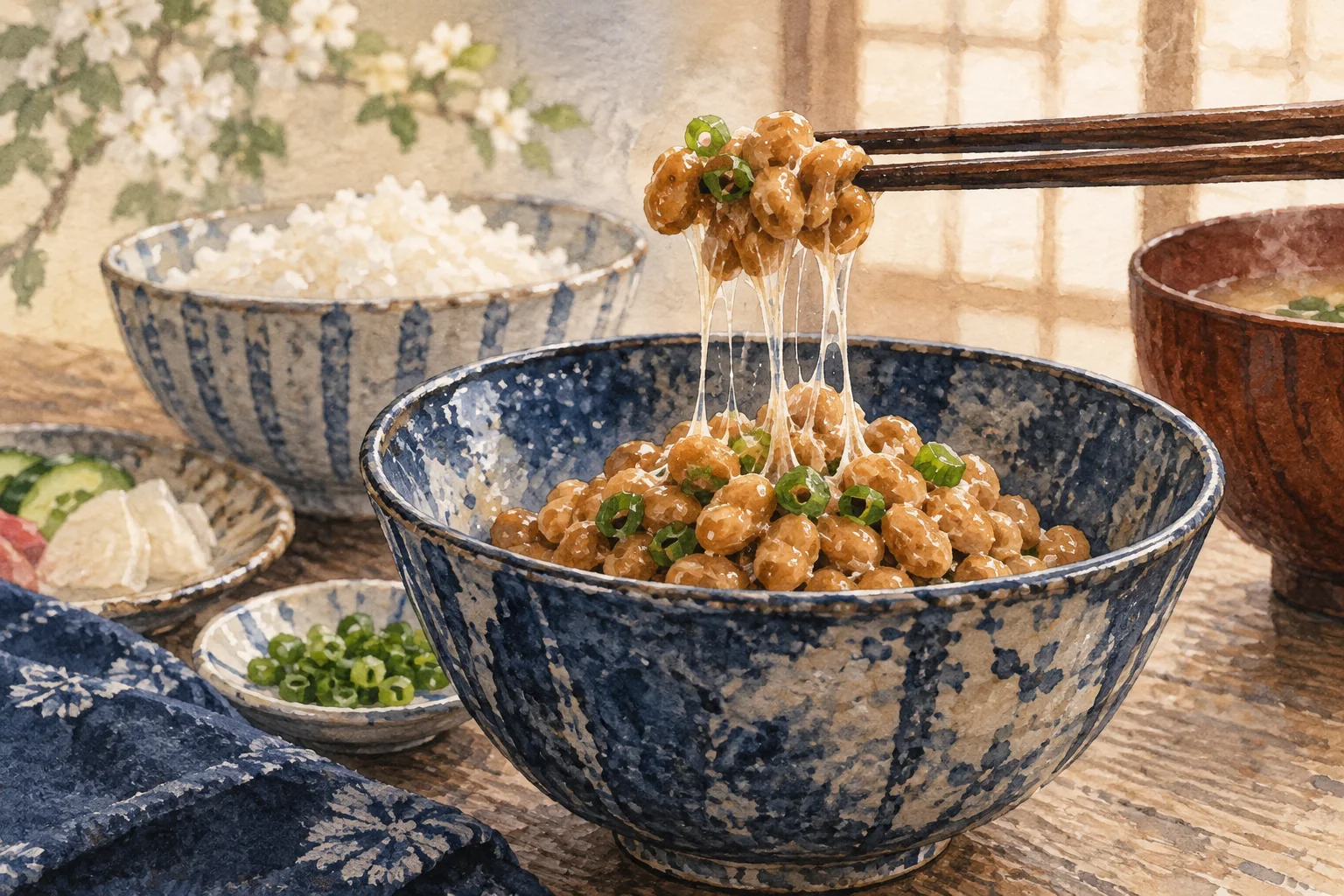
Natto is fermented soybeans, famous for their strong smell and sticky threads.
納豆とは発酵させた大豆で、強いにおいと糸を引く粘りで知られています。
In 30 seconds
The standard explanation
Natto is soybeans fermented with a specific bacterium, which makes them sticky, stringy and strongly aromatic. It is eaten at breakfast, mixed vigorously with soy sauce and mustard and poured over rice. It is very nutritious. It is also a food that many Japanese people, particularly in the west of the country, will not eat.
納豆は、特定の菌で発酵させた大豆で、粘りがあり、糸を引き、においが強いものです。朝食に、醤油とからしを入れてよく混ぜ、ご飯にかけて食べます。栄養価はとても高いです。そして、日本人自身にも、とくに西日本に、食べられない人が少なくない食べものでもあります。
As a short speech
A full paragraph you can read aloud
Natto is fermented soybeans, and it is the food most likely to defeat a visitor to Japan. The beans are fermented with a bacterium that turns them sticky, so that when you lift them with chopsticks they stretch into long threads. The smell is strong and distinctive.
It is eaten at breakfast: you open the pack, add the sachets of soy sauce and mustard, stir it hard for thirty seconds until it goes white and foamy, and pour it over hot rice. Nutritionally it is excellent, high in protein and in vitamin K2, and an enzyme in it called nattokinase is being studied for its effect on blood clots.
The honest part of the explanation is this: plenty of Japanese people cannot eat it either. Consumption is much higher in eastern Japan than in the west, and telling a visitor that not liking natto is completely normal is kinder and more accurate than insisting they try it.
納豆は発酵させた大豆で、日本を訪れた人にとって最も手ごわい食べものです。菌で発酵させることで粘りが出て、箸で持ち上げると長い糸を引きます。においは強く独特です。朝食に食べます。
パックを開け、添付の醤油とからしを入れ、30秒ほど強く混ぜて白く泡立たせ、熱いご飯にかけます。栄養面では優秀で、たんぱく質とビタミンK2が豊富です。含まれるナットウキナーゼという酵素が血栓に与える働きも研究されています。
説明の正直な部分はここです。日本人でも食べられない人はたくさんいます。消費量は西日本より東日本のほうがずっと多く、納豆が苦手なのはまったく普通だと伝えるほうが、無理にすすめるより親切で、事実にも合っています。
Questions people actually ask
And how to answer them.
Why does it smell like that?
The fermenting bacterium breaks down proteins and produces ammonia and other strongly aromatic compounds. The same process is what creates the stickiness and the nutritional value.
発酵させる菌がたんぱく質を分解し、アンモニアなど香りの強い成分を生むからです。同じ働きが粘りと栄養価も作っています。
Do all Japanese people eat it?
No. Consumption is noticeably higher in eastern Japan, and there are plenty of adults here who have never liked it. Nobody will be offended if you decline.
食べません。消費量は東日本のほうがはっきり多く、大人になっても苦手な人はたくさんいます。断っても誰も気を悪くしません。
How should a beginner try it?
Stir it thoroughly first, which softens the smell, add plenty of soy sauce and mustard, and eat it over hot rice rather than on its own. A raw egg mixed in also mellows it.
まずよく混ぜること。においがやわらぎます。醤油とからしをしっかり入れ、単体ではなく熱いご飯にかけて食べてください。卵を落とすと、さらに角が取れます。
A common misunderstanding
MYTHAll Japanese people love natto.
FACTIt divides the country. Surveys repeatedly show a clear east-west split, and disliking natto is an entirely ordinary Japanese position.
Phrases you can use
- Stir it hard before you eat it.食べる前によく混ぜてください。
- Plenty of Japanese people don't like it either.日本人でも苦手な人はたくさんいます。
- It's much more popular in the east of the country.東日本のほうがずっとよく食べます。
- Put it on hot rice, not on its own.そのままではなく、熱いご飯にかけてください。
- You really don't have to finish it.無理に食べきらなくて大丈夫です。
Words you need
- fermented発酵した
- sticky / stringy粘りのある、糸を引く
- acquired taste慣れないと苦手な味
- pungentにおいの強い
- nutritious栄養価の高い
Watch
From YouTubeBackground (Japanese)
納豆は稲わらに付着する枯草菌の一種(納豆菌、Bacillus subtilis var. natto)による発酵食品。現在は培養した菌を使って衛生的に作られる。総務省の家計調査では、納豆の支出額は福島市・水戸市など東日本の都市が上位を占め、和歌山市・大阪市など西日本の都市が下位に並ぶ傾向が長年続いている。納豆に含まれるナットウキナーゼという酵素は血栓を溶かす働きが研究されている。ビタミンK2も豊富で、骨の健康との関連が指摘される。ただし、ワルファリンなどの抗凝固薬を服用している人は摂取を避けるよう指導されるため、説明の際は触れておくとよい。