umeshu
plum liqueur, the drink many Japanese households make at home
梅酒(うめしゅ)
In one line
The shortest answer that works
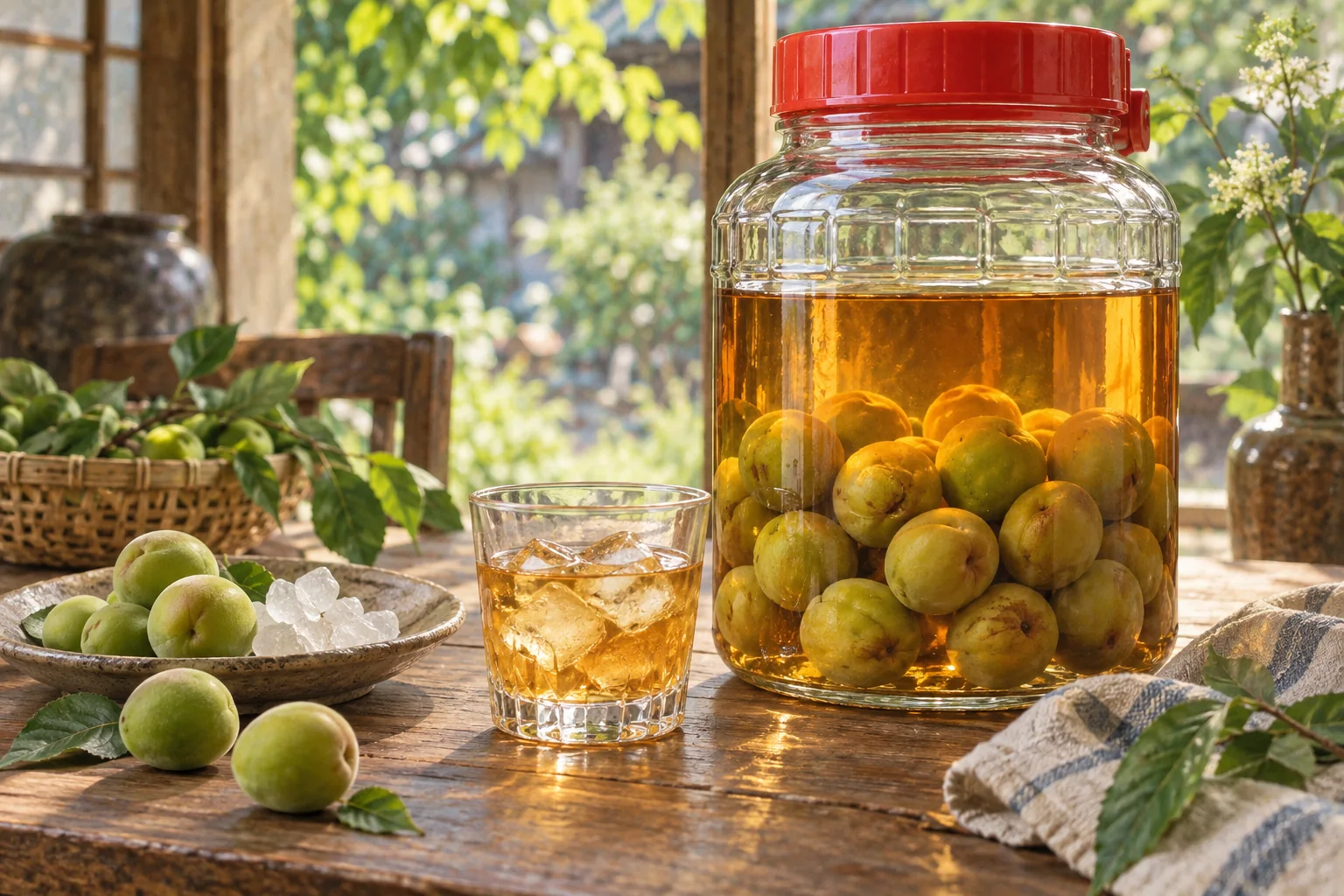
Umeshu is a sweet liqueur of green ume fruit and rock sugar steeped in white spirits, commonly made at home.
梅酒とは、青い梅と氷砂糖を焼酎などに漬けて作る甘い酒で、家庭でもよく作られるものです。
In 30 seconds
The standard explanation
Umeshu is made by putting hard green ume — often translated as plum, though it is closer to an apricot — into a jar with rock sugar and a neutral spirit, usually white liquor or shochu, and leaving it for months. Home brewing of alcohol is illegal in Japan, but steeping fruit in an already-taxed spirit for household use is specifically permitted, which is why so many families know someone who makes it.
梅酒は、固い青梅を氷砂糖と一緒に瓶に入れ、ホワイトリカーや焼酎などの癖のない酒を注いで数か月おいて作ります。日本では酒を自分で醸造することは違法ですが、すでに税を払った酒に果実を漬けるのは、家庭用に限って認められています。だから、作っている人が身内にいる家庭がとても多いのです。
As a short speech
A full paragraph you can read aloud
Umeshu is interesting for a legal reason as much as a culinary one. It is made by taking hard green ume — usually translated as plum, though botanically it sits closer to an apricot — and layering them in a jar with rock sugar and a neutral spirit, traditionally a cheap high-proof white liquor.
You leave it for at least three months and preferably a year; the sugar draws the juice out, the fruit gives it acidity and a strong almond-like aroma, and the result is sweet, sour and anywhere from about ten to twenty percent alcohol, depending on the recipe. The legal point is that home brewing is illegal in Japan, but there is a specific exemption allowing households to steep ingredients in a spirit that has already been taxed, provided it is not for sale.
So this is the best-known alcoholic drink that ordinary Japanese families make themselves, and June, when the green ume appear, is when supermarkets stack jars, sugar and bottles of white liquor together in one display. You drink it on the rocks, with soda, or hot in winter.
梅酒は、料理の話としてだけでなく、法律の話としても面白いものです。作り方は、固い青梅を氷砂糖と交互に瓶へ入れ、癖のない酒を注ぐ。昔から使われるのは度数の高い安いホワイトリカーです。最低でも三か月、できれば一年おきます。
砂糖が果汁を引き出し、梅が酸味と杏仁のような強い香りを与え、甘くて酸っぱい酒になります。度数は作り方によって十〜二十パーセントほどです。法律の点はこうです。日本では酒を自分で醸造することは違法ですが、すでに酒税を払った酒に材料を漬けることは、売らずに家庭で消費する限り認められています。
つまり、ふつうの日本の家庭が自分で作る酒の代表が、これなのです。青梅が出回る六月になると、スーパーは瓶と氷砂糖とホワイトリカーを一か所に積み上げます。飲み方は、氷を入れるか、炭酸で割るか、冬なら湯で割ります。
Questions people actually ask
And how to answer them.
Can you eat the fruit?
Yes, after it has steeped. Raw green ume should not be eaten — they contain a compound that can be harmful in large amounts — but steeping or salting removes the problem.
漬かったあとなら食べられます。生の青梅は食べないでください。多く食べると有害になりうる成分を含みます。漬けるか塩をすることで、その心配はなくなります。
Is it really a plum?
Not exactly. Ume is usually translated as plum but is closer to an apricot, and it is almost never eaten as fresh fruit — only pickled, steeped or made into syrup.
正確には違います。梅はプラムと訳されますが、杏のほうが近く、生の果物として食べることはまずありません。漬けるか、酒にするか、シロップにします。
Can I make it myself in Japan?
Yes, for your own household, using a spirit of 20 percent or more that has already been taxed. Selling it, or brewing alcohol from scratch, is not allowed.
自家用ならできます。酒税を納めた二十度以上の酒を使うことが条件です。売ることや、一から醸造することは認められていません。
A common misunderstanding
MYTHMaking alcohol at home is normal in Japan.
FACTBrewing is illegal. Steeping fruit in an already-taxed spirit for your own household is a specific exemption, and umeshu is the main thing it covers.
Phrases you can use
- Green ume and rock sugar steeped in spirits.青梅と氷砂糖を酒に漬けたものです。
- A lot of families make their own.自分で作る家庭が多いです。
- Brewing is illegal here, but steeping is allowed.醸造は違法ですが、漬けるのは認められています。
- Don't eat the fruit raw — steep it first.生の梅は食べないでください。漬けてからです。
- Try it with soda water.炭酸で割ってみてください。
Words you need
- ume fruit梅
- rock sugar氷砂糖
- neutral spiritホワイトリカー
- to steep漬ける
- liquor tax law酒税法
Watch
From YouTubeBackground (Japanese)
酒税法では自家醸造が禁じられているが、アルコール分20度以上で酒税の納付済みの酒に、米や麦、ぶどうなど一部を除く材料を漬けることは、自家消費に限り認められている。梅酒はこの例外の代表例である。青梅にはアミグダリンが含まれ、生食は避けるべきとされるが、漬け込みや塩蔵によって問題は解消する。梅の主要な産地は和歌山県で、国内生産の多くを占める。