nihonshu
Japanese rice wine
日本酒(にほんしゅ)
In one line
The shortest answer that works
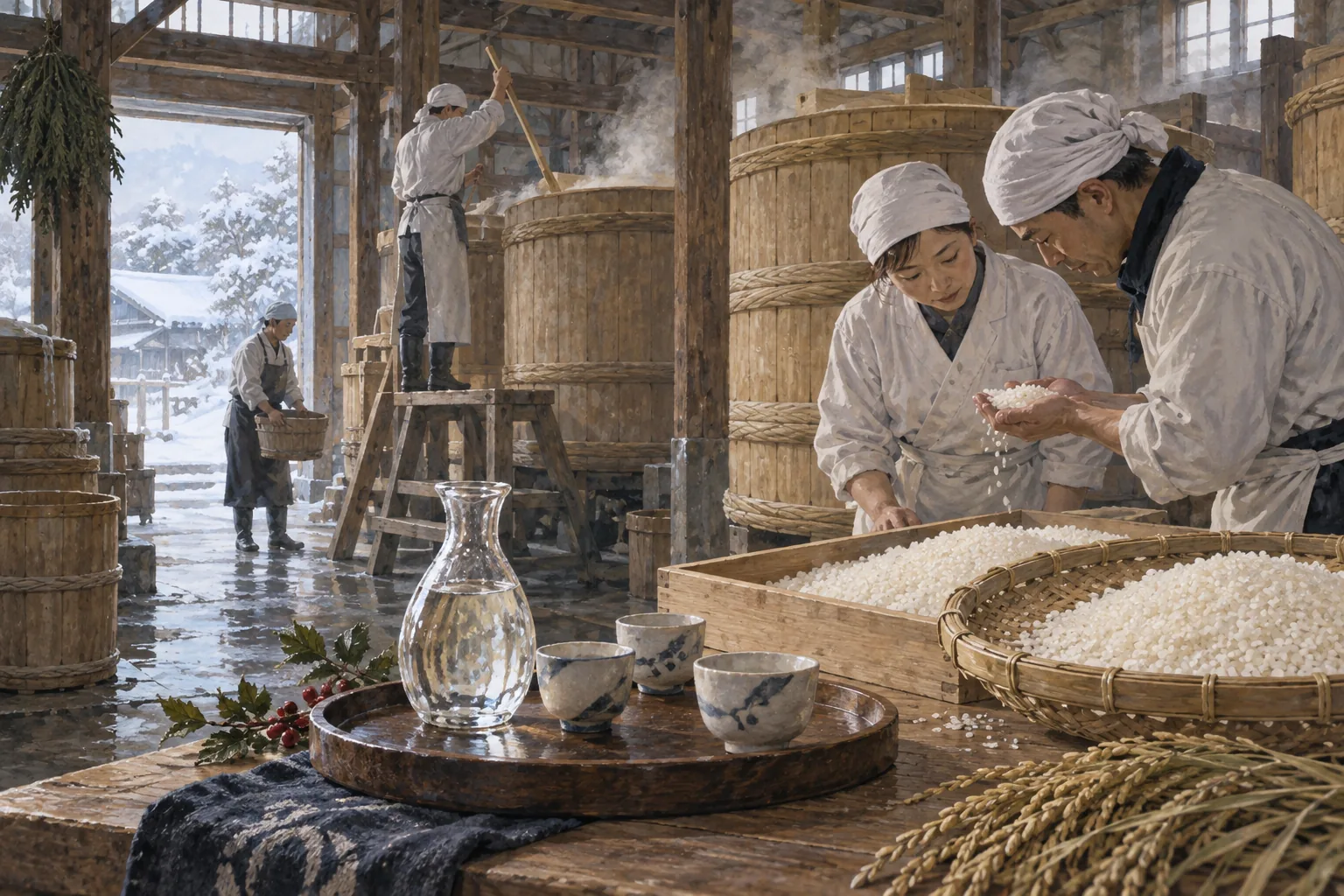
Nihonshu is Japanese rice wine, brewed from rice, water and a mold called koji.
日本酒とは、米と水と麹から醸す日本の酒です。
In 30 seconds
The standard explanation
Nihonshu is brewed from rice, water, yeast and koji, a mold that converts starch into sugar. Because the conversion and the fermentation happen at the same time in the same tank, it reaches a higher alcohol level than beer or most wine naturally would. Note that the word sake in Japanese means alcohol in general, not this drink specifically.
日本酒は米、水、酵母、そしてでんぷんを糖に変える麹というかびから醸されます。糖化と発酵が同じ槽の中で同時に進むため、ビールや多くのワインが自然に達する度数より高くなります。なお日本語の「酒」は酒全般を指す語で、この飲み物だけを指すわけではありません。
As a short speech
A full paragraph you can read aloud
Nihonshu is Japanese rice wine, and the first thing to say is a vocabulary point. The English word sake refers to this drink, but in Japanese sake simply means alcohol of any kind, so a Japanese person asking if you drink sake may mean beer.
The drink itself is made from rice, water, yeast and koji, a mold that breaks the rice starch down into sugar. What makes it unusual is that this conversion happens at the same time as fermentation, in the same tank, which lets it reach around fifteen to twenty percent alcohol without distillation.
Quality categories are based mainly on how much of each grain of rice has been polished away before brewing: the more removed, the cleaner and more fragrant the result, though not necessarily the better. Temperature is a genuine tool rather than a matter of quality. Some are best chilled, some at room temperature, and some warmed, and a good shop will tell you which.
日本酒は米から醸す日本の酒ですが、まず言葉の話をします。英語の sake はこの飲み物を指しますが、日本語の「酒」は種類を問わず酒全般を意味するので、日本人に酒を飲むかと聞かれたら、ビールのことかもしれません。
飲み物そのものは、米、水、酵母、そして米のでんぷんを糖に分解する麹というかびから作られます。珍しいのは、この糖化が発酵と同時に、同じ槽の中で進むことです。そのおかげで蒸留せずに十五から二十パーセントほどの度数に達します。
等級は主に、醸す前に米の粒をどれだけ削ったかによって分かれます。削るほど澄んで香り高くなりますが、必ずしも上等という意味ではありません。温度は品質の問題ではなく、れっきとした使い分けの手立てです。冷やしてよいもの、常温がよいもの、温めてよいものがあり、良い店なら教えてくれます。
Questions people actually ask
And how to answer them.
Is warming it a sign of cheap sake?
No, though that idea circulates. Some styles are made to be warmed and open up at around forty degrees Celsius, while delicate aromatic ones lose their character when heated. Ask the shop, because it depends on the specific bottle.
違いますが、その思い込みはよく流れています。温めることを前提に造られた酒があり、四十度前後で味が開きます。一方、香りの繊細なものは温めると持ち味を失います。銘柄によるので、店に尋ねてください。
How should I pour at a table?
Pour for others rather than for yourself, hold the flask with both hands, and hold your cup up with both hands when someone pours for you. If you have had enough, leave the cup full rather than emptying it.
自分でつがず人につぎ、徳利は両手で持ちます。ついでもらうときは盃を両手で持って受けます。もう十分なら、飲み干さずに盃を満たしたままにしておくとよいです。
A common misunderstanding
MYTHSake is a distilled spirit like vodka.
FACTIt is brewed, not distilled, closer in process to beer than to spirits, and it is usually around fifteen percent alcohol. Shochu is the distilled Japanese drink.
Phrases you can use
- In Japanese, sake means alcohol in general.日本語の酒は酒全般のことです。
- It's brewed, not distilled.蒸留ではなく醸造です。
- Some are better warm, some chilled.温めるものと冷やすものがあります。
- Pour for others, not for yourself.自分ではなく人につぎます。
Words you need
- to brew醸す
- polishing ratio精米歩合
- dry / sweet辛口・甘口
- brewery蔵元
Watch
From YouTubeBackground (Japanese)
日本酒は精米歩合や原料によって分類され、大吟醸、吟醸、純米などの呼び名(特定名称)があります。「純米」は米と米麹と水だけで造ったものを指します。糖化と発酵が同時に進む造り方を並行複発酵と呼び、醸造酒としては高い度数になる理由です。全国に千を超える蔵元があり、地域ごとに米と水と気候が違うため味の傾向も異なります。近年は海外での評価が高まり、輸出が増えています。飲食店では「一合」を単位に注文することが多くあります。