kanreki
birthdays that mark a long life
還暦と長寿の祝い(かんれきとちょうじゅのいわい)
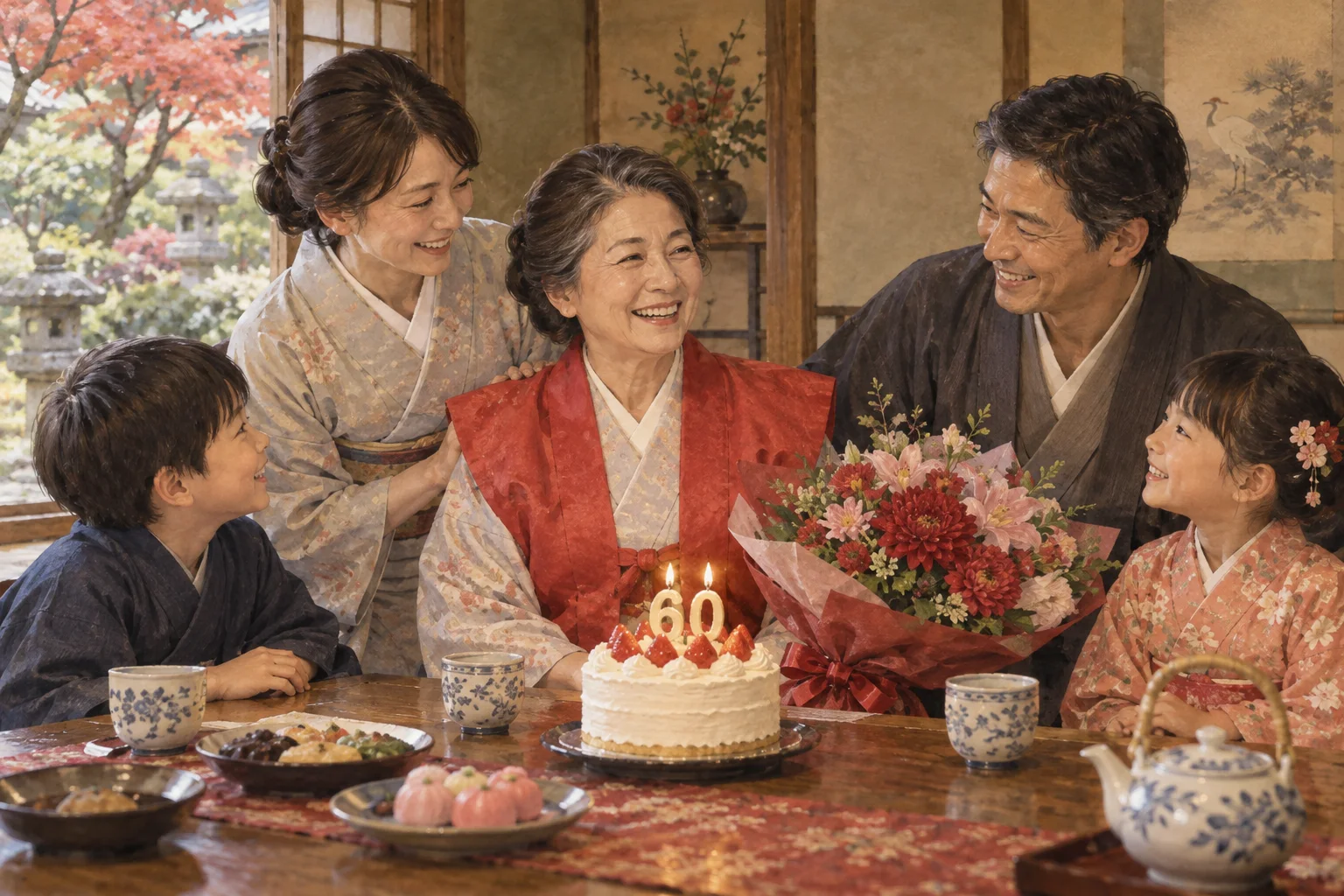
In one line
The shortest answer that works
Kanreki marks turning sixty, when the traditional calendar cycle returns to where you began.
還暦とは、干支が一巡して生まれた年の干支に戻る、満六十歳の祝いです。
In 30 seconds
The standard explanation
The traditional zodiac cycle takes sixty years to return to its start, so turning sixty is celebrated as a symbolic rebirth, marked by giving the person something red, often a red sleeveless jacket of the kind a baby wears. Further celebrations follow at seventy, seventy-seven, eighty, eighty-eight, ninety and ninety-nine.
伝統的な干支の組み合わせは六十年で元に戻るため、満六十歳は生まれ直しとして祝われ、赤いものを贈ります。赤子が着るような赤いちゃんちゃんこが定番です。以後、七十、七十七、八十、八十八、九十、九十九にも祝いがあります。
As a short speech
A full paragraph you can read aloud
The traditional East Asian calendar combines ten stems with twelve branches, and the combination takes sixty years to come back to where it started. That makes your sixtieth birthday the point at which your zodiac sign and your calendar position return to the ones you were born under, so it is treated as a symbolic return to the beginning, a second infancy.
The gift that expresses this is red: traditionally a red sleeveless jacket and cap of the kind a baby wears, which the person puts on for a photograph, and which most people now find slightly embarrassing and do anyway. Red is also a color that wards off harm.
The celebrations continue after that, at seventy, seventy-seven, eighty, eighty-eight, ninety and ninety-nine, most with names derived from how the number looks when written, and each traditionally linked to a color. Because life expectancy has risen so far, the sixtieth is now often marked lightly, with the later ones taken more seriously.
東アジアの伝統的な暦は十の幹と十二の枝を組み合わせ、その組み合わせが元に戻るまでに六十年かかります。そのため満六十歳は、干支も暦の位置も生まれたときのものに戻る地点となり、始まりへの象徴的な回帰、二度目の幼年として扱われます。
それを表す贈り物が赤いものです。伝統的には赤子が着るような赤いちゃんちゃんこと頭巾で、本人はそれを着て写真に収まります。今ではたいていの人が少し照れくさく思いながら、それでも着ます。赤は災いを避ける色でもあります。祝いはそのあとも続きます。
七十、七十七、八十、八十八、九十、九十九。名の多くは数字を書いたときの形から来ていて、それぞれに縁の色があるとされます。寿命が大きく伸びたため、今では還暦は軽く済ませ、その先の祝いのほうを重く見ることが多くなりました。
Questions people actually ask
And how to answer them.
Why sixty and not another number?
Because the calendar cycle of ten stems and twelve branches repeats every sixty years. At sixty your combination returns to the one you were born under, which is read as completing a full round and starting again.
十干と十二支の組み合わせが六十年で一巡するからです。六十歳で、生まれたときと同じ組み合わせに戻ります。それが一周を終えて始まりに戻ることとして読まれます。
What are the later celebrations called?
Seventy is koki, seventy-seven kiju, eighty sanju, eighty-eight beiju and ninety-nine hakuju. Most of the names come from how the number looks when written in characters, which is a piece of wordplay built into the custom.
七十は古希、七十七は喜寿、八十は傘寿、八十八は米寿、九十九は白寿です。名の多くは、その数を漢字で書いたときの形から来ていて、この習わしには文字遊びが組み込まれています。
Phrases you can use
- The zodiac cycle comes back around at sixty.干支は六十年で一巡します。
- You give something red.赤いものを贈ります。
- It's treated as a second infancy.二度目の赤子として扱われます。
- There are celebrations at seventy-seven and eighty-eight too.七十七と八十八にも祝いがあります。
Words you need
- long life長寿
- zodiac cycle干支の一巡
- to celebrate祝う
- red jacket赤いちゃんちゃんこ
Watch
From YouTubeBackground (Japanese)
長寿の祝いの名は数字の字形に由来するものが多く、喜寿は「喜」の草書が七十七に見えること、米寿は「米」が八十八に分解できること、白寿は「百」から一を取ると「白」になることから来ています。それぞれに色があり、還暦は赤、古希と喜寿は紫、傘寿と米寿は黄または金茶、白寿は白とされます。還暦以外は数え年で祝う習わしでしたが、今は満年齢で行うことも多くなりました。