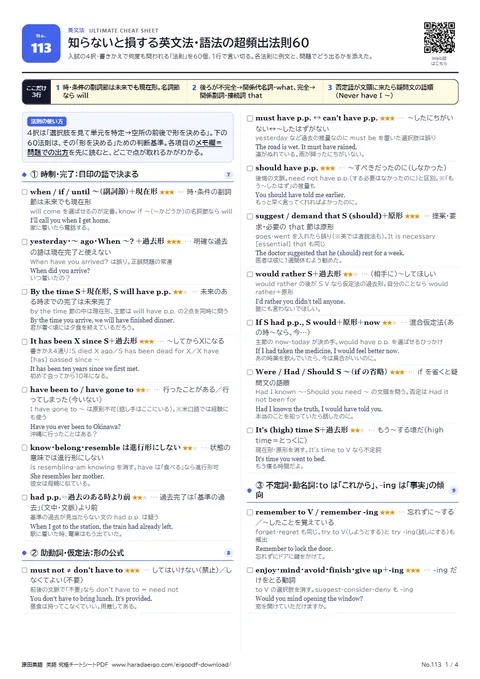
まずはこの3つ
- 時・条件の副詞節は未来でも現在形。名詞節なら will
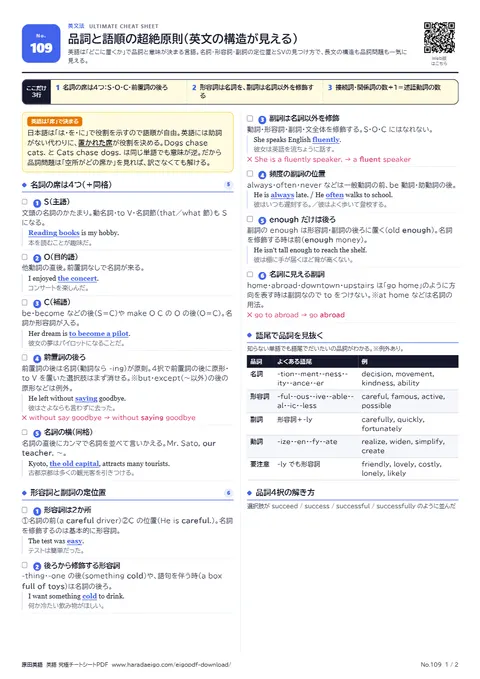
- 後ろが不完全→関係代名詞・what、完全→関係副詞・接続詞 that
- 否定語が文頭に来たら疑問文の語順(Never have I 〜)
法則の使い方
4択は「選択肢を見て単元を特定→空所の前後で形を決める」。下の60法則は、その「形を決める」ための判断基準。各項目のメモ欄=問題での出方を先に読むと、どこで点が取れるかがわかる。
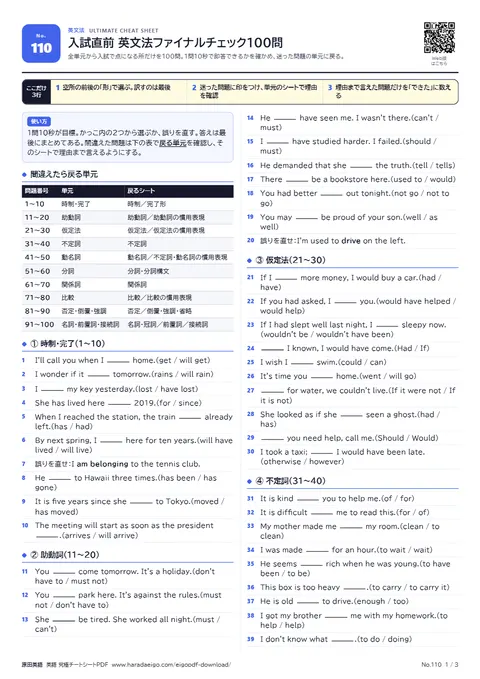
1時制・完了:目印の語で決まる7
- when / if / until 〜(副詞節)+現在形★★★時・条件の副詞節は未来でも現在形will come を選ばせるのが定番。know if 〜(〜かどうか)の名詞節なら willI'll call you when I get home.家に着いたら電話する。
- yesterday・〜 ago・When 〜? +過去形★★★明確な過去の語は現在完了と使えないWhen have you arrived? は誤り。正誤問題の常連When did you arrive?いつ着いたの?
- By the time S+現在形, S will have p.p.★★★未来のある時までの完了は未来完了by the time 節の中は現在形、主節は will have p.p. の2点を同時に問うBy the time you arrive, we will have finished dinner.君が着く頃には夕食を終えているだろう。
- It has been X since S+過去形★★★〜してからXになる書きかえ4通り:S died X ago/S has been dead for X/X have [has] passed since 〜It has been ten years since we first met.初めて会ってから10年になる。
- have been to / have gone to★★★行ったことがある/行ってしまった(今いない)I have gone to 〜 は原則不可(話し手はここにいる)。※米口語では経験にも使うHave you ever been to Okinawa?沖縄に行ったことはある?
- know・belong・resemble は進行形にしない★★★状態の意味では進行形にしないis resembling・am knowing を消す。have は「食べる」なら進行形可She resembles her mother.彼女は母親に似ている。
- had p.p.=過去のある時より前★★★過去完了は「基準の過去」(文中・文脈)より前基準の過去が見当たらない文の had p.p. は疑うWhen I got to the station, the train had already left.駅に着いた時、電車はもう出ていた。
2助動詞・仮定法:形の公式8
- must not ≠ don't have to★★★してはいけない(禁止)/しなくてよい(不要)前後の文脈で「不要」なら don't have to = need notYou don't have to bring lunch. It's provided.昼食は持ってこなくていい。用意してある。
- must have p.p. ↔ can't have p.p.★★★〜したにちがいない↔〜したはずがないyesterday など過去の推量なのに must be を置いた選択肢は誤りThe road is wet. It must have rained.道がぬれている。雨が降ったにちがいない。
- should have p.p.★★★〜すべきだったのに(しなかった)後悔の文脈。need not have p.p.(する必要はなかったのに)と区別。※「もう〜したはず」の推量もYou should have told me earlier.もっと早く言ってくれればよかったのに。
- suggest / demand that S (should)+原形★★★提案・要求・必要の that 節は原形goes・went を入れたら誤り(※英では直説法も)。It is necessary [essential] that も同じThe doctor suggested that he (should) rest for a week.医者は彼に1週間休むよう勧めた。
- would rather S+過去形★★★(相手に)〜してほしいwould rather の後が S V なら仮定法の過去形。自分のことなら would rather+原形I'd rather you didn't tell anyone.誰にも言わないでほしい。
- If S had p.p., S would+原形+now★★★混合仮定法(あの時〜なら、今…)主節の now・today が決め手。would have p.p. を選ばせるひっかけIf I had taken the medicine, I would feel better now.あの時薬を飲んでいたら、今は具合がいいのに。
- Were / Had / Should S 〜(if の省略)★★★if を省くと疑問文の語順Had I known 〜・Should you need 〜 の文頭を問う。否定は Had it not been forHad I known the truth, I would have told you.本当のことを知っていたら話したのに。
- It's (high) time S+過去形★★★もう〜する頃だ(high time=とっくに)現在形・原形を消す。It's time to V なら不定詞It's time you went to bed.もう寝る時間だよ。
3不定詞・動名詞:to は「これから」、-ing は「事実」の傾向9
- remember to V / remember -ing★★★忘れずに〜する/〜したことを覚えているforget・regret も同じ。try to V(しようとする)と try -ing(試しにする)も頻出Remember to lock the door.忘れずにドアに鍵をかけて。
- enjoy・mind・avoid・finish・give up+-ing★★★-ing だけをとる動詞to V の選択肢を消す。suggest・consider・deny も -ingWould you mind opening the window?窓を開けていただけますか。
- look forward to -ing★★★この to は前置詞→後ろは -ingbe used to・object to・when it comes to も同じ。to+原形を選ばせるI'm looking forward to seeing you.会えるのを楽しみにしている。
- It is kind of 人 to V★★★人の性質を言う形容詞は for ではなく of「人 is 形容詞」が言えれば of(You are kind.)It was careless of you to leave the door open.ドアを開けっぱなしにするとは不注意だったね。
- too 〜 to V(主語=目的語なら O を重ねない)★★★〜すぎて…できないtoo heavy to carry it は誤り。so 〜 that S can't V なら it が必要This box is too heavy for me to carry.この箱は重すぎて私には運べない。
- make / let / have+O+原形★★★使役動詞は原形。make は受動態で to が復活I was made to wait. の to を問う。get は get O to VMy mother made me clean my room.母は私に部屋を掃除させた。
- S seem(s) to have p.p.★★★=It seems that S+過去形(前のこと)書きかえで完了不定詞を問う。seemed なら It seemed that S had p.p.He seems to have been ill.彼は病気だったようだ。
- so that S can [will] V★★★Sが〜できるように(目的)=in order to V/so as to V。so that の前にカンマがあれば「その結果」が多いSpeak louder so that everyone can hear you.皆に聞こえるように大きな声で話して。
- lest S (should)+原形★★★〜しないように(=for fear that)lest に否定の意味が入っている→後ろに not を置かない。※硬い書き言葉He spoke quietly lest he (should) wake the baby.彼は赤ちゃんを起こさないよう小声で話した。
4分詞・関係詞:「する/される」と「完全/不完全」8
- 名詞が「する」→-ing、「される」→p.p.★★★分詞は名詞との関係で選ぶSVOC も同じ:I had my hair cut.(髪は切られる)。※fallen leaves の p.p. は完了Look at the broken window.割れた窓を見て。
- 人が感じる→-ed、物が感じさせる→-ing★★★感情動詞の分詞I was boring.(退屈な人間だった)は意味が変わる誤りI was bored with the boring movie.退屈な映画にうんざりした。
- 分詞構文の主語=主節の主語★★★違えば主語を残す(独立分詞構文)It being fine, 〜・There being no bus, 〜 を問うThere being no bus, we had to walk.バスがなかったので、歩くしかなかった。
- with+O+-ing / p.p.★★★Oが〜している[されている]状態でwith his arms folded・with his eyes closed(O は「される」側)He listened with his eyes closed.彼は目を閉じて聞いていた。
- 後ろが不完全→関係代名詞、完全→関係副詞★★★先行詞ではなく後ろの文で決めるthe town (which) I visited / the town where I was bornThis is the town where I was born.ここは私が生まれた町だ。
- what=the thing(s) which★★★先行詞を含む→先行詞の後には置けない後ろが完全なら that、不完全なら what(接続詞 that との区別)What he said is true.彼の言ったことは本当だ。
- A is to B what C is to D★★★AとBの関係はCとDの関係と同じ整序で what の位置を問う。並べ方は「A is to B」が先Water is to fish what air is to us.水と魚の関係は、空気と人間の関係と同じだ。
- カンマ・前置詞の直後に that は不可★★★カンマ・前置詞の後は who・whom・which などを使う, which は前の文全体も指せるHe said nothing, which made her angry.彼が何も言わなかったので、彼女は怒った。
5比較:形をまぜない7
- The+比較級 S V, the+比較級 S V★★★〜すればするほど…形容詞+名詞はセットで前へ:The more money you have, 〜The more you practice, the better you get.練習すればするほど上達する。
- much / far / even+比較級★★★比較級を強めるのに very は使えないvery more・very better を消す。最上級は by far the 〜This is much better than that.こちらの方がずっといい。
- 比べる物をそろえる(that of / those of)★★★名詞のくり返しは that・those で受けるJapan's climate is milder than England. は誤りThe population of Tokyo is larger than that of Osaka.東京の人口は大阪より多い。
- no more than = only / no less than = as much [many] as★★★no は「少ない!」「多い!」という気持ちnot more than=at most、not less than=at least と区別I have no more than 500 yen.500円しか持っていない。
- A is no more B than C is D★★★AがBでないのはCがDでないのと同じthan の後は肯定形でも否定で訳す(クジラ構文)A whale is no more a fish than a horse is.クジラが魚でないのは、馬が魚でないのと同じだ。
- 比較級 than any other+単数名詞★★★=最上級any other mountains(複数)は誤り。No other+単数 〜 比較級 than も同じMt. Fuji is higher than any other mountain in Japan.富士山は日本のほかのどの山より高い。
- not so much A as B★★★AというよりむしろB(=B rather than A)as の位置と A・B の順番を問う。B rather than A への書きかえで逆にしないHe is not so much a scholar as a writer.彼は学者というより作家だ。
6否定・倒置・強調:語順が点になる8
- not+all / always / necessarily★★★部分否定(すべて〜とは限らない)全体否定 none・never・not 〜 at all と区別The rich are not always happy.金持ちが幸せとは限らない。
- 否定語(Never・Little・Rarely)+V+S★★★否定の副詞が文頭→疑問文の語順Never I have seen は誤り。Little did I dream 〜 も頻出Never have I seen such a beautiful sunset.こんなに美しい夕日は見たことがない。
- No sooner had S p.p. than S+過去形★★★〜するとすぐに…than を when にしない。Hardly [Scarcely] had S p.p. when [before] と組み合わせを区別No sooner had I left home than it began to rain.家を出たとたん雨が降りだした。
- It is not until A that B★★★AしてはじめてBする=Not until A did B(倒置)/B only after A。整序の常連It was not until I lost my health that I realized its value.健康を失ってはじめてその価値に気づいた。
- It is 〜 that(強調構文)★★★It is と that を外して文が完全なら強調構文強調する語句が人なら who も可。形式主語との区別を問うIt was Ken that broke the window.窓を割ったのはケンだった。
- anything but ≠ nothing but★★★決して〜ない/〜だけ(only)far from=決して〜ない も同じグループThe test was anything but easy.テストは決してやさしくなかった。
- never 〜 without -ing★★★〜すると必ず…する(二重否定)=Whenever 〜, S always …。書きかえで出るThey never meet without arguing.2人は会えば必ず口論になる。
- So+助動詞+S / Neither+助動詞+S★★★〜もそうだ/〜もそうではない肯定には So do I、否定には Neither [Nor] do I。do・be・can は前の文に合わせるAI can't swim.BNeither can I.A:泳げないんだ。/B:私も。
7名詞・語法・一致:1語で正誤が決まる13
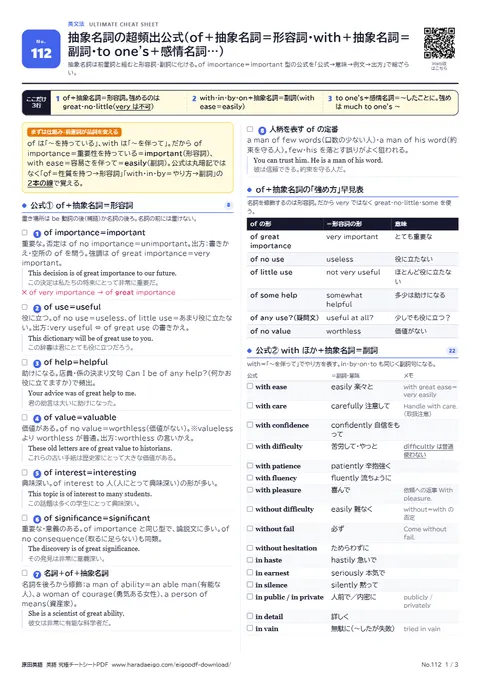
- of+抽象名詞=形容詞★★★of importance=important強めるのは great(of great use)。詳しくは「抽象名詞の公式」シートThis book is of great use to beginners.この本は初心者にとても役に立つ。
- with+抽象名詞=副詞★★★with ease=easilywith difficulty(苦労して)は -ly の形がないShe solved the puzzle with ease.彼女はそのパズルを楽々と解いた。
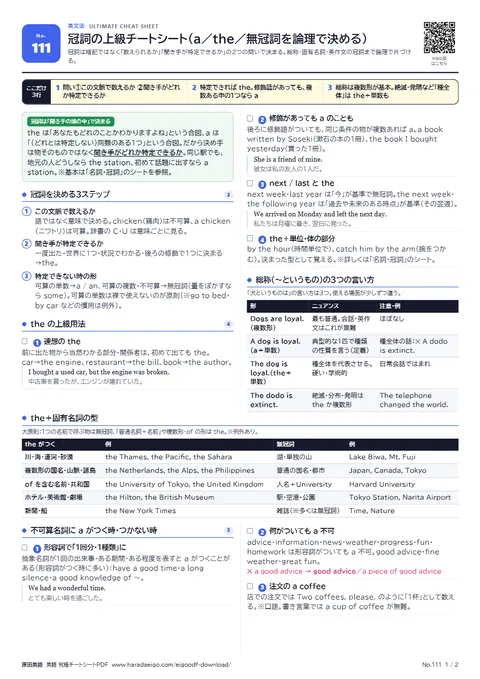
- information・advice・furniture は不可算★★★a も -s もつかない数える時は a piece of 〜。many → much に直すCan you give me some advice?助言をもらえますか。
- discuss・marry・enter・reach+O★★★前置詞のいらない他動詞discuss about・marry with・reach at を消すWe discussed the problem.私たちはその問題について話し合った。
- rob A of B(分離の of)★★★AからBを奪うdeprive・clear・cure も同じ型。steal は steal B from AA man robbed her of her bag.男が彼女からバッグを奪った。
- remind A of B(関連の of)★★★AにBを思い出させるinform・convince・warn A of B も同じ型This song reminds me of my school days.この歌を聞くと学生時代を思い出す。
- prevent A from -ing(妨害の from)★★★Aが〜するのを妨げるkeep・stop・prohibit・discourage も同じ型。無生物主語で頻出The rain prevented us from going out.雨のせいで出かけられなかった。
- provide A with B(供給の with)★★★AにBを与える=provide B for [to] A。supply・present も同じ型The school provides students with tablets.学校は生徒にタブレットを支給している。
- the number of → 単数/a number of → 複数★★★〜の数/多くの〜主語と動詞の一致の定番The number of tourists is increasing.観光客の数は増えている。
- A as well as B → A に一致★★★either A or B・not only A but also B は B に一致動詞に近い方ではなく「話の中心」に合わせるThe teacher as well as the students was surprised.生徒だけでなく先生も驚いた。
- Do you know where he lives?★★★間接疑問は S V の語順Yes/No で答える文は Do you know が先、think・believe なら疑問詞が先What do you think he wants?彼は何がほしいと思う?
- during+名詞 / while+S V★★★前置詞か接続詞かbecause of と because、despite と though も同じ見分け方I fell asleep during the movie.映画の間に眠ってしまった。
- by=期限 / until=継続★★★〜までに/〜までずっとfinish・return は by、wait・stay は until。※not 〜 until=〜まで…しないPlease return the book by Friday.金曜日までに本を返してください。
書きかえ問題の定番セット
上の法則が書きかえ問題ではこう組み合わさる。左右を両方書けるようにする。
| もとの文 | 書きかえ |
|---|---|
| He died ten years ago. | It has been ten years since he died./He has been dead for ten years. |
| As soon as I left home, it began to rain. | No sooner had I left home than 〜/Hardly had I left home when 〜/On leaving home, 〜 |
| I realized its value only after I lost it. | It was not until I lost it that I realized its value./Not until I lost it did I realize its value. |
| If it were not for water, 〜 | Without water, 〜/But for water, 〜/Were it not for water, 〜 |
| It seems that he was ill. | He seems to have been ill. |
| The box is so heavy that I can't carry it. | The box is too heavy for me to carry. |
| I'm sorry I can't help you. | I wish I could help you. |
| This is very important. | This is of great importance. |
法則を貫く2本の軸
60法則のうち多くは2つの軸で説明できる。①形の相性:to=これから、-ing=事実(の傾向)、過去形=距離(仮定法・丁寧)。②構造:後ろが完全か不完全か、主語はどれか。迷ったら意味より先に、この2つで選択肢を切る。
法則チェックテスト
- 1Let's wait here until the rain .正解は stops。時の副詞節→現在形
- 2It is essential that every student the rules.正解は follow。必要の that 節→原形
- 3I'd rather you smoke here.正解は didn't。would rather S+過去形
- 4He walked carefully lest he on the ice.正解は should slip。lest の後に not は置かない
- 5Light is to plants food is to animals.正解は what。A is to B what C is to D
- 6No sooner had he sat down the phone rang.正解は than。No sooner 〜 than
- 7It was not I got home that I noticed my phone was missing.正解は until。It is not until A that B
- 8The heavy snow prevented the train on time.正解は from arriving。prevent A from -ing
- 9Either you or Ken to go.正解は has。either A or B→B に一致
- 10書きかえ:He died five years ago. = He has been for five years.
超頻出の文法法則を一覧にまとめ、A4 4枚で印刷できる無料PDFにしました。Web版は赤シート・覚えたチェック・カード・4択テストつき。