 ワークシート
 ぬりえ
 迷路
理想の人体を求めて!動物たちにも意味がかくされた銅版画。In search of the perfect human body! Even the animals hide meanings.
 美術館アンテナ:アルブレヒト・デューラーの作品に会える展覧会
この作品のお話
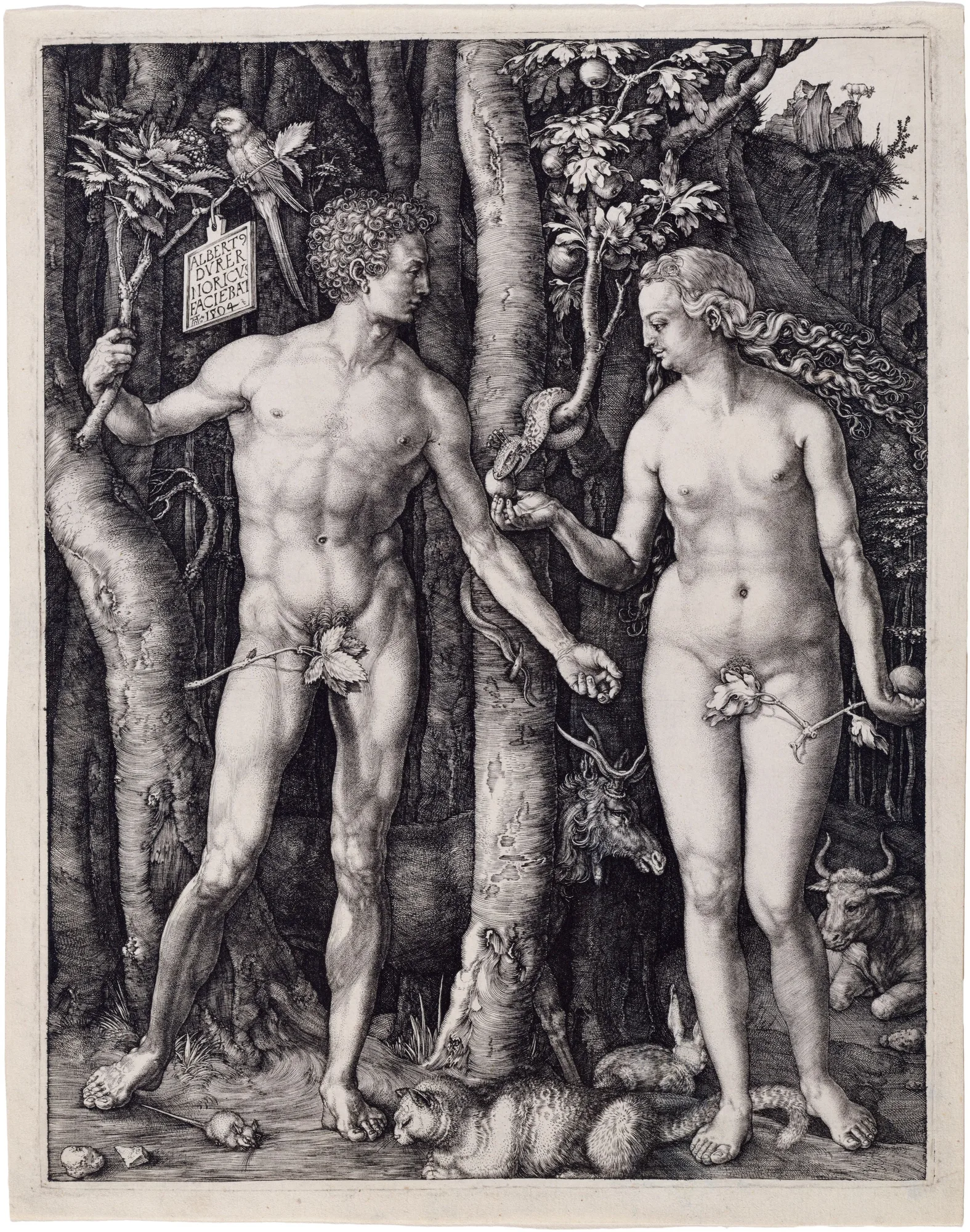
Story楽園の森で、最初の人間アダムとイヴが、知恵の木の禁じられた実を食べる直前の姿で描かれています。ドイツの画家アルブレヒト・デューラーが1504年に作った銅版画で、銅の板に細い線を彫り、インクをつめて紙に刷ったものです。この画像は、ニューヨークのモルガン・ライブラリー&ミュージアムが持つ一枚です。
In the forest of Paradise, Adam and Eve, the first humans, are shown just before they eat the forbidden fruit from the Tree of Knowledge. The German artist Albrecht Dürer made this engraving in 1504. He cut fine lines into a copper plate, filled them with ink and printed them on paper. This image shows a print owned by the Morgan Library & Museum in New York.
イタリアの芸術に強くひかれていたデューラーは、古代の彫刻のようにつり合いのとれた、理想の人体を研究していました。アダムとイヴの姿は、その研究の成果です。木の幹や動物の毛、葉っぱまで、細い線の重なりだけで明るさや手ざわりを表しています。左上の札には、ラテン語で「ニュルンベルクのアルブレヒト・デューラーが作った 1504」と彫られています。
Dürer studied the ideal human body, perfectly balanced like ancient statues. The figures of Adam and Eve are the result of that study. Using only layers of fine lines, he showed light and texture, from tree bark to animal fur and leaves. A sign at the upper left says in Latin, 'Albrecht Dürer of Nuremberg made this, 1504.'
版画は同じ絵を何枚も刷れるため、この作品はヨーロッパ中に広まり、多くの画家がお手本にしました。デューラーは版画を売ることで名声と収入を得た、最初期の芸術家の一人です。今も世界各地の美術館に、この作品の刷りが大切に保管されていて、刷りによってインクの濃さや紙の状態が少しずつちがうのも見どころです。
Because many copies of a print can be made, this work spread all over Europe, and many artists learned from it. Dürer was one of the first artists to become famous and earn money by selling prints. Today, museums around the world carefully keep copies of this print. It is interesting that each copy differs a little in the darkness of the ink and the condition of the paper.
これは白黒の版画です。アダムとイヴが森に立っています。ヘビがイヴに木の実をわたしています。絵の中にはたくさんの動物がいます。ネコとネズミをさがしてみよう!
This is a print in black and white. Adam and Eve stand in a forest. A snake gives Eve a fruit. Many animals are in the picture. Look for the cat and the mouse!
英語のレベルは上の「やさしい/ふつう」で切りかえられます。
えっ!?な裏ネタ
Secretsネコ、ウサギ、ヘラジカ、牛は、昔の考え方「四体液説」による人の4つの気質(怒りっぽい・陽気・ゆううつ・のんびり)を表すという説があります。人間が楽園を失うと、この4つのバランスがくずれると考えられていました。
Some say the cat, the rabbit, the elk and the ox stand for the four temperaments of an old theory: angry, cheerful, gloomy and calm. People believed these four became unbalanced when humans lost Paradise.
2人の足もとには、ネコと、そのすぐそばにネズミがいます。楽園ではまだ、動物どうしもあらそいません。でも木の実が食べられた瞬間、この平和はこわれてしまう…。そんな張りつめた一瞬だと考えられています。
At their feet are a cat and, close by, a mouse. In Paradise, animals do not yet fight each other. But the moment the fruit is eaten, this peace will end. The scene is thought to show that tense moment.
アダムがつかむ枝はナナカマドで「生命の木」、イヴのそばの木はイチジクで「知恵の木」を表すという読み方があります。2人はちょうど、2本の木の間に立っているのです。
One reading says the branch Adam holds is a mountain ash, the Tree of Life, and the tree beside Eve is a fig, the Tree of Knowledge. The two are standing right between the two trees.
未完成の試し刷りが2点残っています。森の多くがすでに彫られている一方で、人物や動物の一部はまだできあがっていません。デューラーがどんな順番で版を彫ったのかを知る、貴重な手がかりです。
Two unfinished trial proofs survive. Much of the forest was already engraved, while parts of the figures and animals were still incomplete. They are valuable clues to the order in which Dürer worked on the plate.
ここを見て!
Look Closer1サインの札The signature sign
枝にぶら下がる札。「ニュルンベルクのアルブレヒト・デューラーが作った 1504」とラテン語で書かれています。上にはオウムがとまっています。
A sign hangs from a branch. In Latin it says Albrecht Dürer of Nuremberg made this in 1504. A parrot sits above it.
2ヘビと木の実The snake and the fruit
木に巻きついたヘビが、イヴに木の実をわたしています。
A snake wrapped around the tree gives Eve a fruit.
3ネコとネズミA cat and a mouse
足もとで丸くなるネコと、すぐそばのネズミ。今はまだ、なかよし?
A cat curls up at their feet, close to a mouse. Are they still friends?
4ヘラジカThe elk
木のかげから顔を出すヘラジカ。右のほうには牛、イヴの足もとにはウサギもいます。
An elk looks out from behind the tree. There is also an ox on the right and a rabbit near Eve's feet.
英語で名画を語ろう
Talk about Art in EnglishDürer signed his name on a little sign in the tree.
デューラーは木にかかった小さな札に名前を書き入れました。
💡 sign は動詞で「署名する」。有名人の「サイン」は autograph と言います。
英語で説明すると… Describe it
これは白黒の版画です。中央には、ヘビが巻きついた木があります。左にアダム、右にイヴが立っています。足もとには、ネコとネズミとウサギがいます。
This is a black-and-white print. In the center, there is a tree with a snake on it. Adam stands on the left, and Eve stands on the right. At their feet, there are a cat, a mouse and a rabbit.
考えてみよう Think & Talk
- デューラーはなぜ、この版画にたくさんの動物を入れたのだと思いますか?Why do you think Dürer put so many animals in this print?
- あなたにとって「完ぺきな体」とは、どんな姿ですか?What makes a body look 'perfect' to you?
この作品の英単語
WordsThis engraving was made in 1504.
この銅版画は1504年に作られました。
Dürer studied the ideal human body.
デューラーは理想の人体を研究しました。
The serpent gives Eve a fruit.
ヘビがイヴに木の実をわたします。
Many copies were printed and sold.
たくさんの刷りが作られ、売られました。
ミニクイズ
QuizQ. 左上の札に書かれているのは?What is written on the sign at the upper left?
「ニュルンベルクのアルブレヒト・デューラーが作った 1504」と書かれています。
It says 'Albrecht Dürer of Nuremberg made this, 1504.'
ウソ?ホント? 版画なので、同じ絵が何枚も刷られた。Because it is a print, many copies were made.
ヨーロッパ中に広まり、今も各地の美術館にあります。
It spread across Europe and is now in many museums.
ウソ?ホント? この作品は、木の板に油絵の具で描かれている。This work is painted in oil on a wooden panel.
銅の板に線を彫って、紙に刷った銅版画です。
It is an engraving: lines were cut into copper and printed on paper.
 画像の出典とライセンス / Image credit
- PDAlbrecht Dürer, Adam and Eve, 1504, Engraving.jpg(Wikimedia Commons)
ライセンス:Public domain(パブリックドメイン)/作者・撮影者の表記:Albrecht Dürer
この作品は、作者の死後長い年月がたち著作権の保護期間が終わった「パブリックドメイン」の作品です。画像は平面の作品を忠実に写したもので、新しい著作権は生じません(Wikimedia Commons の PD-Art の考え方)。 所蔵:モルガン・ライブラリー&ミュージアム(この刷り)(The Morgan Library & Museum (this impression))。画像は表示のために縮小・WebP 形式に変換しています。