 テクノロジー・未来
木なのに向こうが透けて見える「透明な木材」。作り方は意外とシンプルだった
 2026.10.02
 English Corner(A2〜B2・4択クイズ)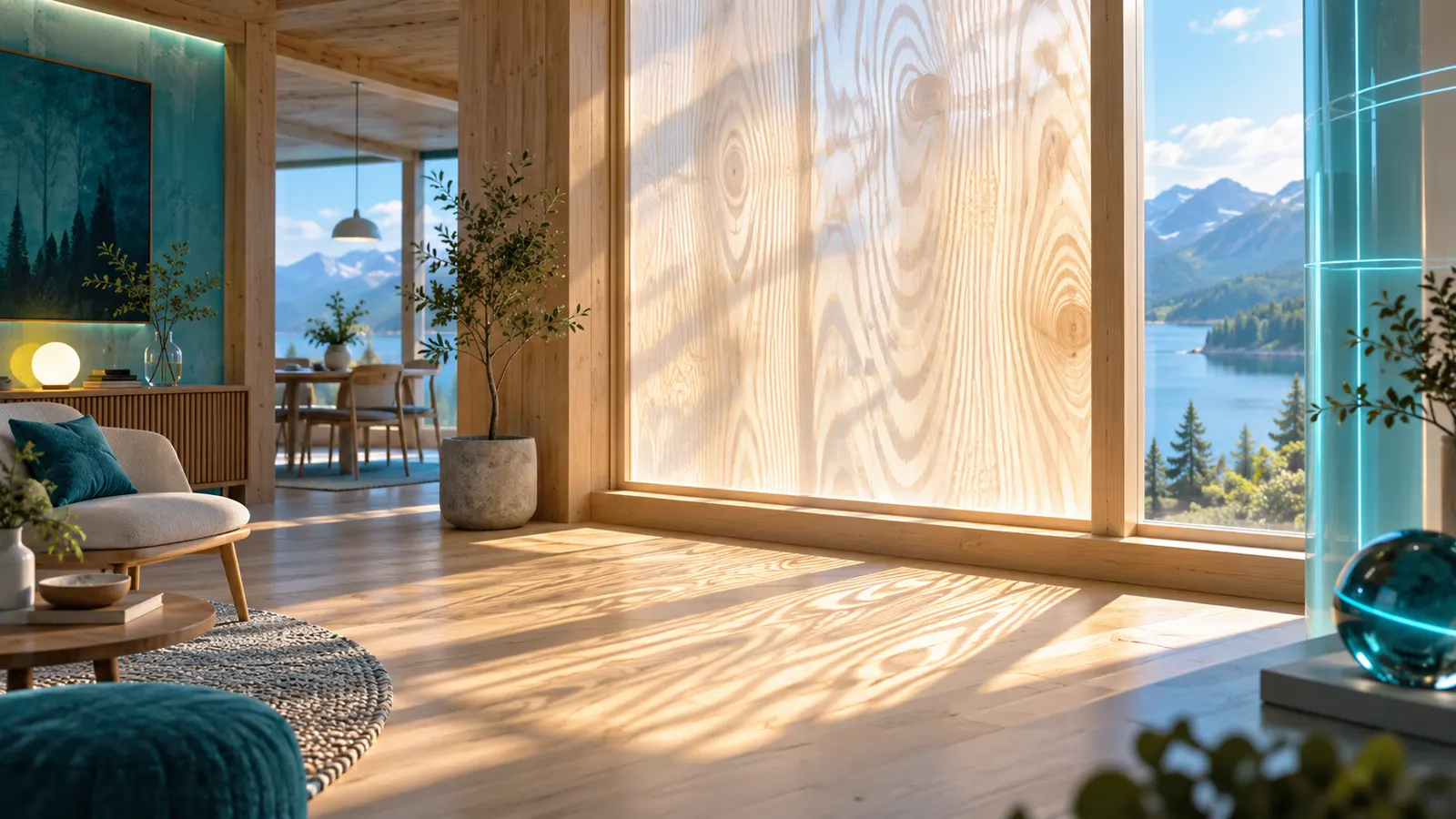
 読む前に予想してみよう!
透明な木材は、木の茶色のもとになる成分を取り除いて作る
色のもとになるリグニンを除いたり脱色したりしてから、透明な樹脂をしみ込ませる。
 研究カード(どんな研究?)
- 対象
- 色のもと(リグニン)を抜いた木材に樹脂をしみ込ませた材料
- 規模
- 実験室スケールの試料
- 研究の種類
- 材料研究・レビュー
- 確かさ
- ★★★☆☆
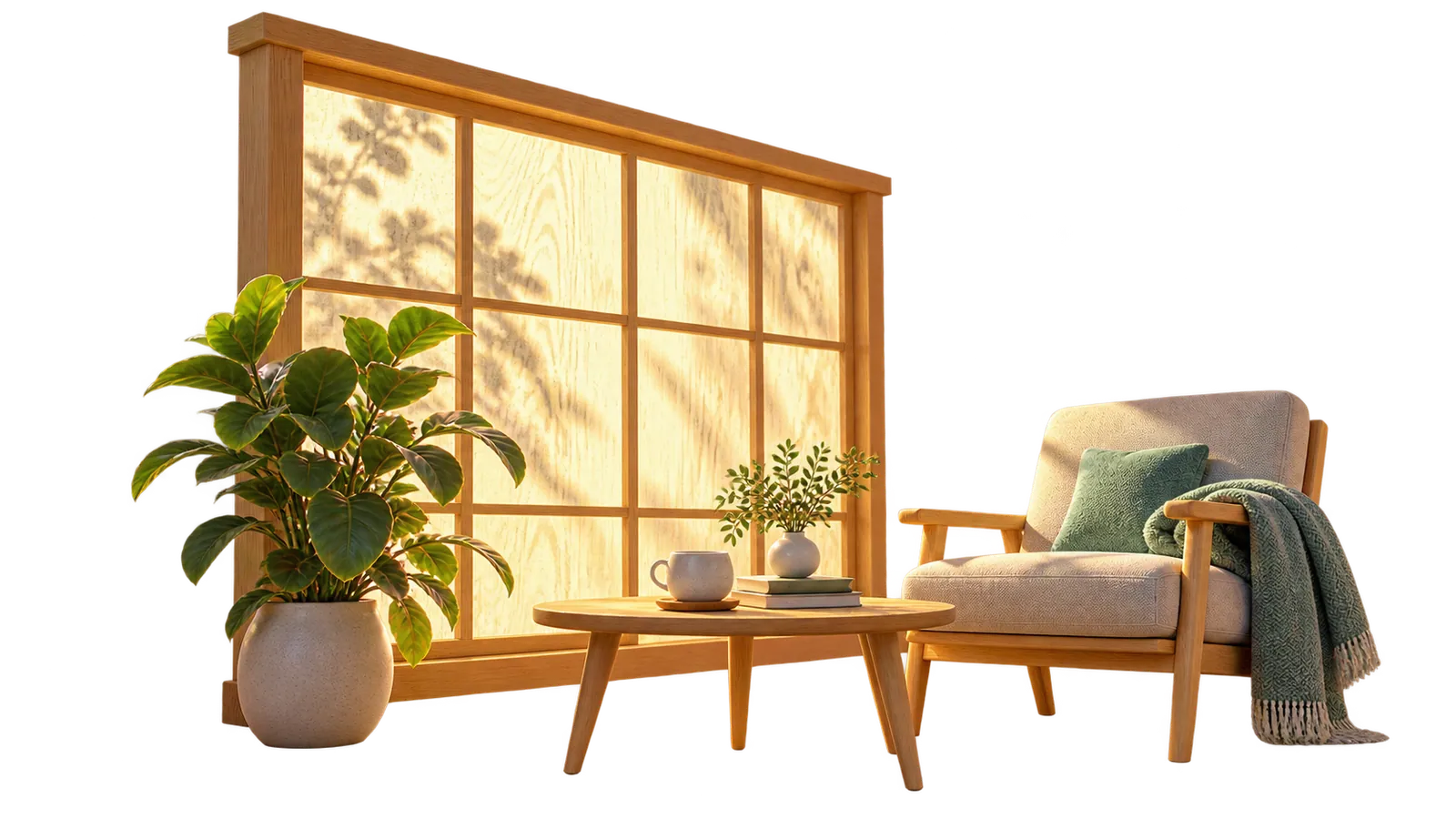
木から色のもとになる成分リグニンを取り除き、すき間に透明な樹脂をしみ込ませると、光を通す「透明な木材」ができる。割れにくく断熱性も高い窓材として研究中。
ひとことで言うと木の「色のもと」を抜いて透明な樹脂を入れると、木が透けて見える!
木の板を窓にはめても、向こう側は見えません。……当たり前ですよね。
ところが、向こうが透けて見える木の板が、実際に研究室で作られています。その名も「透明な木材」。
しかも作り方は、聞いてみると「え、それだけ?」と思うほどシンプル。木の仕組みを知ると、なぜ透明にできるのかがよく分かります。
01木が茶色くて透けないのはなぜ?
木を顕微鏡で拡大して見ると、細いストローを束ねたような構造になっています。木が生きていたころ、この細い管の中を水が通っていました。
木の主な成分は3つ。
- セルロース:細い繊維。木の“骨組み”。もともとはほぼ無色
- ヘミセルロース:繊維どうしをつなぐ成分
- リグニン:繊維のすき間を埋める“接着剤”。光を吸収しやすく、木の茶色っぽい色のもと
木が透けて見えないのには、2つの理由があります。1つはリグニンが光を吸収すること。もう1つは、内部にたくさんある空気のすき間で光があちこちに散らばってしまうことです。
すりガラスが透けないのも、表面の細かいデコボコで光が散らばるからです。ところが、すりガラスに水をたらすと、そこだけ少し透けて見えますよね。水がデコボコを埋めて、光が散らばりにくくなるからです。透明な木材は、まさにこの原理を使っています。
02作り方は「色を抜いて、すき間を埋める」
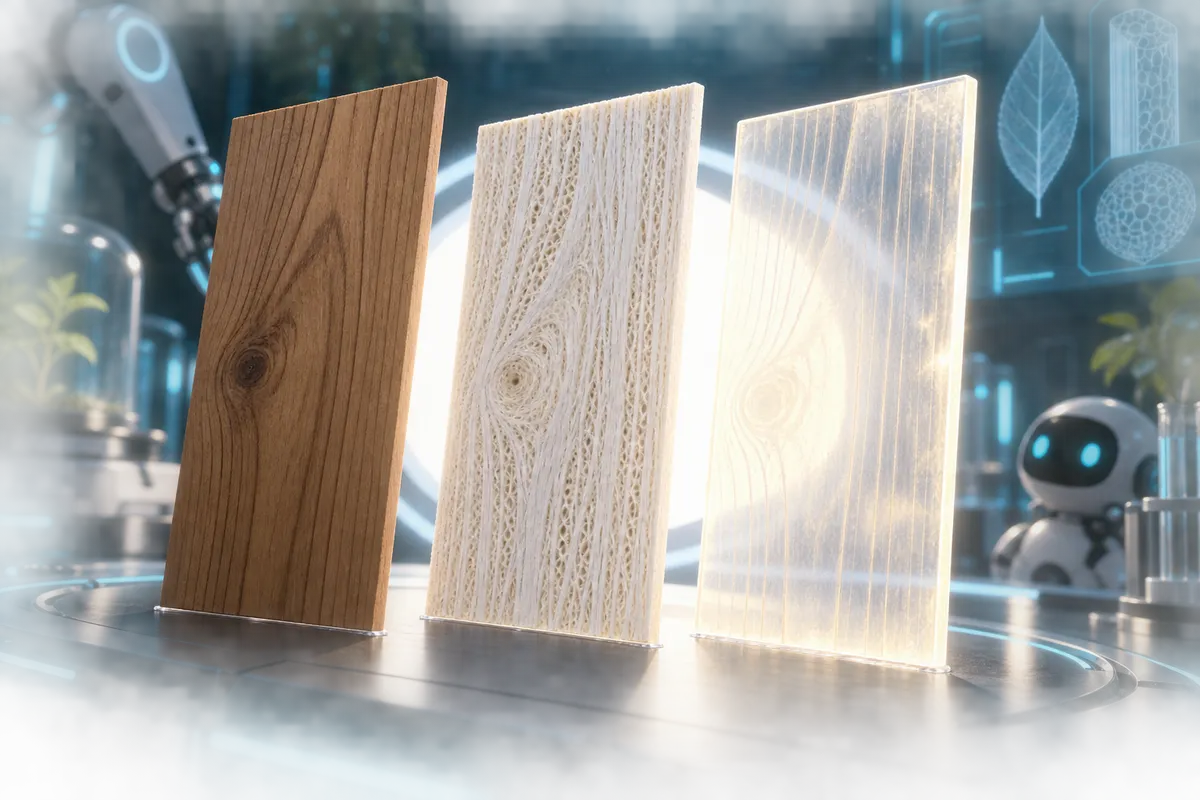
- 薄い木の板を薬品につけ、色のもとになるリグニンを取り除く(真っ白になる)
- 空気のすき間に、アクリル樹脂などの透明な樹脂をしみ込ませる
- 樹脂を固める
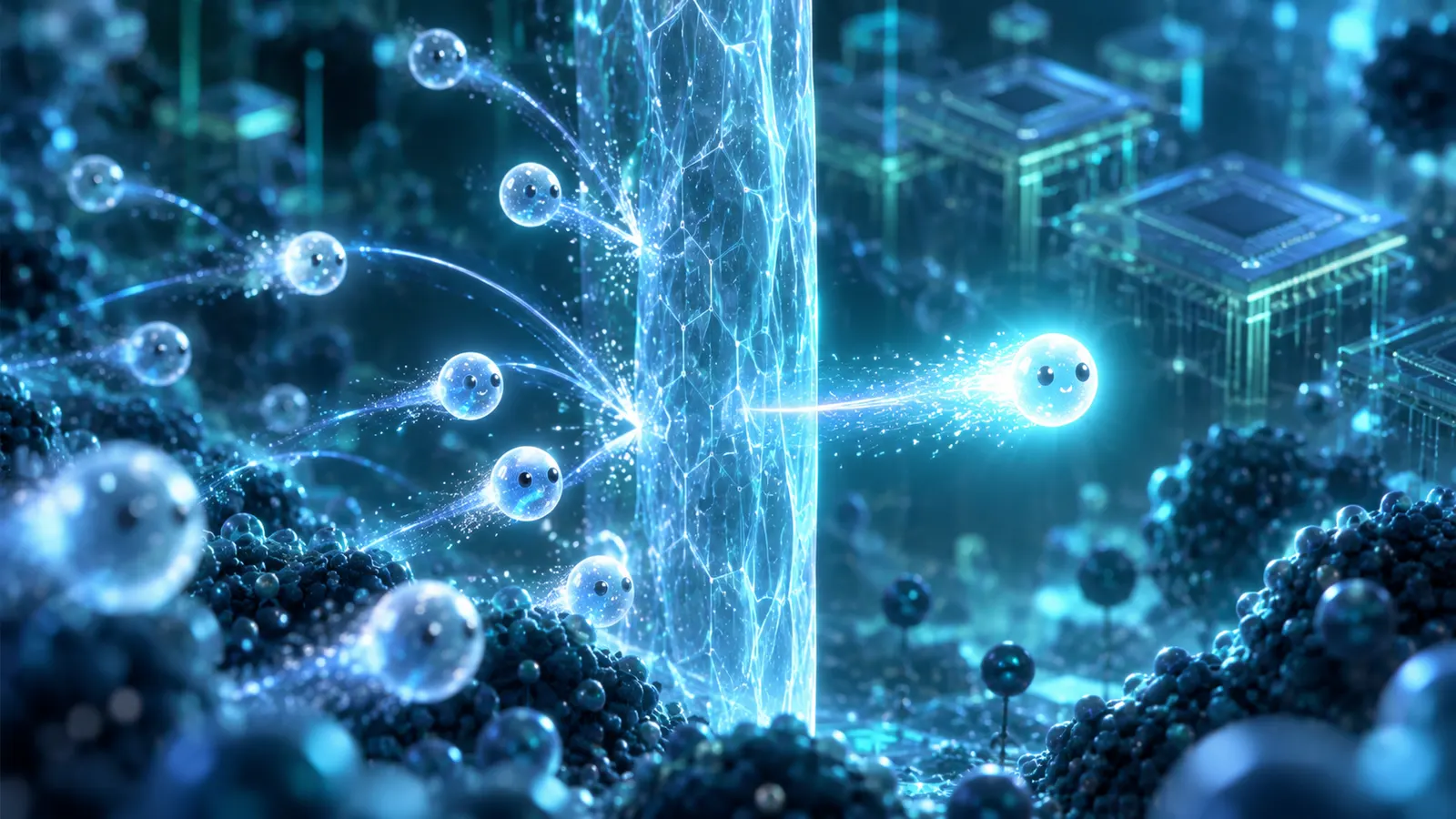
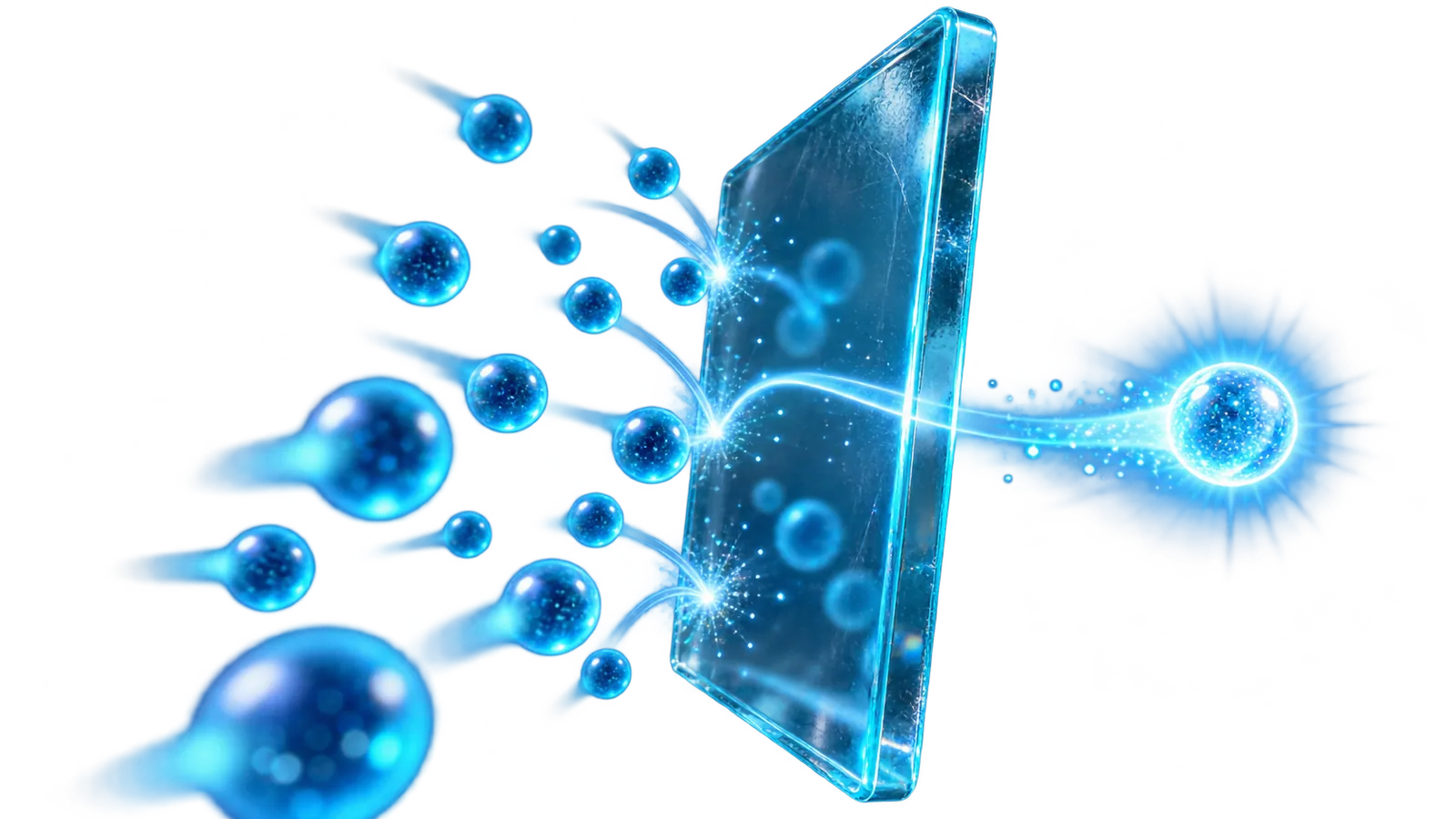
ポイントは、セルロースと樹脂の光の曲がり方(屈折率)をほぼ同じにそろえること。こうすると、光は境目でほとんど曲がらず、散らばらずに通り抜けます。水をたらしたすりガラスと同じ理屈です。
03ガラスにはない3つの長所
- 割れにくい:ガラスのように粉々に砕けず、木の繊維が衝撃を受け止めてくれる
- 熱を伝えにくい:ガラスより断熱性が高く、冷暖房の効率アップが期待される(2020年の研究では、熱の伝わりやすさがガラスの数分の1と報告。Mi ら, Nature Communications)
- まぶしくない:光を散らす性質があるため、部屋の中に光がやわらかく広がる(そのぶん、向こうの景色はぼやけて見える)
これらを生かして、窓や天窓、太陽電池のカバーなどへの応用が研究されています。
04まとめ
透明な木材は、木の色のもとであるリグニンを抜き、すき間を透明な樹脂で埋めるという、シンプルな発想から生まれた新素材です。割れにくく断熱性も高い“未来の窓”として期待されています。
いつか、木の香りがする窓から朝日が差し込む家が、当たり前になるかもしれません。
この研究を英語で読もう原田英語の English CornerIf you look at wood under a microscope, it looks like a bundle of tiny straws. 音声
音声 4択クイズ9問A2・B1・B2タップして開く
原田英語の English Corner
この研究を英語で読もう
Usually, you cannot see through wood. But scientists can now make wood that lets light through. First, they take out lignin, the part that makes wood brown. The wood becomes white.
Then they fill the small empty spaces with a clear plastic. Now light can pass through it. This wood breaks less easily than glass and keeps heat inside better. Someday, it may be used for windows.
67 words ・ CEFR A2
和訳を見る
ふつう、木の向こうを見ることはできません。しかし科学者たちは今、光を通す木を作ることができます。まず、木を茶色にしている成分であるリグニンを取り除きます。木は白くなります。
次に、小さなすき間を透明なプラスチックで満たします。すると、光がその中を通り抜けられるようになります。この木はガラスより割れにくく、熱を中に保つのも得意です。いつか、窓に使われるかもしれません。
4択リーディングクイズ
Q1. What is the passage mainly about?
光を通す「透明な木材」とその作り方が主題なので D。
Q2. What is lignin?
lignin, the part that makes wood brown とあるので A。
Q3. In this passage, "clear" means ...
a clear plastic の clear は「透明な」。光を通す話なので B。
If you look at wood under a microscope, it looks like a bundle of tiny straws. Wood cannot be seen through for two reasons. A substance called lignin absorbs light and gives wood its brown color, and the many air spaces inside scatter light in all directions. In 2016, research teams in Sweden and the United States reported a simple way to make wood transparent.
First, they removed the lignin, leaving a white frame of cellulose. Then they filled the air spaces with a clear resin that bends light almost the same amount as cellulose, so light passes straight through. Transparent wood is harder to shatter than glass and keeps heat in better, but it is not as clear as glass yet.
122 words ・ CEFR B1
和訳を見る
顕微鏡で木を見ると、細いストローを束ねたように見えます。木の向こうが見えない理由は2つあります。リグニンという物質が光を吸収して木に茶色の色を与えること、そして内部にあるたくさんの空気のすき間が光をあらゆる方向に散らしてしまうことです。2016年、スウェーデンとアメリカの研究チームが、木を透明にする簡単な方法を報告しました。
まず、リグニンを取り除き、セルロースの白い骨組みを残しました。次に、セルロースとほぼ同じだけ光を曲げる透明な樹脂で空気のすき間を満たしたので、光はまっすぐ通り抜けます。透明な木材はガラスより粉々に割れにくく、熱を保つのも得意ですが、まだガラスほどはっきりとは透けません。
4択リーディングクイズ
Q1. Why can't we see through ordinary wood?
lignin absorbs light ... and the many air spaces inside scatter light とあるので B。
Q2. Why is the resin chosen to bend light almost the same amount as cellulose?
bends light almost the same amount as cellulose, so light passes straight through とあるので A。
Q3. What can we infer about transparent wood?
割れにくさや断熱性では優れるが、まだガラスほど透けないとあるので D。
Wood is opaque for two reasons. Lignin, the component that binds cellulose fibers together, absorbs light and gives wood its brown tone, while countless air-filled channels scatter light at every boundary. In 2016, two groups, one at Sweden's KTH Royal Institute of Technology and another at the University of Maryland, independently reported an unexpectedly simple solution. After chemically removing lignin to leave a white cellulose scaffold, they infiltrated the empty pores with a transparent polymer whose refractive index closely matches that of cellulose. Because light then bends very little at the boundaries, it passes through rather than scattering, much as frosted glass becomes clearer when wet.
The resulting material shatters less easily than glass, diffuses light softly and, according to a 2020 study, conducts heat only a fraction as readily as glass, making it attractive for windows and skylights. However, it remains hazier than glass, most reported samples are only about a millimeter thick, and producing large panels cheaply is difficult. The use of fossil-based resins and chemicals is also an environmental weakness, which has led researchers to explore gentler methods, such as bleaching only the color-causing parts of lignin with sunlight.
192 words ・ CEFR B2
和訳を見る
木が不透明なのには2つの理由があります。セルロースの繊維同士を結びつける成分であるリグニンが光を吸収して木に茶色の色合いを与え、一方で空気で満たされた無数の通り道が、あらゆる境目で光を散乱させるのです。2016年、スウェーデンのKTH王立工科大学のグループとメリーランド大学のグループという2つのグループが、それぞれ独立に驚くほど簡単な解決策を報告しました。化学的にリグニンを取り除いて白いセルロースの骨組みを残した後、屈折率がセルロースとよく一致する透明な高分子を空いた穴にしみ込ませたのです。すると光は境目でほとんど曲がらないので、散乱せずに通り抜けます。ちょうど、すりガラスがぬれると透明に近くなるのと同じです。
こうしてできた材料はガラスより粉々に割れにくく、光をやわらかく広げ、2020年の研究によれば熱の伝わりやすさはガラスの数分の1しかないため、窓や天窓に魅力的です。しかし、まだガラスより曇って見え、報告された試料の多くは厚さ約1ミリメートルにすぎず、大きな板を安く作るのも困難です。化石燃料由来の樹脂や薬品を使うことも環境面の弱点で、そのため研究者たちは、太陽光を使ってリグニンの色の原因となる部分だけを脱色するといった、より穏やかな方法を探っています。
4択リーディングクイズ
Q1. Why does the author mention frosted glass becoming clearer when wet?
屈折率をそろえると境目で光が曲がらず散乱しない、という原理を身近な例で説明しているので C。
Q2. Which is NOT mentioned as a remaining challenge?
曇り・薄い試料・大きな板の低コスト化・環境負荷は書かれているが、重すぎるとは書かれていないので D。
Q3. Why are researchers exploring gentler methods?
The use of fossil-based resins and chemicals is also an environmental weakness, which has led researchers to explore gentler methods とあるので A。
重要単語
- transparentB2形容詞透明なThe transparent wood lets sunlight through.
 trans-(通して)+parent(見える)。比喩で「(組織などが)透明性のある」。名詞 transparency。opaque(不透明な)と対。
 - ligninC1名詞リグニン(木の成分)Lignin gives wood its brown color. ラテン語 lignum(木)から。紙を作るときも取り除かれる成分。
- celluloseC1名詞セルロースCellulose fibers make up the frame of wood. cell(細胞)+-ose(糖類の語尾)。glucose(ブドウ糖)の -ose と同じ。
- refractive indexC1名詞(句)屈折率The resin has a similar refractive index to cellulose. refract(屈折させる)= re-(後ろへ)+fract(折る)。fraction, fracture も同語源。
- insulationC1名詞断熱Transparent wood offers better insulation than glass. 動詞 insulate(断熱・絶縁する)。island(島)と同じ語源で「孤立させる」イメージ。
- scatterB2動詞散らす、散乱させるAir spaces scatter light in all directions. scatter A over B「AをBにまき散らす」。空が青いのも光の scattering のため。
- opaqueC1形容詞不透明なOrdinary wood is opaque. 発音は /oʊˈpeɪk/(オウペイク)。比喩で「わかりにくい」の意味もある。transparent の反意語。
 入試に出る順の単語帳を印刷する →
 全5903語の「科学英単語カード」で復習する →
 動画でもっと知る
動画は各チャンネルの公式埋め込みで表示しています(YouTube)。
 4コマでわかる
このネタ、誰かに教えたくなった?
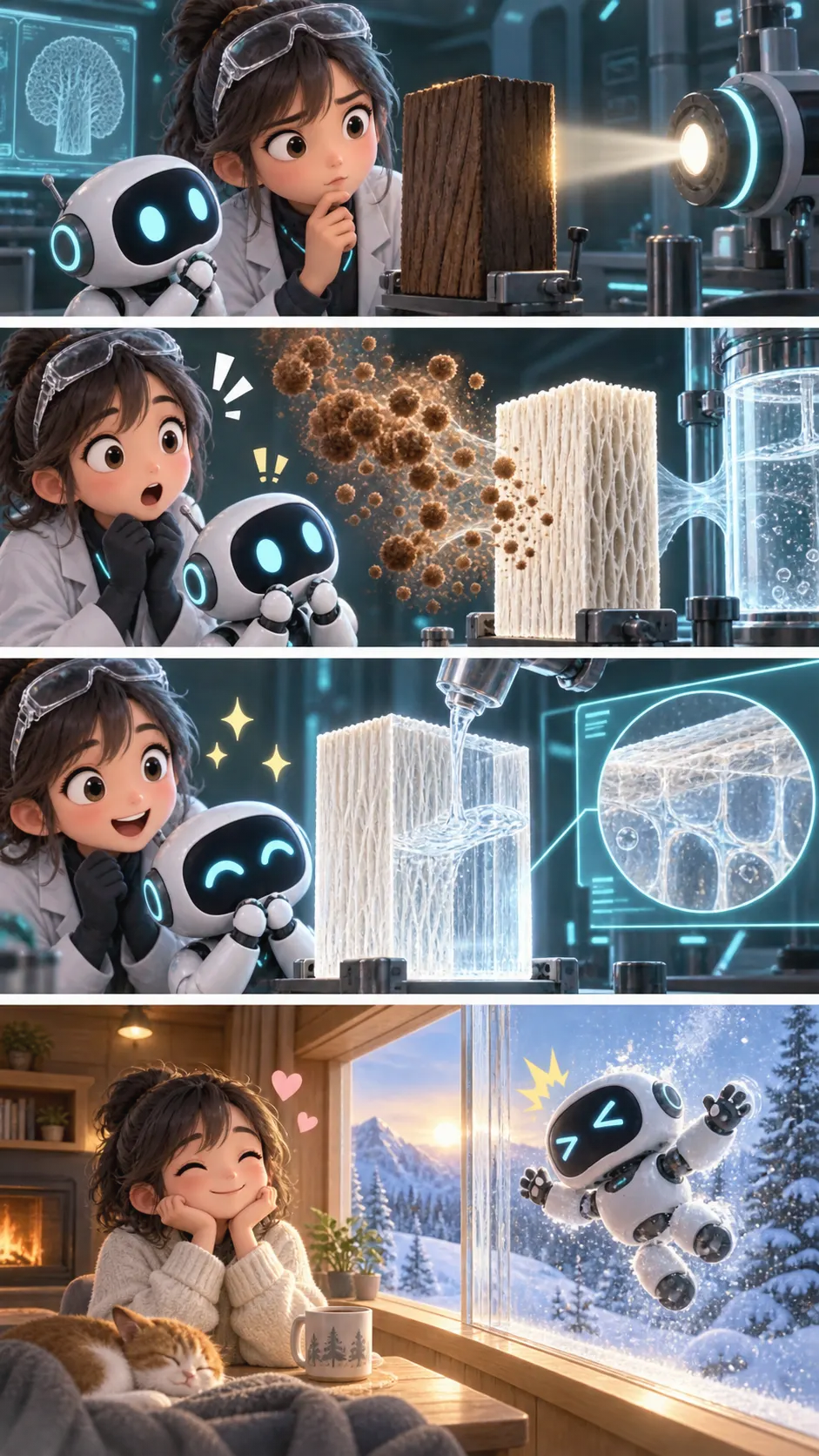
木の板なのに、向こう側が透けて見える「透明な木材」が研究されているらしい。作り方は、木の色のもとを抜いて、すき間に透明な樹脂をしみ込ませるだけ。ガラスより割れにくく、熱も逃がしにくいとか。
押すと「マジかリスト」に保存されます
 出典・参考文献(6件)タップで表示
- Fink (1992) Transparent Wood – A New Approach in the Functional Study of Wood Structure, Holzforschungdoi.org
- Li et al. (2016) Optically Transparent Wood from a Nanoporous Cellulosic Template: Combining Functional and Structural Performance, Biomacromoleculesdoi.org
- Zhu et al. (2016) Highly Anisotropic, Highly Transparent Wood Composites, Advanced Materialsdoi.org
- Li et al. (2018) Optically Transparent Wood: Recent Progress, Opportunities, and Challenges, Advanced Optical Materialsdoi.org
- Mi et al. (2020) Scalable aesthetic transparent wood for energy efficient buildings, Nature Communicationsdoi.org
- Xia et al. (2021) Solar-assisted fabrication of large-scale, patternable transparent wood, Science Advancesdoi.org

※本記事は上記の研究・公開資料をもとに、原田英語が独自の言葉で解説したものです。引用は著作権法第32条の範囲で行い、出典を明記しています。画像はすべてオリジナルのイメージです。研究結果には限界や個人差があります。誤りのご指摘は原田英語のお問い合わせフォームから。