

 宇宙・NASAホント
飛行機に乗るたび、宇宙から放射線を浴びていた。アメリカ横断2回で胸のX線1回分
 2026.10.02
 English Corner(A2〜B2・4択クイズ)
 読む前に予想してみよう!
飛行機の中で浴びる宇宙線は、夜より昼の方がずっと多い
主な原因は太陽系の外から来る銀河宇宙線で、昼でも夜でも届く。高度・緯度・飛行時間で変わる。
 研究カード(どんな研究?)
- 対象
- 航空機の乗客・乗務員
- 規模
- 数千〜数万人規模の線量記録・計算
- 研究の種類
- 線量計算・疫学研究のレビュー
- 確かさ
- ★★★☆☆
高度1万mでは大気の盾が薄く、宇宙線の被ばくが地上より多い。たまに乗る旅行者のリスクは小さいが、長距離路線のパイロットは年に平均2〜3ミリシーベルト浴びる。
ひとことで言うと飛行機の上は、宇宙からの放射線が地上より多い!
旅行や出張で飛行機に乗るとき、窓の外の雲を眺めながら、宇宙から降ってくる放射線のことを考えたことはありますか?
実は、飛行機が飛ぶ高度1万mあたりは、地上よりも宇宙線が多い場所です。私たちは飛行機に乗るたびに、少しだけ「宇宙」に近づいているのです。
01宇宙線ってなに?
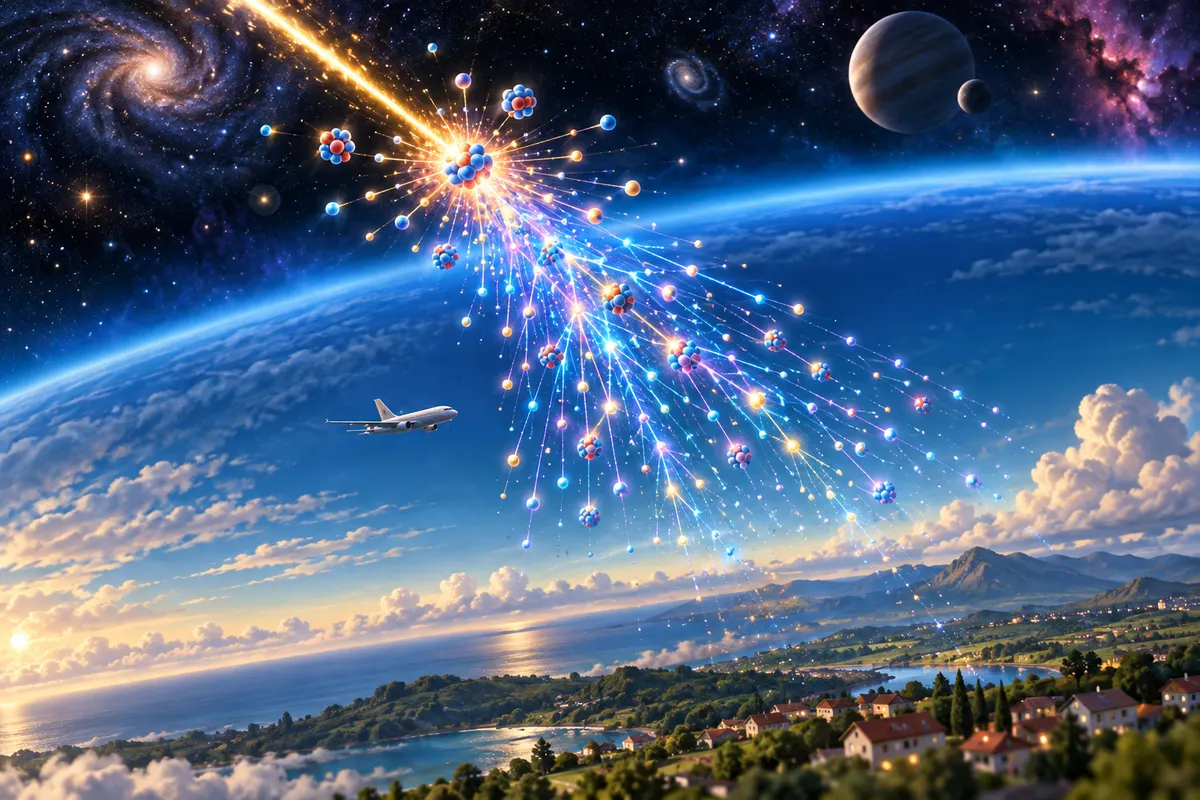
宇宙線は、宇宙から飛んでくるものすごくエネルギーの高い粒子です。主に、太陽系の外の超新星爆発などで加速された陽子や原子核(銀河宇宙線)と考えられています。
宇宙線が地球の大気に飛び込むと、空気の分子とぶつかって中性子などの粒子のシャワーが生まれます。地上にいる私たちは、厚い大気に守られているので、その影響はわずかです。
でも、高度が上がるほど大気の盾が薄くなり、浴びる量が増えます。
021回のフライトでどれくらい?
アメリカ疾病予防管理センター(CDC)によると、アメリカ大陸横断の片道で浴びる放射線は約0.035ミリシーベルト。大陸横断の飛行を2回すると、胸部X線検査1回分くらいになるといいます。
日本からニューヨークなどへの長距離便の往復でも、約0.1〜0.2ミリシーベルトです。私たちが地上で1年間に浴びる自然放射線(日本では約2ミリシーベルト)と比べると、ずっと小さな量です。
03量が変わる3つの条件
浴びる量は、主に次の条件で変わります。
- 高度:高いほど多い
- 緯度:北極や南極に近いルートほど多い(地球の磁場の守りが弱いため)
- 飛行時間:長いほど多い
さらに、ごくまれに大きな太陽フレアが起きると、高緯度のルートで一時的に線量が上がることがあります。
04乗務員は「放射線を浴びる仕事」
パイロットや客室乗務員は、何度も長時間飛ぶため、浴びる量が多くなります。研究のまとめによると、長距離路線のパイロットで年に平均2〜3ミリシーベルト程度です。そのため、多くの国で乗務員の被ばく量は計算・管理されています。日本でも、航空会社が乗務員の線量を計算し、管理する指針があります。
05宇宙飛行士はけた違い
宇宙ステーションの宇宙飛行士は、さらに多くの宇宙線を浴びます。JAXAによると、ISSでは1日に、地上で暮らす人の約半年分に近い量の放射線を受けることがあります。
それに比べれば、飛行機の乗客が浴びる量はずっと小さなもの。地球の大気と磁場が、どれほど強力な盾になっているかがよく分かります。
06まとめ
飛行機に乗るたび、私たちは宇宙からの放射線をほんの少し多く浴びていました。
でも、たまの旅行なら心配はいりません。空の上で窓の外を見ながら、「今、宇宙から粒子が降ってきているんだな」と想像してみると、空の旅がちょっと特別に感じられるかもしれません。
この研究を英語で読もう原田英語の English CornerEvery time you fly, you are exposed to a little more radiation from space. 音声
音声 4択クイズ9問A2・B1・B2タップして開く
原田英語の English Corner
この研究を英語で読もう
When you fly in a plane, you get a little more radiation from space. This radiation is called cosmic rays. On the ground, the thick air protects us.
But at about 10,000 meters, the air is thinner. Two flights across the United States give about the same dose as one chest X-ray. This is very small for travelers. But pilots and flight attendants fly often, so their doses are checked.
70 words ・ CEFR A2
和訳を見る
飛行機に乗ると、宇宙からの放射線を少しだけ多く浴びます。この放射線は宇宙線と呼ばれます。地上では、厚い空気が私たちを守っています。
しかし、高度約1万mでは空気が薄くなります。アメリカ大陸を横断する飛行2回で、胸のX線検査1回とほぼ同じ量になります。これは旅行者にとってはとても少ない量です。しかし、パイロットや客室乗務員はよく飛ぶので、彼らの浴びる量は確認されています。
4択リーディングクイズ
Q1. What is the passage mainly about?
飛行機に乗るときに浴びる宇宙からの放射線が主題なので D。
Q2. Why do people get more radiation on a plane?
at about 10,000 meters, the air is thinner とあり、空気の守りが薄いからなので B。
Q3. In the passage, "protects" means ...
protect は「守る」。the thick air protects us=厚い空気が私たちを守る、なので A。
Every time you fly, you are exposed to a little more radiation from space. Cosmic rays are high-energy particles that come mainly from outside our solar system. On the ground, the thick atmosphere protects us, but at a cruising altitude of about 10,000 meters, that shield is thinner.
According to the CDC, one flight across the United States gives about 0.035 millisieverts, so two flights equal roughly one chest X-ray. The amount increases with altitude, flight time, and routes closer to the poles. For occasional travelers, the risk is very small. However, long-haul pilots receive about 2 to 3 millisieverts a year on average, so in many countries aircrew doses are calculated and managed.
114 words ・ CEFR B1
和訳を見る
飛行機に乗るたびに、あなたは宇宙からの放射線を少しだけ多く浴びています。宇宙線は、主に太陽系の外からやって来る高エネルギーの粒子です。地上では厚い大気が私たちを守っていますが、高度約1万mの巡航高度では、その盾が薄くなります。
CDCによると、アメリカ大陸横断の飛行1回で約0.035ミリシーベルトになるので、2回でおよそ胸部X線1回分に相当します。浴びる量は、高度が高いほど、飛行時間が長いほど、そして極に近いルートほど増えます。たまに乗る旅行者にとって、リスクはとても小さいものです。しかし、長距離路線のパイロットは平均で年に約2〜3ミリシーベルト浴びるので、多くの国で乗務員の線量は計算・管理されています。
4択リーディングクイズ
Q1. Where do cosmic rays mainly come from?
particles that come mainly from outside our solar system とあるので C。
Q2. Which flight would probably give the largest dose?
The amount increases with altitude, flight time, and routes closer to the poles とあるので、高く長く極に近いルートの B。
Q3. Why are aircrew doses managed in many countries?
長距離路線のパイロットは平均で年に2〜3ミリシーベルト浴び so ... aircrew doses are calculated and managed とあるので A。
Each time you fly, you move closer to space in terms of radiation. Cosmic rays, mostly high-energy protons and atomic nuclei accelerated by events such as supernova explosions beyond the solar system, strike the upper atmosphere and produce showers of secondary particles, including neutrons. At ground level, the thick atmosphere absorbs most of this, but at cruising altitudes of around 10,000 meters the shield is much thinner. According to the CDC, a one-way flight across the United States delivers about 0.035 millisieverts, so two such flights roughly equal one chest X-ray.
A 2025 study based on Japanese travel records estimated that international travelers received an average of only about 0.06 millisieverts per year, far below the roughly 2 millisieverts of natural background radiation people in Japan receive annually. Doses rise with altitude, flight duration, and latitude, since Earth's magnetic field offers less protection near the poles, and large solar flares can occasionally raise levels on high-latitude routes. Long-haul pilots average 2 to 3 millisieverts a year. Some studies of aircrew report higher rates of certain cancers, but factors such as sun exposure and disrupted sleep make it difficult to prove that cosmic radiation is the cause.
196 words ・ CEFR B2
和訳を見る
飛行機に乗るたびに、あなたは放射線という点で、宇宙に近づいています。宇宙線は、主に太陽系の外の超新星爆発などで加速された高エネルギーの陽子や原子核で、上層大気にぶつかって中性子などの二次粒子のシャワーを生み出します。地表では厚い大気がそのほとんどを吸収しますが、高度約1万mの巡航高度では、その盾はずっと薄くなります。CDCによると、アメリカ大陸横断の片道飛行で約0.035ミリシーベルトとなり、そうした飛行2回でおよそ胸部X線1回分に相当します。日本人の渡航記録にもとづく2025年の研究では、国際線の旅行者が浴びる量は平均で年に約0.06ミリシーベルトにすぎないと推定され、日本の人々が毎年受ける約2ミリシーベルトの自然放射線をはるかに下回っていました。
線量は高度、飛行時間、緯度とともに増えます。極の近くでは地球の磁場による守りが弱いからです。また、大きな太陽フレアが、まれに高緯度のルートで線量を上げることもあります。長距離路線のパイロットは、平均で年に2〜3ミリシーベルトを浴びます。乗務員に関する一部の研究では特定のがんの発生率が高いと報告されていますが、日光への曝露や睡眠の乱れといった要因があるため、宇宙線が原因だと証明するのは困難です。
4択リーディングクイズ
Q1. According to the passage, why does latitude affect the dose?
since Earth's magnetic field offers less protection near the poles とあるので B。
Q2. How does the average yearly dose of Japanese international travelers compare with natural background radiation?
about 0.06 millisieverts per year, far below the roughly 2 millisieverts of natural background radiation とあるので A。
Q3. Why is it hard to prove that cosmic radiation causes cancer in aircrew?
factors such as sun exposure and disrupted sleep make it difficult to prove とあり、交絡要因の存在が理由なので C。
重要単語
- cosmic rayC1名詞(句)宇宙線Cosmic rays come from far beyond the solar system.
 cosmic は cosmos(宇宙)の形容詞。cosmic radiation とも言う。
 - altitudeB2名詞高度Radiation increases with altitude. high altitude(高地)。latitude(緯度)、longitude(経度)と混同しやすいので3つセットで。
- doseB2名詞線量(浴びた放射線の量)The dose from one flight is very small. 薬の「1回分の服用量」の意味でも使う。overdose(過剰摂取)。
- aircrewB2名詞航空機の乗務員Aircrew are treated as radiation workers in some countries. pilot と flight attendant を合わせた言い方。crew は集合名詞。
- solar flareC1名詞(句)太陽フレアA large solar flare can raise radiation levels at high latitudes. flare は「ぱっと燃え上がる炎」。太陽表面の爆発現象。
- exposeB2動詞さらすPassengers are exposed to more radiation at high altitude. be exposed to ~「~にさらされる」は入試超頻出。名詞 exposure。
- latitudeB2名詞緯度Doses are higher at high latitudes. latitude は横の線(緯線)、longitude は縦の線(経線)。lat=広い(横幅)と覚えると区別しやすい。
 入試に出る順の単語帳を印刷する →
 全5903語の「科学英単語カード」で復習する →
 動画でもっと知る
動画は各チャンネルの公式埋め込みで表示しています(YouTube)。
この話題を TED で聞く
同じテーマの TED・TED-Ed を、 TED HACK で。英語の見どころ・使える表現・学習ミッションつきの日本語ガイドです。(運営:原田英語)


 公式・一次情報をチェック
 4コマでわかる
このネタ、誰かに教えたくなった?
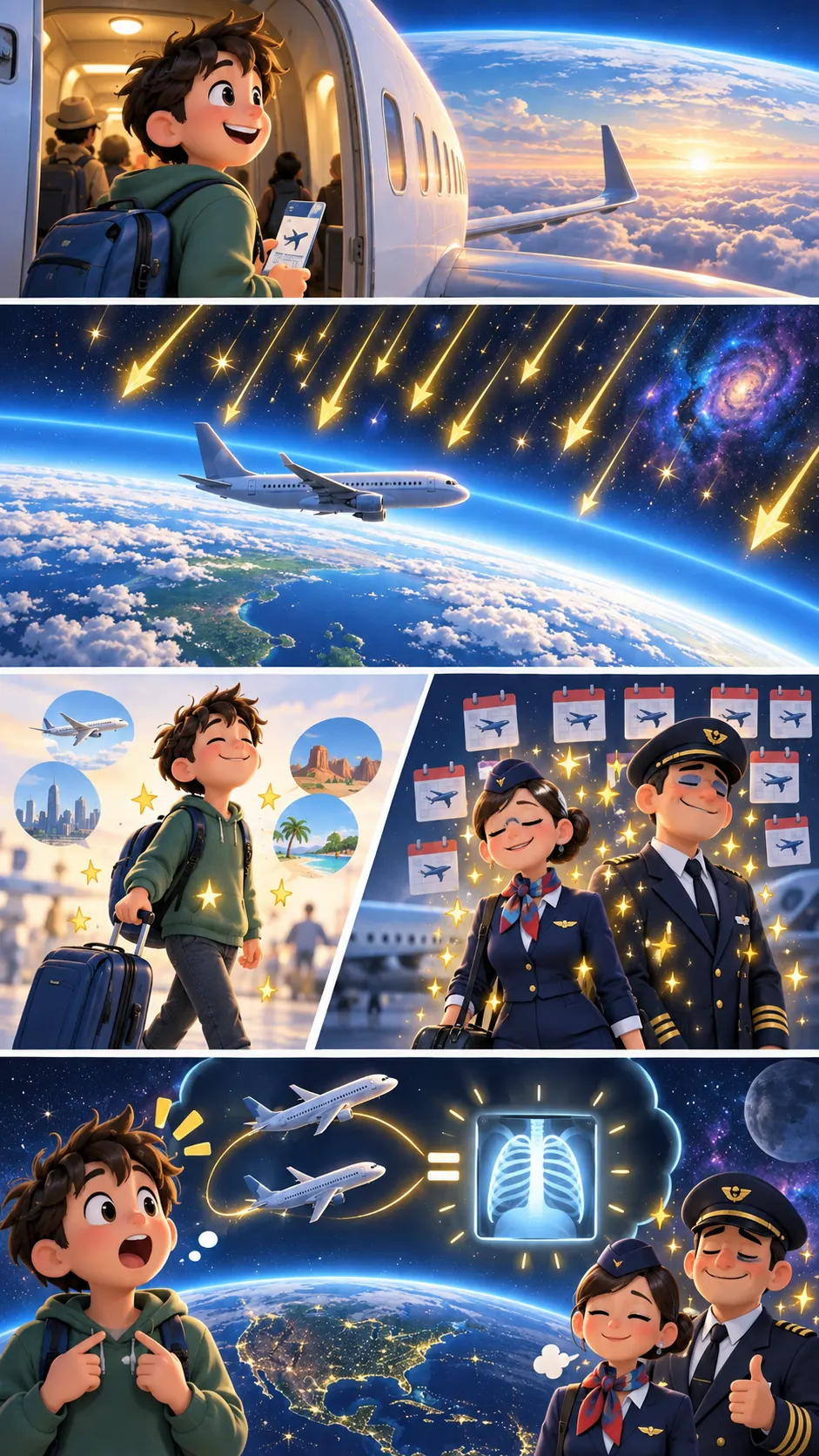
飛行機に乗ると、宇宙から来る放射線(宇宙線)を地上より多く浴びるらしい。アメリカ大陸横断2回で胸のX線1回分ほど。たまに乗る人のリスクはとても小さいけど、乗務員は被ばく量が管理されている。
押すと「マジかリスト」に保存されます
 出典・参考文献(4件)タップで表示
- Bagshaw (2008) Cosmic radiation in commercial aviation, Travel Medicine and Infectious Diseasedoi.org
- Yasuda et al. (2025) Recent trends in cosmic radiation exposure onboard aircraft: effects of the COVID-19 pandemic on Japanese in-flight doses, Frontiers in Public Healthdoi.org
- Scheibler et al. (2022) Cancer risks from cosmic radiation exposure in flight: A review, Frontiers in Public Healthdoi.org
- CDC: Facts About Radiation from Air Travelcdc.gov

※本記事は上記の研究・公開資料をもとに、原田英語が独自の言葉で解説したものです。引用は著作権法第32条の範囲で行い、出典を明記しています。画像はすべてオリジナルのイメージです。研究結果には限界や個人差があります。誤りのご指摘は原田英語のお問い合わせフォームから。