


 心理学ホント
ナルシストは最初は人気者、でも数週間で評価が下がる。グループ実験で分かった"人気の賞味期限"
 2026.10.02
 English Corner(A2〜B2・4択クイズ)

 読む前に予想してみよう!
自己愛が強い人は、初対面の印象では周りから好かれやすい
初対面の自己紹介の場面では、自己愛が強い人ほど人気が高かった。ただし時間がたつと評価は下がった。
 研究カード(どんな研究?)
- 対象
- ドイツ・カナダの参加者(大学生など)
- 規模
- 73人〜311人
- 研究の種類
- グループでの縦断的観察実験
- 確かさ
- ★★★★☆
自己愛が強い人は、初対面では明るく魅力的に見えて人気者になりやすい。ところが毎週会うグループ実験では、回を重ねるごとに人気が下がっていった。
ひとことで言うと最初は「すごい人!」に見えても、何週間も会ううちに評価は下がっていった。
新しいクラスや部活で、最初から目立つ人がいます。自信たっぷりで、話がうまくて、おしゃれで、なんだか輝いて見える。気づけばみんなの中心にいる——。
ところがしばらくたつと、「あの人、ちょっと自分の話ばっかりじゃない?」「人の手柄を取るよね」と、評判が変わっていくことがあります。
心理学では、こうした変化を「自己愛(ナルシシズム)」という性格の特徴から調べた研究があります。そこから見えてきたのは、人気の"賞味期限"でした。
01初対面では「自己愛が強い人」が人気者
つまり、ナルシストっぽい人が最初に人気を集めるのは偶然ではなく、第一印象を良くするふるまいをしているから、と考えられます。
027週間たつと評価が下がる
では、そのあとはどうなるのでしょうか。
カナダの心理学者ポールハスさんは、初対面の人たちに4〜6人のグループで週1回、20分ずつ、計7回話し合ってもらいました。そして、1回目と7回目の後にお互いの印象を評価してもらったのです。
注目したのは、自己愛の強さなど「自分を実際以上によく見せようとする傾向」です。この傾向が強い人は、1回目は「感じがいい」「心が安定している」「有能そう」と好意的に見られました。ところが7回目には、評価が否定的なものに変わっていたのです。

03「称賛を求める」と「張り合う」の2つの顔
ドイツの研究チームは2015年、さらに詳しく調べました。311人の参加者に少人数のグループで3週間にわたって毎週交流してもらい、その様子をビデオで記録したのです。
研究チームは、自己愛を2つの面に分けて考えました。
- 称賛を求める面:注目されたい、すごいと思われたい → 自信のある堂々としたふるまいにつながり、最初は好印象
- 張り合う面:他人を見下す、ライバルを蹴落としたい → 攻撃的・傲慢なふるまいにつながり、信頼できないと見られる
時間がたつにつれて、前者のプラスの効果は弱まり、後者のマイナスの効果が強くなっていきました。最初の魅力が薄れ、マイナス面のほうが目立ってくる、というわけです。
04まとめ
自己愛が強い人は、初対面では自信と華やかさで人気者になりやすい。でも、毎週顔を合わせるうちに、その人気は少しずつ下がっていくことが分かりました。
第一印象はとても強力ですが、それがすべてではありません。人を判断するときは、時間をかけてその人の行動を見ること。それが、自分を守り、本当に信頼できる人を見つけるための近道です。
この研究を英語で読もう原田英語の English CornerIn a new class, some people stand out right away because they seem confident and charming. 音声
音声 4択クイズ9問A2・B1・B2タップして開く
原田英語の English Corner
この研究を英語で読もう
Some people seem amazing when you first meet them. They are confident, funny, and well dressed. Psychologists found that people with a strong focus on themselves are often popular at first.
But this does not last. In one study, small groups of people met once a week. At first, these people seemed nice. After seven meetings, others did not like them as much. So don't judge people too quickly.
69 words ・ CEFR A2
和訳を見る
初めて会ったときにすごく見える人がいます。自信があって、面白くて、おしゃれです。心理学者たちは、自分自身への関心がとても強い人は、最初は人気が出やすいことを発見しました。
しかし、それは長く続きません。ある研究では、少人数のグループが週に1回集まりました。最初、こうした人たちは感じが良く見えました。7回集まったあと、ほかの人たちは彼らをそれほど好きではなくなりました。だから、人をすぐに判断しすぎないようにしましょう。
4択リーディングクイズ
Q1. What is the passage mainly about?
自己愛の強い人が最初は人気でも、後で評価が下がる話なので B。
Q2. What happened after seven meetings?
After seven meetings, others did not like them as much. とあるので C。
Q3. In this passage, "judge" means ...
judge people は「人を判断する」=その人がどんな人か決めることなので A。
In a new class, some people stand out right away because they seem confident and charming. Research suggests that people who score high in narcissism, a personality trait involving a strong desire for attention and admiration, often make this kind of impression. In a German study, 73 new university students introduced themselves to the group and rated each other. People higher in narcissism were more popular at first because of their stylish clothes, confident gestures, and humorous way of speaking.
However, a Canadian psychologist found that this popularity fades. Participants met in small groups once a week for seven weeks. People who tended to present themselves too positively were seen as pleasant at the first meeting, but by the seventh, others rated them negatively.
124 words ・ CEFR B1
和訳を見る
新しいクラスでは、自信があって魅力的に見えるため、すぐに目立つ人がいます。研究によると、自己愛の得点が高い人は、こうした印象を与えやすいようです。自己愛とは、注目や称賛を強く求める気持ちを含む性格特性です。ドイツの研究では、大学の新入生73人がグループの前で自己紹介をし、お互いを評価しました。自己愛が強い人ほど、おしゃれな服装、自信のある身ぶり、ユーモアのある話し方のために、最初は人気がありました。
しかし、カナダの心理学者は、この人気が薄れていくことを発見しました。参加者は7週間、週に1回少人数のグループで集まりました。自分を実際以上によく見せようとする傾向がある人は、1回目の集まりでは感じが良いと見られましたが、7回目には周りから否定的に評価されていました。
4択リーディングクイズ
Q1. What is narcissism, according to the passage?
a personality trait involving a strong desire for attention and admiration と定義されているので B。
Q2. Why were people higher in narcissism popular at first?
because of their stylish clothes, confident gestures, and humorous way of speaking とあるので C。
Q3. What can we learn from the Canadian study?
1回目は好印象でも7回目には否定的に評価されたので、知り合うにつれ印象が変わると分かる。正解は D。
People who make a dazzling first impression are not always the ones we end up liking most. Research on narcissism, a personality trait found to varying degrees in everyone rather than a clinical diagnosis, helps explain why. In a German study, 73 first-year students introduced themselves to the group, and those higher in narcissism were rated as more popular.
Their flashy clothing, charming facial expressions, self-assured body language and humorous remarks did much of the work. Even entitlement and exploitativeness, tendencies that are harmful in the long run, looked attractive at first sight. That early glow did not last. In a Canadian study, participants met weekly in small groups for seven sessions. Those with a strong tendency to self-enhance were viewed favorably after the first meeting, but by the last they were rated negatively.
A later German study video-recorded about 300 participants in weekly group interactions for three weeks. It separated two sides of narcissism. Admiration seeking produced confident behavior and initial appeal, while rivalry led to aggressive, arrogant conduct. Week by week, the benefits of admiration seeking faded and the costs of rivalry grew.
185 words ・ CEFR B2
和訳を見る
まばゆい第一印象を与える人が、最終的に私たちが最も好きになる人とは限りません。自己愛の研究がその理由を説明する助けになります。ここでの自己愛とは、臨床的な診断ではなく、誰にでもさまざまな程度で見られる性格特性のことです。
ドイツの研究では、大学1年生73人がグループの前で自己紹介をし、自己愛の強い人ほど人気が高いと評価されました。それには、派手な服装、魅力的な表情、自信に満ちた身ぶり、ユーモアのある発言が大きく効いていました。特権意識や人を利用する傾向のように、長い目で見れば有害な傾向でさえ、初対面では魅力的に見えたのです。その最初の輝きは長続きしませんでした。カナダの研究では、参加者が少人数のグループで毎週、計7回集まりました。自分を実際以上によく見せる傾向が強い人は、1回目の後は好意的に見られましたが、最後の回には否定的に評価されていました。
その後のドイツの研究では、約300人の参加者の毎週のグループでの交流を3週間ビデオ撮影しました。この研究は自己愛の2つの面を区別しました。「称賛を求める面」は自信あるふるまいと最初の魅力を生み、「張り合う面」は攻撃的で傲慢なふるまいにつながりました。週を追うごとに、称賛を求める面の利点は薄れ、張り合う面のコストは大きくなっていきました。
4択リーディングクイズ
Q1. What does the author clarify about the word "narcissism"?
a personality trait found to varying degrees in everyone rather than a clinical diagnosis とあるので C。
Q2. In the later German study, what did the "rivalry" side of narcissism lead to?
rivalry led to aggressive, arrogant conduct とあるので A。B は admiration seeking の説明。
Q3. Which statement best summarizes the passage?
最初は魅力で人気を得るが、Week by week, the benefits of admiration seeking faded and the costs of rivalry grew. とあるので D。
重要単語
- narcissismC1名詞自己愛(の強さ)Narcissism is a strong focus on oneself.
 水面に映る自分に恋したギリシャ神話のナルキッソスが語源。形容詞 narcissistic。
 - charmingB1形容詞魅力的なHe has a charming smile. charm(魅力・魔法)から。lucky charm は「お守り」。
- arrogantB2形容詞傲慢な、偉そうなNobody likes an arrogant leader. 名詞 arrogance。反対の意味は humble / modest(謙虚な)。
- popularityB1名詞人気The singer's popularity grew quickly. popular(人気のある)の名詞形。gain / lose popularity「人気を得る・失う」。
- admirationB2名詞称賛、あこがれShe wanted admiration from everyone. 動詞 admire。in admiration「感心して」。
- rivalryC1名詞競争心、張り合うことRivalry between the teams was strong. rival(ライバル)の名詞形。sibling rivalry「きょうだい間の張り合い」。
- impressionB1名詞印象She made a good first impression. make a good impression on ~「~によい印象を与える」。first impression「第一印象」。
 入試に出る順の単語帳を印刷する →
 全5903語の「科学英単語カード」で復習する →
 この話題を TED で聞く
同じテーマの TED・TED-Ed を、 TED HACK で。英語の見どころ・使える表現・学習ミッションつきの日本語ガイドです。(運営:原田英語)


 4コマでわかる
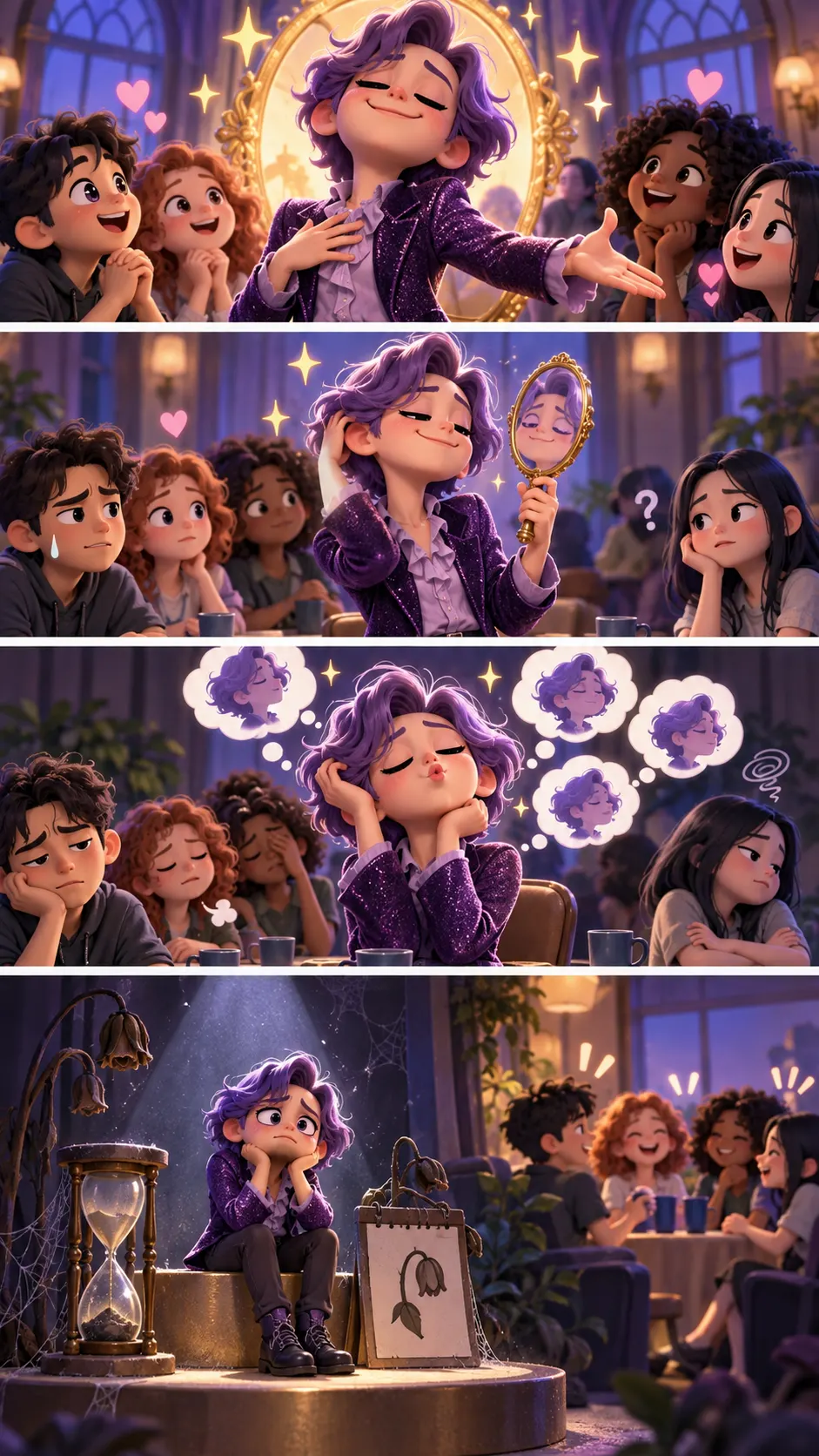
このネタ、誰かに教えたくなった?
自己愛が強い"ナルシスト"タイプは、初対面では自信満々で魅力的に見え、人気者になりやすいらしい。ところが毎週集まるグループ実験では、回を重ねるごとに評価が下がり、最後は否定的に見られるように。人気には賞味期限があった。
押すと「マジかリスト」に保存されます
 出典・参考文献(3件)タップで表示
- Back, Schmukle & Egloff (2010) Why are narcissists so charming at first sight? Decoding the narcissism–popularity link at zero acquaintance, Journal of Personality and Social Psychologydoi.org
- Paulhus (1998) Interpersonal and intrapsychic adaptiveness of trait self-enhancement: A mixed blessing?, Journal of Personality and Social Psychologydoi.org
- Leckelt et al. (2015) Behavioral processes underlying the decline of narcissists' popularity over time, Journal of Personality and Social Psychologydoi.org

※本記事は上記の研究・公開資料をもとに、原田英語が独自の言葉で解説したものです。引用は著作権法第32条の範囲で行い、出典を明記しています。画像はすべてオリジナルのイメージです。研究結果には限界や個人差があります。誤りのご指摘は原田英語のお問い合わせフォームから。
 これも「マジか!?」

 心理学
心理学
「愛着スタイル診断」で人間関係は一生決まる? 心の"クセ"はタイプ分けできなかった

 心理学
心理学
「長男はしっかり者、末っ子は甘えん坊」は本当? 2万人のデータで性格差はほぼゼロだった

 心理学
心理学
【最新研究】AIの「あなたは悪くない」が、人の謝る気を弱めていた

 心理学
心理学
パソコンのボール回しゲームで"パスが来ない"だけで心が傷ついた。仲間はずれ研究120本の結論

 心理学
心理学
会話が「2人とも終わりたい時」に終わることは、ほぼなかった。932の会話を調べた研究
 心理学
心理学