


 動物・植物
動物・植物植物は1日中ぐるぐる動いている。ヒマワリの“首ふり”とダーウィンが見た円運動
 2026.10.02
 English Corner(A2〜B2・4択クイズ)
 読む前に予想してみよう!
満開になった大人のヒマワリも、一日中ずっと太陽を追いかけて向きを変えている
太陽を追うのは若い株。花が開くころには動きを止め、多くは東を向いたままになる。
 研究カード(どんな研究?)
- 対象
- ヒマワリほか多くの植物
- 規模
- 野外と実験室
- 研究の種類
- 成長測定・遺伝子発現解析と総説
- 確かさ
- ★★★★☆
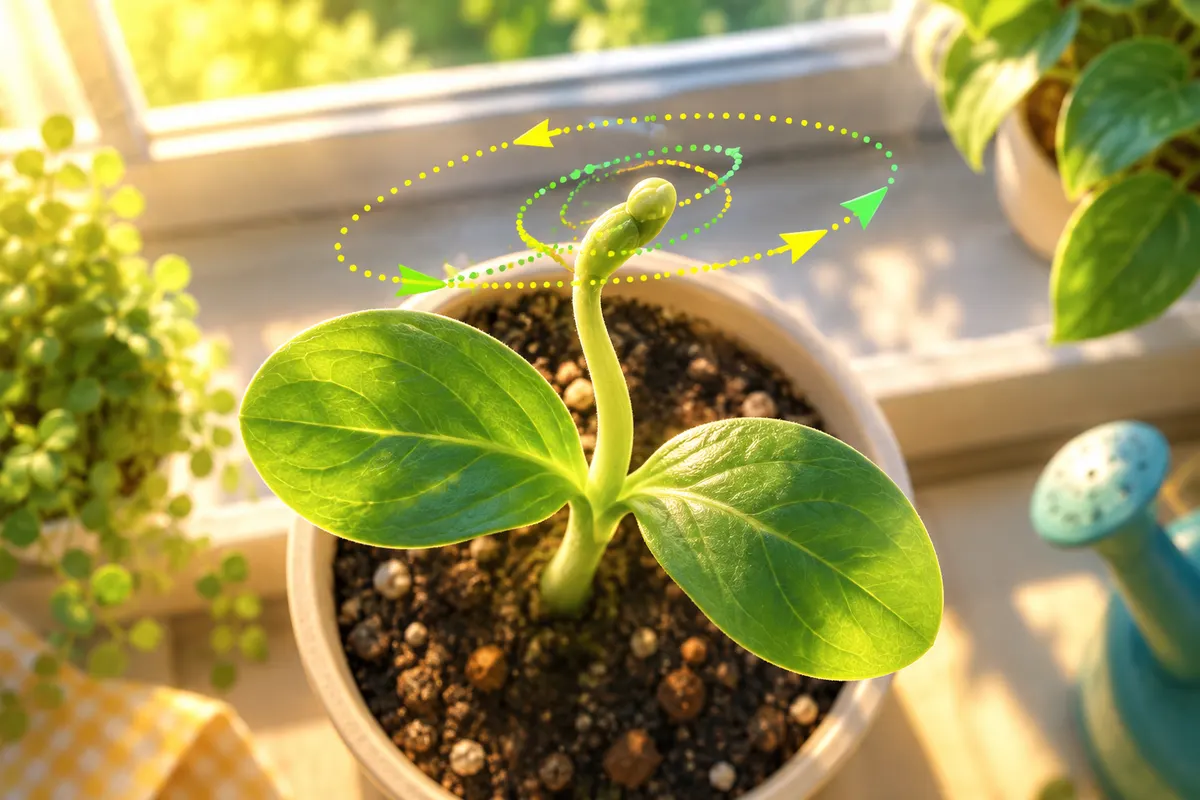
植物の茎の先は、らせんを描くように一日中ゆっくり回っている。若いヒマワリは昼に東→西へ太陽を追い、夜のうちに東へ戻っていた。
ひとことで言うと植物は止まっているようで、実は一日中ゆっくり動いてる!
植物は「動かない生き物」の代表のように思われています。でもスマホのタイムラプス(微速度撮影)で一日中撮ってみると、その印象はひっくり返ります。
茎の先はくるくると円を描き、葉は上がったり下がったり。まるでダンスです。「植物の葉は1日に何回動くの?」――答えは「ずっと動いている」なのです。
01ダーウィンも夢中になった「ぐるぐる運動」
進化論で有名なダーウィンは、晩年に息子のフランシスと一緒に、植物の動きを徹底的に観察しました。1880年の本『植物の運動力』で、彼はほとんどすべての植物の茎や根の先が、らせんや楕円を描きながら伸びていると報告しています。
この動きは回旋転頭運動(サーカムニューテーション)と呼ばれます。ポーランドの研究者ストラシュ(Stolarz)の総説(2009年)によると、1周にかかる時間や円の大きさ、回る向きは植物によってさまざま。体内時計の影響を受けて、時間帯によって動き方が変わるものもあります。つる植物は、この動きで支柱を探り当てていると考えられています。
02数分ごとに葉を振る植物も
中には、肉眼でも動きがわかる植物もいます。マメ科のマイハギ(電信草)は、小さな横の葉を数分ごとに上下に振ります。シャルマ(Sharma)らの研究(2003年)は、この“ふりふり”のリズムが光の条件で変わることを調べています。
1日に何回動くかは、植物と動きの種類しだい。
- 夜に葉を閉じる就眠運動:1日1往復
- 茎の先の回旋運動:1周にかかる時間は植物によってさまざま
- マイハギの小葉:数分ごと――ただし暗い状態が長く続くと止まる
03ヒマワリは夜のうちに東へ向き直る
植物の動きでいちばん有名なのが、ヒマワリでしょう。
いっぽう、花が咲くころの大人のヒマワリは動きを止め、多くが東を向いたままになります。研究チームが調べると、東向きの花は朝すばやく温まり、西向きの花より多くの虫が訪れていました。「ヒマワリはいつも太陽を見ている」は、実は“若いころだけ”の話だったのです。
04まとめ
植物は止まっているように見えて、実は一日中、自分のリズムで動いています。私たちが気づかないのは、その動きがゆっくりすぎるからです。
次にヒマワリ畑を見たら、思い出してください。花が咲く前の若い株は、夜のうちにこっそり東へ向き直って、朝日を待っているのです。
この研究を英語で読もう原田英語の English CornerPlants may seem motionless, but a time-lapse video shows that they are always moving. 音声
音声 4択クイズ9問A2・B1・B2タップして開く
原田英語の English Corner
この研究を英語で読もう
Plants look still, but they are always moving slowly. If you film a plant all day, you can see the top of its stem moving in circles. Charles Darwin studied this more than 100 years ago.
Young sunflowers follow the sun from east to west during the day. At night, they turn back to face east again. Older sunflowers stop moving and face east.
64 words ・ CEFR A2
和訳を見る
植物は止まっているように見えますが、いつもゆっくり動いています。植物を一日中撮影すると、茎の先が円を描いて動いているのがわかります。チャールズ・ダーウィンは100年以上前にこれを研究しました。
若いヒマワリは、昼のあいだ東から西へ太陽を追いかけます。夜になると、また東を向くように戻ります。大人のヒマワリは動くのをやめて、東を向いています。
4択リーディングクイズ
Q1. What is the passage mainly about?
植物はいつも動いていて、若いヒマワリは太陽を追う、という内容なので B。
Q2. What do young sunflowers do at night?
At night, they turn back to face east again. とあるので A。
Q3. In the first sentence, "still" means ...
Plants look still は「植物は静止しているように見える」。but they are always moving と対比されているので D。still には「まだ」の意味もあるので注意。
Plants may seem motionless, but a time-lapse video shows that they are always moving. In his 1880 book, Charles Darwin reported that the tips of almost all stems and roots grow in circles or spirals. Climbing plants probably use this movement to find something to hold on to. Sunflowers are a famous example.
A 2016 study found that young sunflowers follow the sun from east to west during the day and turn back to the east at night. This happens because the east side of the stem grows more during the day, and the west side grows more at night. The movement is controlled by an internal clock.
108 words ・ CEFR B1
和訳を見る
植物は動かないように見えるかもしれませんが、タイムラプス動画を見ると、いつも動いていることがわかります。チャールズ・ダーウィンは1880年の本で、ほとんどすべての茎や根の先が、円やらせんを描きながら伸びていると報告しました。つる植物はおそらく、この動きを使ってつかまるものを探しています。ヒマワリは有名な例です。
2016年の研究で、若いヒマワリは昼のあいだ東から西へ太陽を追い、夜には東へ戻ることがわかりました。これは、茎の東側が昼によく伸び、西側が夜によく伸びるために起こります。この動きは体内時計によって調整されています。
4択リーディングクイズ
Q1. What is the passage mainly about?
植物はいつも動いているという話から、ヒマワリの動きとそのしくみまで述べているので D。
Q2. Why do young sunflowers bend?
the east side of the stem grows more during the day, and the west side grows more at night とあるので C。
Q3. Why do young sunflowers most likely turn east at night?
昼は太陽を追うので、夜のうちに東を向いておけば朝日をすぐ受けられると推測できる。正解は A。
Plants look motionless, but time-lapse footage shows that they are never really still. In his 1880 book The Power of Movement in Plants, Charles Darwin, working with his son Francis, reported that the tips of nearly all stems and roots trace spirals or ellipses as they grow. The motion is now called circumnutation.
Its speed, size and direction vary among species, and climbing plants are thought to use it to find supports, although researchers still argue about the mechanism behind it. The most famous moving plant is the sunflower. In a 2016 Science paper, Atamian and colleagues showed that young sunflowers follow the sun from east to west during the day and swing back to face east before dawn.
The east side of the stem grows more by day and the west side more at night. This rhythm is regulated by the circadian clock, and it continued for a while even under constant indoor lighting. Mature plants, by contrast, stop moving and mostly face east. Facing east has an advantage. East-facing flowers warmed up faster in the morning and drew more pollinators than west-facing ones. When the researchers warmed west-facing flowers with heaters, the gap shrank.
196 words ・ CEFR B2
和訳を見る
植物は動かないように見えますが、タイムラプス映像を見ると、けっして止まってはいないことがわかります。1880年の著書『植物の運動力』で、チャールズ・ダーウィンは息子フランシスとともに、ほぼすべての茎や根の先端が伸びながららせんや楕円を描いていると報告しました。この動きは現在、回旋転頭運動と呼ばれています。
その速さや大きさ、向きは種によって異なり、つる植物はこの動きで支柱を探り当てていると考えられていますが、動きを生み出すしくみについては研究者の間で今も意見が分かれています。動く植物として最も有名なのはヒマワリです。2016年の『Science』の論文で、アタミアンらは、若いヒマワリが昼は東から西へ太陽を追い、夜明け前には東を向くように戻ることを示しました。
茎の東側は昼に、西側は夜によく伸びます。このリズムは体内時計によって調整されていて、室内で照明を一定にしてもしばらく続きました。対照的に、成熟した株は動きを止め、ほとんどが東を向きます。東を向くことには利点があります。東向きの花は朝すばやく温まり、西向きの花より多くの送粉者を引きつけました。研究者たちが西向きの花をヒーターで温めると、その差は縮まりました。
4択リーディングクイズ
Q1. What is the passage mainly about?
植物のたえまない動き(回旋転頭運動)と、代表例としてのヒマワリを述べているので A。
Q2. What happened when west-facing flowers were warmed with heaters?
When the researchers warmed west-facing flowers with heaters, the gap shrank. とあるので C。温かさが送粉者を呼ぶ要因だとわかる。
Q3. What does the result under constant indoor lighting suggest?
一定の照明でもリズムがしばらく続いたことから、体内時計(circadian clock)が関わっていると言えるので B。
重要単語
- trackB2動詞追跡するYoung sunflowers track the sun across the sky.
 名詞「通った跡・線路」から。keep track of ~「~を把握し続ける」は頻出熟語。
 - circumnutationC1名詞回旋転頭運動(茎先のらせん運動)Circumnutation helps climbing plants find support. circum-(周りを)+nutation(うなずき運動)。circumference(円周)と同じ接頭辞。
- anticipateB2動詞予測する、先回りするThe plant anticipates sunrise and turns east at night. anti(前もって)+cipate(取る)。名詞 anticipation。expect より「備える」ニュアンスが強い。
- elongationC1名詞伸長Elongation on one side of the stem makes it bend. elongate(長くする)の名詞形。long が入っていると気づけば推測できる。
- time-lapseB2名詞・形容詞微速度撮影(の)A time-lapse video shows that plants are always moving. lapse は「(時の)経過」。a lapse of time「時の経過」。
- circadian clockC1名詞(句)概日時計、体内時計The circadian clock controls the sunflower's daily rhythm. circa(約)+dies(1日)。circadian rhythm「概日リズム」は睡眠の話題でも頻出。
- motionlessB2形容詞動かない、静止したPlants seem motionless, but they move all the time. motion(動き)+-less(ない)。still, stationary と言い換えられる。
 入試に出る順の単語帳を印刷する →
 全5903語の「科学英単語カード」で復習する →
 動画でもっと知る
動画は各チャンネルの公式埋め込みで表示しています(YouTube)。
この話題を TED で聞く
同じテーマの TED・TED-Ed を、 TED HACK で。英語の見どころ・使える表現・学習ミッションつきの日本語ガイドです。(運営:原田英語)


このネタ、誰かに教えたくなった?
若いヒマワリは昼に東から西へ太陽を追い、夜のうちに東へ向き直っていた。しかも体内時計で、日の出前に東を向いて待っている。植物の茎の先は、一日中らせんを描いて回っている。止まって見えるのは、動きがゆっくりすぎて人の目では気づけないだけ。
押すと「マジかリスト」に保存されます
 出典・参考文献(3件)タップで表示
- Atamian et al. (2016) Circadian regulation of sunflower heliotropism, floral orientation, and pollinator visits, Sciencedoi.org
- Stolarz (2009) Circumnutation as a visible plant action and reaction, Plant Signaling & Behaviordoi.org
- Sharma et al. (2003) Light-Dependent Changes in the Leaflet Movement Rhythm of the Plant Desmodium gyrans, Zeitschrift für Naturforschung Cdoi.org

※本記事は上記の研究・公開資料をもとに、原田英語が独自の言葉で解説したものです。引用は著作権法第32条の範囲で行い、出典を明記しています。画像はすべてオリジナルのイメージです。研究結果には限界や個人差があります。誤りのご指摘は原田英語のお問い合わせフォームから。
 これも「マジか!?」

 動物・植物
動物・植物
植物も夜は「寝る」? ネムノキが夜に葉をたたむしくみと、リンネが考えた“花時計”

 動物・植物
動物・植物
「観葉植物で空気がキレイに」は幻想? 換気と同じ効果には床1㎡に10〜1000鉢が必要という計算


 動物・植物
動物・植物
【録音成功】水不足のトマトは「超音波」でポツポツ鳴いていた

 動物・植物
動物・植物
虫にかじられた植物は「助けて」の匂いを出す。やって来るのは、その虫に卵を産みつける寄生バチ
 動物・植物
動物・植物
脳がないのに“錯覚”する? ヒマワリの芽は、いちばん明るい方へ伸びるとは限らなかった
 動物・植物
動物・植物