


 動物・植物ビミョー
緑の多い学校の子は記憶力が伸びやすい? 2593人の調査と「教室の緑」の実験
 2026.10.02
 English Corner(A2〜B2・4択クイズ)
 読む前に予想してみよう!
教室に観葉植物を置けば、それだけで子どもの成績が上がることがはっきり証明されている
窓からの緑の眺めには効果を示す実験があるが、室内の鉢植えだけの効果は研究によって結果がまちまち。
 研究カード(どんな研究?)
- 対象
- 小学生2593人(バルセロナ)、高校生94人、小学4年生634人ほか
- 規模
- 大規模な観察+小規模の実験
- 研究の種類
- 縦断観察研究・ランダム化実験・対照実験
- 確かさ
- ★★★☆☆
緑の多い学校の子は1年間の記憶力の伸びが大きかった。窓から緑が見える教室で注意力が回復した実験もある。ただし鉢植えだけの効果ははっきりしない。
ひとことで言うと窓から木が見える教室は、頭がリフレッシュしやすいみたい!
テスト勉強で頭がパンパンになったとき、窓の外の木をぼーっと眺めると、少しスッキリする――そんな経験はありませんか?
実は、学校の緑と子どもの頭の働きの関係は、世界中で研究されています。結果をのぞいてみると、見えてくるのは「緑は効きそう。でも“鉢植えを置けばOK”ほど単純ではない」という話です。
01緑の多い学校ほど、1年間の記憶力の伸びが大きかった
ワーキングメモリーとは、頭の中で情報を一時的に置いておく「作業台」のようなもの。暗算や、先生の説明を聞きながらノートをとるときに大活躍します。
ただし、この研究は観察研究です。緑の多い学校は、もともと環境のよい地域にあるかもしれません。研究チームは、お母さんの学歴や地域の暮らし向きの違いを計算でそろえて分析しました。それでも、すべての違いを取り除けたとは限りません。
さらに、車の排気ガスなどによる大気汚染を計算に加えると、学校の緑と記憶力の伸びの関係のうち20〜65%が、大気汚染の違いで説明できました。緑の多い学校は空気がきれいで、それが頭の発達によく働いている可能性があるのです。
02窓から緑が見える教室で、注意力が戻った
「本当に緑のおかげなの?」を確かめるには、実験が必要です。
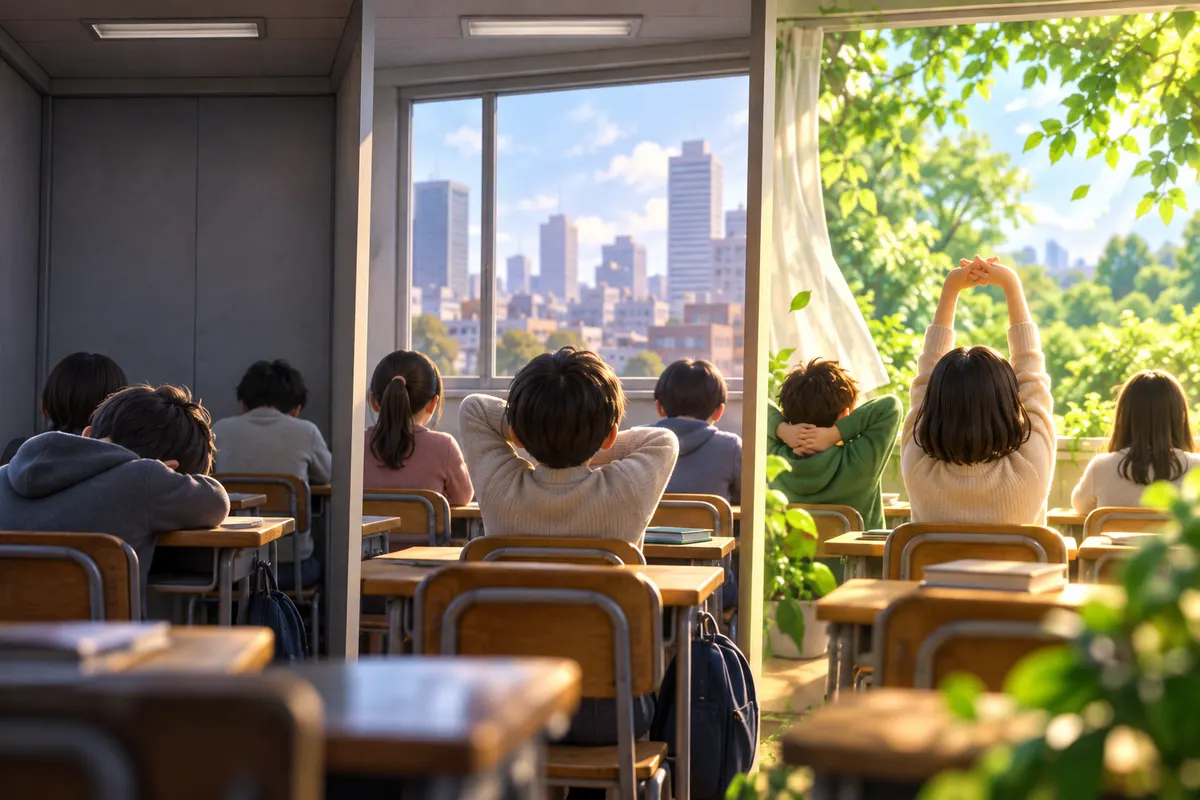
アメリカ・イリノイ州の5つの高校で行われた研究(Li & Sullivan、2016年)では、高校生94人をくじ引きで3種類の教室に分けました。①窓のない教室、②窓から建物が見える教室、③窓から緑が見える教室です。ストレスのかかる作業をしたあと、それぞれの教室で休憩してもらうと――。
緑が見える教室の生徒は、注意力テストの成績がよく、ストレスからの回復も早かったのです。
03「教室に植物」は、まだ結論が割れている
では、教室の中に植物を置くのはどうでしょう?
オランダの研究(van den Bergら)では、2つの小学校の4つの教室に植物の壁(グリーンウォール)を設置しました。7〜10歳の170人を、2か月後と4か月後まで追っています。すると、植物の壁がある教室の子は、選択的注意(必要なものだけに集中する力)のテストでよい成績でした。ただし、作業のスピードや「気分のよさ」には差がありませんでした。
いっぽう、ドイツの小学4年生634人(41クラス)を調べた研究(Lindemann-Matthiesら、2021年)もあります。窓から見える自然が多い教室の子は、「ストレスが少ない」「授業に集中できている」と答えました。ところが、集中力テストの成績とは関係が見られませんでした。教室内の植物の量も、教室の居心地のよさとは関係していませんでした。
04まとめ
緑の多い学校、窓から緑が見える教室は、子どもの記憶力や注意力の回復を後押ししてくれる可能性があります。ただ、「鉢植えを1つ置けば成績アップ」というほど単純ではありません。
いちばん手軽なのは、疲れたら外の緑を見ること。窓の外の木は、ちょっとした“頭の休憩所”なのかもしれません。
この研究を英語で読もう原田英語の English CornerDoes green space help children learn? 音声
音声 4択クイズ9問A2・B1・B2タップして開く
原田英語の English Corner
この研究を英語で読もう
Can trees help children learn? In Barcelona, scientists studied 2,593 children aged 7 to 10. Children at schools with more green space improved their memory more in one year.
In the United States, high school students rested in different classrooms. Students in a classroom with a green view out the window did better on an attention test. But plants in pots alone may not help much.
66 words ・ CEFR A2
和訳を見る
木は子どもの学習を助けるのでしょうか。バルセロナで、科学者たちは7歳から10歳の子ども2593人を調べました。緑の多い学校の子どもは、1年間で記憶力がより大きく伸びました。
アメリカでは、高校生がいろいろな教室で休憩しました。窓から緑が見える教室の生徒は、注意力のテストでよい成績をとりました。でも、鉢植えだけではあまり役に立たないかもしれません。
4択リーディングクイズ
Q1. What is the passage mainly about?
Can trees help children learn? という問いに対して、緑と記憶力・注意力の研究を紹介しているので C。
Q2. How many children were in the Barcelona study?
scientists studied 2,593 children とあるので B。
Q3. In this passage, "improved" means ...
improved their memory は「記憶力が伸びた」。improve は「よくなる・よくする」なので D。
Does green space help children learn? In Barcelona, researchers tested the memory and attention of 2,593 children aged 7 to 10 every three months. Children whose schools had more greenery showed larger improvements in working memory over one year.
However, this was an observational study, and part of the effect may be explained by lower air pollution from traffic. In an American experiment, 94 high school students were randomly placed in classrooms with no windows, a view of buildings, or a view of trees. After a tiring task, students who rested in the green-view room scored better on an attention test and recovered from stress faster. Evidence for potted plants inside classrooms, however, is mixed.
115 words ・ CEFR B1
和訳を見る
緑地は子どもの学習を助けるのでしょうか。バルセロナでは、研究者たちが7〜10歳の子ども2593人の記憶力と注意力を3か月ごとにテストしました。学校の緑が多い子どもほど、1年間でワーキングメモリーが大きく伸びました。
しかしこれは観察研究であり、効果の一部は交通による大気汚染が少ないことで説明できるかもしれません。アメリカの実験では、94人の高校生が、窓のない教室、建物が見える教室、木が見える教室にくじ引きで分けられました。疲れる作業のあと、緑が見える教室で休んだ生徒は注意力テストの成績がよく、ストレスからの回復も早かったのです。ただし、教室の中の鉢植えについての証拠は、結果がまちまちです。
4択リーディングクイズ
Q1. What is the passage mainly about?
第1文の問いに対し、観察研究と実験の両方から緑と学習の関係を紹介しているので B。
Q2. Which classroom helped students recover best in the American experiment?
students who rested in the green-view room scored better ... and recovered from stress faster とあるので D。
Q3. Why does the author mention that the Barcelona study was observational?
観察研究であり、大気汚染の少なさなど他の要因でも説明できると続けているので A。
Several studies suggest that greenery supports children's cognitive development, though the strength of the evidence varies. In a 2015 PNAS study, Dadvand and colleagues tested 2,593 schoolchildren aged 7 to 10 in Barcelona every three months and measured surrounding greenery using satellite images.
Children at greener schools showed greater one-year gains in working memory and reductions in inattentiveness. Because the study was observational, schools in greener areas might differ in other ways, and traffic-related air pollution accounted for 20 to 65 percent of the association. Greenery may therefore help partly through cleaner air. Experimental evidence is more direct.
In 2016, Li and Sullivan randomly assigned 94 high school students to classrooms without windows, with views of buildings, or with views of greenery; after a demanding task, those with green views performed better on attention tests and recovered from stress faster. Indoor plants are less clear-cut. A Dutch study found that green walls improved selective attention but not speed or mood, while a 2021 German survey of 634 fourth graders found no clear link between the amount of classroom plants and comfort.
181 words ・ CEFR B2
和訳を見る
いくつかの研究は、緑が子どもの認知発達を支えることを示唆していますが、証拠の強さはさまざまです。2015年の『PNAS』の研究で、ダドヴァンドらはバルセロナの7〜10歳の小学生2593人を3か月ごとにテストし、周囲の緑の量を人工衛星の画像で測りました。
緑の多い学校の子どもは、1年間のワーキングメモリーの伸びが大きく、不注意も減っていました。これは観察研究なので、緑の多い地域の学校はほかの点でも違っているかもしれません。また交通由来の大気汚染がこの関連の20〜65%を説明しており、緑は空気をきれいにすることで一部役立っている可能性が示されました。実験による証拠はより直接的です。2016年、リーとサリバンは94人の高校生を、窓のない教室、建物が見える教室、緑が見える教室にランダムに割り当てました。
負荷の高い作業のあと、緑が見える生徒は注意力テストの成績がよく、ストレスからの回復も早かったのです。室内の植物については、はっきりしません。オランダの研究では、植物の壁が選択的注意を高めたものの、速さや気分は変わりませんでした。また2021年にドイツの小学4年生634人を調べた研究では、教室の植物の量と居心地のよさとの間に明確な関係は見られませんでした。
4択リーディングクイズ
Q1. What is the passage mainly about?
第1文 though the strength of the evidence varies のとおり、観察研究・実験・室内植物の研究を比べているので D。
Q2. What did the Barcelona study suggest about air pollution?
traffic-related air pollution accounted for 20 to 65 percent of the association とあるので A。
Q3. Which statement best matches the passage?
窓からの緑はランダム化実験で効果が示された一方、Indoor plants are less clear-cut. とあるので C。緑の壁は速さや気分を改善しなかったので D は誤り。
重要単語
- green spaceB2名詞(句)緑地Green space around schools may support learning.
 urban green space「都市の緑地」。greenery(緑・草木)も同じ文脈で頻出。
 - working memoryC1名詞(句)作業記憶、ワーキングメモリーWorking memory helps you solve math problems in your head. 情報を一時的に保持しながら処理する記憶。認知心理学の長文の定番語。
- attentionA2名詞注意(力)A short break can restore your attention. pay attention to ~「~に注意を払う」。attract attention「注目を集める」。
- associationB2名詞関連、協会An association does not always mean cause and effect. associate A with B「AをBと結びつけて考える」。相関と因果の区別は入試長文の頻出テーマ。
- air pollutionB1名詞(句)大気汚染Trees may reduce children's exposure to air pollution. pollute(汚染する)の名詞形。pollutant(汚染物質)も覚えておく。
- observational studyC1名詞(句)観察研究An observational study cannot prove cause and effect. 条件を操作しない研究。experiment(実験)、randomized(ランダム化された)と対比して覚える。
- randomlyB2副詞無作為に、ランダムにStudents were randomly assigned to three classrooms. be randomly assigned to ~「~に無作為に割り当てられる」は実験の説明の定番表現。
 入試に出る順の単語帳を印刷する →
 全5903語の「科学英単語カード」で復習する →
 動画でもっと知る
動画は各チャンネルの公式埋め込みで表示しています(YouTube)。
この話題を TED で聞く
同じテーマの TED・TED-Ed を、 TED HACK で。英語の見どころ・使える表現・学習ミッションつきの日本語ガイドです。(運営:原田英語)


 公式・一次情報をチェック
- 論文全文:Dadvand et al. 2015(NIH PubMed Central)pmc.ncbi.nlm.nih.gov
このネタ、誰かに教えたくなった?
バルセロナの小学生2593人の調査では、学校の緑が多い子ほど1年間の記憶力の伸びが大きかった。窓から緑が見える教室で注意力が回復した実験も。ただ鉢植えだけの効果はまだはっきりしない。
押すと「マジかリスト」に保存されます
 出典・参考文献(4件)タップで表示
- Dadvand et al. (2015) Green spaces and cognitive development in primary schoolchildren, PNASdoi.org
- Li & Sullivan (2016) Impact of views to school landscapes on recovery from stress and mental fatigue, Landscape and Urban Planningdoi.org
- van den Berg et al. (2016) Green Walls for a Restorative Classroom Environment: A Controlled Evaluation Study, Environment and Behaviordoi.org
- Lindemann-Matthies et al. (2021) Associations between the naturalness of window and interior classroom views, subjective well-being of primary school children and their performance in an attention and concentration test, Landscape and Urban Planningdoi.org

※本記事は上記の研究・公開資料をもとに、原田英語が独自の言葉で解説したものです。引用は著作権法第32条の範囲で行い、出典を明記しています。画像はすべてオリジナルのイメージです。研究結果には限界や個人差があります。誤りのご指摘は原田英語のお問い合わせフォームから。
 これも「マジか!?」

 動物・植物
動物・植物
「観葉植物で空気がキレイに」は幻想? 換気と同じ効果には床1㎡に10〜1000鉢が必要という計算
 動物・植物
動物・植物
【録音成功】水不足のトマトは「超音波」でポツポツ鳴いていた
 動物・植物
動物・植物
虫にかじられた植物は「助けて」の匂いを出す。やって来るのは、その虫に卵を産みつける寄生バチ
 動物・植物
動物・植物
脳がないのに“錯覚”する? ヒマワリの芽は、いちばん明るい方へ伸びるとは限らなかった
 動物・植物
動物・植物
植物も夜は「寝る」? ネムノキが夜に葉をたたむしくみと、リンネが考えた“花時計”
 動物・植物
動物・植物