
 動物・植物ビミョー
頭を切っても「記憶」が戻る? 再生する虫プラナリアと“脳の外の記憶”の謎
 2026.10.02
 English Corner(A2〜B2・4択クイズ)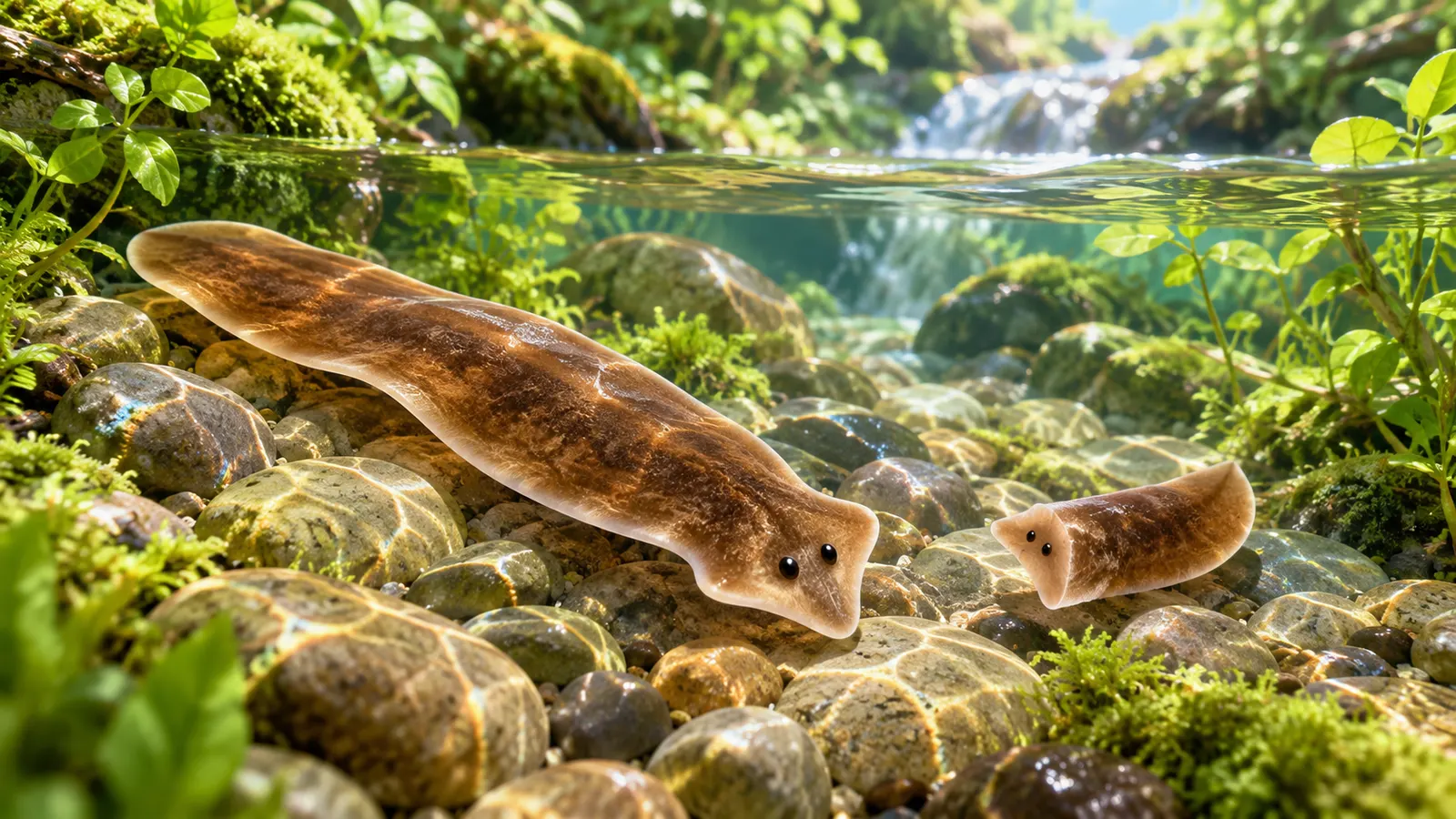
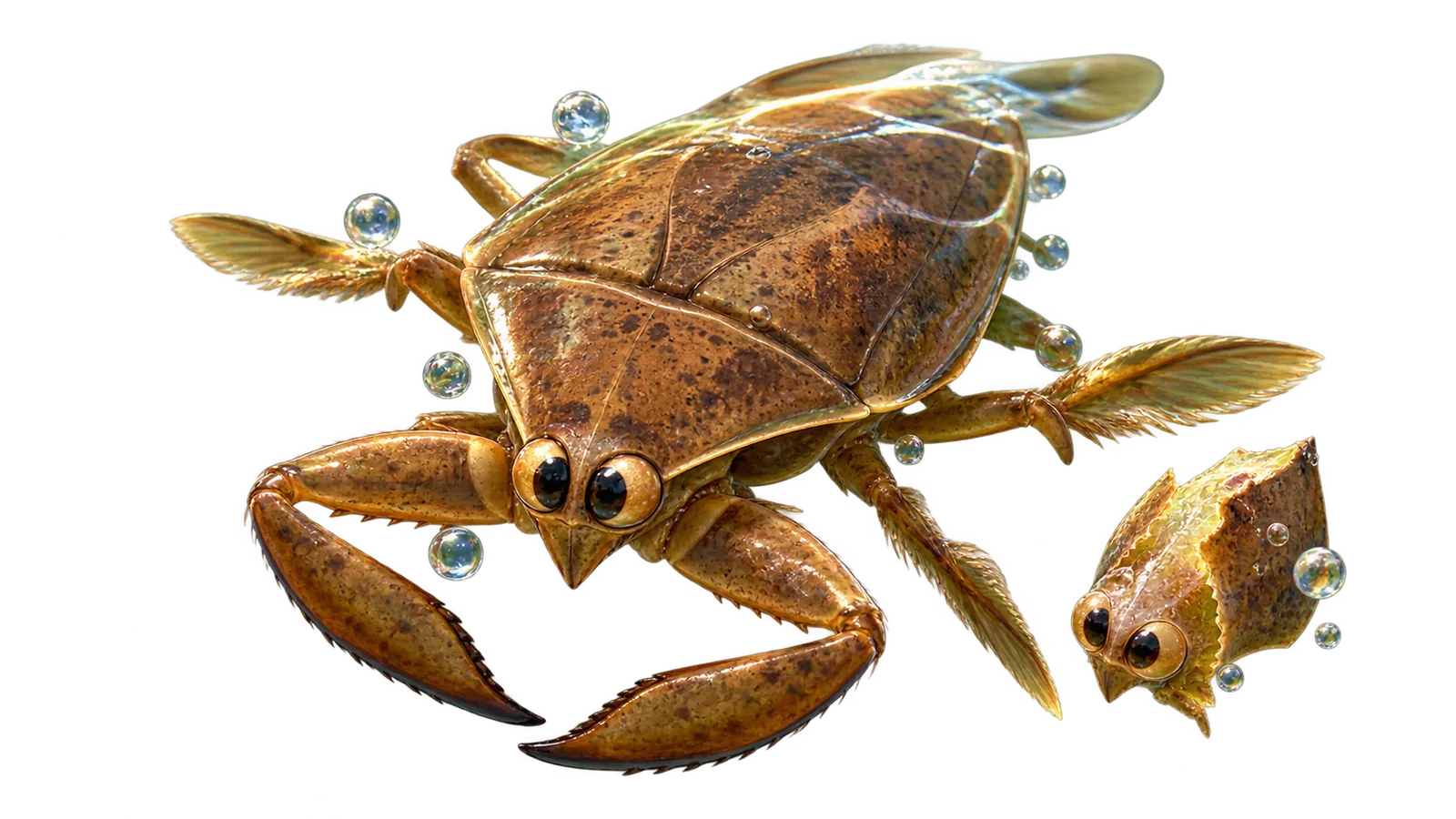
 読む前に予想してみよう!
プラナリアの再生を支えているのは、どんな細胞にもなれる幹細胞である
体じゅうに散らばる「ネオブラスト」という幹細胞の中に、1個だけで全身の細胞を作り直せるものがある。
 研究カード(どんな研究?)
- 対象
- ナミウズムシ(Dugesia japonica)・シュミテア属のプラナリア
- 規模
- 数十匹(行動実験)・単一細胞移植(幹細胞実験)
- 研究の種類
- 自動化した行動訓練実験・放射線照射と細胞移植
- 確かさ
- ★★☆☆☆
プラナリアは小さな切れ端からでも体全体を再生する。頭を切って脳を作り直した個体が、切る前の訓練を「少し覚えていた」ように見えた実験もあるが、まだ慎重な検証が必要。
ひとことで言うとプラナリアは切っても体が元どおり。新しい頭でも、前のことを少し覚えていたかも?
川の石の裏をのぞくと、ときどき1〜2cmほどの平たい虫が見つかります。三角形の頭に、寄り目のような2つの目。プラナリアです。
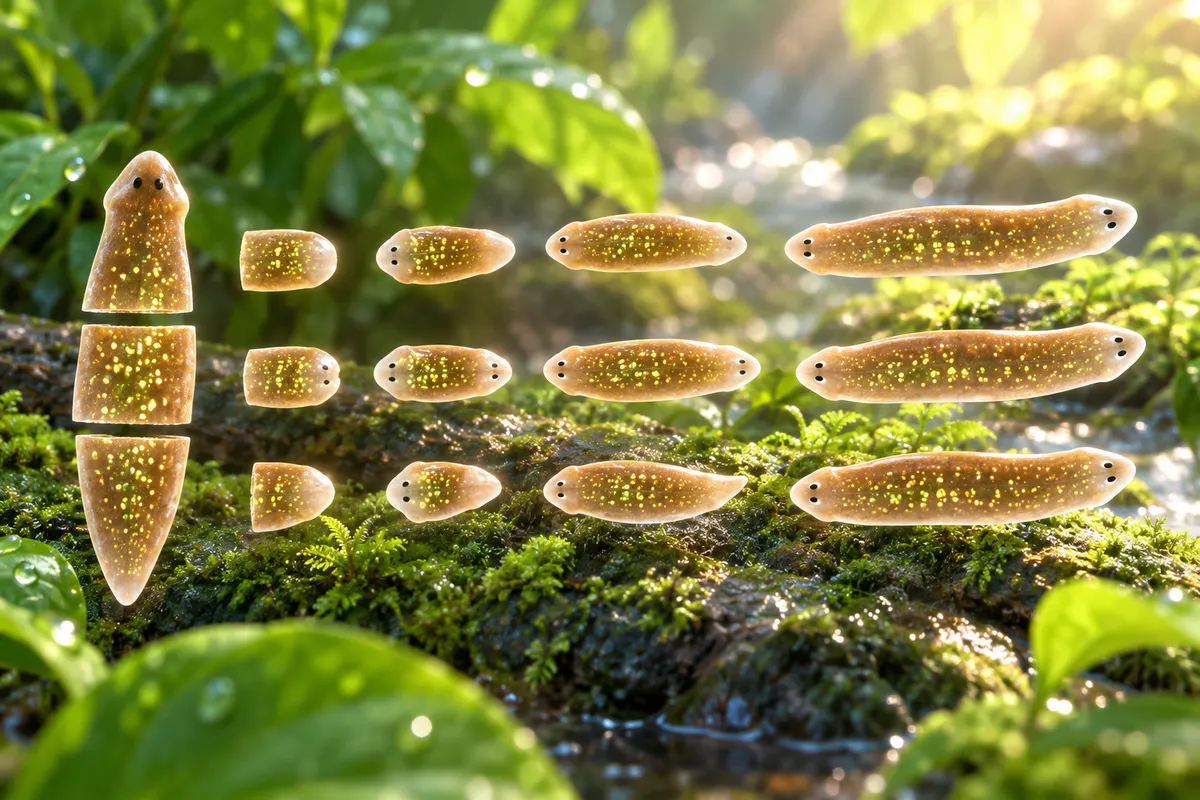
この虫は、体を切ると、それぞれの切れ端が頭も尾もそろった新しい1匹に育ちます。頭を切れば新しい頭が、しっぽを切れば新しいしっぽが。小さな断片からでも、体まるごと作り直してしまうのです。
そこから、こんな問いが生まれました。「頭(脳)を作り直したプラナリアは、昔のことを覚えているのか?」
01再生の主役は「なんにでもなれる細胞」
プラナリアの体には、ネオブラストと呼ばれる、分裂する細胞がたくさん散らばっています。再生のとき、この細胞が増えて、神経や腸や筋肉など、必要な細胞に変わっていきます。
人間の大人の体にも幹細胞はありますが、多くは「血液だけ」「皮膚だけ」のように役割が決まっています。プラナリアは、何にでもなれる幹細胞を大人になっても体じゅうに持っている。これが、驚異的な再生力の秘密です。
02新しい頭に、古い記憶は残る?
再生した頭の中には、新しい脳ができます。では、切る前に覚えたことはどうなるのでしょう。
この問いは、1950〜60年代にアメリカの心理学者ジェームズ・マコーネルさんたちが取り組んだことで有名になりました。ただ、当時の実験は手作業で、観察する人の主観が入りやすく、結果がなかなか再現されませんでした。「訓練したプラナリアを別のプラナリアに食べさせると記憶が移る」という報告もありましたが、これは今では信頼できない結果とみなされています。
つまり、新しい脳になっても、記憶の「名残り」のようなものが体のどこかに残っていた可能性があるのです。
03まだ「答え」ではない
ただし、この結果をそのまま「記憶は脳の外にある」と受け取るのは早すぎます。
- 実験はまだ少数の研究室でしか行われておらず、別のチームによる十分な再現がありません
- 効果は「完全に覚えていた」ではなく、再学習が少し速かったという控えめなもの
- 頭を切ったあとも、体の側に残った神経のネットワークが、何らかの情報を保っていた可能性もあります
「脳がなくなっても記憶が残るなんて!」という見出しはインパクト大ですが、そう決めつけるのはまだ早いのです。
04まとめ
プラナリアは、たった1個の細胞から体を作り直せるほどの再生名人でした。そして、作り直した頭でも「昔の記憶の名残り」を持っていたかもしれない。
記憶はどこにしまわれているのか。その答えはまだ出ていませんが、川の石の裏の小さな虫が、脳科学の大きな謎へのヒントを握っているのかもしれません。
この研究を英語で読もう原田英語の English CornerPlanarians are flatworms that can regrow a complete body from a small piece. 音声
音声 4択クイズ9問A2・B1・B2タップして開く
原田英語の English Corner
この研究を英語で読もう
Planarians are small flat worms that live in rivers. If you cut one into pieces, each piece grows into a new worm. Special cells in their bodies can become any kind of cell.
Scientists asked a strange question. If a worm grows a new head and brain, does it remember things? In one study, worms with new heads learned old lessons a little faster. But other scientists still need to check this result.
73 words ・ CEFR A2
和訳を見る
プラナリアは川にすむ小さな平たい虫です。1匹を切り分けると、それぞれの切れ端が新しい虫に育ちます。体の中の特別な細胞が、どんな種類の細胞にもなれるのです。
科学者たちは不思議な問いを立てました。虫が新しい頭と脳を生やしたら、前のことを覚えているのでしょうか。ある研究では、新しい頭を持つ虫が、以前の学習を少し速く覚え直しました。しかし、この結果はまだほかの科学者が確かめる必要があります。
4択リーディングクイズ
Q1. What happens when you cut a planarian into pieces?
each piece grows into a new worm とあるので B。
Q2. What did the worms with new heads do in one study?
worms with new heads learned old lessons a little faster とあるので A。
Q3. In this passage, "check this result" means ...
check は「確かめる」。結果が本当かもう一度調べる、という意味なので C。
Planarians are flatworms that can regrow a complete body from a small piece. Their secret is a type of stem cell called a neoblast. In 2011, Peter Reddien's team showed that a single neoblast could rebuild all the cells of a worm that had lost its ability to regenerate.
Does a worm with a new brain keep its old memories? In 2013, Tal Shomrat and Michael Levin used a computer-controlled machine to train worms.
Then they cut off the worms' heads. The heads grew back in about two weeks, and the trained worms relearned the task faster than untrained worms. The difference was small, and other laboratories have not fully repeated the experiment. Even so, it hints that some memory may be stored outside the head.
126 words ・ CEFR B1
和訳を見る
プラナリアは、小さな断片から完全な体を再生できる扁形動物です。その秘密は、ネオブラストと呼ばれる幹細胞の一種です。2011年、ピーター・レディエンさんのチームは、再生能力を失った虫のあらゆる細胞を、たった1個のネオブラストが作り直せることを示しました。
では、新しい脳ができた虫は、古い記憶を保っているのでしょうか。2013年、タル・ショムラットさんとマイケル・レヴィンさんは、コンピューター制御の装置を使って虫を訓練しました。
それから虫の頭を切り落としました。頭は約2週間で再生し、訓練された虫は、訓練されていない虫よりも速く課題を覚え直しました。差は小さく、ほかの研究室はこの実験を十分には再現していません。それでも、記憶の一部が頭の外に蓄えられている可能性をうかがわせる結果です。
4択リーディングクイズ
Q1. What did Reddien's team show in 2011?
a single neoblast could rebuild all the cells of a worm とあるので A。
Q2. How long did it take for the new heads to regrow?
The heads grew back in about two weeks とあるので D。
Q3. What is the writer's attitude toward the 2013 result?
The difference was small, and other laboratories have not fully repeated the experiment. と慎重な姿勢を示しつつ、Even so ... と興味深さも認めているので B。
Cut a planarian into pieces, and even a small fragment can grow into a complete worm with a head and a tail. In 2011, Peter Reddien and colleagues showed how. They used radiation to destroy all the dividing cells in a worm, then transplanted a single neoblast from another worm. That one cell produced every cell type and restored the animal's ability to regenerate.
Pluripotent stem cells like this, present throughout the adult body, are rare in animals like us. Memory is a more controversial subject. Experiments in the 1950s and 1960s claimed that planarians kept learned behavior after regeneration, and even that memory could pass to other worms that ate trained ones. Those results were subjective and are no longer trusted.
In 2013, Tal Shomrat and Michael Levin tried again with automated training. Worms were familiarized with a rough-floored dish and then decapitated. After their heads grew back, they relearned the behavior faster. The effect was modest.
The worms relearned faster but did not fully recall the task, and few labs have tested the result. Nerves left in the body may also have held on to the information while the new head grew.
194 words ・ CEFR B2
和訳を見る
プラナリアを切り刻むと、小さな断片からでも、頭と尾のそろった完全な虫が育ちます。2011年、ピーター・レディエンさんらは、そのしくみを示しました。放射線で虫の分裂する細胞をすべて壊し、別の虫から1個のネオブラストを移植したのです。そのたった1個の細胞があらゆる種類の細胞を作り出し、動物の再生能力を回復させました。
大人の体じゅうに存在するこうした多能性幹細胞は、私たちのような動物ではまれです。記憶は、もっと議論を呼ぶテーマです。1950年代から60年代の実験は、プラナリアが再生後も学習した行動を保つと主張し、さらに訓練した虫を食べたほかの虫に記憶が移るとまで主張しました。それらの結果は主観的で、今では信頼されていません。
2013年、タル・ショムラットさんとマイケル・レヴィンさんは、自動化した訓練でもう一度試しました。虫を底がざらざらした容器に慣らしてから、頭を切り落としたのです。頭が再生した後、虫はその行動をより速く覚え直しました。効果は控えめでした。
虫は速く覚え直したものの、課題を完全に思い出したわけではなく、この結果を検証した研究室も少数です。また、新しい頭が育つあいだ、体に残った神経が情報を保っていた可能性もあります。
4択リーディングクイズ
Q1. What did the 2011 transplant experiment demonstrate?
That one cell produced every cell type and restored the animal's ability to regenerate. とあるので C。人間のような動物ではまれだと書かれている。
Q2. Why are the experiments from the 1950s and 1960s no longer trusted?
Those results were subjective and are no longer trusted. とあるので A。
Q3. Which is a possible explanation mentioned by the writer for the 2013 result?
最終文に Nerves left in the body may also have held on to the information とあるので B。
重要単語
- regenerateC1動詞再生するPlanarians can regenerate a new head.
 re-(再び)+generate(生み出す)。名詞 regeneration「再生」は医療の文脈で入試頻出。
 - stem cellB2名詞(句)幹細胞Stem cells can turn into many types of cells. stem は植物の「茎」。いろいろな細胞が枝分かれしていく「幹」のイメージ。iPS細胞も induced pluripotent stem cell。
- pluripotentC1形容詞多能性の(いろいろな細胞になれる)A single pluripotent cell rebuilt the whole worm. pluri-(多くの)+potent(力がある)。iPS細胞の P はこの語。
- decapitateC1動詞頭を切り落とすThe researchers decapitated the trained worms. de-(取り去る)+capit(頭)。capital(首都・頭文字)、captain と同じ語根。
- replicateC1動詞再現する、追試するOther labs need to replicate the result. 名詞 replication「追試」。科学では再現性(reproducibility)が信頼の鍵になる。
- intriguingC1形容詞興味をそそるThe result is intriguing but needs more research. 動詞 intrigue「興味をそそる」。interesting より強く「謎めいていて気になる」ニュアンス。
 入試に出る順の単語帳を印刷する →
 全5903語の「科学英単語カード」で復習する →
 動画でもっと知る
動画は各チャンネルの公式埋め込みで表示しています(YouTube)。
この話題を TED で聞く
同じテーマの TED・TED-Ed を、 TED HACK で。英語の見どころ・使える表現・学習ミッションつきの日本語ガイドです。(運営:原田英語)

 4コマでわかる
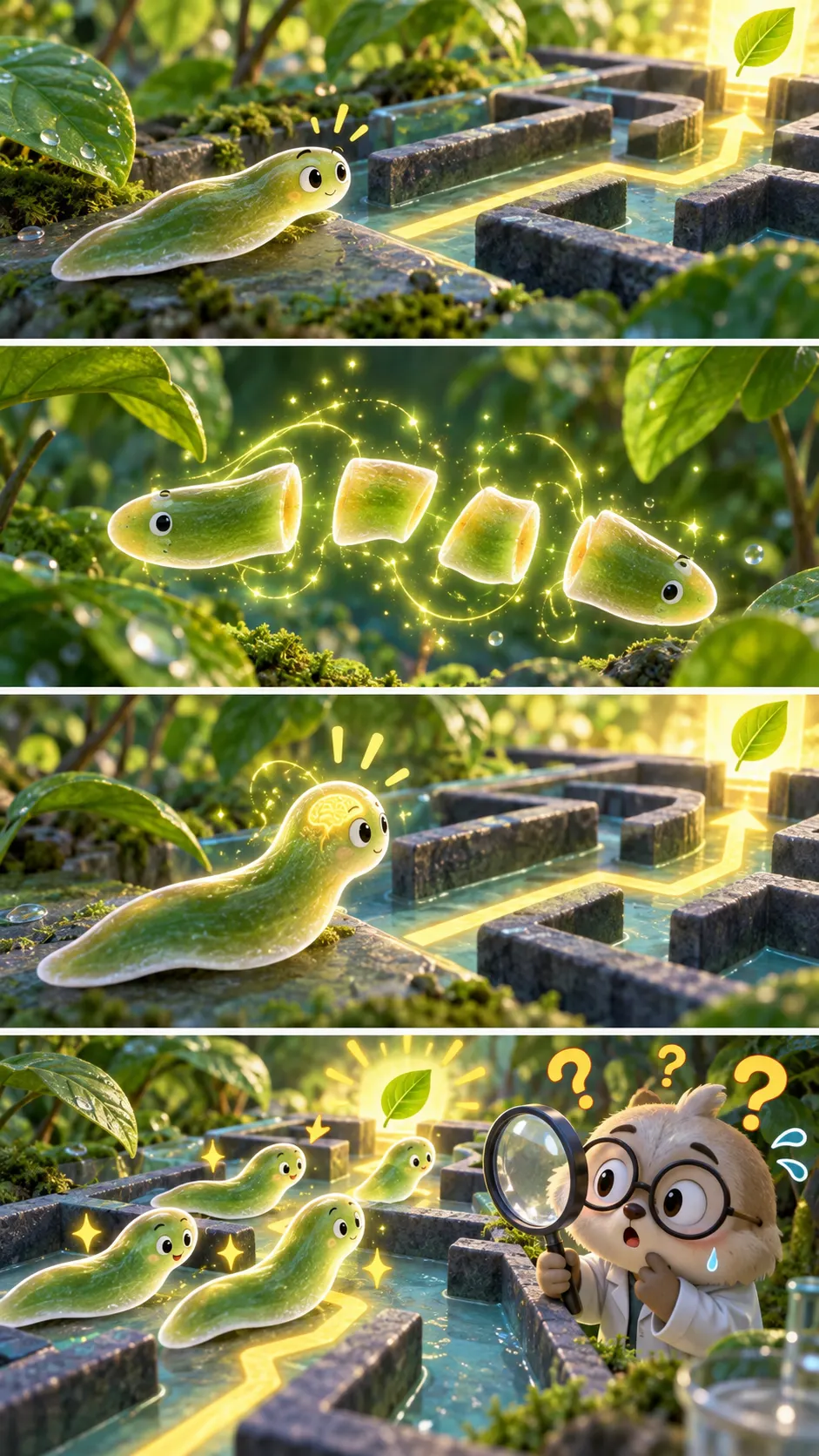
このネタ、誰かに教えたくなった?
プラナリアは切っても切っても体を再生する。しかも、訓練したあと頭を切り落とし、新しい脳が生えた個体に少し復習させると、訓練していない個体より覚えが早かったという実験がある。記憶はどこにしまわれているのか。ただし再現はまだこれから。
押すと「マジかリスト」に保存されます
 出典・参考文献(3件)タップで表示
- Wagner, Wang & Reddien (2011) Clonogenic Neoblasts Are Pluripotent Adult Stem Cells That Underlie Planarian Regeneration, Sciencedoi.org
- Shomrat & Levin (2013) An automated training paradigm reveals long-term memory in planaria and its persistence through head regeneration, Journal of Experimental Biologydoi.org
- Reddien (2018) The Cellular and Molecular Basis for Planarian Regeneration, Celldoi.org

※本記事は上記の研究・公開資料をもとに、原田英語が独自の言葉で解説したものです。引用は著作権法第32条の範囲で行い、出典を明記しています。画像はすべてオリジナルのイメージです。研究結果には限界や個人差があります。誤りのご指摘は原田英語のお問い合わせフォームから。