
 ウソ?ホント?検証ウソ
「テレビに近づくと目が悪くなる」は原因と結果が逆かも。近くで見たがるのは近視のサインのことも
 2026.10.02
 English Corner(A2〜B2・4択クイズ)
 読む前に予想してみよう!
今のテレビを近くで見続けると、目の組織が傷ついて視力が落ちる
目が疲れることはあるが、目を傷めて視力を下げる証拠はない。近づくのは近視のサインのことも。
 研究カード(どんな研究?)
- 対象
- 子どもを含む各国の研究
- 規模
- 11研究をまとめたメタ分析ほか
- 研究の種類
- 系統的レビュー+介入研究
- 確かさ
- ★★★☆☆
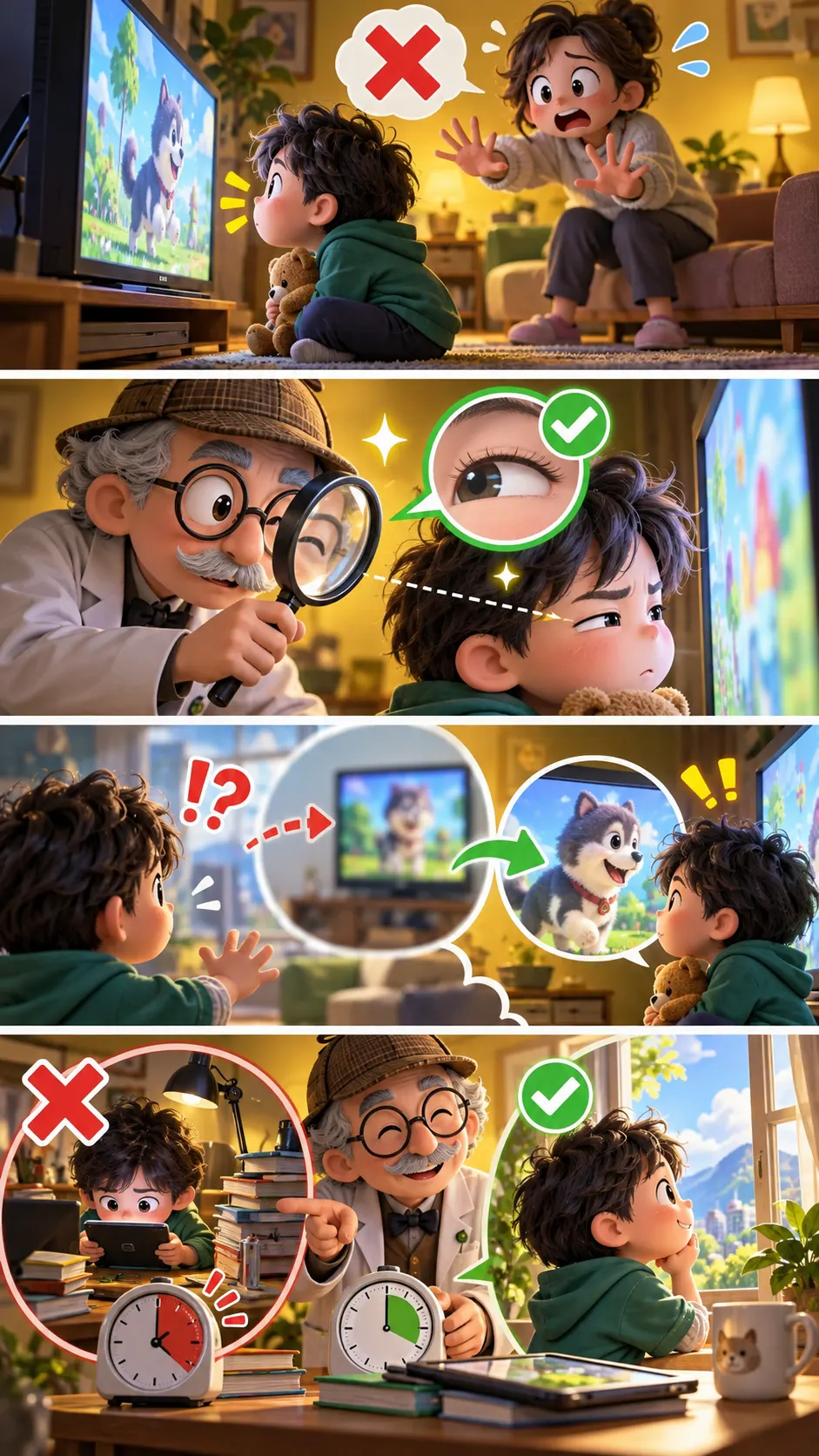
テレビを近くで見ても、視力が落ちる証拠はない。むしろ「近視だから近づいて見ている」可能性がある。注意したいのは画面との距離より、近くを見続ける時間の長さ。
ひとことで言うとテレビに近づくから目が悪くなるんじゃない。目が悪いから近づくのかも!
「テレビから離れなさい! 目が悪くなるよ!」
アニメに夢中になって、気づけば画面のすぐ前に座っていた――。子どものころ、何度もこう言われた人は多いでしょう。
ところが米国眼科学会は、テレビを近くで見ても視力を傷めることはないと説明しています。それどころか、この注意には原因と結果が逆になっている可能性があるのです。
01近視だから「近づいている」のかも
近視の人は、遠くのものがぼやけて見えます。もし子どもが軽い近視になっていたら、どうするでしょうか。
そう、よく見えるように、自然と画面に近づくのです。
本人は「見えにくい」と自覚していないことも多いものです。少しずつ見えにくくなるので、その見え方に慣れてしまい、それが普通だと思っているからです。大人から見ると「近くで見る→目が悪くなった」に見えますが、実際は「目が悪い→近くで見る」だったのかもしれません。
米国眼科学会も、近くに座りたがるのは近視で、メガネが必要なサインのことがあると注意を促しています。
02そもそも、なぜ「テレビは目に悪い」になった?
この言い伝えには、ちょっとした歴史があります。
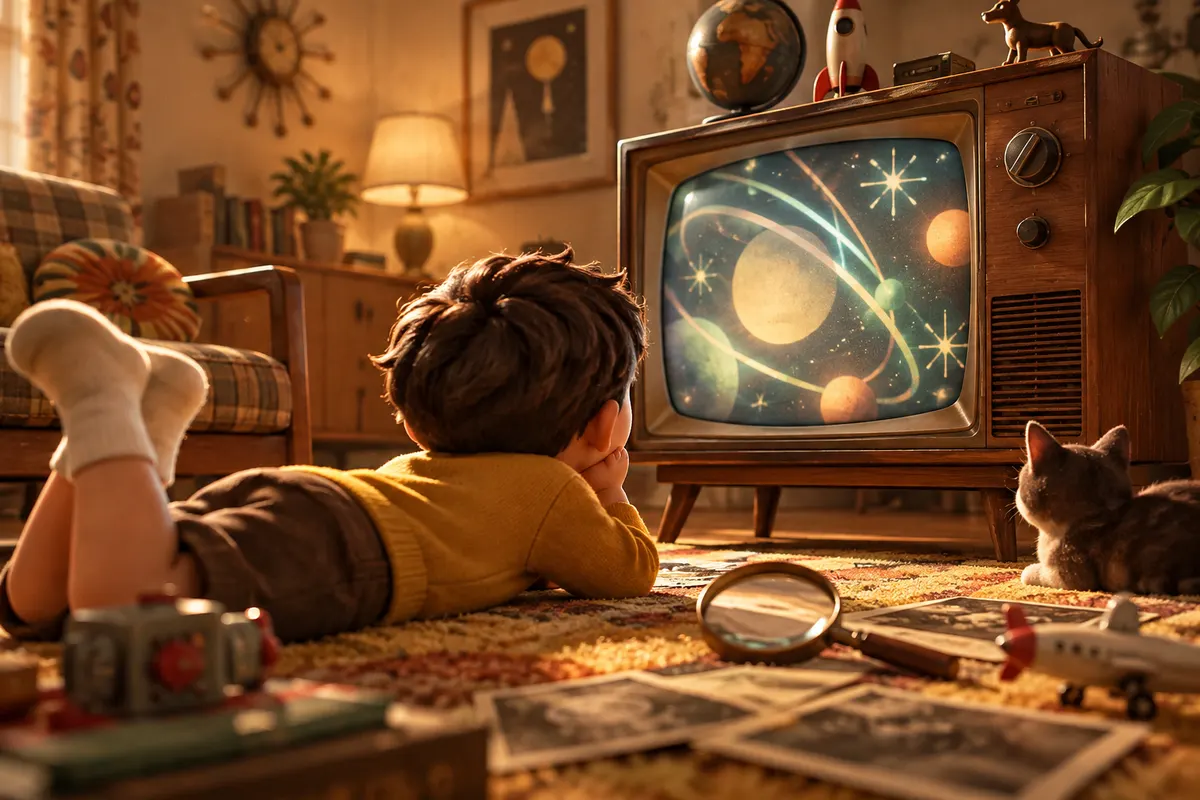
1960年代後半のアメリカで、一部のカラーテレビから基準を超えるX線が漏れていることが分かり、製品が回収される騒ぎがありました。昔のブラウン管テレビは、内部で電子を高速で飛ばして画面を光らせる仕組みだったため、設計や部品に問題があると微量のX線が出ることがあったのです。
この問題はその後の規制で解決されましたが、「テレビに近づくと体に悪い」というイメージは残りました。もちろん、今の液晶や有機ELのテレビに、こうした心配はありません。
03本当に気にすべきは「距離」より「時間」
とはいえ、画面と目の関係がまったくの無罪というわけでもありません。
ポイントは「テレビ」より、手元の小さな画面を近くで長時間見続けること。テレビは数メートル離れて見ることが多いので、スマホよりは目のピント調節の負担が小さいと考えられます。
一方、近視を減らす方向の証拠があるのは屋外で過ごす時間です。台湾の研究では、休み時間に子どもたちを外に出すようにした小学校と、そうしなかった近くの小学校を比べました。1年間で新しく近視になった子の割合は、外に出した学校のほうが少なかった(約8%対約18%)と報告されています。
世界の近視は増え続けていて、ある推計では2050年には世界の人口の約半分が近視になるとされています。画面との付き合い方と外遊びのバランスが、今まで以上に大事になっています。
04まとめ
- テレビを近くで見ても、視力が落ちる証拠はない
- 画面に近づくのは、近視のサインかもしれない(原因と結果が逆)
- 気にしたいのは距離より近くを見続ける時間と、外で過ごす時間の少なさ
テレビの前の子を見かけたら、「離れなさい」の前に「ちゃんと見えてる?」と聞いてみてください。
この研究を英語で読もう原田英語の English Corner"Move away from the TV, or you'll ruin your eyes!" Many of us heard this as children. 音声
音声 4択クイズ9問A2・B1・B2タップして開く
原田英語の English Corner
この研究を英語で読もう
Many parents tell their children, "Don't sit so close to the TV. It will hurt your eyes." But eye doctors in the US say this is not true.
In fact, it may be the other way around. Children who cannot see far things clearly often move closer to the screen. So if a child always sits very close, do not get angry. Take the child for an eye test.
69 words ・ CEFR A2
和訳を見る
多くの親は子どもに「テレビにそんなに近づかないで。目が悪くなるよ」と言います。しかし、アメリカの眼科医たちは、これは本当ではないと言っています。
実は、逆なのかもしれません。遠くのものがはっきり見えない子どもは、よく画面に近づくのです。だから、子どもがいつもとても近くに座っているなら、怒らないでください。目の検査に連れていきましょう。
4択リーディングクイズ
Q1. What is the passage mainly about?
テレビに近づくと目が悪くなるのか、という話なので D。
Q2. Why do some children move closer to the screen?
Children who cannot see far things clearly often move closer to the screen. とあるので A。
Q3. In this passage, "the other way around" means ...
the other way around は「逆」。近づくから目が悪くなるのではなく、目が悪いから近づく、という逆の関係なので B。
"Move away from the TV, or you'll ruin your eyes!" Many of us heard this as children. However, the American Academy of Ophthalmology says that sitting close to a television does not damage eyesight. In fact, cause and effect may be reversed. Nearsighted children see distant objects as blurry, so they naturally move closer to the screen, often without realizing their eyes have a problem.
The warning may have started in the late 1960s, when some color TVs in the US were found to leak X-rays above the safety limit. Modern TVs have no such problem. What deserves more attention is how long children look at things up close, such as phones, and how little time they spend outdoors.
119 words ・ CEFR B1
和訳を見る
「テレビから離れなさい、目が悪くなるよ!」私たちの多くは子どものころにこう言われました。しかし、米国眼科学会は、テレビの近くに座っても視力が傷つくことはないと述べています。実際は、原因と結果が逆かもしれません。近視の子どもは遠くのものがぼやけて見えるため、自分の目に問題があると気づかないまま、自然と画面に近づくのです。
この注意は、アメリカで一部のカラーテレビから安全基準を超えるX線が漏れていることがわかった1960年代後半に始まったのかもしれません。今のテレビにはそのような問題はありません。もっと注意すべきなのは、子どもがスマホなど近くのものを見る時間の長さと、屋外で過ごす時間の少なさです。
4択リーディングクイズ
Q1. What does the American Academy of Ophthalmology say?
sitting close to a television does not damage eyesight とあるので C。
Q2. What happened in the late 1960s?
some color TVs in the US were found to leak X-rays above the safety limit とあるので D。
Q3. What does the author think parents should pay more attention to?
最終文 how long children look at things up close ... and how little time they spend outdoors とあるので A。
Children who sit right in front of the television have been told for generations that they are ruining their eyes. The American Academy of Ophthalmology disagrees. Sitting close may tire the eyes, it says, but it causes no lasting damage.
The warning may even have cause and effect backward. Nearsighted children see distant objects as blurry, so they move closer to the screen, often without noticing that anything is wrong. A child glued to the TV may be signaling a need for glasses. The fear does have a history.
In the late 1960s, some color televisions in the United States were found to give off X-rays above permitted levels, which led to recalls and stricter rules. That problem has nothing to do with today's flat screens. Screens are not completely off the hook, however. A 2021 meta-analysis linked longer use of smart devices with a modestly higher risk of myopia.
Most of the studies it pooled were observational, though, so they cannot show that the devices caused it. Time outdoors seems to help. A Taiwanese school that sent children outside during recess saw fewer new cases. One estimate projects that about half the world's population will be nearsighted by 2050.
200 words ・ CEFR B2
和訳を見る
テレビの真ん前に座る子どもたちは、何世代にもわたって目を悪くするぞと言われてきました。米国眼科学会の見解は違います。近くに座ると目が疲れることはあっても、永続的な害は生じないというのです。
この注意は、原因と結果を逆にとらえている可能性さえあります。近視の子どもは遠くのものがぼやけて見えるので画面に近づきますが、何かがおかしいことに気づかないことも多いのです。テレビにへばりつく子どもは、メガネが必要だというサインを出しているのかもしれません。この心配には歴史があります。
1960年代後半、アメリカで一部のカラーテレビが許容レベルを超えるX線を出していることがわかり、回収と規制強化につながりました。この問題は今の薄型テレビとは関係ありません。しかし、画面に何の責任もないわけではありません。2021年のメタ分析では、スマートデバイスの使用時間が長いほど近視のリスクがやや高いという関連が見られました。
ただし、まとめられた研究の多くは観察研究だったため、デバイスが近視を引き起こしたことまでは示せません。屋外で過ごす時間は役に立つようです。休み時間に子どもを外に出した台湾のある学校では、近視の新たな発症が少なくなりました。2050年には世界人口の約半分が近視になるという推計もあります。
4択リーディングクイズ
Q1. According to the passage, what might a child who sits very close to the TV be signaling?
A child glued to the TV may be signaling a need for glasses. とあるので B。
Q2. Why does the 1960s X-ray problem "have nothing to do with today's flat screens"?
X線漏れは昔のカラーテレビ(ブラウン管)の問題で、今の薄型テレビには当てはまらないため C。
Q3. What limitation of the 2021 meta-analysis does the author point out?
Most of the studies it pooled were observational ... they cannot show that the devices caused it とあるので D。
重要単語
- nearsightedB2形容詞近視のHe is nearsighted, so he wears glasses.
 医学用語は myopic(名詞 myopia)。反対は farsighted(遠視の)。
 - reverse causationC1名詞(句)逆の因果関係This may be a case of reverse causation. cause(原因)の名詞 causation。研究の限界を述べる英文で頻出。
- screen timeB1名詞(句)画面を見ている時間Parents often worry about screen time. limit screen time「画面時間を制限する」の形でよく使われる。
- radiationB2名詞放射線Old TVs gave off a tiny amount of radiation. radiate(放射する)の名詞。give off ~ は「(光・熱などを)発する」。
- eye examA2名詞(句)目の検査Children should have a regular eye exam. exam は examination の短縮形。have an eye exam で「目の検査を受ける」。
- blurryB2形容詞ぼやけたDistant objects look blurry to nearsighted people. blur(ぼやける・ぼかす)の形容詞。blurred とも言う。
 入試に出る順の単語帳を印刷する →
 全5903語の「科学英単語カード」で復習する →
 この話題を TED で聞く
同じテーマの TED・TED-Ed を、 TED HACK で。英語の見どころ・使える表現・学習ミッションつきの日本語ガイドです。(運営:原田英語)

 公式・一次情報をチェック
 4コマでわかる
このネタ、誰かに教えたくなった?
「テレビに近づくと目が悪くなるよ」は、原因と結果が逆かもしれないらしい。近視の子は遠くがぼやけるから、自然と画面に近づく。テレビの前にへばりつく子は、叱るより視力検査が先かも。
押すと「マジかリスト」に保存されます
 出典・参考文献(4件)タップで表示
- Holden et al. (2016) Global Prevalence of Myopia and High Myopia and Temporal Trends from 2000 through 2050, Ophthalmologydoi.org
- Foreman et al. (2021) Association between digital smart device use and myopia: a systematic review and meta-analysis, The Lancet Digital Healthdoi.org
- Wu et al. (2013) Outdoor Activity during Class Recess Reduces Myopia Onset and Progression in School Children, Ophthalmologydoi.org
- Common Eye and Vision Myths(American Academy of Ophthalmology)aao.org

※本記事は上記の研究・公開資料をもとに、原田英語が独自の言葉で解説したものです。引用は著作権法第32条の範囲で行い、出典を明記しています。画像はすべてオリジナルのイメージです。研究結果には限界や個人差があります。誤りのご指摘は原田英語のお問い合わせフォームから。
 これも「マジか!?」
 検証
検証
「暗い所で本を読むと目が悪くなる」は言い過ぎ。近視とはっきり関係していたのは"外遊び"だった


 体・健康
体・健康
2050年には世界の半分が近視に? 子どもの目を守るカギは「外で過ごす時間」だった
 検証
検証
「砂糖で子どもが興奮する」は親の思い込み? 「砂糖入り」と聞いただけで親の見る目が変わった
 検証
検証
「寝る子は育つ」は科学的にホント? 成長ホルモンは"寝入りばなの深い眠り"にドッと出ていた
 検証
検証
「髪や爪は死後も伸びる」はウソ。伸びたように見える"からくり"は皮膚にあった
 検証
検証