
 ウソ?ホント?検証ビミョー
「マイナスイオンで健康に」はどこまで本当? あのブームを論文で確かめた
 2026.10.02
 English Corner(A2〜B2・4択クイズ)
 読む前に予想してみよう!
マイナスイオンには、気分や睡眠を良くする効果がしっかり確認されている
2013年に多くの研究をまとめた分析では、不安・気分・睡眠への一貫した効果は見られなかった。
 研究カード(どんな研究?)
- 対象
- 成人(季節性うつの人を含む)
- 規模
- 33件の研究
- 研究の種類
- メタ分析
- 確かさ
- ★★★☆☆
研究では、ごく高濃度のマイナスイオンで季節性うつの気分が軽くなった報告はある。でも「家電で健康に」を支える確かな証拠はほぼない。
ひとことで言うと滝で気持ちいいのは本当。でも「イオンで体が元気に」はまだナゾ!
2000年代の初めごろ、日本中が「マイナスイオン」に夢中になった時期がありました。ドライヤー、エアコン、扇風機、さらには靴下や下着まで、「マイナスイオン配合」の文字が躍っていました。
「滝のそばは空気がおいしい。それはマイナスイオンのおかげ。だから家でもマイナスイオンを浴びれば健康に!」
この話、どこまでが本当で、どこからが盛りすぎなのでしょうか? 論文を頼りに、ていねいに仕分けしてみます。
01そもそも「マイナスイオン」って何?
空気中の分子は、ときどき電気を帯びます。マイナスの電気を帯びた小さな粒を、研究の世界では負の空気イオンと呼びます(「マイナスイオン」は主に日本の宣伝で広まった呼び方です)。
滝のしぶきが細かく砕けると、マイナスの電気を帯びた粒ができやすくなります。これはレナード効果と呼ばれ、19世紀末から知られている本物の物理現象。だから「滝のそばに負イオンが多い」こと自体は本当です。
問題は、それが体に良い効果をもたらすのか、です。
02論文を集めてみたら…
ただし、例外がひとつ。季節性うつ(冬に日照が減ると気分が落ち込む状態)などの人に負イオンを浴びてもらった研究5件をまとめると、うつの評価点が下がっていました。その差は、非常に高濃度の負イオンを使ったときほどはっきりしていたのです。
ここで大事なのは「非常に高濃度」という条件。こうした研究で使われたのは専用の装置で、家電の「イオン放出モード」とは別物と考えたほうがよさそうです。
03「思い込み」の力も大きい
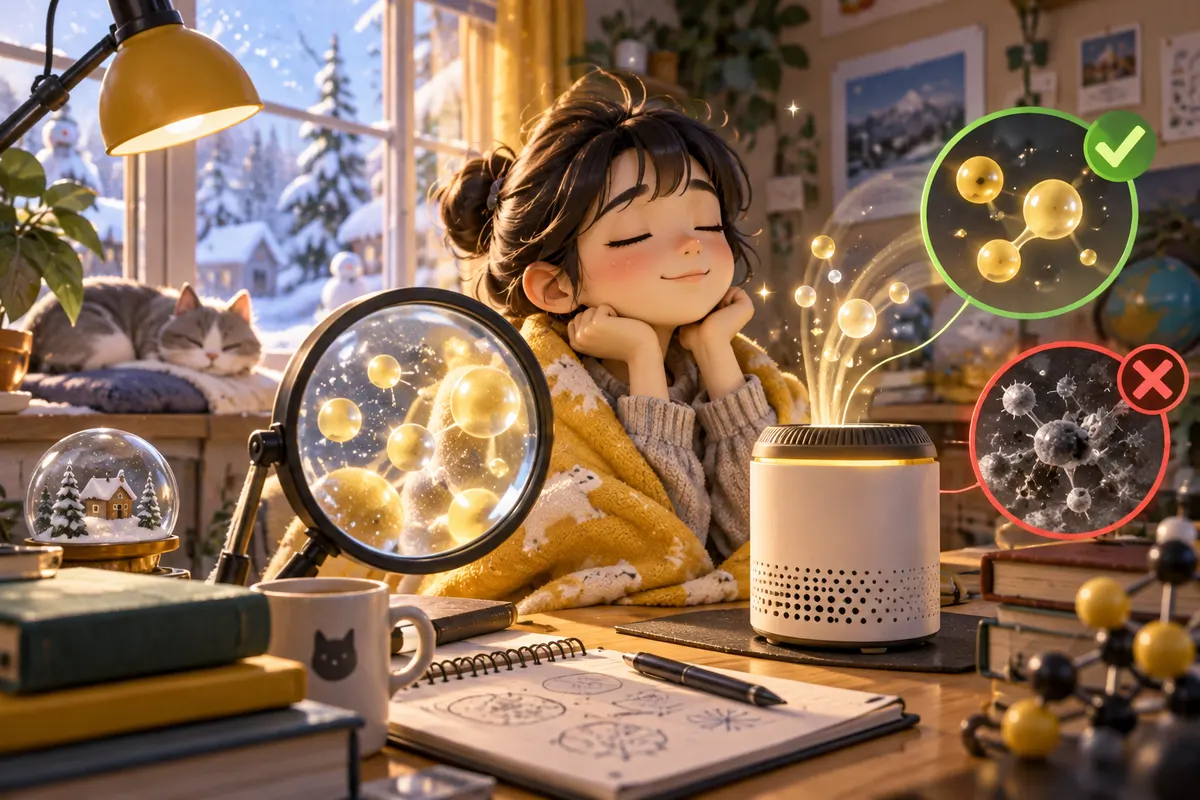
2018年に発表された季節性うつの比較実験(アメリカ、40人)では、高濃度の負イオンは、イオンを出さない偽の装置より効果がありました。ただ、偽の装置のグループでも、多くの項目でかなりの改善が見られました。
この改善の多くはプラセボ効果(=「効くはず」と思うだけで実際に楽になる現象)や、時間とともに自然に良くなった分と考えられます。気持ちよさそうな機械を毎日使う、という行為そのものにも力があるのです。
また、動物実験をまとめた2018年のレビューでも、質の高い研究ほど健康への一貫した影響は見られないという結論でした。
森や滝の心地よさには、涼しさ、緑の景色、水の音、空気のきれいさ、日常からの解放感など、たくさんの要素が重なっています。そのうち「イオンの分」だけを取り出して証明するのは、とても難しいのです。
04「半分ホント」の線引き
ここまでをまとめると、こうなります。
- ホント:滝のそばに負イオンが多いこと(物理現象)
- ちょっとホント:ごく高濃度で、季節性うつの気分がやわらいだ報告
- まだナゾ・根拠薄:家電や衣類の「マイナスイオンで健康に」
05まとめ
マイナスイオンは「まったくのウソ」ではありません。でも、「浴びれば健康に」と言えるほどの証拠はない、が今の正直な答えです。
滝や森に行きたくなったら、イオンのためではなく、景色と空気と散歩のために出かけましょう。それだけで、たぶん十分に気持ちいいはずです。
この研究を英語で読もう原田英語の English CornerAround 2000, "negative ions" became a huge trend in Japan. 音声
音声 4択クイズ9問A2・B1・B2タップして開く
原田英語の English Corner
この研究を英語で読もう
In the early 2000s, many products in Japan said they made "negative ions." People believed these tiny charged particles were good for health. It is true that there are many negative ions near waterfalls.
But a review of 33 studies found no clear effect on mood or sleep. Very strong amounts from special machines may help some people in winter. But home products probably do not make you healthier.
69 words ・ CEFR A2
和訳を見る
2000年代初め、日本の多くの商品が「マイナスイオン」を出すとうたっていました。人々は、この電気を帯びた小さな粒が健康に良いと信じていました。滝の近くにマイナスイオンが多いのは本当です。
しかし、33件の研究を見直したところ、気分や睡眠へのはっきりした効果は見つかりませんでした。専用の機械から出るとても多い量は、冬に一部の人の助けになるかもしれません。しかし、家庭用の商品で健康になる可能性は低いでしょう。
4択リーディングクイズ
Q1. What is the passage mainly about?
マイナスイオンが本当に健康に良いのかを研究で確かめた話なので B。
Q2. What did the review of 33 studies find?
found no clear effect on mood or sleep とあるので D。
Q3. In this passage, "tiny" means ...
tiny は「とても小さい」なので A。
Around 2000, "negative ions" became a huge trend in Japan. Hair dryers, air conditioners and many other products claimed to release them. Negative air ions do exist. When water from a waterfall breaks into tiny drops, it produces a lot of them.
But do they make people healthier? In 2013, American researchers combined 33 studies on people and found no consistent effect on anxiety, mood, relaxation or sleep. There was one exception.
Very high levels of negative ions seemed to reduce symptoms in people with seasonal depression. These studies used special machines, though, and not ordinary home appliances. In a 2018 experiment, people who used a fake device also felt quite a lot better. So part of the benefit seems to come from belief.
124 words ・ CEFR B1
和訳を見る
2000年ごろ、日本で「マイナスイオン」が大流行しました。ドライヤーやエアコンなど、多くの商品がそれを出すとうたいました。負の空気イオンは実際に存在します。滝の水が細かいしずくに砕けると、それがたくさん作られます。
では、それは人を健康にするのでしょうか。2013年、アメリカの研究者たちは人を対象にした33件の研究をまとめ、不安、気分、リラックス、睡眠に対する一貫した効果は見つかりませんでした。例外が一つありました。
非常に高濃度の負イオンは、季節性うつの人の症状を軽くするようでした。ただし、これらの研究で使われたのは専用の装置で、ふつうの家電ではありませんでした。2018年の実験では、偽の装置を使った人もかなり気分が良くなりました。どうやら、効果の一部は信じる気持ちから生まれているようです。
4択リーディングクイズ
Q1. Why are there many negative ions near waterfalls?
When water from a waterfall breaks into tiny drops, it produces a lot of them とあるので D。
Q2. What was the one exception in the 2013 review?
Very high levels of negative ions seemed to reduce symptoms in people with seasonal depression とあるので C。
Q3. What does the 2018 experiment suggest?
偽の装置でもかなり良くなり、part of the benefit seems to come from belief とあるので A。プラセボ効果(思い込みの力)の話。
In the early 2000s, Japanese shoppers could buy hair dryers, fans and even socks advertised as releasing "minus ions." The physics behind the craze is genuine. When water shatters into fine spray, as at a waterfall, negatively charged particles form, a phenomenon known as the Lenard effect. Whether those ions benefit human health is another matter.
In a 2013 meta-analysis of 33 studies conducted between 1957 and 2012, Perez and colleagues found no consistent effect of air ions on anxiety, mood, relaxation, sleep or comfort. One finding stood out, however. In people with seasonal depression, exposure to very high concentrations of negative ions was associated with lower depression scores. Two caveats apply. First, those concentrations came from dedicated devices, not ordinary household appliances.
Second, the trials were small, and in a 2018 controlled study, participants given a sham device also improved substantially, pointing to expectation and natural recovery. A 2018 review of animal research similarly found that higher-quality studies showed no consistent health effects. The pleasure of standing beside a waterfall is real, but it is likely to reflect cool air, scenery, sound and a break from routine rather than ions alone.
192 words ・ CEFR B2
和訳を見る
2000年代初め、日本の買い物客は「マイナスイオン」を出すと宣伝されたドライヤーや扇風機、さらには靴下まで買うことができました。このブームの背後にある物理は本物です。滝のように水が細かいしぶきに砕けると負に帯電した粒子ができ、これはレナード効果として知られる現象です。そのイオンが人間の健康に役立つかどうかは別の問題です。
1957年から2012年に行われた33件の研究のメタ分析で、ペレスらは、空気イオンが不安、気分、リラックス、睡眠、快適さに一貫した効果を持つという結果を見出しませんでした。しかし、一つの知見が際立っていました。季節性うつの人では、非常に高濃度の負イオンを浴びることが、うつの評価点の低下と関連していたのです。ここには2つの注意点があります。第一に、その濃度はふつうの家電ではなく専用の装置によるものだったこと。
第二に、試験は小規模で、2018年の対照研究では偽の装置を与えられた参加者もかなり改善しており、期待や自然な回復の影響が示唆されたことです。動物研究に関する2018年のレビューも同様に、質の高い研究ほど一貫した健康への影響を示さないと結論しました。滝のそばに立つ心地よさは本物ですが、それはイオンだけではなく、涼しい空気、景色、音、日常からの解放を反映している可能性が高いのです。
4択リーディングクイズ
Q1. Which part of the negative ion story does the author accept as genuine?
The physics behind the craze is genuine として、レナード効果を本物と認めているので B。
Q2. What is the first caveat about the seasonal depression findings?
First, those concentrations came from dedicated devices, not ordinary household appliances とあるので A。
Q3. What does the author suggest about the pleasant feeling near a waterfall?
最終文で cool air, scenery, sound and a break from routine rather than ions alone と述べているので C。
重要単語
- ionB2名詞イオンNegative ions form near waterfalls.
 英語の発音は「アイオン」。研究では negative air ions と呼び、「マイナスイオン」は和製表現。
 - concentrationB2名詞濃度/集中The study used a very high concentration of ions. 「集中(力)」の意味とあわせて多義語。concentrate on ~「~に集中する」。
- seasonal depressionC1名詞(句)季節性うつSeasonal depression often starts in winter. 正式には seasonal affective disorder(SAD)。日照時間との関係で長文に出る。
- consistentB2形容詞一貫したThe results were not consistent across studies. be consistent with ~「~と一致する」は内容一致問題で頻出。反対は inconsistent。
- applianceB2名詞家電製品Many appliances claimed to release healthy ions. home appliances / household appliances「家電」。apply(適用する)と同語源。
- caveatC2名詞注意書き、但し書きThere is one important caveat to these results. ラテン語「用心せよ」。研究紹介で with one caveat「ただし一点注意」の形で使う。
- shamC1形容詞・名詞偽の(もの)Some participants used a sham device. 医学研究では sham treatment「偽の処置」として placebo と並ぶ重要語。
 入試に出る順の単語帳を印刷する →
 全5903語の「科学英単語カード」で復習する →
 動画でもっと知る
動画は各チャンネルの公式埋め込みで表示しています(YouTube)。
 4コマでわかる
このネタ、誰かに教えたくなった?
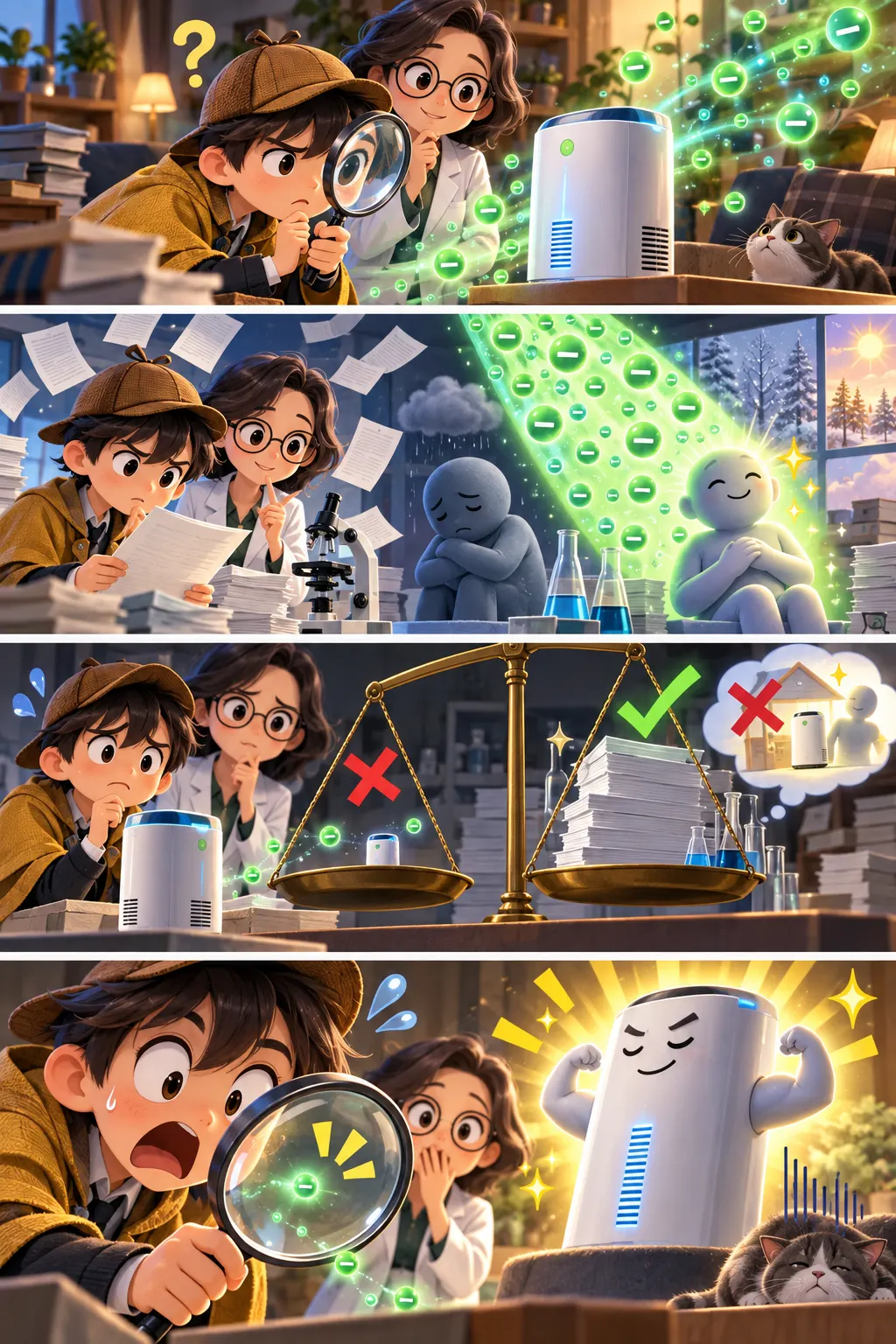
「マイナスイオンで健康に」、論文を調べると「ものすごく高濃度なら、冬のうつっぽさが軽くなったかも」という報告はあるけど、不安・睡眠・リラックスへの一貫した効果は見られなかったらしい。
押すと「マジかリスト」に保存されます
 出典・参考文献(4件)タップで表示
- Perez, Alexander & Bailey (2013) Air ions and mood outcomes: a review and meta-analysis, BMC Psychiatrydoi.org
- Bowers et al. (2018) Controlled trial evaluation of exposure duration to negative air ions for the treatment of seasonal affective disorder, Psychiatry Researchdoi.org
- Bailey et al. (2018) Exposure of laboratory animals to small air ions: a systematic review of biological and behavioral studies, BioMedical Engineering OnLinedoi.org
- Jiang et al. (2018) Negative Air Ions and Their Effects on Human Health and Air Quality Improvement, International Journal of Molecular Sciencesdoi.org

※本記事は上記の研究・公開資料をもとに、原田英語が独自の言葉で解説したものです。引用は著作権法第32条の範囲で行い、出典を明記しています。画像はすべてオリジナルのイメージです。研究結果には限界や個人差があります。誤りのご指摘は原田英語のお問い合わせフォームから。