
 ウソ?ホント?検証ウソ
こっくりさんを動かす犯人は「自分の指」。しかも「知らない」はずの答えを当てることも
 2026.10.02
 English Corner(A2〜B2・4択クイズ)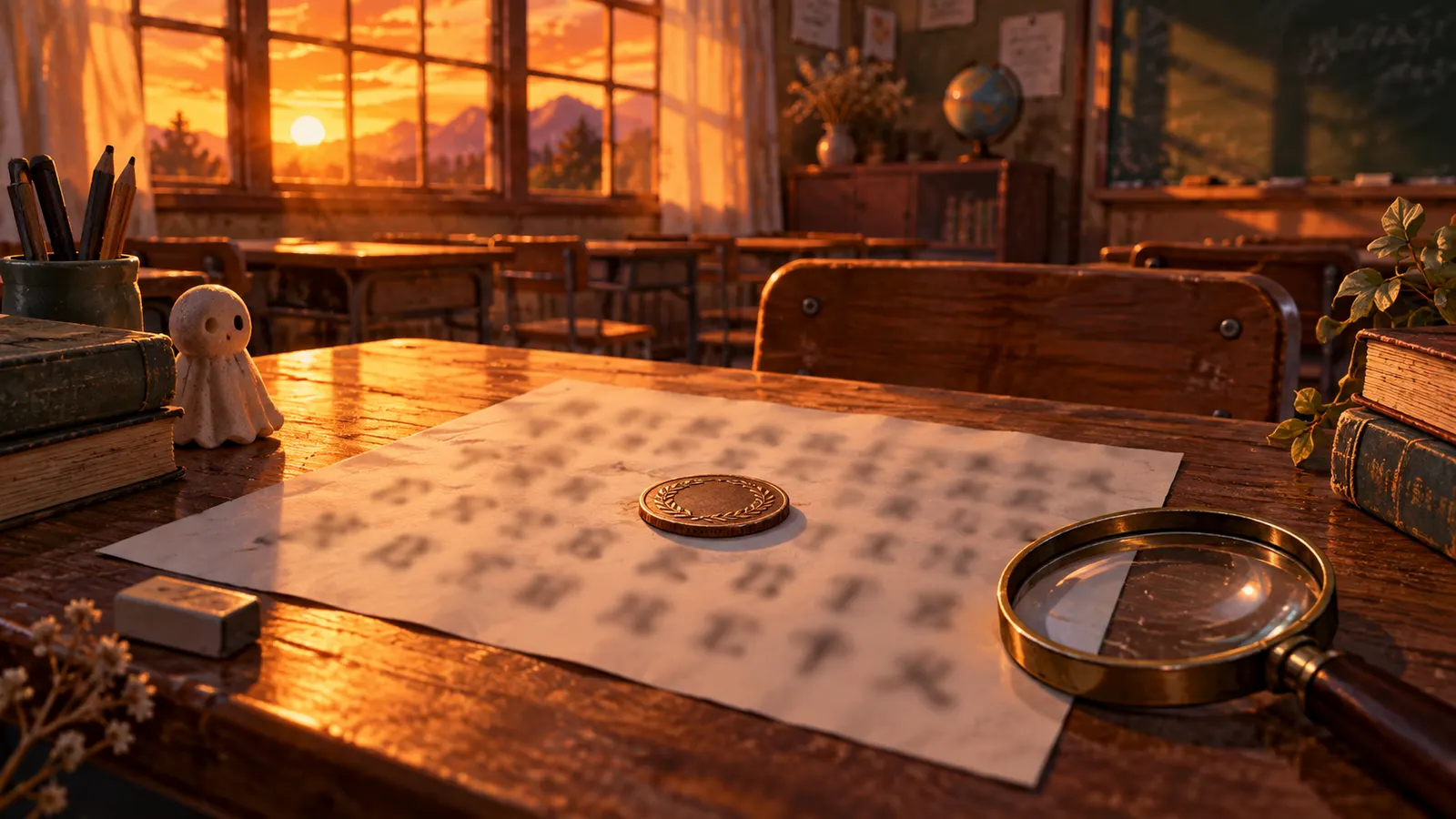
 読む前に予想してみよう!
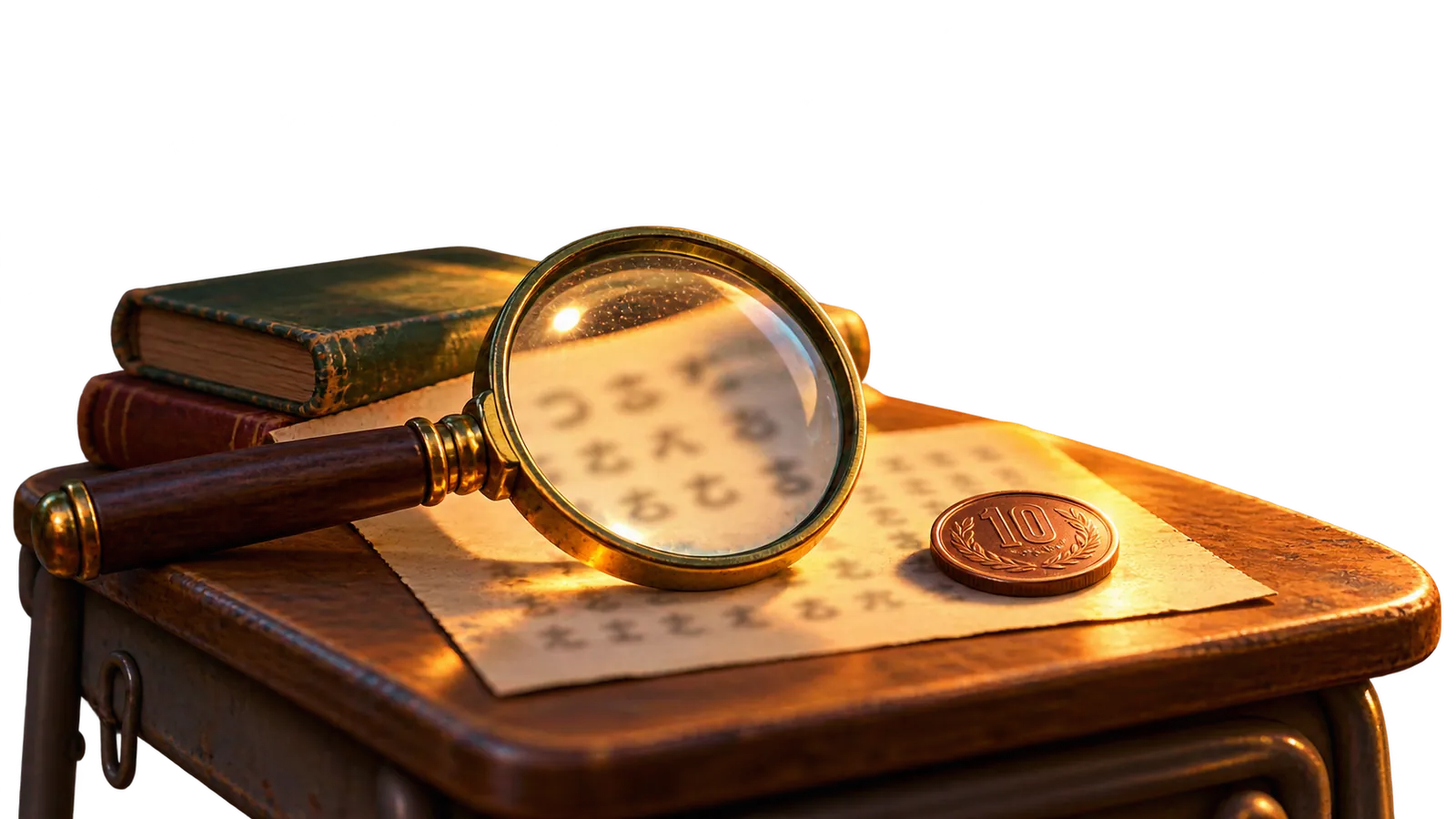
こっくりさんの10円玉は、参加者が誰も力を入れていないのに動いている
参加者の指が、本人も気づかないほど小さく動いている(観念運動)。ファラデーが19世紀に装置で確かめた。
 研究カード(どんな研究?)
- 対象
- 大学生・ウィジャボード愛好家など
- 規模
- 少人数の複数研究
- 研究の種類
- 実験研究
- 確かさ
- ★★★☆☆
こっくりさんの10円玉が動くのは霊ではなく、参加者の指が無意識に動く「観念運動」のため。本人に自覚はない。実験では、覚えていないはずの答えを無意識に指で表せる可能性まで示された。
ひとことで言うと10円玉を動かしているのは、自分の指。でも本人は気づいていない!
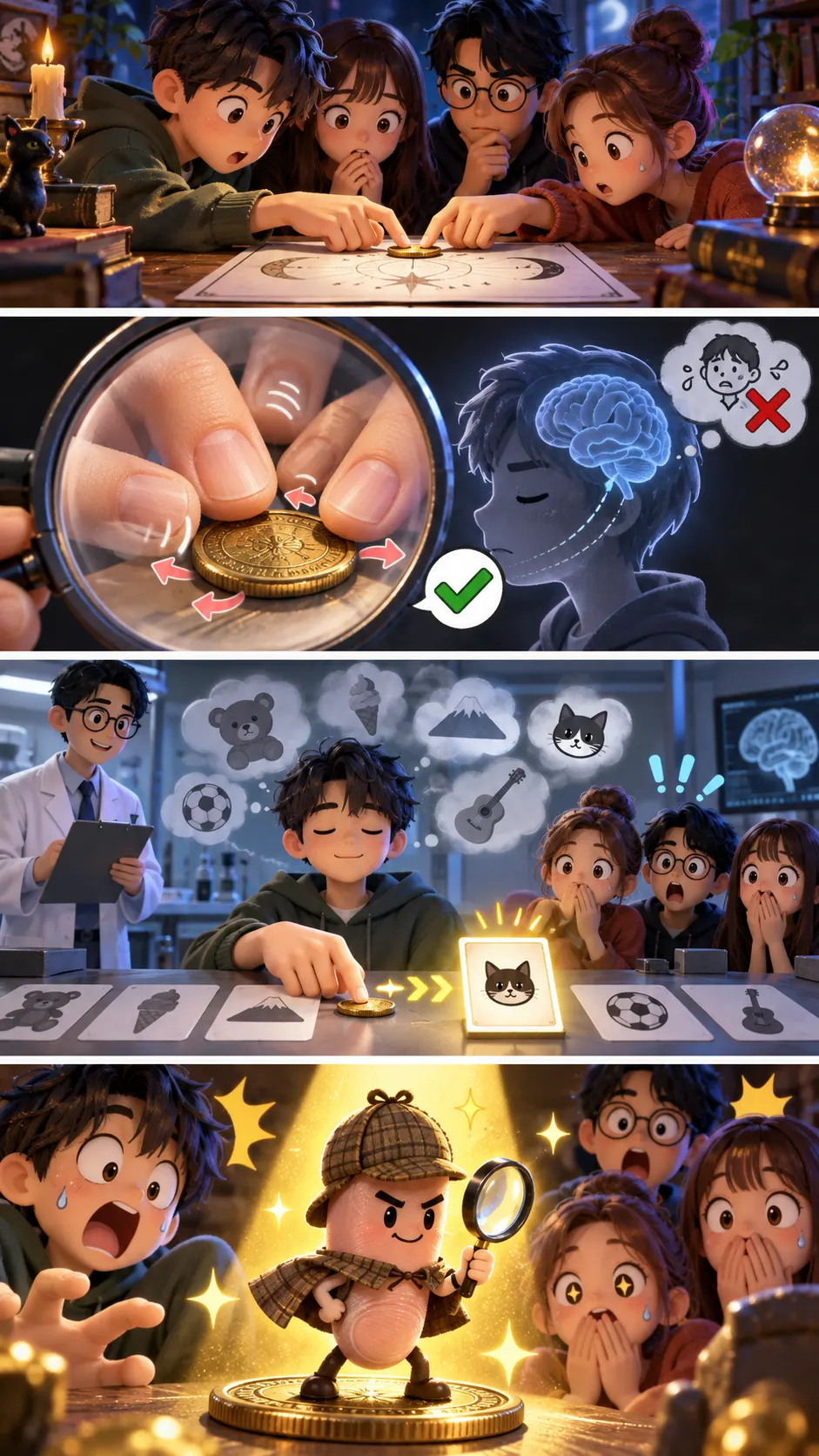
こっくりさんの10円玉が動く原理は、参加者の指の「観念運動(かんねんうんどう)」です。「はい」に行くかな、と頭で考えるだけで、指の筋肉が本人も気づかないほど小さくその方向へ力を入れてしまう。その小さな力が何人分も重なって、10円玉が「勝手に」動いているように見えるのです。
霊ではない――ここまでは昔から知られていた話です。でも2012年の実験は、さらに一歩進んだ「マジか!?」な発見をしています。無意識の指は、本人が「知らない」と思っている答えを、偶然より高い確率で当てていたのです。
011853年、ファラデーが「犯人」を突き止めた
こっくりさんのルーツは、19世紀に欧米で大流行した「テーブル・ターニング」です。何人かでテーブルに手を置くと、テーブルが勝手に回り出す、という降霊術の遊びでした。
同じころ、イギリスの生理学者ウィリアム・カーペンターは、こうした「考えたことが無意識に体の動きになる」現象を観念運動と名づけました。日本でも明治時代に、哲学者の井上円了がこっくりさんを心の働きで説明しようとしたことが知られています。
02指は「知らないはずの答え」を知っていた
03「誰も動かしていない」と感じるのはなぜ?
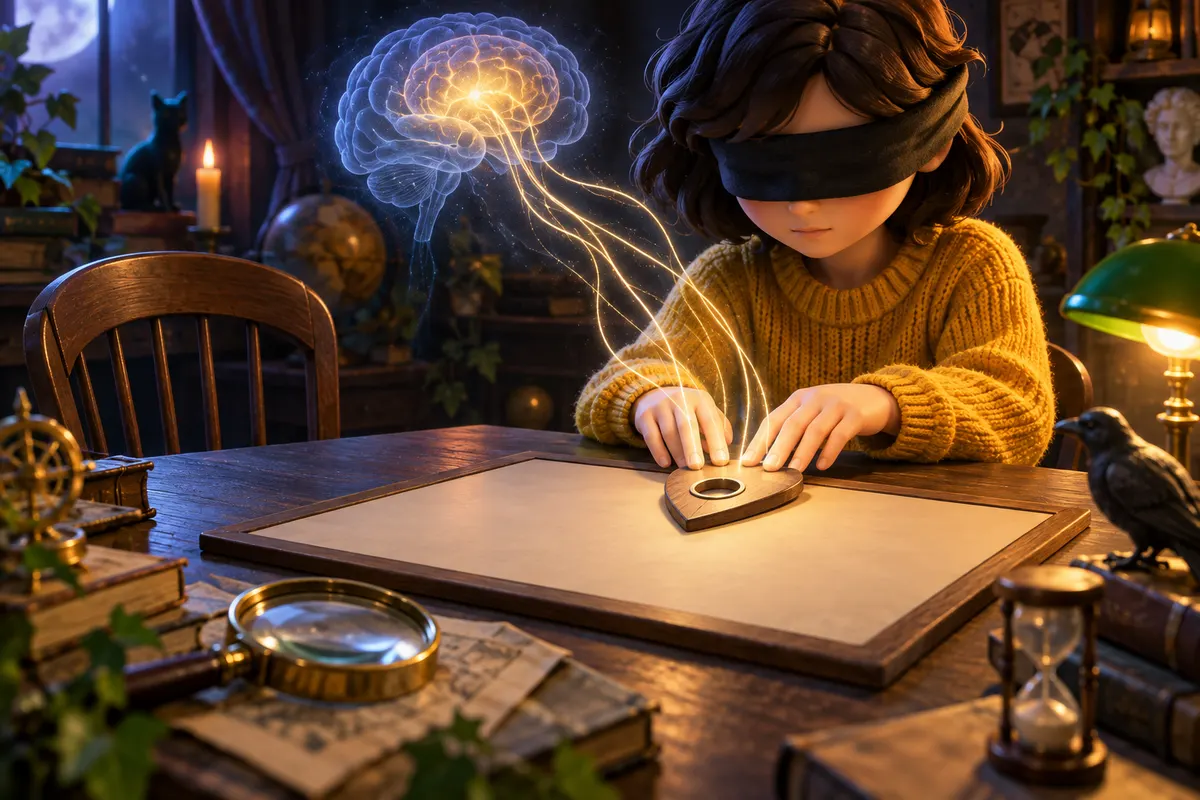
デンマークの研究チームは、ウィジャボードの愛好家たちに視線を測る装置をつけて実験しました。わざと言葉をつづるときは、次に行く文字を目で先回りして見ていたのに、「霊と交信」しているときは、先回りが起きにくくなっていました。
また、ボードを信じている人は、疑っている人より、「自分が動かしている」という感覚が弱い傾向でした。何人かで動かすと、お互いの小さな動きに合わせて、意味のある言葉が少しずつ「つくられていく」のです。
04まとめ
こっくりさんの正体は、霊ではなく私たち自身の指と脳でした。そして、その無意識の指は、本人も気づいていない知識を表に出すことさえあるようです。
怖い遊びとしてではなく、「心と体の不思議なつながり」の実験として見ると、こっくりさんはがぜん面白くなります。
この研究を英語で読もう原田英語の English CornerIn the Japanese game kokkuri-san, or on a Western Ouija board, players lightly touch a coin or pointer, and… 音声
音声 4択クイズ9問A2・B1・B2タップして開く
原田英語の English Corner
この研究を英語で読もう
In kokkuri-san, people put their fingers on a coin, and the coin seems to move by itself. Is it a ghost? No. The players' own fingers move it a little, but they do not notice.
In 1853, a scientist named Faraday showed that people's hands moved before a table moved. In a 2012 study, these hidden finger movements even seemed to show answers that people did not know they knew.
70 words ・ CEFR A2
和訳を見る
こっくりさんでは、人々が硬貨に指をのせると、硬貨がひとりでに動くように見えます。幽霊のしわざでしょうか。いいえ。参加者自身の指が硬貨を少し動かしているのですが、本人たちは気づいていません。
1853年、ファラデーという科学者が、テーブルが動く前に人々の手が動いていたことを示しました。2012年の研究では、こうした隠れた指の動きが、本人が知っていると気づいていない答えまで示したようです。
4択リーディングクイズ
Q1. What is the passage mainly about?
こっくりさんの硬貨がなぜ動くのかを説明しているので C。
Q2. Who really moves the coin?
The players' own fingers move it a little とあるので D。
Q3. In this passage, "notice" is closest to ...
notice は「気づく」。become aware of と同じ意味なので A。
In the Japanese game kokkuri-san, or on a Western Ouija board, players lightly touch a coin or pointer, and it seems to move on its own. The real cause is ideomotor action. When we think about a movement, our muscles make tiny movements without our awareness. In 1853, the scientist Michael Faraday placed a device between people's hands and a table and showed that their hands moved first.
When people could see the device, the table hardly moved. In 2012, researchers in Canada tested blindfolded players who believed a partner was helping, though they were actually moving the board alone. For questions they felt they were only guessing, they answered correctly about 50% of the time by speaking but about 65% by using the board.
125 words ・ CEFR B1
和訳を見る
日本のこっくりさんや西洋のウィジャボードでは、参加者が硬貨や指示器に軽く触れると、それがひとりでに動くように見えます。本当の原因は観念運動です。ある動きについて考えると、筋肉が私たちの気づかないうちに小さな動きをするのです。1853年、科学者のマイケル・ファラデーは、人々の手とテーブルの間に装置をはさみ、手のほうが先に動いていたことを示しました。
人々がその装置を見られるようにすると、テーブルはほとんど動きませんでした。2012年、カナダの研究者たちは、相手が一緒に動かしていると信じている目かくしをした参加者を調べましたが、実際には参加者がひとりでボードを動かしていました。当てずっぽうだと感じた質問について、口で答えると正答率は約50%でしたが、ボードを使うと約65%でした。
4択リーディングクイズ
Q1. What is the passage mainly about?
The real cause is ideomotor action とあり、無意識の小さな動きでこっくりさんを説明しているので A。
Q2. What happened when people could see Faraday's device?
When people could see the device, the table hardly moved. とあるので C。
Q3. What does the 2012 result suggest?
当てずっぽうだと感じた質問でも、ボードだと正答率が約65%に上がったことから、自覚のない知識が指の動きに表れたと考えられるので B。
In 1853, Michael Faraday slipped a simple indicator between the hands of table-turners and the table they claimed was moving on its own. Table-turning was the nineteenth-century craze from which Japan's kokkuri-san descends. The indicator showed that the hands moved first and the table followed. Once participants could watch it, the table barely moved at all. When a person expects a movement, the muscles may start to carry it out on a scale too small to notice.
The physiologist Carpenter called this ideomotor action. The same force pushes the coin in kokkuri-san and the planchette on a Ouija board. A 2012 Canadian experiment, though based on a small group of volunteers, went further. Blindfolded participants answered yes-or-no questions on a Ouija board, believing that a partner shared the planchette, although the partner had quietly let go.
On questions where they felt they were only guessing, they were right about 50% of the time when they answered aloud but about 65% of the time with the board. So these tiny movements may carry knowledge that people do not know they have. A Danish eye-tracking study found that during "spirit" sessions, players looked ahead to the next letter less often.
198 words ・ CEFR B2
和訳を見る
1853年、マイケル・ファラデーは、テーブル・ターニングをする人たちの手と、ひとりでに動くと彼らが言うテーブルの間に、簡単な指示装置をはさみました。テーブル・ターニングは19世紀の大流行で、日本のこっくりさんの起源です。装置は、手が先に動き、テーブルがそれについていくことを示しました。参加者が装置を見られるようになると、テーブルはほとんど動かなくなりました。人がある動きを予期すると、筋肉は気づけないほど小さな規模でその動きを実行し始めることがあります。
生理学者のカーペンターはこれを観念運動と呼びました。こっくりさんの硬貨やウィジャボードの指示器を動かしているのも、この同じ力です。2012年のカナダの実験は、少人数のボランティアによるものではあるものの、さらに先へ進みました。目かくしをした参加者が、相手と一緒に指示器を動かしていると信じてウィジャボードで「はい・いいえ」の質問に答えましたが、相手はこっそり手を離していました。
当てずっぽうだと感じた質問では、口頭で答えると正答率は約50%でしたが、ボードでは約65%でした。つまり、こうした小さな動きは、本人も持っていると気づいていない知識を運んでいるのかもしれません。デンマークの視線計測研究では、「霊」との交信中には、参加者が次の文字を先回りして見ることが少なくなることがわかりました。
4択リーディングクイズ
Q1. What is the main point of the passage?
手が先に動いていたというファラデーの実験と観念運動の説明、そして these tiny movements may carry knowledge that people do not know they have という研究を紹介しているので D。
Q2. In the 2012 experiment, what was true about the partner?
although the partner had quietly let go とあるので B。let go は「手を離す」。
Q3. Why did the table barely move once participants could watch the indicator?
装置で自分の手の動きが見えると、無意識だった力に気づいて止まったと考えられるので C。観念運動は本人が気づかないときに働く。
重要単語
- ideomotorC1形容詞観念運動のIdeomotor movements happen without our awareness.
 ideo-(観念・考え)+motor(運動)。idea と同じ語源で「考えが運動になる」。
 - unconsciousB2形容詞無意識のHer fingers made unconscious movements. un-(否定)+conscious(意識している)。「意識不明の」の意味もある。名詞 the unconscious「無意識」。
- planchetteC1名詞ウィジャボードの指示器The planchette moved slowly to "YES." フランス語で「小さな板」。plank(厚板)と関係のある語。
- sense of agencyC1名詞(句)自分が動かしているという感覚Players lose their sense of agency during the game. agency は「行為の主体であること」。agent(行為者)と同語源。「代理店」の意味の agency と区別。
- spiritB1名詞霊・精神Many believed a spirit was moving the coin. 「精神・気力」の意味でも使う。team spirit「団結心」、in high spirits「上機嫌で」。
- anticipateB2動詞予期する・先回りして考えるYour muscles may move when you anticipate an answer. ante-(前に)+cip(取る)=「前もってつかむ」。expect より「先を見越して備える」ニュアンス。
 入試に出る順の単語帳を印刷する →
 全5903語の「科学英単語カード」で復習する →
 4コマでわかる
このネタ、誰かに教えたくなった?
こっくりさんの10円玉が動くのは、霊じゃなく自分の指の無意識の動き。1853年にファラデーが実験で確かめていた。2012年の実験では、自信のない質問の正答率が、口で答えると50%、ボードだと65%に上がったらしい。
押すと「マジかリスト」に保存されます
 出典・参考文献(4件)タップで表示
- Faraday (1853) Experimental investigation of table-moving, Journal of the Franklin Institutedoi.org
- Gauchou, Rensink & Fels (2012) Expression of nonconscious knowledge via ideomotor actions, Consciousness and Cognitiondoi.org
- Andersen et al. (2018) Predictive minds in Ouija board sessions, Phenomenology and the Cognitive Sciencesdoi.org
- Wegner, Fuller & Sparrow (2003) Clever hands: Uncontrolled intelligence in facilitated communication, Journal of Personality and Social Psychologydoi.org

※本記事は上記の研究・公開資料をもとに、原田英語が独自の言葉で解説したものです。引用は著作権法第32条の範囲で行い、出典を明記しています。画像はすべてオリジナルのイメージです。研究結果には限界や個人差があります。誤りのご指摘は原田英語のお問い合わせフォームから。