
 脳と心理ホント
「Aは赤」「月曜は黄色」。文字に色が見える共感覚、その色が昔遊んだおもちゃと同じだった人も
 2026.10.02
 English Corner(A2〜B2・4択クイズ)
 読む前に予想してみよう!
共感覚はとても珍しく、数千人に1人しかいない
自己申告に頼らない調査では、何らかの共感覚を持つ人は約4%。最も多いのは「曜日に色」のタイプだった。
 研究カード(どんな研究?)
- 対象
- 一般の人・共感覚者
- 規模
- 500人+1,190人(どれくらいの割合でいるかの調査)、6,588人(オンライン調査)
- 研究の種類
- 割合を調べる調査・オンライン調査
- 確かさ
- ★★★☆☆
共感覚は、かつての推定よりずっと多く、全タイプ合わせて約4%。文字の色が子どものころの磁石おもちゃと一致する人も見つかった。
ひとことで言うと文字に色が見える人がいる。その色は、昔遊んだおもちゃの色かも!
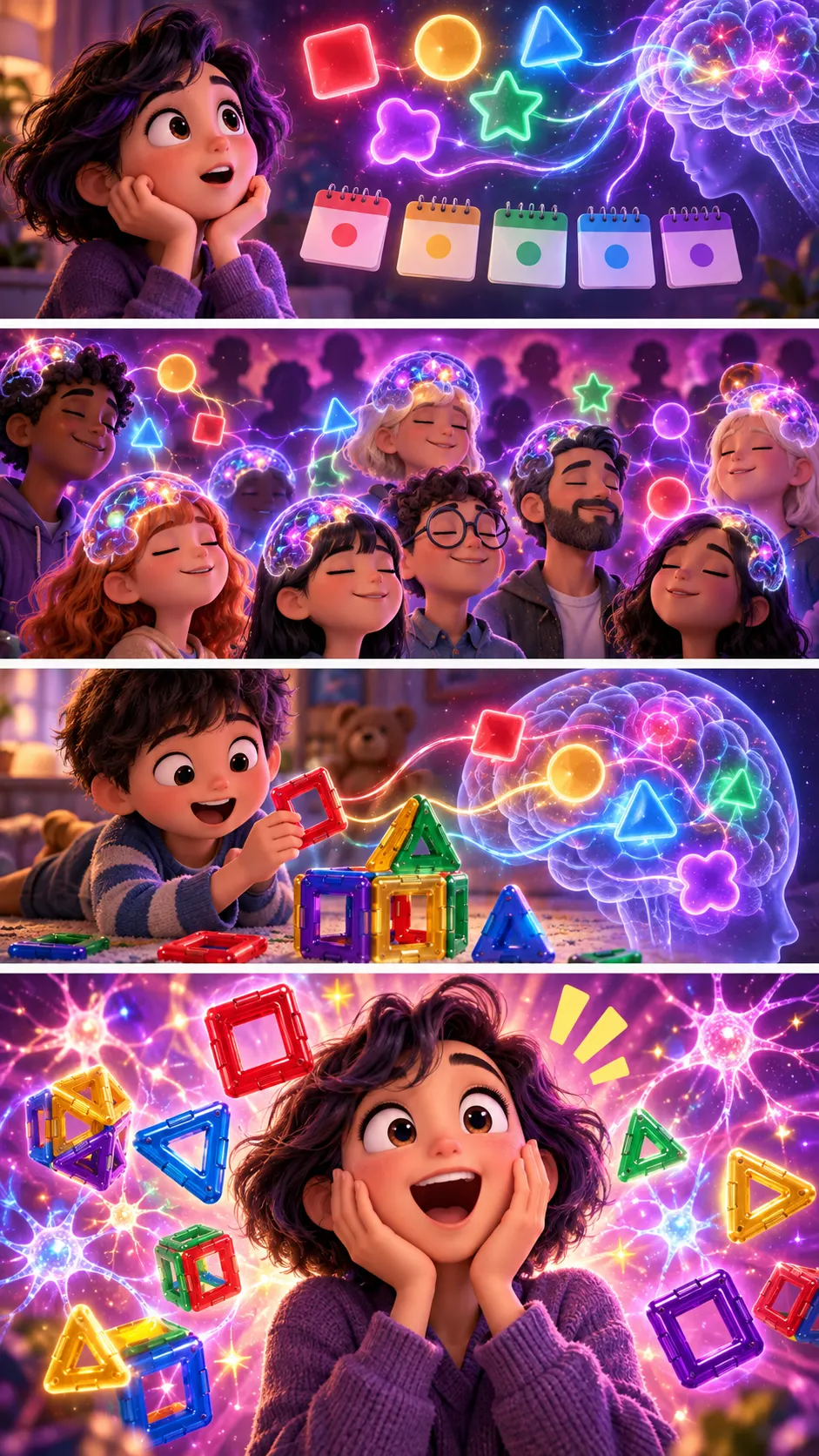
「Aって赤いよね」「水曜日は緑っぽい」
もしこう言われて「わかる!」と思ったなら、あなたは共感覚(きょうかんかく)の持ち主かもしれません。逆に「何それ?」と思った人には、ちょっと信じられない世界の話です。
共感覚とは、ある感覚が、別の感覚を自動的に引き起こす現象です。たとえば、文字を見ると色を感じる。音を聞くと色が見える。そんな体験です。
01「思い込み」じゃない証拠
「ただの連想でしょ?」と思うかもしれません。でも共感覚には、ふつうの連想とは違う特徴があります。
- 同じ文字には、何年たっても同じ色を答える(一貫性が非常に高い)
- 本人の意思とは関係なく、自動的に色を感じる
少なくともこの2人では、共感覚の色は「気のせい」ではありませんでした。実際の見え方に影響していることを示す結果です。
0225人に1人? 実は珍しくなかった
昔、共感覚は2,000人に1人ほどの珍しいものと考えられていました。この数字は、新聞広告などを見て自分から名乗り出た人を数えたものでした。
ところが2006年、イギリスのシムナー(Simner)さんらが別のやり方で調べました。大学や科学博物館で声をかけた一般の人を一人ずつ、客観的なテストで確かめたのです。その結果は――
- 何らかの共感覚を持つ人は約4%(大学で調べた500人中22人。以前の推定の88倍)
- いちばん多いのは「曜日に色」のタイプ
- 研究が多い「文字に色」のタイプは約1%
- 「女性に多い」と言われていたが、男女差ははっきりしなかった
意外と身近な現象だったのです。
03その色の正体は、冷蔵庫のマグネット!
共感覚の文字の色は、どこから来るのでしょう? 家族に共感覚者が多いことから、生まれつき(遺伝)の要素もあると考えられています。
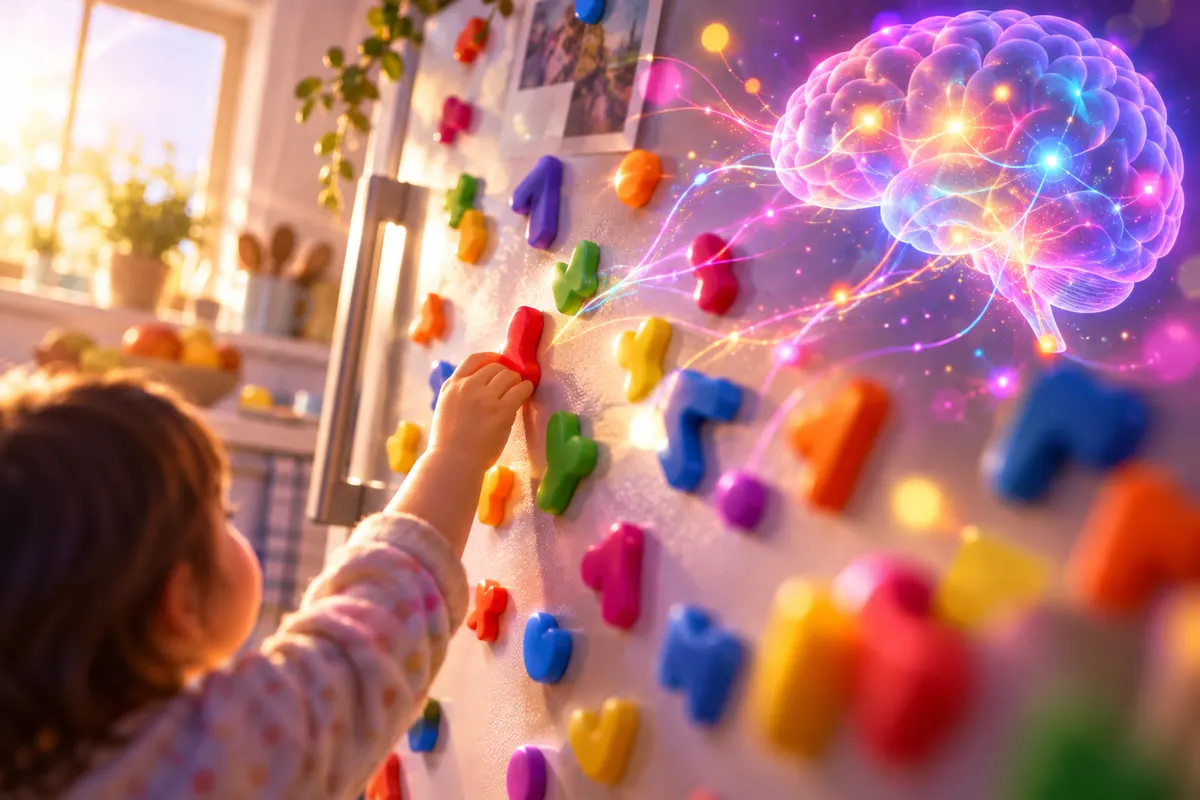
でも2013年、アメリカの研究者が意外な報告をしました。ウィットホフト(Witthoft)さんとウィナウアー(Winawer)さんです。11人の共感覚者の文字の色が、ある有名なおもちゃの色とよく一致していたのです。冷蔵庫に貼って遊ぶ、色つきのアルファベット磁石でした。
2015年には、もっと大規模な調査が行われました。対象は、英語圏で文字に色が見える共感覚者6,588人。そのうち少なくとも400人(約6%)は、このおもちゃから色を覚えたと考えられる結果でした。
おもちゃが発売されてから10年ほどのあいだに生まれた人では、時期によって約15%に達しました。一方、発売より5年以上前に生まれた人には、一人もいませんでした。
04まとめ
共感覚は、すべてのタイプを合わせると約25人に1人という身近な現象でした。そしてその色の一部は、子どものころに遊んだおもちゃから来ていることもあったのです。
周りに「Aは赤」と言う人がいたら、聞いてみてください。子どものころ、冷蔵庫に色つきの文字マグネットを貼っていなかったか。色の出どころが、そこにあるかもしれません。
この研究を英語で読もう原田英語の English CornerSynesthesia is a condition in which one sense automatically triggers another, such as seeing colors when… 音声
音声 4択クイズ9問A2・B1・B2タップして開く
原田英語の English Corner
この研究を英語で読もう
Some people see colors when they look at letters or think about days of the week. For example, A may be red and Monday may be yellow. This is called synesthesia. People once thought only one in 2,000 people had it.
But a study in 2006 found about four percent. Also, some people's letter colors matched the colors of a magnet toy they played with as children.
67 words ・ CEFR A2
和訳を見る
文字を見たり曜日のことを考えたりすると、色が見える人がいます。たとえば、Aは赤で、月曜日は黄色かもしれません。これは共感覚と呼ばれます。かつては、2,000人に1人しか持っていないと考えられていました。
しかし、2006年の研究では約4%いることがわかりました。また、文字の色が、子どものころに遊んだ磁石のおもちゃの色と一致する人もいました。
4択リーディングクイズ
Q1. What is the passage mainly about?
文字や曜日に色が見える共感覚が話題なので D。
Q2. How many people have synesthesia, according to the 2006 study?
a study in 2006 found about four percent とあるので C。2,000人に1人は昔の推定。
Q3. In this passage, "matched" means ...
match は「一致する」。文字の色がおもちゃの色と同じだった、という意味なので A。
Synesthesia is a condition in which one sense automatically triggers another, such as seeing colors when reading letters. It is not just imagination. Synesthetes give the same color to the same letter even years later, and in a 2001 experiment, two people who saw colors for numbers found hidden shapes made of 2s among 5s more easily than other people.
Synesthesia was once thought to affect one person in 2,000, but a 2006 study that tested ordinary people found about four percent. Where do the colors come from? In 2013, researchers reported that eleven synesthetes had letter colors very similar to those of a popular set of alphabet magnets for refrigerators. Childhood experience can shape which letter gets which color.
120 words ・ CEFR B1
和訳を見る
共感覚とは、文字を読むと色が見えるといったように、ある感覚が自動的に別の感覚を引き起こす状態のことです。それは単なる想像ではありません。共感覚者は何年たっても同じ文字に同じ色を答えますし、2001年の実験では、数字に色が見える2人は、5の中に並べた2で作られた隠れた形を、ほかの人より見つけやすかったのです。
共感覚はかつて2,000人に1人に見られるものと考えられていましたが、一般の人を調べた2006年の研究では約4%でした。では、その色はどこから来るのでしょうか。2013年、研究者たちは、11人の共感覚者の文字の色が、冷蔵庫に貼る人気のアルファベット磁石セットの色と非常によく似ていたと報告しました。子どものころの経験が、どの文字が何色になるかを決めることがあるのです。
4択リーディングクイズ
Q1. What did the 2001 experiment show?
two people who saw colors for numbers found hidden shapes ... more easily than other people とあるので B。
Q2. Why did the 2006 study find more synesthetes than earlier estimates?
a 2006 study that tested ordinary people とあり、一般の人を対象に調べたことがポイントなので D。
Q3. What does the magnet toy finding suggest?
最終文 Childhood experience can shape which letter gets which color. から C。
In a 2015 online survey of 6,588 English-speaking people who see letters in color, at least 400 had colors that apparently came from a popular set of refrigerator magnets. Nobody born more than five years before the toy appeared had them.
So learning can shape a synesthete's colors. Because people chose to join the survey, though, it says nothing about how common the condition is. Synesthesia, in which stimulation of one sense automatically triggers an experience in another, was long dismissed as fanciful or rare. Two features set it apart from ordinary association. It is involuntary, and it is highly consistent, so a synesthete will give a letter the same color years later.
In a 2001 study, two people who saw digits in color tended to find shapes made of 2s hidden among 5s more easily than non-synesthetes, as if the 2s popped out in a different hue. Estimates of how common it is once stood at one in 2,000. In 2006, researchers used objective tests on a general sample instead of relying on volunteers and found it in about 4 percent of people. Colored weekdays were the most common type, and letter-color synesthesia affected about 1 percent.
198 words ・ CEFR B2
和訳を見る
英語を話し、文字に色が見える6,588人を対象にした2015年のオンライン調査では、少なくとも400人の色が、人気の冷蔵庫用磁石セットに由来するとみられるものでした。そのおもちゃが登場する5年以上前に生まれた人には、そうした例は一人もいませんでした。
つまり、共感覚者が見る色は、学習によって形づくられることがあるのです。ただし、この調査には人々が自分から参加したので、共感覚がどれくらい多いのかについては何も言えません。ある感覚への刺激が自動的に別の感覚の体験を引き起こす共感覚は、長い間、空想的なもの、あるいはまれなものとして片づけられてきました。共感覚をふつうの連想と区別する特徴は2つあります。意図せずに起こること、そして一貫性がとても高いことで、共感覚者は何年たっても同じ文字に同じ色を当てはめます。2001年の研究では、数字に色が見える2人は、5の中に隠れた2で作られた形を、共感覚のない人より見つけやすい傾向がありました。
まるで2が違う色合いで浮き上がって見えるかのようでした。共感覚がどれくらい多いかについては、かつて2,000人に1人と推定されていました。2006年、研究者が志願者に頼らず、一般の標本に客観的なテストを用いたところ、約4%の人に共感覚が見られました。最も多かったのは曜日に色が見えるタイプで、文字に色が見える共感覚は約1%でした。
4択リーディングクイズ
Q1. Which two features distinguish synesthesia from ordinary association?
It is involuntary, and it is highly consistent と明示されているので A。
Q2. Why did the 2006 estimate differ so much from the earlier one?
used objective tests on a general sample instead of relying on volunteers とあるので C。
Q3. Why can't the 2015 online survey tell us how common synesthesia is?
Because people chose to join the survey, though, it says nothing about how common the condition is とあるので D。自己選択バイアスの指摘。
重要単語
- synesthesiaC1名詞共感覚Synesthesia mixes different senses.
 syn-(共に)+esthesia(感覚)。英式は synaesthesia。anesthesia(麻酔=感覚がない)と同じ語根。
 - graphemeC1名詞書記素(文字・数字の単位)Each grapheme had its own color. graph-(書く)+-eme(単位)。phoneme(音素)と対で言語学の基本語。
- prevalenceC1名詞有病率、存在する割合The prevalence was higher than expected. 形容詞 prevalent(広く行き渡った)。疫学の文脈では「ある時点で該当する人の割合」。
- associateB2動詞結びつけるShe associates the letter A with red. associate A with B「AをBと結びつけて考える」。be associated with ~「~と関連がある」も必須。
- consistentB2形容詞一貫したHis answers were consistent over many years. be consistent with ~「~と矛盾しない」も頻出。名詞 consistency。
- involuntaryC1形容詞無意識の、意図しないThe color experience is involuntary. in-(否定)+voluntary(自発的な)。volunteer と同語源。
 入試に出る順の単語帳を印刷する →
 全5903語の「科学英単語カード」で復習する →
 この話題を TED で聞く
同じテーマの TED・TED-Ed を、 TED HACK で。英語の見どころ・使える表現・学習ミッションつきの日本語ガイドです。(運営:原田英語)

 4コマでわかる
このネタ、誰かに教えたくなった?
「共感覚」は昔は2000人に1人と思われていたけど、調べたら全タイプ合わせて約4%いた。しかも文字に色が見える6,588人のうち、多くの文字の色が子どものころの冷蔵庫マグネットと一致する人が、少なくとも400人いたらしい。
押すと「マジかリスト」に保存されます
 出典・参考文献(5件)タップで表示
- Simner et al. (2006) Synaesthesia: the prevalence of atypical cross-modal experiences, Perceptiondoi.org
- Ramachandran & Hubbard (2001) Psychophysical investigations into the neural basis of synaesthesia, Proceedings of the Royal Society Bdoi.org
- Witthoft & Winawer (2013) Learning, memory, and synesthesia, Psychological Sciencedoi.org
- Witthoft, Winawer & Eagleman (2015) Prevalence of learned grapheme-color pairings in a large online sample of synesthetes, PLOS ONEdoi.org
- Ward (2013) Synesthesia, Annual Review of Psychologydoi.org

※本記事は上記の研究・公開資料をもとに、原田英語が独自の言葉で解説したものです。引用は著作権法第32条の範囲で行い、出典を明記しています。画像はすべてオリジナルのイメージです。研究結果には限界や個人差があります。誤りのご指摘は原田英語のお問い合わせフォームから。
 これも「マジか!?」
 脳・心理
脳・心理
記憶の「分けると残る」は腎臓の細胞にも? 薬を一気より4回に分けると遺伝子が長く働いた
 脳・心理
脳・心理
赤ちゃんの頃の記憶がないのは、「記憶を作れない」からではないかもしれない
 脳・心理
脳・心理
マウスに"ありもしない怖い記憶"を植え付けた。光で記憶のスイッチを押す研究の現在地

 脳・心理
脳・心理
記憶は思い出すたびに不安定になり、作り直される? 怖い記憶を弱める研究のいま
 脳・心理
脳・心理
質問の言い方ひとつで、記憶は書き換わる。割れていないガラスを「見た」と答えた人たち
 脳・心理
脳・心理