原田英語の時事英語ジュニア|英語ニュース ワークシート(中学生レベル)
Class ____ No. ____ Name ____________________
マンガン団塊とは?深海の石ころ1個に245匹、すき間は小さな生き物のすみか
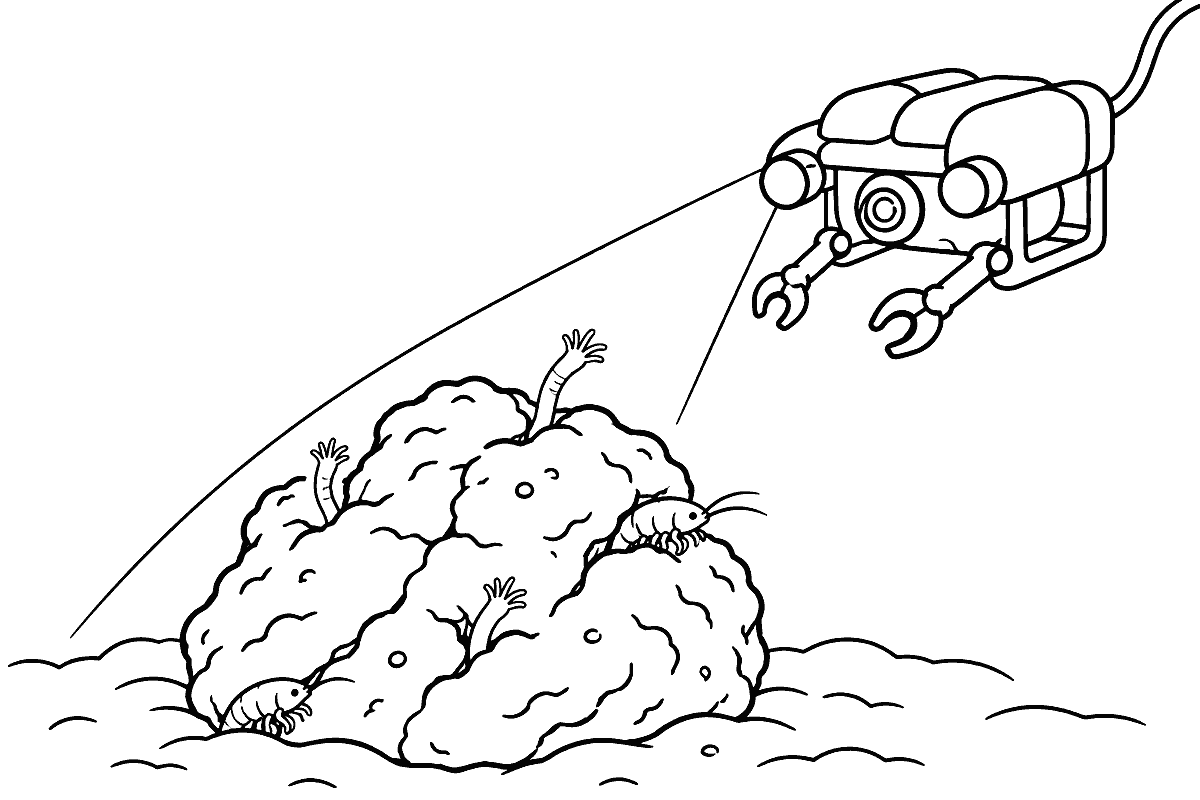
A Deep-Sea Rock Was Home to 245 Tiny Animals
1Scientists found 245 tiny animals living in one rock from the deep sea.
2It came from the floor of the Pacific Ocean, 4,000 to 6,000 meters deep. Rocks like this are called nodules. They are usually about the size of a fist. They contain metals such as iron and manganese.
3The scientists studied 244 nodules and found 4,139 animals in their cracks. On average, each nodule had 17 animals. The cracks are big enough for animals smaller than one millimeter. The animals included roundworms and tiny animals related to shrimp.
4Nodules grow very slowly, often only a few millimeters in a million years. Some people want to mine them for metals such as nickel and cobalt. The scientists warned that mining could destroy these tiny homes.
Words 単語
| tinyB1 | 形 | とても小さいvery, very small |
| fist外 | 名 | にぎりこぶしa hand with the fingers closed tight |
| floorA1 | 名 | 底、床the lowest part of a room or the sea |
| containB1 | 動 | ふくむto have something inside |
| metalsA2 | 名 | 金属hard materials like gold, iron and copper |
| cracksB2 | 名 | 割れ目、すき間thin lines where something has broken |
| averageA2 | 名 | 平均the usual amount you get by dividing a total |
| destroyA2 | 動 | こわす、破壊するto break something so it is gone |
単語のレベル:CEFR-J(『CEFR-J Wordlist Version 1.6』 東京外国語大学投野由紀夫研究室. (URL: https://www.cefr-j.org/download.html より 2026年8月ダウンロード))
1. Reading Quiz 本文の内容に合うものを選ぼう
How many animals lived in the one rock?
A. 17B. 244C. 245D. 4,139
Where did the rock come from?
A. A mountain in JapanB. The floor of the Pacific OceanC. A river in EuropeD. The Moon
Where did the animals live?
A. In the cracks of the nodulesB. On the backs of fishC. In the sand on a beachD. Inside a ship
How fast do nodules grow?
A. A few meters a yearB. A few centimeters a monthC. About one meter in ten yearsD. A few millimeters in a million years
2. True or False 正しければ T、違っていれば F
( ) Nodules are usually about the size of a fist.
( ) Nodules contain metals such as iron and manganese.
( ) Each nodule had about 245 animals on average.
( ) The scientists said mining would be good for the tiny animals.
3. Fill in the Blanks 下の語から選んで空らんをうめよう(形を変えずに)
cracksmetalsfisttinyfloorcontain
They _____ metals such as iron and manganese.
Scientists found 245 _____ animals living in one rock from the deep sea.
It came from the _____ of the Pacific Ocean, 4,000 to 6,000 meters deep.
The scientists studied 244 nodules and found 4,139 animals in their _____.
They are usually about the size of a _____.
Some people want to mine them for _____ such as nickel and cobalt.
4. Word Order 語を並べかえて正しい文にしよう
( a / of / fist / about / usually / They / the / size / are ) .
( nodules / called / like / Rocks / this / are ) .
( animals / nodule / each / 17 / average, / On / had ) .
5. Think and Write 英語で答えてみよう
What other animals do you know that live in the deep sea?(深海にすむ生き物で、ほかに知っているものは?)
Do you think we should dig up the deep-sea floor for metals? Why?(金属をとるために深海の底を掘り出すべきだと思う?それはなぜ?)
Answers 解答
1. (1) C (2) B (3) A (4) D
2. (1) T (2) T (3) F (4) F
3. (1) contain (2) tiny (3) floor (4) cracks (5) fist (6) metals
4.
- They are usually about the size of a fist.
- Rocks like this are called nodules.
- On average, each nodule had 17 animals.
全文訳
1科学者たちが、深海からとってきた石1個の中に、245匹の小さな生き物がすんでいるのを見つけました。
2石は、深さ4,000〜6,000メートルの太平洋の海の底から来ました。このような石は「団塊(ノジュール)」と呼ばれます。ふつうは、にぎりこぶしくらいの大きさです。鉄やマンガンなどの金属をふくんでいます。
3科学者たちは団塊244個を調べ、そのすき間から4,139匹の生き物を見つけました。平均すると、団塊1個に17匹がいました。すき間は、1ミリより小さい生き物が入れるくらいの大きさです。その中には、線虫や、エビと同じ甲殻類のなかまの小さな生き物がいました。
4団塊はとてもゆっくり育ち、100万年でたった数ミリということも多いです。ニッケルやコバルトなどの金属をとるために、団塊を掘り出したいと考える人たちもいます。科学者たちは、掘り出すと、この小さなすみかがこわれてしまうおそれがあると注意をうながしました。
文法ポイント:受け身(be動詞 + 過去分詞)
「~される」「~されている」を表す。本文の Rocks like this are called nodules.(このような石は団塊と呼ばれる)がその例。call A B(A を B と呼ぶ)の A を主語にした形。
出典:EurekAlert!(MARUM・ブレーメン大学の発表)、Ocean News & Technology、Scientific Reports ほか(記事は原田英語の時事英語ジュニアのオリジナル)|https://www.haradaeigo.com/jijieigo-junior/news/2026-11-17-deep-sea-nodule-245-animals/