原田英語の時事英語ジュニア|英語ニュース ワークシート(高校生レベル)
Class ____ No. ____ Name ____________________
スマホで記憶力が低下?カギは「時間」より「使い方」 ハンガリーの大学の研究
It May Be How You Scroll, Not How Long
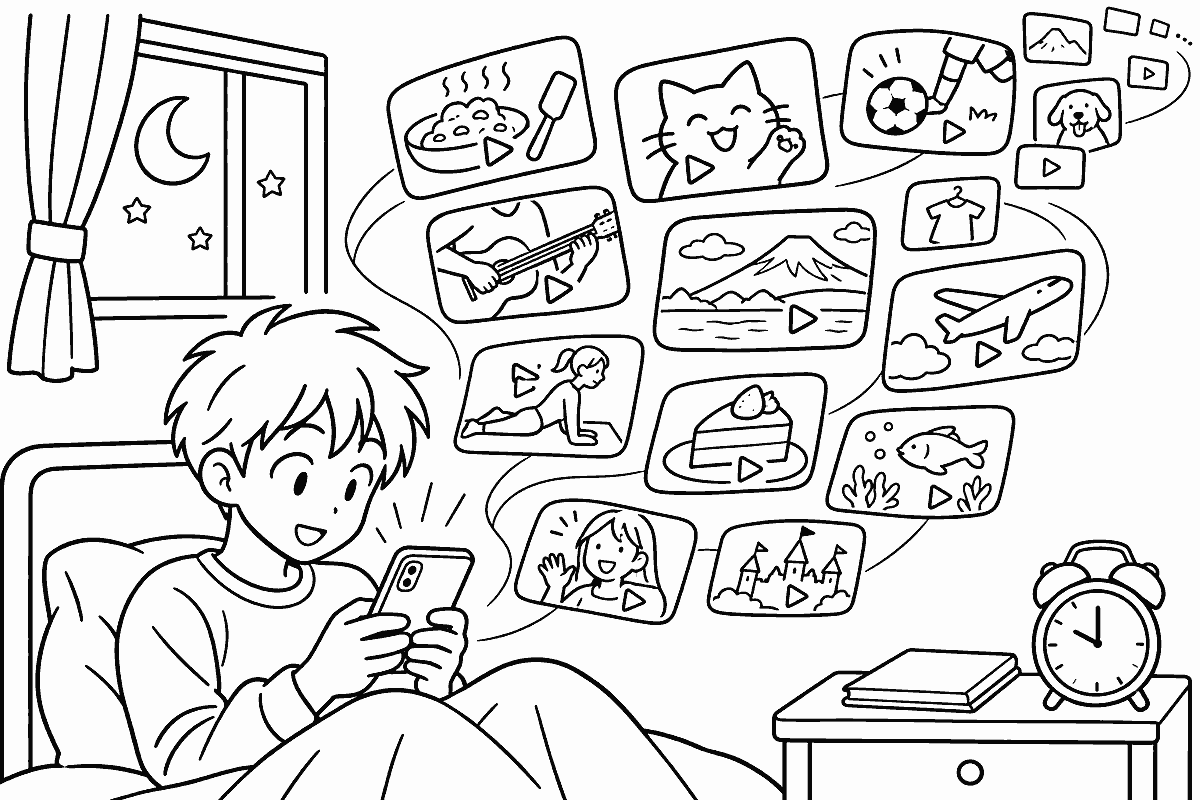
1Young adults who spend hours scrolling through content on their phones scored lower than expected on memory and attention tests, a study in Hungary has found. Semmelweis University in Budapest, which ran the study, said how people use their phones may matter more than how long they use them.
2The study, published in the journal Acta Psychologica, looked at university students aged 18 to their mid-30s. Inc. magazine reported that 225 students took part. They filled out online questionnaires about their phone use, such as whether they had missed planned tasks because of their phones. They also took memory and attention tests and had their bodies measured.
3Based on their habits, the students were divided into three groups. One group used phones mainly to keep in touch with people. Another mixed messaging with news, entertainment and scrolling but stayed under about four to five hours a day. The third group, about one third of the students, used phones for four to five hours or more a day, mostly to consume content rather than to communicate.
4The heavy-scrolling group slept worse and found it harder to stop themselves from checking their phones. The researchers also found that a nervous personality alone did not make someone addicted to their phone. Low self-control and a strong fear of missing out, or FOMO, mattered more. Total time on phones was linked mainly to physical effects, such as neck strain from looking down.
5The results show a link, not proof that scrolling causes weaker memory. The researchers did not suggest giving up smartphones. They suggested turning off unnecessary notifications, limiting time on social media and avoiding phones before bed.
Words 単語
| contentB1 | 名 | (ネットの)コンテンツ、中身videos, pictures and posts that people watch online |
| journalB1 | 名 | 学術誌、専門の雑誌a magazine where scientists share their studies |
| questionnairesB1 | 名 | アンケート、質問票(questionnaire の複数形)sets of written questions people answer |
| physicalA2 | 形 | 体の、身体的なabout your body, not your mind |
| consumeB1 | 動 | 消費する、(コンテンツを)見るto use, eat or watch something |
| measuredB1 | 動 | 測られた(measure の過去分詞)checked for size, weight or amount |
| personalityA2 | 名 | 性格、人がらthe kind of person someone is |
| addictedB2 | 形 | 依存している、やめられないnot able to stop doing or using something |
| notifications外 | 名 | 通知(notification の複数形)messages that pop up on a phone |
| strainB1 | 名 | 負担、無理な力too much pressure on a part of your body |
単語のレベル:CEFR-J(『CEFR-J Wordlist Version 1.6』 東京外国語大学投野由紀夫研究室. (URL: https://www.cefr-j.org/download.html より 2026年8月ダウンロード))
1. Reading Quiz 本文の内容に合うものを選ぼう
According to the university, what may matter more than how long people use their phones?
A. Which phone people buyB. How many apps people haveC. How people use their phonesD. How old people are
What did the students do in the study?
A. They gave up their phones for a month.B. They filled out questionnaires and took memory and attention tests.C. They only slept in a lab.D. They made their own apps.
What did the third group mostly use their phones for?
A. To consume contentB. To keep in touch with peopleC. To study for testsD. To make phone calls
What mattered more than a nervous personality?
A. The color of the phoneB. The number of appsC. Physical exerciseD. Low self-control and a strong fear of missing out
What was total time on phones linked to mainly?
A. Better test scoresB. Physical effects such as neck strainC. Having more friendsD. Fear of missing out only
2. True or False 正しければ T、違っていれば F
( ) The study looked at students aged 18 to their mid-30s.
( ) About one third of the students were in the heavy-scrolling group.
( ) The study proved that scrolling causes weaker memory.
( ) The researchers said people should give up smartphones.
3. Fill in the Blanks 下の語から選んで空らんをうめよう(形を変えずに)
contentmeasuredphysicalconsumequestionnairesjournal
Total time on phones was linked mainly to _____ effects, such as neck strain from looking down.
The third group, about one third of the students, used phones for four to five hours or more a day, mostly to _____ content rather than to communicate.
They also took memory and attention tests and had their bodies _____.
Young adults who spend hours scrolling through _____ on their phones scored lower than expected on memory and attention tests, a study in Hungary has found.
They filled out online _____ about their phone use, such as whether they had missed planned tasks because of their phones.
The study, published in the _____ Acta Psychologica, looked at university students aged 18 to their mid-30s.
4. Word Order 語を並べかえて正しい文にしよう
( reported / took / part / 225 / Inc. / magazine / students / that ) .
( were / into / on / groups / their / students / divided / habits, / three / the / Based ) .
( up / not / The / did / giving / suggest / researchers / smartphones ) .
5. Think and Write 英語で答えてみよう
Some people say schools should limit how long students use phones. Others say schools should teach better ways to use them. Which do you agree with, and why?(学校は生徒がスマホを使う時間を制限すべきだという人も、よりよい使い方を教えるべきだという人もいます。あなたはどちらに賛成ですか。理由も言ってみよう。)
Do you ever feel FOMO when you are away from your phone? What could help?(スマホから離れているとき、取り残される不安(FOMO)を感じることはありますか。何が助けになりそうですか。)
Answers 解答
1. (1) C (2) B (3) A (4) D (5) B
2. (1) T (2) T (3) F (4) F
3. (1) physical (2) consume (3) measured (4) content (5) questionnaires (6) journal
4.
- Inc. magazine reported that 225 students took part.
- Based on their habits, the students were divided into three groups.
- The researchers did not suggest giving up smartphones.
全文訳
1スマホで何時間もコンテンツをスクロールして見ている若い大人は、記憶と注意力のテストで予想より低い点数だったことが、ハンガリーの研究でわかりました。研究を行ったブダペストのセンメルワイス大学は、スマホをどのくらい長く使うかより、どう使うかのほうが大事かもしれないと述べました。
2学術誌『アクタ・サイコロジカ』にのったこの研究は、18歳から30代半ばの大学生を調べました。アメリカの雑誌Inc.によると、225人の学生が参加しました。学生たちは、スマホのせいで予定していたことをやりそこねたことがあるかなど、スマホの使い方についてのオンラインのアンケートに答えました。記憶と注意力のテストを受け、体の測定もしました。
3習慣をもとに、学生は3つのグループに分けられました。1つのグループは、おもに人と連絡をとり合うためにスマホを使っていました。別のグループは、メッセージにニュースや娯楽、スクロールをまぜて使っていましたが、1日約4〜5時間より少ない時間でした。3つ目のグループは学生の約3分の1で、1日4〜5時間以上スマホを使い、そのほとんどは人とやりとりするより、コンテンツを見ることに使っていました。
4長くスクロールするグループは、睡眠がよくなく、スマホを確かめるのをがまんしにくいと感じていました。研究者たちは、不安になりやすい性格だけでは、スマホに依存するわけではないこともわかりました。自分をおさえる力が弱いことと、「取り残されるのがこわい」という気持ち(FOMO)が強いことのほうが、大きく関係していました。スマホを使う時間の合計は、おもに、下を向くことによる首の負担のような、体への影響と関係していました。
5この結果が示しているのは関係であって、スクロールが記憶力を弱くするという証拠ではありません。研究者たちは、スマホをやめることはすすめませんでした。かわりに、いらない通知を切ること、SNSの時間を決めること、寝る前にスマホを使わないことをすすめました。
文法ポイント:間接疑問(how + 主語 + 動詞 / how long + 主語 + 動詞)
疑問詞のあとを〈主語 + 動詞〉のふつうの語順にすると、文の一部(名詞のかたまり)として使える。本文の how people use their phones may matter more than how long they use them では、how people use their phones(人がスマホをどう使うか)が主語、how long they use them(どのくらい長く使うか)が than のあとに来ている。疑問文の語順(how do people use)にしない点に注意。
出典:ScienceDaily(Semmelweis University)、EurekAlert!(Semmelweis University)、The Star(Inc./Tribune News Service) ほか(記事は原田英語の時事英語ジュニアのオリジナル)|https://www.haradaeigo.com/jijieigo-junior/news/2026-11-07-scrolling-memory-phone-study/