原田英語の時事英語ジュニア|英語ニュース ワークシート(中学生レベル)
Class ____ No. ____ Name ____________________
スマホで記憶力が低下?カギは「時間」より「使い方」 ハンガリーの大学の研究
How You Use Your Phone May Matter More Than How Long
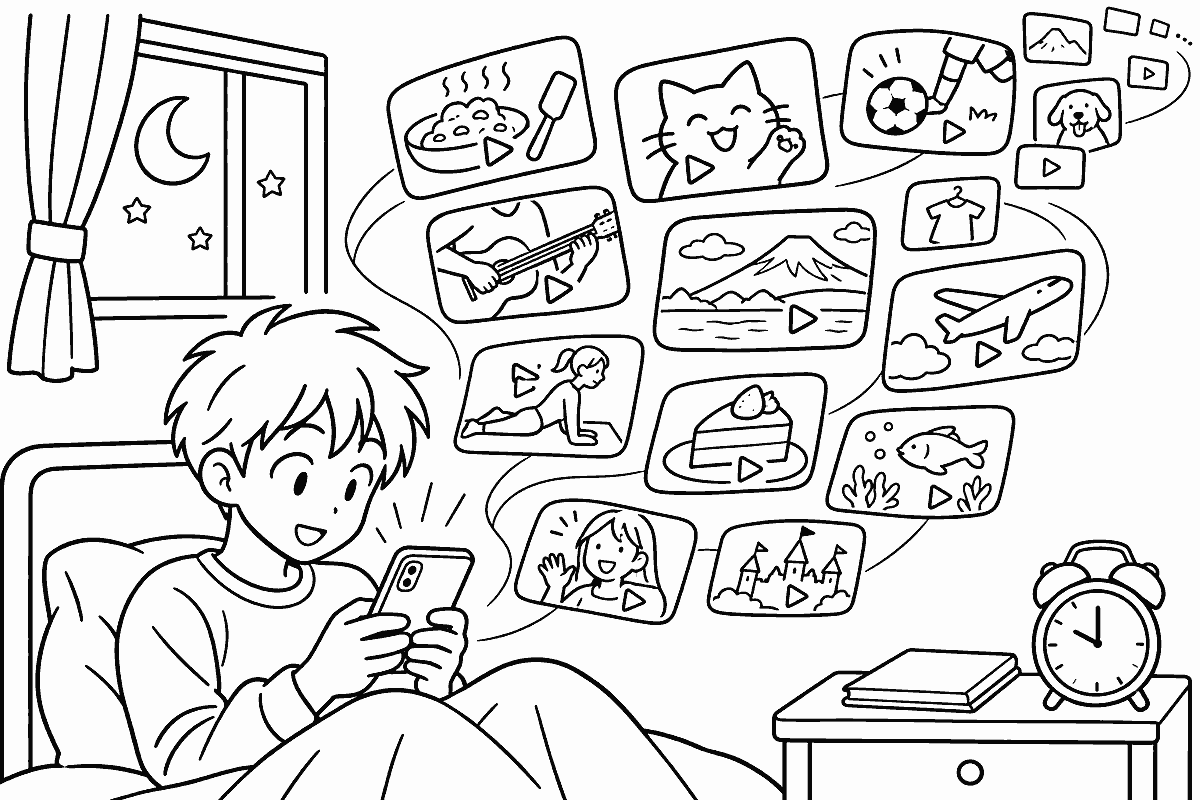
1Scientists in Hungary have found a link between phone habits and memory. Students who spent hours mostly scrolling through content did worse on memory tests.
2The study was done at Semmelweis University in Budapest. University students answered questions about how they use their phones. They also took tests of memory and attention.
3The researchers put the students into three groups. Some mostly used their phones to keep in touch with people. About one third used their phones for four to five hours or more a day. They mostly watched content like short videos instead of chatting with people. This group's scores on memory and attention tests were lower than expected for people their age. They also slept worse.
4The university said the way people use their phones may matter more than the time. But the study did not show that phones cause these problems.
Words 単語
| linkB1 | 名 | 関係、つながりa connection between two things |
| habitsA1 | 名 | 習慣、くせ(habit の複数形)things you do often without thinking |
| memoryA1 | 名 | 記憶、記憶力the power to keep things in your mind |
| scrolling外 | 名 | スクロールすること(scroll の ing 形)moving up and down on a screen |
| attentionA2 | 名 | 注意、注意力the act of watching or listening carefully |
| researchersB1 | 名 | 研究者(researcher の複数形)people who study something to learn new facts |
| expectedB2 | 動 | 予想された(expect の過去分詞)thought that something would happen |
| causeA2 | 動 | ~の原因になる、~を引き起こすto make something happen |
単語のレベル:CEFR-J(『CEFR-J Wordlist Version 1.6』 東京外国語大学投野由紀夫研究室. (URL: https://www.cefr-j.org/download.html より 2026年8月ダウンロード))
1. Reading Quiz 本文の内容に合うものを選ぼう
Where was the study done?
A. At a high school in JapanB. At a university in BudapestC. At a phone company in AmericaD. At a hospital in London
Into how many groups did the researchers put the students?
A. TwoB. FourC. FiveD. Three
What did the group that used phones for four to five hours or more mostly do?
A. Watched content like short videosB. Talked with friendsC. Studied EnglishD. Took photos
What did the university say may matter more than the time?
A. The price of phonesB. The size of the screenC. The way people use their phonesD. The number of friends
2. True or False 正しければ T、違っていれば F
( ) The students took tests of memory and attention.
( ) About half of the students used their phones for four to five hours or more a day.
( ) The group that used phones the most also slept worse.
( ) The study proved that phones cause memory problems.
3. Fill in the Blanks 下の語から選んで空らんをうめよう(形を変えずに)
memorylinkattentionresearcherscauseexpected
But the study did not show that phones _____ these problems.
Students who spent hours mostly scrolling through content did worse on _____ tests.
They also took tests of memory and _____.
This group's scores on memory and attention tests were lower than _____ for people their age.
The _____ put the students into three groups.
Scientists in Hungary have found a _____ between phone habits and memory.
4. Word Order 語を並べかえて正しい文にしよう
( of / attention / also / They / and / took / tests / memory ) .
( students / researchers / three / into / groups / The / put / the ) .
( worse / slept / They / also ) .
5. Think and Write 英語で答えてみよう
What do you usually do on your phone?(あなたはふだん、スマホで何をしていますか?)
Do you think you use your phone too much? Why?(自分はスマホを使いすぎていると思いますか?それはなぜ?)
Answers 解答
1. (1) B (2) D (3) A (4) C
2. (1) T (2) F (3) T (4) F
3. (1) cause (2) memory (3) attention (4) expected (5) researchers (6) link
4.
- They also took tests of memory and attention.
- The researchers put the students into three groups.
- They also slept worse.
全文訳
1ハンガリーの科学者たちが、スマホの使い方のくせと記憶力のあいだに関係を見つけました。何時間も、おもにコンテンツをスクロールして見ていた学生は、記憶のテストの成績が低かったのです。
2この研究は、ブダペストのセンメルワイス大学で行われました。大学生たちが、自分のスマホの使い方についての質問に答えました。記憶と注意力のテストも受けました。
3研究者たちは、学生を3つのグループに分けました。おもに人と連絡をとり合うためにスマホを使う人たちがいました。約3分の1は、1日4〜5時間以上スマホを使っていました。この人たちは、人とやりとりするより、おもに短い動画などのコンテンツを見ていました。このグループは、記憶と注意力のテストの点数が、その年齢の人として予想されるより低くなりました。睡眠もよくありませんでした。
4大学は、スマホを使う時間より、使い方のほうが大事かもしれないと述べました。ただし、この研究は、スマホがこれらの問題の原因だということを示したわけではありません。
文法ポイント:比較級 + than expected「予想より~」
〈比較級 + than expected〉で「予想されたより~」。本文の scores … were lower than expected は「点数が予想より低かった」。lower は low の比較級。第1段落の did worse(成績が悪かった)の worse も bad / badly の比較級。than I expected(私が思っていたより)のように主語を入れてもよい。
出典:ScienceDaily(Semmelweis University)、EurekAlert!(Semmelweis University)、The Star(Inc./Tribune News Service) ほか(記事は原田英語の時事英語ジュニアのオリジナル)|https://www.haradaeigo.com/jijieigo-junior/news/2026-11-07-scrolling-memory-phone-study/