原田英語の時事英語ジュニア|英語ニュース ワークシート(高校生レベル)
Class ____ No. ____ Name ____________________
ハグは英語で hug イギリスの調査、心に残るハグがある人は約7割
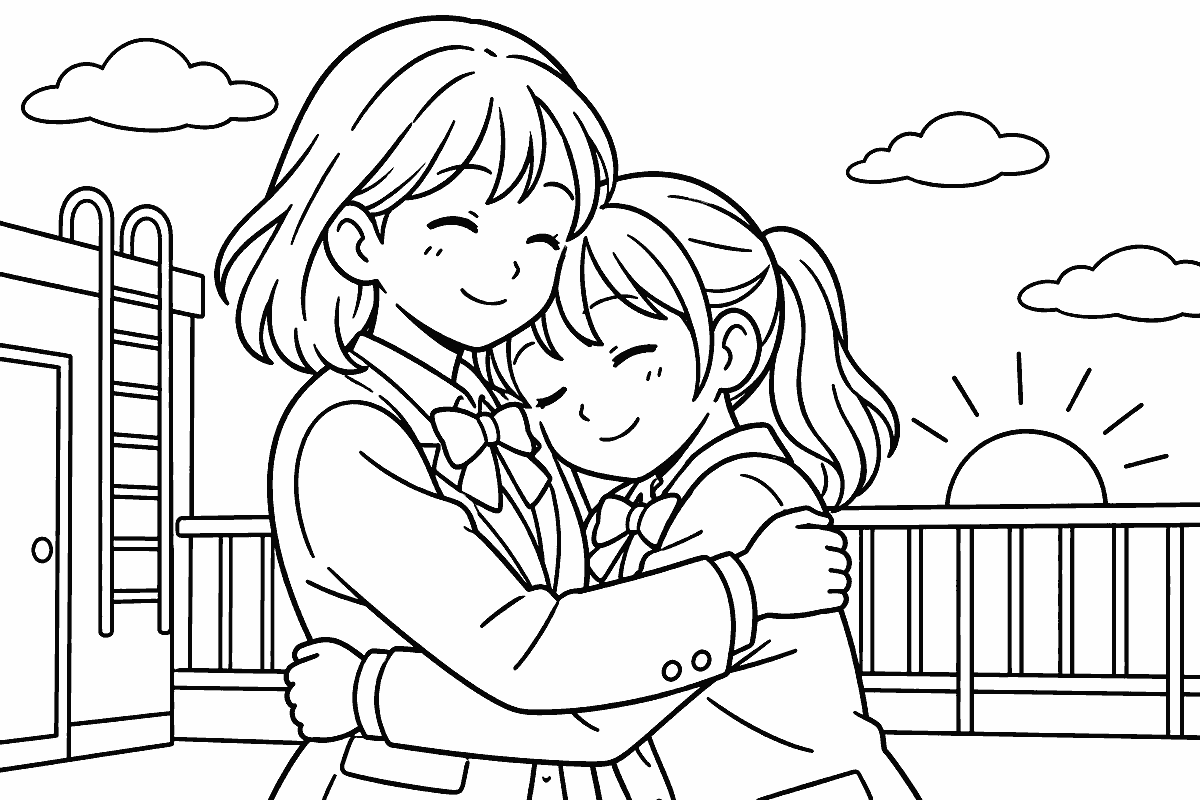
Why Some Hugs Stay With Us, UK Survey Finds
1Nearly 70 percent of adults in a large British survey said they remembered a hug because of the good effect it had on their feelings. The most common reason was comfort. Researchers at the University of Bristol published the findings on October 28 in the journal PLOS ONE.
2The team analyzed answers from 15,049 people aged 18 to 92 in the UK. The data came from the Touch Test, an online survey run with the Wellcome Collection and BBC Radio 4 in early 2020. Participants were asked if a hug had stayed in their memory because it made them feel good, and 69.5 percent said yes.
3Many said the hug gave them comfort or support, or made them feel understood. People who scored higher on empathy were more likely to remember such a hug. So were people who usually greet friends and family with a hug. People who tend to feel anxious when they are apart from loved ones were also more likely to recall one. By contrast, people who prefer to keep an emotional distance from others were less likely to do so.
4Age, gender and how often people hugged were not linked to whether they remembered a hug. However, men and women gave somewhat different reasons. Women more often mentioned comfort, while men more often mentioned friendliness or feeling understood.
5The researchers said most of the effects were small and that the study cannot prove cause and effect. About 75 percent of the participants were women. The team also said people in countries where touch and personal space are viewed differently might answer in other ways.
Words 単語
| recallB1 | 動 | 思い出すto bring something back into your mind |
| surveyA1 | 名 | 調査a set of questions asked to many people |
| analyzedB1 | 動 | 分析した(analyze の過去形)studied something carefully to understand it |
| participantsB1 | 名 | 参加者(participant の複数形)people who take part in something |
| emotionalB1 | 形 | 気持ちの、感情のabout feelings, such as joy or sadness |
| empathy外 | 名 | 共感、人の気持ちがわかる力the ability to share another person's feelings |
| anxiousA2 | 形 | 不安な、心配なworried and nervous about something |
| by contrastA2 | 句 | それに対して、反対にused to show a big difference from something |
| distanceB1 | 名 | 距離the amount of space between two things |
| viewedA2 | 動 | 見られている、考えられている(view の過去分詞)thought about in a certain way |
単語のレベル:CEFR-J(『CEFR-J Wordlist Version 1.6』 東京外国語大学投野由紀夫研究室. (URL: https://www.cefr-j.org/download.html より 2026年8月ダウンロード))
1. Reading Quiz 本文の内容に合うものを選ぼう
Who ran the Touch Test with the researchers?
A. A hospital in LondonB. The Wellcome Collection and BBC Radio 4C. A high school in BristolD. A phone company
What percentage of participants said yes to the hug question?
A. 18 percentB. 50 percentC. 69.5 percentD. 92 percent
Which group was LESS likely to remember a hug?
A. People who prefer to keep an emotional distance from othersB. People who scored higher on empathyC. People who greet friends with a hugD. People who feel anxious when apart from loved ones
Which reason did women mention more often than men?
A. FriendlinessB. Feeling understoodC. A long tripD. Comfort
What did the researchers say about the results?
A. They prove that hugs improve memory.B. People in every country would answer the same way.C. Most effects were small, and the study cannot prove cause and effect.D. Only young people remember hugs.
2. True or False 正しければ T、違っていれば F
( ) The participants were aged 18 to 92.
( ) People who hugged more often were more likely to remember a hug.
( ) People who greet family with a hug were more likely to remember one.
( ) The researchers said people in every country would answer the same way.
3. Fill in the Blanks 下の語から選んで空らんをうめよう(形を変えずに)
analyzedemotionalParticipantssurveyempathyrecall
People who tend to feel anxious when they are apart from loved ones were also more likely to _____ one.
Nearly 70 percent of adults in a large British _____ said they remembered a hug because of the good effect it had on their feelings.
People who scored higher on _____ were more likely to remember such a hug.
_____ were asked if a hug had stayed in their memory because it made them feel good, and 69.5 percent said yes.
By contrast, people who prefer to keep an _____ distance from others were less likely to do so.
The team _____ answers from 15,049 people aged 18 to 92 in the UK.
4. Word Order 語を並べかえて正しい文にしよう
( was / comfort / The / common / reason / most ) .
( and / reasons / women / somewhat / different / gave / men / However, ) .
( About / 75 / the / of / participants / women / were / percent ) .
5. Think and Write 英語で答えてみよう
Hugging is less common in some cultures. How do people in your country show comfort to friends without touching?(ハグがあまりふつうではない文化もあります。あなたの国では、ふれ合わずに友だちをどうやってなぐさめますか?)
Do you think a message or a hug is better for cheering up a friend? Explain your view.(友だちを元気づけるには、メッセージとハグのどちらがよいと思いますか?考えを説明してください。)
Answers 解答
1. (1) B (2) C (3) A (4) D (5) C
2. (1) T (2) F (3) T (4) F
3. (1) recall (2) survey (3) empathy (4) Participants (5) emotional (6) analyzed
4.
- The most common reason was comfort.
- However, men and women gave somewhat different reasons.
- About 75 percent of the participants were women.
全文訳
1イギリスの大規模な調査で、大人の約70%が、気持ちにいい影響があったので覚えているハグがあると答えました。いちばん多い理由は、なぐさめ(安心)でした。ブリストル大学の研究者たちが、10月28日に科学誌『PLOS ONE』でこの結果を発表しました。
2研究チームは、イギリスに住む18歳から92歳の1万5049人の答えを分析しました。データは、2020年のはじめにウェルカム・コレクションとBBCラジオ4といっしょに行われたインターネット調査「タッチ・テスト」のものです。参加者は、いい気持ちになったことで心に残っているハグがあるかを聞かれ、69.5%が「ある」と答えました。
3多くの人が、そのハグでなぐさめられたり支えられたりした、わかってもらえたと感じたと答えました。共感の点数が高い人ほど、そうしたハグを覚えていることが多くありました。ふだん友だちや家族とハグであいさつをする人も同じでした。大切な人とはなれると不安になりやすい人も、ハグを覚えていることが多くありました。反対に、人と心の距離をとりたがる人は、覚えていることが少なめでした。
4年れい、性別、ハグをする回数は、ハグを覚えているかどうかとは関係がありませんでした。ただ、男性と女性では、あげた理由が少しちがいました。女性は「なぐさめ」をあげることが多く、男性は「親しみ」や「わかってもらえた」をあげることが多くありました。
5研究者たちは、ほとんどの関係は小さなもので、この研究では原因と結果は証明できないと話しています。参加者の約75%は女性でした。チームは、ふれ合い方や人との距離のとり方の考え方がちがう国の人は、ちがう答え方をするかもしれないとも話しています。
文法ポイント:So + 助動詞・be動詞 + 主語(~もそうだ)
前の文の内容をくり返さずに「~も同じだ」と言う形。肯定の文を受けて〈So + be動詞・助動詞 + 主語〉の順になる(主語と動詞の順が入れかわる)。本文の So were people who usually greet friends and family with a hug. は、前の文の were more likely to remember such a hug を受けて「ふだんハグであいさつする人たちもそうだった」。
出典:University of Bristol、PLOS ONE(Dueren ほか) ほか(記事は原田英語の時事英語ジュニアのオリジナル)|https://www.haradaeigo.com/jijieigo-junior/news/2026-11-04-memorable-hugs-study/