原田英語の時事英語ジュニア|英語ニュース ワークシート(高校生レベル)
Class ____ No. ____ Name ____________________
文化の日は英語で?11月3日は恐竜も名画も無料 実は中高生はふだんも無料
Culture Day Opens the Doors of Tokyo's National Museums
1Several national museums in Tokyo will drop their admission fees for permanent exhibitions on November 3, Culture Day. This year the national holiday falls on a Tuesday.
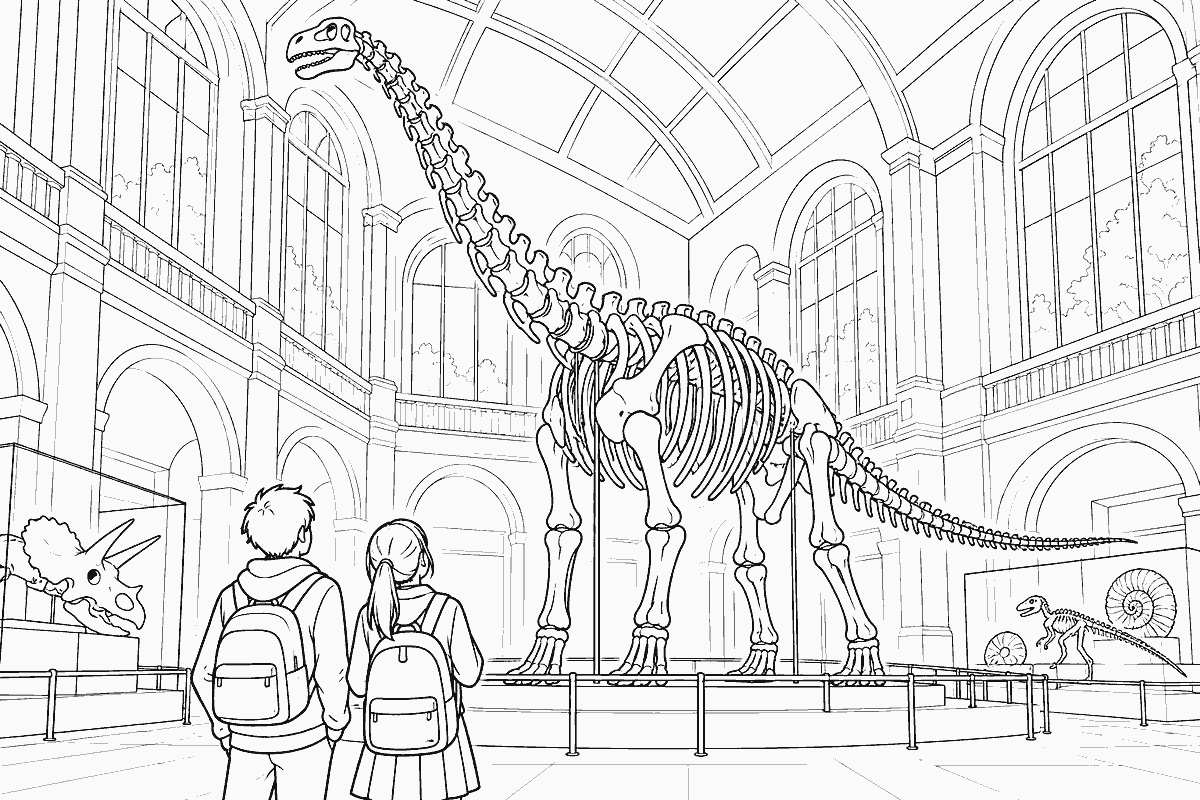
2At the National Museum of Nature and Science in Ueno, the usual charge of 630 yen for adults and university students will be waived. Its permanent exhibits are spread over two buildings. One is about the Japanese islands, and the other traces the history of life on Earth. That second building displays skeletons of dinosaurs such as Tyrannosaurus and Triceratops.
3The Tokyo National Museum usually charges adults 1,000 yen for its Collection Exhibition, but entry will be free on the holiday. As of April 2026, the museum holds about 120,000 objects, including 90 National Treasures. However, its two special exhibitions will still require a regular ticket.
4At the National Museum of Western Art, adults usually pay 500 yen for the permanent collection. The museum opened in 1959, and its collection grew out of the Matsukata Collection, which the French government gave back to Japan. The Matsukata Collection was French art centered on Impressionist paintings and sculptures by Rodin.
5For teenagers, the holiday is not the only chance. At all three museums, high school students and people under 18 can enter the permanent exhibitions for free on ordinary days as well. They may be asked to show a student ID or other proof of age.
6Culture Day was one of nine national holidays set by a 1948 law. The law describes it as a day to love freedom and peace and to promote culture. Before then, November 3 was a holiday called Meiji-setsu, because it was the birthday of Emperor Meiji. It is also the date on which Japan's Constitution was promulgated in 1946. The week from November 1 to 7 is Education and Culture Week, when museums around Japan hold free openings and other events.
Words 単語
| admissionB1 | 名 | 入場、入館the right to go into a place |
| permanentB1 | 形 | 常設の、ずっと続くstaying the same for a long time |
| waived外 | 動 | (料金などが)免除された、なしにされた(waive の過去分詞)not asked for, even though it is usually needed |
| tracesB1 | 動 | (歴史などを)たどるshows how something started and changed over time |
| objectsB1 | 名 | 物、品物(object の複数形)things that you can see and touch |
| requireB1 | 動 | 必要とするto need something |
| centeredA2 | 形 | (~を)中心にしたhaving one thing as the main part |
| ordinaryB1 | 形 | ふつうの、ふだんのnormal and not special |
| proofB1 | 名 | 証明、証明するものsomething that shows a fact is true |
| promulgated外 | 動 | (法律などが)公布された(promulgate の過去分詞)made known to the public as an official law |
単語のレベル:CEFR-J(『CEFR-J Wordlist Version 1.6』 東京外国語大学投野由紀夫研究室. (URL: https://www.cefr-j.org/download.html より 2026年8月ダウンロード))
1. Reading Quiz 本文の内容に合うものを選ぼう
What day of the week is Culture Day this year?
A. MondayB. TuesdayC. FridayD. Sunday
What can visitors see in the second building of the National Museum of Nature and Science?
A. Dinosaur skeletonsB. Paintings from the Middle AgesC. Old Japanese moviesD. The Matsukata Collection
What will still require a regular ticket at the Tokyo National Museum on November 3?
A. The Collection ExhibitionB. The 90 National TreasuresC. Its two special exhibitionsD. The museum garden
Where did the collection of the National Museum of Western Art come from?
A. Gifts from university studentsB. Works bought in 2026C. Items from the Tokyo National MuseumD. The Matsukata Collection, which France gave back to Japan
Why was November 3 a holiday before 1948?
A. It was the day the Constitution was promulgated.B. It was the birthday of Emperor Meiji.C. It was the first day of Education and Culture Week.D. It was the day the National Museum of Western Art opened.
2. True or False 正しければ T、違っていれば F
( ) At the National Museum of Nature and Science, adults usually pay 630 yen.
( ) The National Museum of Western Art opened in 1959.
( ) People under 18 must pay for the permanent exhibitions on ordinary days.
( ) Culture Day was added as a national holiday in 2026.
3. Fill in the Blanks 下の語から選んで空らんをうめよう(形を変えずに)
waivedtracesobjectspermanentrequireadmission
At the National Museum of Nature and Science in Ueno, the usual charge of 630 yen for adults and university students will be _____.
As of April 2026, the museum holds about 120,000 _____, including 90 National Treasures.
Several national museums in Tokyo will drop their _____ fees for permanent exhibitions on November 3, Culture Day.
One is about the Japanese islands, and the other _____ the history of life on Earth.
However, its two special exhibitions will still _____ a regular ticket.
Its _____ exhibits are spread over two buildings.
4. Word Order 語を並べかえて正しい文にしよう
( over / buildings / permanent / Its / two / spread / exhibits / are ) .
( holiday / only / teenagers, / For / is / the / not / the / chance ) .
( This / Tuesday / the / year / national / a / holiday / on / falls ) .
5. Think and Write 英語で答えてみよう
Should more museums be free for everyone on every day? Why or why not?(もっと多くの博物館・美術館が、だれでも毎日無料になるべきだと思いますか?その理由は?)
If a friend from abroad visited Japan on Culture Day, which museum would you take them to, and why?(海外の友だちが文化の日に日本に来たら、どの館に連れて行きますか?その理由は?)
Answers 解答
1. (1) B (2) A (3) C (4) D (5) B
2. (1) T (2) T (3) F (4) F
3. (1) waived (2) objects (3) admission (4) traces (5) require (6) permanent
4.
- Its permanent exhibits are spread over two buildings.
- For teenagers, the holiday is not the only chance.
- This year the national holiday falls on a Tuesday.
全文訳
1東京のいくつかの国立の博物館・美術館が、11月3日の文化の日に、常設展の観覧料を無料にします。今年、この国民の祝日は火曜日にあたります。
2上野の国立科学博物館では、大人と大学生のふだんの料金630円が無料になります。常設展は2つの建物に分かれています。1つは日本列島について、もう1つは地球の生命の歴史をたどる展示です。その2つ目の建物には、ティラノサウルスやトリケラトプスなどの恐竜の骨格が展示されています。
3東京国立博物館は、「東博コレクション展」にふだん大人1000円の料金がかかりますが、この祝日は無料になります。この館には、2026年4月の時点で、国宝90件をふくむ約12万件の所蔵品があります。ただし、開催中の2つの特別展は、その日もふつうのチケットが必要です。
4国立西洋美術館では、常設展にふだん大人は500円をはらいます。美術館は1959年に開館しました。そのコレクションは、フランス政府が日本に返した「松方コレクション」がもとになっています。松方コレクションは、印象派の絵とロダンの彫刻を中心にしたフランスの美術でした。
510代の人にとって、チャンスはこの祝日だけではありません。3つの館のどれでも、高校生以下と18歳未満の人は、ふだんの日も無料で常設展に入れます。生徒手帳など、年齢がわかるものを見せるように言われることがあります。
6文化の日は、1948年の法律で決められた9つの国民の祝日の1つでした。その法律は、この日を「自由と平和を愛し、文化をすすめる」日としています。それより前、11月3日は明治天皇の誕生日だったので、「明治節」という祝日でした。この日は、1946年に日本国憲法が公布された日でもあります。11月1日から7日までの1週間は「教育・文化週間」で、全国の博物館・美術館で無料公開などの行事が行われます。
文法ポイント:関係副詞 when(時を表す語 + when + 文)
時を表す名詞のあとに when を置くと、「~する(その)時」と説明をつけ足せる。本文の The week from November 1 to 7 is Education and Culture Week, when museums around Japan hold free openings and other events. では、カンマのあとの when 以下が「その週には全国の館で無料公開などの行事がある」と、Education and Culture Week の説明をしている。
出典:美術手帖、Tokyo Art Beat、国立科学博物館、東京国立博物館、国立西洋美術館、国立西洋美術館、いこーよ、内閣府、内閣府、国立国会図書館、東京国立博物館、文部科学省 ほか(記事は原田英語の時事英語ジュニアのオリジナル)|https://www.haradaeigo.com/jijieigo-junior/news/2026-10-28-culture-day-free-museums/