原田英語の時事英語ジュニア|英語ニュース ワークシート(高校生レベル)
Class ____ No. ____ Name ____________________
創造力は英語で?幼い子より大人のほうが高得点 162人の実験
Are Young Children Really More Creative Than Adults?
1Adults produced work that was rated as more creative than preschool children's work in an experiment by researchers in Austria. The result challenges a common belief that children are more creative than adults. The children did come out ahead in how they felt about the tasks, though. They felt better about what they had made.
2The study was led by a team at the University of Graz and was published in the journal PLOS One on October 21. The team also included researchers linked to universities in Germany, Belgium and the United States. The participants were 92 kindergarten children aged four to seven and 70 adults. About 85 percent of the adults were between 20 and 30.
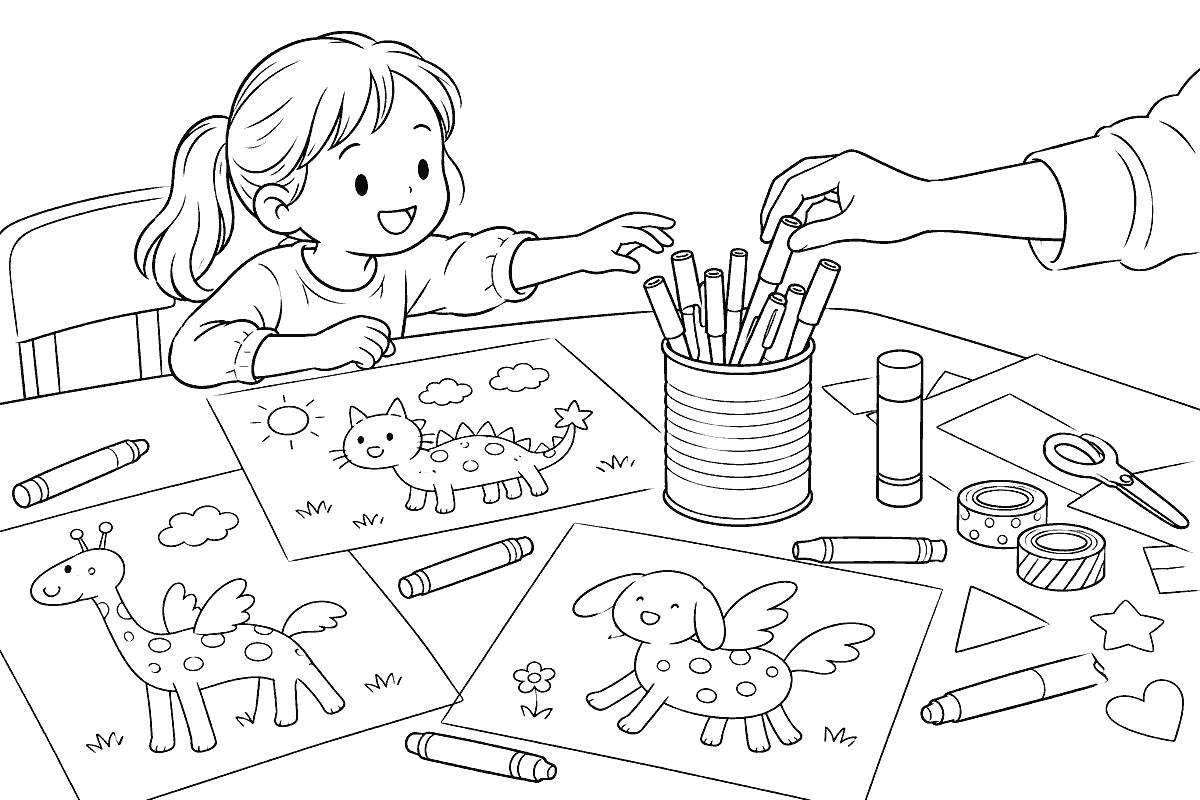
3Each participant listed uses for a tin can in three minutes. They also made a free drawing and invented an imaginary animal on paper. Five experienced raters evaluated the ideas and drawings collected from both groups. The raters did not know which group each piece came from. They judged how new, how effective and how creative the work was.
4Adults received higher overall creativity ratings in all three tasks. In the free drawing, however, the two groups scored about the same for newness. The children rated their own work more highly in every task. In two tasks, they were also more motivated and had more fun. They were less anxious than the adults during the tin can task.
5Asked who is more creative, 78.6 percent of the adults chose children. The researchers said adults may confuse children's enthusiasm and confidence with creative skill. They also noted limits to their study. It compared two age groups at a single point in time, so it cannot show cause and effect.
6All of the participants also came from a single cultural background. According to Phys.org, the team plans to study why adults tend to see themselves as less creative than children.
Words 単語
| creativityA2 | 名 | 創造力、創造性the skill of making new and original things |
| challengesA2 | 動 | ~に疑問を投げかける(challenge の3人称単数)says or shows that an idea may be wrong |
| participantsB1 | 名 | 参加者(participant の複数形)people who take part in an event or study |
| imaginaryB1 | 形 | 空想の、想像上のnot real and only in your mind |
| evaluatedB2 | 動 | 評価した(evaluate の過去形)looked at something carefully and decided how good it was |
| effectiveB1 | 形 | 効果的な、うまく役目を果たすworking well and giving the result you want |
| motivatedB2 | 形 | やる気のあるwanting to do something and work hard |
| anxiousA2 | 形 | 不安な、心配なworried and nervous about something |
| enthusiasmB1 | 名 | 熱心さ、熱意a strong feeling of wanting to do something |
| confuseA2 | 動 | 取りちがえる、混同するto think one thing is another thing by mistake |
単語のレベル:CEFR-J(『CEFR-J Wordlist Version 1.6』 東京外国語大学投野由紀夫研究室. (URL: https://www.cefr-j.org/download.html より 2026年8月ダウンロード))
1. Reading Quiz 本文の内容に合うものを選ぼう
Which group received higher overall creativity ratings?
A. The children, in all three tasksB. The adults, in all three tasksC. The children, in two tasksD. Neither group
What did the raters NOT know?
A. How many tasks there wereB. What a tin can isC. Which group each piece came fromD. How to judge creativity
In which task did the two groups score about the same for newness?
A. The free drawingB. The tin can taskC. The imaginary animalD. All three tasks
What did the researchers say adults may do?
A. Give children easier tasksB. Draw better animals than childrenC. Feel less anxious than childrenD. Confuse children's enthusiasm and confidence with creative skill
Why can't the study show cause and effect?
A. Because it used only one taskB. Because it compared two age groups at a single point in timeC. Because the raters were childrenD. Because it was not published
2. True or False 正しければ T、違っていれば F
( ) Only researchers from Austria worked on the study.
( ) The children rated their own work more highly in every task.
( ) The children were more anxious than the adults during the tin can task.
( ) All of the participants came from a single cultural background.
3. Fill in the Blanks 下の語から選んで空らんをうめよう(形を変えずに)
evaluatedimaginaryeffectivecreativityparticipantschallenges
The _____ were 92 kindergarten children aged four to seven and 70 adults.
They judged how new, how _____ and how creative the work was.
The result _____ a common belief that children are more creative than adults.
Five experienced raters _____ the ideas and drawings collected from both groups.
Adults received higher overall _____ ratings in all three tasks.
They also made a free drawing and invented an _____ animal on paper.
4. Word Order 語を並べかえて正しい文にしよう
( study / to / their / also / They / limits / noted ) .
( in / three / can / listed / a / minutes / Each / uses / tin / participant / for ) .
( every / more / The / in / work / highly / their / task / children / rated / own ) .
5. Think and Write 英語で答えてみよう
Should schools give students more time for creative activities? Give your opinion and reasons.(学校は生徒に、創造的な活動の時間をもっと与えるべきだと思いますか?意見と理由を言いましょう。)
Why do you think many adults feel less confident about their creativity than children do?(多くの大人が子どもより自分の創造力に自信を持てないのはなぜだと思いますか?)
Answers 解答
1. (1) B (2) C (3) A (4) D (5) B
2. (1) F (2) T (3) F (4) T
3. (1) participants (2) effective (3) challenges (4) evaluated (5) creativity (6) imaginary
4.
- They also noted limits to their study.
- Each participant listed uses for a tin can in three minutes.
- The children rated their own work more highly in every task.
全文訳
1オーストリアの研究者たちの実験で、大人の作品のほうが、幼稚園児の作品より創造的だと評価されました。この結果は、「子どものほうが大人より創造力がある」というよくある思いこみに疑問を投げかけるものです。ただし、課題についての気持ちの面では、子どものほうが上でした。自分が作ったものについて、より前向きに感じていたのです。
2研究はグラーツ大学のチームが中心となって行い、10月21日に学術誌 PLOS One に発表されました。チームには、ドイツ、ベルギー、アメリカの大学に所属する研究者も入っていました。参加者は、4歳から7歳の幼稚園児92人と、大人70人でした。大人の約85%は20歳から30歳でした。
3参加者は1人ずつ、3分間で空き缶の使い道を挙げました。また、自由に絵をかき、紙の上で空想の動物を考え出しました。経験のある採点者5人が、両方のグループから集めたアイデアと絵を評価しました。採点者は、それぞれの作品がどちらのグループのものかを知りませんでした。作品がどれだけ新しいか、どれだけうまく役目を果たしているか、どれだけ創造的かを判断しました。
43つの課題すべてで、全体の創造性の評価は大人のほうが高くなりました。ただし自由な絵では、新しさの点は2つのグループでほぼ同じでした。子どもは、どの課題でも自分の作品を大人より高く評価しました。2つの課題では、子どものほうがやる気も高く、より楽しんでいました。空き缶の課題では、子どものほうが大人より不安が少なかったのです。
5どちらが創造的かと聞かれると、大人の78.6%が「子ども」を選びました。研究者たちは、大人は子どもの熱心さや自信を、創造の力と取りちがえているのかもしれない、と述べました。研究者たちは、この研究の限界も挙げています。1つの時点で2つの年齢グループをくらべたものなので、原因と結果の関係は示せません。
6また、参加者は全員、同じ1つの文化の中から集められていました。Phys.org によると、チームは今後、大人が「自分は子どもより創造力が低い」と思いがちなのはなぜかを調べる予定です。
文法ポイント:過去分詞の後置修飾(名詞 + 過去分詞 + 語句)
過去分詞が語句をつれて、うしろから名詞を説明する形。「~された…」の意味になる。本文の the ideas and drawings collected from both groups は「両方のグループから集められたアイデアと絵」という意味。
出典:PLOS One、Phys.org ほか(記事は原田英語の時事英語ジュニアのオリジナル)|https://www.haradaeigo.com/jijieigo-junior/news/2026-10-27-kids-creativity-adults-study/