原田英語の時事英語ジュニア|英語ニュース ワークシート(高校生レベル)
Class ____ No. ____ Name ____________________
ミツバチがほかの虫を花から追いはらう?イギリスの研究、暑い日ほど争いが多い
Honeybees Are Winning the Fight for Flowers
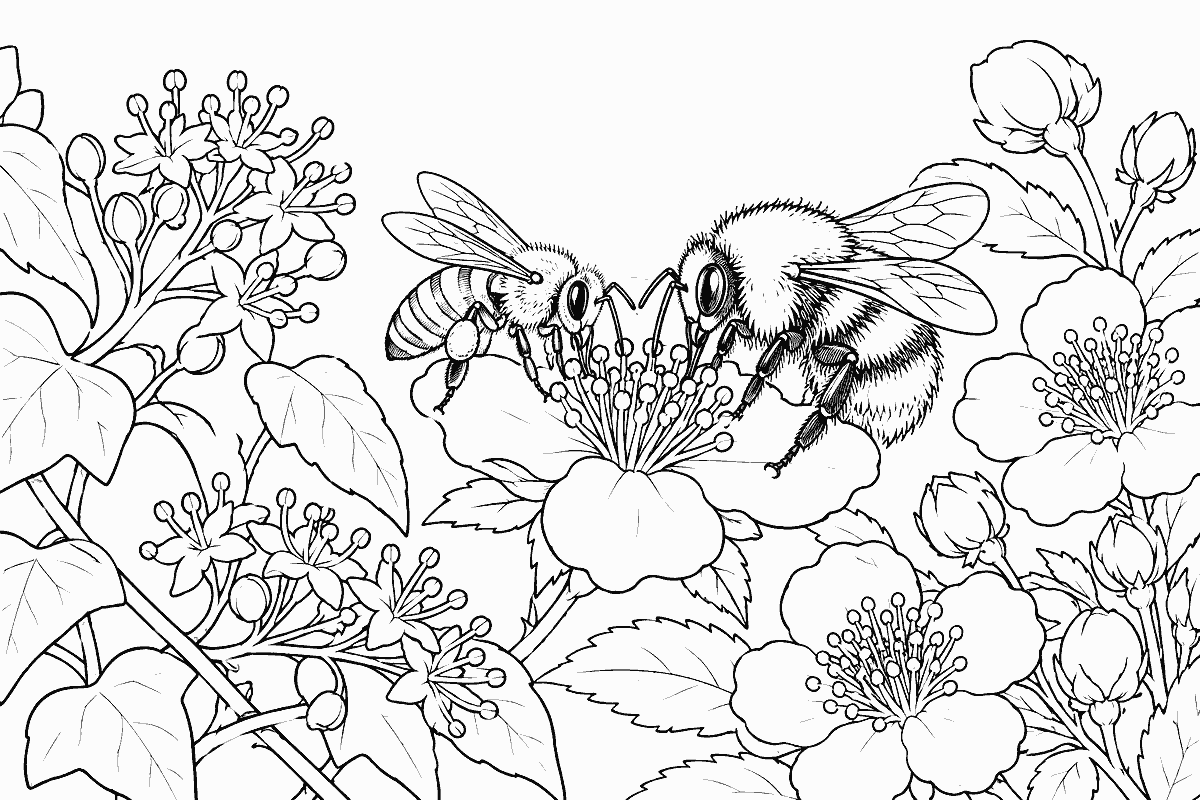
1Honeybees regularly push wild pollinators off flowers, and the competition grows in warmer weather, researchers in England have found. The study, led by Anglia Ruskin University, was published in the journal Ecological Entomology.
2Over two years, the team spent 93 hours watching insects on bramble and ivy at five sites in and around Cambridge. Every site was less than 300 meters from honeybee colonies. The researchers recorded whether each meeting between insects ended with one insect winning or with both sharing the flower.
3Where honeybees were more common, other pollinators were harder to find. On bramble, doubling the number of honeybees was linked to 14 percent fewer bumblebees. Other insects avoided honeybees in 28 percent of meetings on bramble and 36 percent on ivy. In at least one in five of their wins, honeybees pushed or chased their rivals away.
4Only one species regularly fought back. It was the ivy bee, a solitary bee first seen in Britain in 2001. It was the only insect that often challenged honeybees, and it sometimes won.
5Competition rose as temperatures went up. Heat can reduce the nectar that flowers produce. Lead author Victoria Buckle said the study is not meant to discourage beekeeping. But she said warming in the UK is likely to make the competition worse. She said it is important for honeybees and wild pollinators to live together, especially in places with many hives, such as cities. Last year, 47,000 people were registered as beekeepers in the UK, up from 19,000 in 2010.
Words 単語
| pollinators外 | 名 | 花粉を運ぶ生き物(pollinator の複数形)animals that carry pollen from flower to flower |
| competitionA2 | 名 | (食べ物などをめぐる)争い、競争a fight to get something that others also want |
| publishedA2 | 動 | 発表された、出版されたprinted or put online for people to read |
| colonies外 | 名 | (ハチなどの)群れ(colony の複数形)large groups of insects that live together |
| recordedA2 | 動 | 記録したwrote down information to keep it |
| avoidedA2 | 動 | よけた、さけたstayed away from something |
| rivalsB2 | 名 | ライバル、争う相手(rival の複数形)others who try to win the same thing |
| speciesB2 | 名 | (生き物の)種類、種one type of animal or plant |
| reduceB1 | 動 | へらすto make something smaller in amount |
| discourageB1 | 動 | (~するのを)やめさせる、思いとどまらせるto try to stop someone from doing something |
単語のレベル:CEFR-J(『CEFR-J Wordlist Version 1.6』 東京外国語大学投野由紀夫研究室. (URL: https://www.cefr-j.org/download.html より 2026年8月ダウンロード))
1. Reading Quiz 本文の内容に合うものを選ぼう
Where was the study published?
A. In a beekeeping magazineB. On a TV showC. In the journal Ecological EntomologyD. On a university website only
How close was each site to honeybee colonies?
A. Less than 300 metersB. About 3 kilometersC. More than 30 kilometersD. Exactly 93 meters
On bramble, what was linked to 14 percent fewer bumblebees?
A. Warmer weatherB. Doubling the number of honeybeesC. Fewer flowersD. More hoverflies
Which insect regularly fought back against honeybees?
A. The bumblebeeB. The hoverflyC. The butterflyD. The ivy bee
Why might heat make the competition stronger?
A. Heat can reduce the nectar that flowers produce.B. Heat makes honeybees sleep longer.C. Heat makes flowers bigger.D. Heat brings more beekeepers.
2. True or False 正しければ T、違っていれば F
( ) The researchers watched insects at five sites.
( ) Other insects avoided honeybees in 36 percent of meetings on ivy.
( ) The ivy bee has lived in Britain for hundreds of years.
( ) Competition fell as temperatures went up.
3. Fill in the Blanks 下の語から選んで空らんをうめよう(形を変えずに)
publishedpollinatorsavoidedCompetitionrecordedcolonies
_____ rose as temperatures went up.
The researchers _____ whether each meeting between insects ended with one insect winning or with both sharing the flower.
The study, led by Anglia Ruskin University, was _____ in the journal Ecological Entomology.
Other insects _____ honeybees in 28 percent of meetings on bramble and 36 percent on ivy.
Honeybees regularly push wild _____ off flowers, and the competition grows in warmer weather, researchers in England have found.
Every site was less than 300 meters from honeybee _____.
4. Word Order 語を並べかえて正しい文にしよう
( fought / regularly / back / one / species / Only ) .
( as / Competition / went / rose / up / temperatures ) .
( 300 / was / less / site / than / from / colonies / honeybee / Every / meters ) .
5. Think and Write 英語で答えてみよう
More and more people keep bees in cities. Do you think cities should limit the number of hives? Why or why not?(都市でハチを飼う人がふえています。都市は巣箱の数を制限するべきだと思いますか?その理由は?)
Global warming can change how animals live together. What other examples do you know?(温暖化は生き物どうしの暮らし方を変えることがあります。ほかにどんな例を知っていますか?)
Answers 解答
1. (1) C (2) A (3) B (4) D (5) A
2. (1) T (2) T (3) F (4) F
3. (1) Competition (2) recorded (3) published (4) avoided (5) pollinators (6) colonies
4.
- Only one species regularly fought back.
- Competition rose as temperatures went up.
- Every site was less than 300 meters from honeybee colonies.
全文訳
1ミツバチはよく野生の花粉を運ぶ虫を花から追いはらい、その争いは暖かいほどはげしくなることを、イギリスの研究チームが明らかにしました。アングリア・ラスキン大学が中心になった研究で、学術誌『エコロジカル・エントモロジー』に発表されました。
2研究チームは2年間、ケンブリッジとその周りの5か所で、キイチゴのなかまとアイビー(セイヨウキヅタ)に来る虫を合わせて93時間観察しました。どの場所も、ミツバチの群れから300メートルもはなれていませんでした。研究者たちは、虫どうしが出会うたびに、どちらかが勝ったか、花を分け合ったかを記録しました。
3ミツバチが多い場所ほど、ほかの花粉を運ぶ虫は見つけにくくなっていました。キイチゴのなかまでは、ミツバチが2倍になると、マルハナバチが14%少なくなる関係が見られました。ほかの虫がミツバチをよけたのは、キイチゴのなかまでは出会いの28%、アイビーでは36%でした。ミツバチが勝った場面の少なくとも5回に1回は、相手をおしのけるか追いはらっていました。
4よく反撃したのは、1種類だけでした。それは、群れを作らずに暮らすハチの一種で、イギリスで2001年に初めて記録された「アイビー・ビー」でした。ミツバチによく立ち向かったのはこのハチだけで、ときには勝つこともありました。
5気温が上がるにつれて、争いはふえました。暑さで、花が出すみつがへることがあります。中心になった研究者のビクトリア・バックルさんは、ハチを飼うのをやめさせるための研究ではないと話しています。ただ、イギリスの温暖化で、争いはさらにはげしくなりそうだとも話しています。そして、ミツバチと野生の虫がいっしょに暮らせるようにすることが大切で、巣箱の多い都市のような場所ではとくにそうだと話しています。イギリスでハチを飼う人として登録されているのは去年4万7000人で、2010年の1万9000人からふえました。
文法ポイント:接続詞 as(~するにつれて)
as + 主語 + 動詞 で「~するにつれて」を表す。本文の Competition rose as temperatures went up. は「気温が上がるにつれて、争いがふえた」。rise・grow・increase など「変化」を表す動詞といっしょによく使う。
出典:Anglia Ruskin University、ScienceDaily ほか(記事は原田英語の時事英語ジュニアのオリジナル)|https://www.haradaeigo.com/jijieigo-junior/news/2026-10-23-honeybees-push-out-wild-bees/