原田英語の時事英語ジュニア|英語ニュース ワークシート(高校生レベル)
Class ____ No. ____ Name ____________________
犬をなでるとストレスに強くなる?次のテストで心拍が落ち着いた、64人の実験
Petting a Dog Dampened Stress Responses in a Later Test
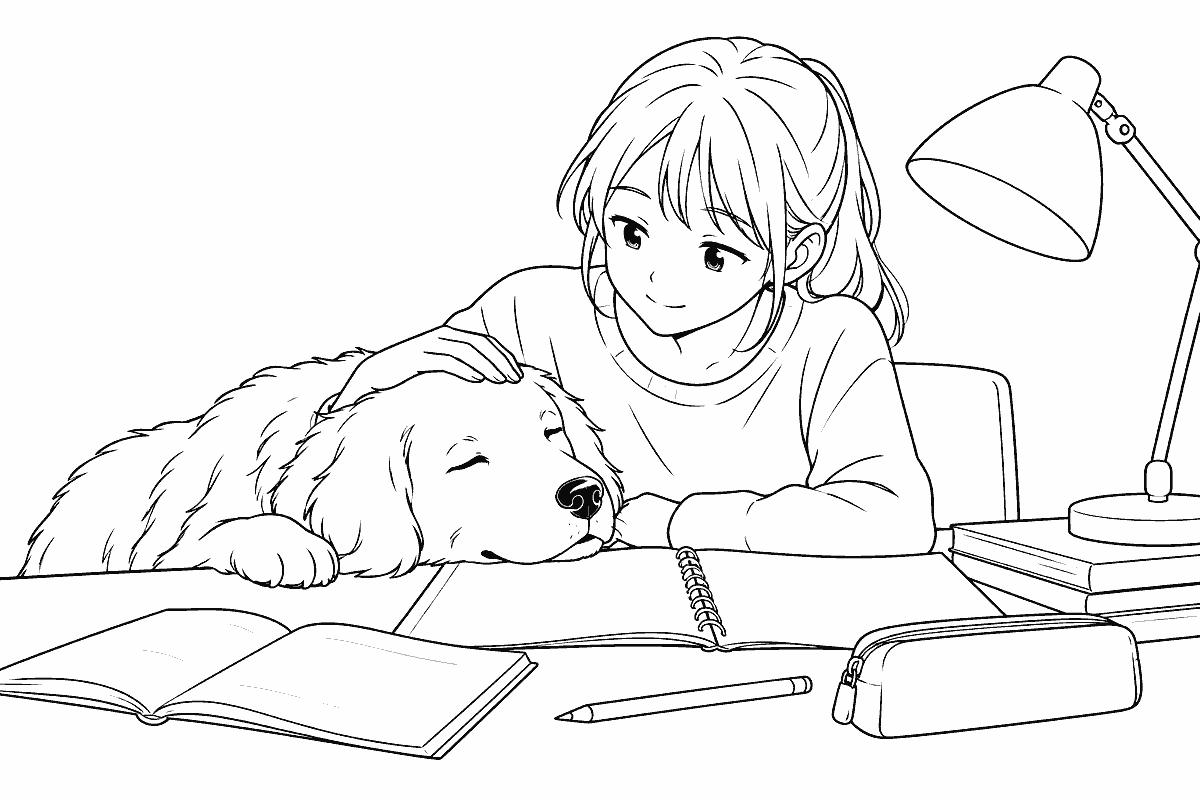
1Dog owners who petted their dogs after a stressful task showed calmer body responses when they faced a second stressful task, researchers in Austria have reported. The team, from the University of Innsbruck, published the study in the journal Biological Psychology.
2Sixty-four dog owners brought their dogs to the lab. Each owner went through the same routine twice: a rest, a 10-minute stress test and a five-minute recovery period with the dog. The test asked them to answer general-knowledge questions within five seconds and to count backward, while a staff member on video gave only critical feedback.
3The dog was in the room only during recovery. In one round, owners were free to touch their dogs, and they spent about 64 percent of the time doing so. In the other, the dog was kept on a short leash out of reach, though owners could still talk to it and look at it.
4The researchers measured brain waves, heart rate and heart rate variability. The stress test raised heart rate and lowered heart rate variability. Touch did not make recovery faster. However, owners who could touch their dogs after the first test had a lower heart rate, higher heart rate variability and smaller stress-related changes in brain waves during the second test. Owners who first recovered without touch did not show the same effects.
5The owners' own ratings of their stress did not match the body measurements well. Most of the 64 owners were women, and the effect on the second test came from an exploratory analysis, so a new study will need to check it.
Words 単語
| responsesA2 | 名 | 反応the way a body or person acts after something happens |
| journalB1 | 名 | 学術誌、専門の雑誌a magazine where scientists share their studies |
| routineB1 | 名 | 決まった手順、いつもの流れa set of actions done in the same order |
| recoveryB1 | 名 | 回復the process of getting back to normal |
| criticalB1 | 形 | 批判的な、きびしいsaying what is bad about something |
| reachA2 | 名 | 手の届く範囲(out of reach で「手の届かない」)the distance your hand can touch |
| measuredB1 | 動 | はかった、測定したfound the size or amount of something |
| variability外 | 名 | 変わりやすさ、ばらつきhow much something changes over time |
| analysisB1 | 名 | 分析a careful study of facts or numbers |
| exploratory外 | 形 | 探索的な(前もって決めずに、あとから調べた)done to look for new ideas, not to prove them |
単語のレベル:CEFR-J(『CEFR-J Wordlist Version 1.6』 東京外国語大学投野由紀夫研究室. (URL: https://www.cefr-j.org/download.html より 2026年8月ダウンロード))
1. Reading Quiz 本文の内容に合うものを選ぼう
Where did the study take place?
A. At the University of InnsbruckB. At a dog park in JapanC. At a hospital in the U.S.D. At a hospital in Germany
How long was each recovery period with the dog?
A. Ten minutesB. Five secondsC. Five minutesD. One hour
In the round without touch, what could owners still do?
A. Hold the dogB. Feed the dogC. Walk the dog outsideD. Talk to the dog and look at it
What was found in owners who could touch their dogs after the first test?
A. They recovered faster right after the test.B. They had a lower heart rate during the second test.C. They answered more questions correctly.D. They said they felt no stress at all.
Why does the result on the second test need to be checked again?
A. Because the dogs were not healthyB. Because the test was too easyC. Because the effect came from an exploratory analysisD. Because no one touched the dogs
2. True or False 正しければ T、違っていれば F
( ) The dogs stayed in the room during the stress tests.
( ) Owners spent about 64 percent of the touch round touching their dogs.
( ) Touch made recovery from the stress test faster.
( ) The owners' own ratings of stress did not match the body measurements well.
3. Fill in the Blanks 下の語から選んで空らんをうめよう(形を変えずに)
criticalresponsesjournalreachroutinerecovery
The dog was in the room only during _____.
The team, from the University of Innsbruck, published the study in the _____ Biological Psychology.
Dog owners who petted their dogs after a stressful task showed calmer body _____ when they faced a second stressful task, researchers in Austria have reported.
In the other, the dog was kept on a short leash out of _____, though owners could still talk to it and look at it.
Each owner went through the same _____ twice: a rest, a 10-minute stress test and a five-minute recovery period with the dog.
The test asked them to answer general-knowledge questions within five seconds and to count backward, while a staff member on video gave only _____ feedback.
4. Word Order 語を並べかえて正しい文にしよう
( dogs / their / Sixty-four / lab / the / owners / dog / brought / to ) .
( in / during / dog / was / The / the / only / recovery / room ) .
( make / faster / not / Touch / recovery / did ) .
5. Think and Write 英語で答えてみよう
The owners' feelings did not always match their body signals. Why do you think that happens?(飼い主の気持ちと体のサインは、いつも同じではありませんでした。なぜそうなると思いますか?)
Would you like your school to have a dog that students can pet before exams? Why or why not?(テストの前に生徒がなでられる犬が学校にいたらいいと思いますか?それはなぜですか?)
Answers 解答
1. (1) A (2) C (3) D (4) B (5) C
2. (1) F (2) T (3) F (4) T
3. (1) recovery (2) journal (3) responses (4) reach (5) routine (6) critical
4.
- Sixty-four dog owners brought their dogs to the lab.
- The dog was in the room only during recovery.
- Touch did not make recovery faster.
全文訳
1ストレスのかかる課題のあとに犬をなでた飼い主は、2回目のストレスのかかる課題に向き合ったとき、体の反応が落ち着いていたと、オーストリアの研究者たちが報告しました。インスブルック大学のチームが、この研究を学術誌『バイオロジカル・サイコロジー』で発表しました。
264人の飼い主が、自分の犬を実験室に連れてきました。飼い主はそれぞれ、休けい、10分のストレステスト、犬といっしょに過ごす5分の回復の時間という同じ流れを2回くり返しました。テストでは、一般常識の問題に5秒以内に答えたり、数を逆にかぞえたりしてもらい、その間、画面に映ったスタッフはきびしい感想だけを伝えました。
3犬が部屋にいたのは、回復の時間だけでした。1回は飼い主が犬に自由にさわってよく、時間の約64%を犬にさわって過ごしました。もう1回は、犬は手の届かない短いリードにつながれていましたが、飼い主は話しかけたり、見つめたりすることはできました。
4研究者たちは、脳波、心拍数、そして心拍変動(心拍の間かくのゆらぎ)をはかりました。ストレステストで、心拍数は上がり、心拍変動は下がりました。さわっても、回復が速くなることはありませんでした。しかし、1回目のテストのあとに犬にさわれた飼い主は、2回目のテストの間、心拍数が低く、心拍変動が高く、脳波のストレスによる変化も小さくなりました。1回目に、さわらずに回復の時間を過ごした飼い主には、同じ効果は見られませんでした。
5飼い主が自分で答えたストレスの度合いは、体の測定の結果とあまり一致しませんでした。64人の飼い主の多くは女性でした。また、2回目のテストへの効果は探索的な分析から出たものなので、新しい研究で確かめる必要があります。
文法ポイント:関係代名詞 who(人を説明する)
who は前の「人」を後ろから説明する。本文の Dog owners who petted their dogs after a stressful task は「ストレスのかかる課題のあとに犬をなでた飼い主」という意味で、who 以下が Dog owners を説明している。Owners who first recovered without touch も同じ形。
出典:Biological Psychology(PubMed)、PsyPost ほか(記事は原田英語の時事英語ジュニアのオリジナル)|https://www.haradaeigo.com/jijieigo-junior/news/2026-10-22-petting-dog-stress-test/