原田英語の時事英語ジュニア|英語ニュース ワークシート(高校生レベル)
Class ____ No. ____ Name ____________________
睡眠時間と成績の関係は?平日の夜に約19分多く寝た大学生の成績が上がった実験
Experiment Shows Extra Sleep Can Lift Grades
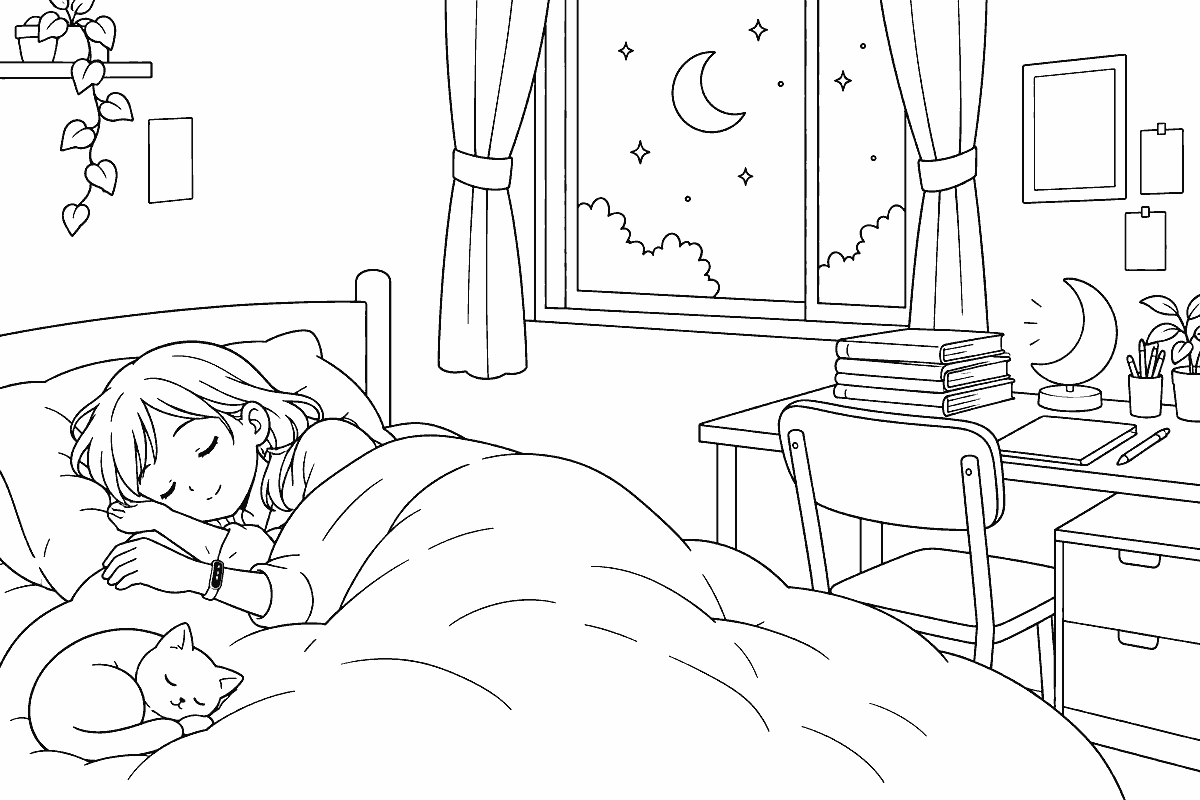
1A large U.S. experiment has found that college students earned higher grades when they were paid for getting at least seven hours of sleep on school nights. The students who were paid slept about 19 minutes longer on school nights. Their grade point average for that term was about 0.08 points higher.
2Researchers from the University of Pittsburgh, Carnegie Mellon University and the University of California, San Diego, ran the study. It was published in the Journal of Political Economy. More than 1,100 Pittsburgh undergraduates took part.
3Their average sleep before the study was 6.6 hours a night. For about half of them, the average bedtime was after 1 a.m. Only 43 percent of their weeknights included seven hours of sleep or more. All of them wore Fitbit trackers, which recorded their sleep.
4For four weeks, one randomly chosen group earned about 5 dollars for each school night they slept seven hours or more. This group had 26 percent more nights with seven hours of sleep or more, compared with a group that got no sleep reminders or nightly rewards. Like the paid group, another group got reminders at bedtime and reports on their sleep each morning, but it received no money. Those messages alone had little effect.
5The habit partly stuck after the payments ended, and the paid students went on sleeping roughly eight extra minutes a night until the study ended. The gains in sleep and grades were largest among students in their first term of college. The researchers wrote that grades stayed higher the next term, but no difference was found two terms later.
Words 単語
| experimentB1 | 名 | 実験a test done to find out if an idea is true |
| researchersB1 | 名 | 研究者people who study something carefully to learn new facts |
| publishedA2 | 動 | 発表された、出版されたprinted or shared for the public to read |
| undergraduatesB2 | 名 | (大学の)学部生college students who have not finished their first degree |
| recordedA2 | 動 | 記録したkept information so it can be checked later |
| remindersB2 | 名 | (忘れないための)お知らせmessages that help you remember to do something |
| randomly外 | 副 | 無作為にby chance, without a plan |
| compared withA2 | 熟 | ~とくらべてwhen you look at how two things are different |
| habitA1 | 名 | 習慣something you do often without thinking |
| gainsB1 | 名 | 向上、増加increases in something good |
単語のレベル:CEFR-J(『CEFR-J Wordlist Version 1.6』 東京外国語大学投野由紀夫研究室. (URL: https://www.cefr-j.org/download.html より 2026年8月ダウンロード))
1. Reading Quiz 本文の内容に合うものを選ぼう
How much higher was the paid students' grade point average that term?
A. About 0.08 pointsB. About 1 pointC. About 19 pointsD. It did not change.
Before the experiment, on what share of weeknights did the students sleep seven hours or more?
A. About 90 percentB. About 26 percentC. Only 43 percentD. About 60 percent
What did all the students wear?
A. Special glassesB. Fitbit trackersC. School uniformsD. Headphones
After the payments ended, how much longer did the students keep sleeping?
A. About two hoursB. About 30 minutesC. About 19 minutesD. About eight minutes
What happened two terms later?
A. Grades rose even more.B. Students slept two hours longer.C. No difference was found.D. The study started again.
2. True or False 正しければ T、違っていれば F
( ) The study was published in a journal.
( ) Before the experiment, most students slept more than eight hours.
( ) The paid group received money for four weeks.
( ) The paid students stopped sleeping longer as soon as the payments ended.
3. Fill in the Blanks 下の語から選んで空らんをうめよう(形を変えずに)
Researchersrecordedremindersundergraduatesexperimentpublished
A large U.S. _____ has found that college students earned higher grades when they were paid for getting at least seven hours of sleep on school nights.
More than 1,100 Pittsburgh _____ took part.
It was _____ in the Journal of Political Economy.
All of them wore Fitbit trackers, which _____ their sleep.
_____ from the University of Pittsburgh, Carnegie Mellon University and the University of California, San Diego, ran the study.
This group had 26 percent more nights with seven hours of sleep or more, compared with a group that got no sleep _____ or nightly rewards.
4. Word Order 語を並べかえて正しい文にしよう
( effect / little / had / alone / Those / messages ) .
( took / undergraduates / part / than / More / Pittsburgh / 1,100 ) .
( of / was / Economy / Journal / It / Political / the / in / published ) .
5. Think and Write 英語で答えてみよう
Should schools start later in the morning so that students can sleep more? Give your reasons.(生徒がもっと眠れるように、学校は朝もっと遅く始まるべきだと思いますか。理由を挙げましょう。)
Is it a good idea to reward students with money for healthy habits? Explain your opinion.(健康的な習慣に対して、生徒にお金でごほうびをあげるのはよい考えだと思いますか。意見を説明しましょう。)
Answers 解答
1. (1) A (2) C (3) B (4) D (5) C
2. (1) T (2) F (3) T (4) F
3. (1) experiment (2) undergraduates (3) published (4) recorded (5) Researchers (6) reminders
4.
- Those messages alone had little effect.
- More than 1,100 Pittsburgh undergraduates took part.
- It was published in the Journal of Political Economy.
全文訳
1次の日に学校がある夜に7時間以上眠るとお金がもらえた大学生は、成績が上がったことが、アメリカの大規模な実験でわかりました。お金をもらった学生は、次の日に学校がある夜に約19分長く眠りました。その学期の成績の平均点(GPA)は、約0.08ポイント高くなりました。
2ピッツバーグ大学、カーネギーメロン大学、カリフォルニア大学サンディエゴ校の研究者が、この研究を行いました。研究は学術誌『Journal of Political Economy』に掲載されました。ピッツバーグ大学の学部生1100人以上が参加しました。
3研究の前、学生たちの睡眠時間は平均で一晩6.6時間でした。約半分の学生は、寝る時刻の平均が夜中の1時すぎでした。7時間以上眠れていたのは、平日の夜のうち43%だけでした。全員が、睡眠を記録するフィットビットという機器をつけました。
4無作為に選ばれた1つのグループは、4週間のあいだ、次の日に学校がある夜に7時間以上眠ると、1晩約5ドルを受け取りました。このグループは、寝る時間のお知らせも、夜ごとのごほうびもなかったグループとくらべて、7時間以上眠れた夜が26%多くなりました。別のグループも、お金のグループと同じように、寝る時間のお知らせと毎朝の睡眠の報告を受け取りましたが、お金はもらいませんでした。お知らせや報告だけでは、ほとんど効果がありませんでした。
5お金がもらえなくなったあとも習慣は一部残り、お金をもらった学生は研究が終わるまで、1晩に約8分長く眠りつづけました。睡眠と成績の両方で、効果がいちばん大きかったのは、大学に入って最初の学期の1年生でした。研究者たちによると、次の学期も成績は高いままでしたが、2つあとの学期には、もう差は見られませんでした。
文法ポイント:関係代名詞の非制限用法(, which ~)で前の名詞を説明する
コンマのあとの which が、前の名詞に説明を足す。本文の All of them wore Fitbit trackers, which recorded their sleep. は「全員が Fitbit をつけ、それが睡眠を記録した」。which は Fitbit trackers を受けている。入試の長文でよく出る形。
出典:University of Pittsburgh(Newswise)、The Conversation、National Bureau of Economic Research (NBER) ほか(記事は原田英語の時事英語ジュニアのオリジナル)|https://www.haradaeigo.com/jijieigo-junior/news/2026-10-17-sleep-more-better-grades/