原田英語の時事英語ジュニア|英語ニュース ワークシート(高校生レベル)
Class ____ No. ____ Name ____________________
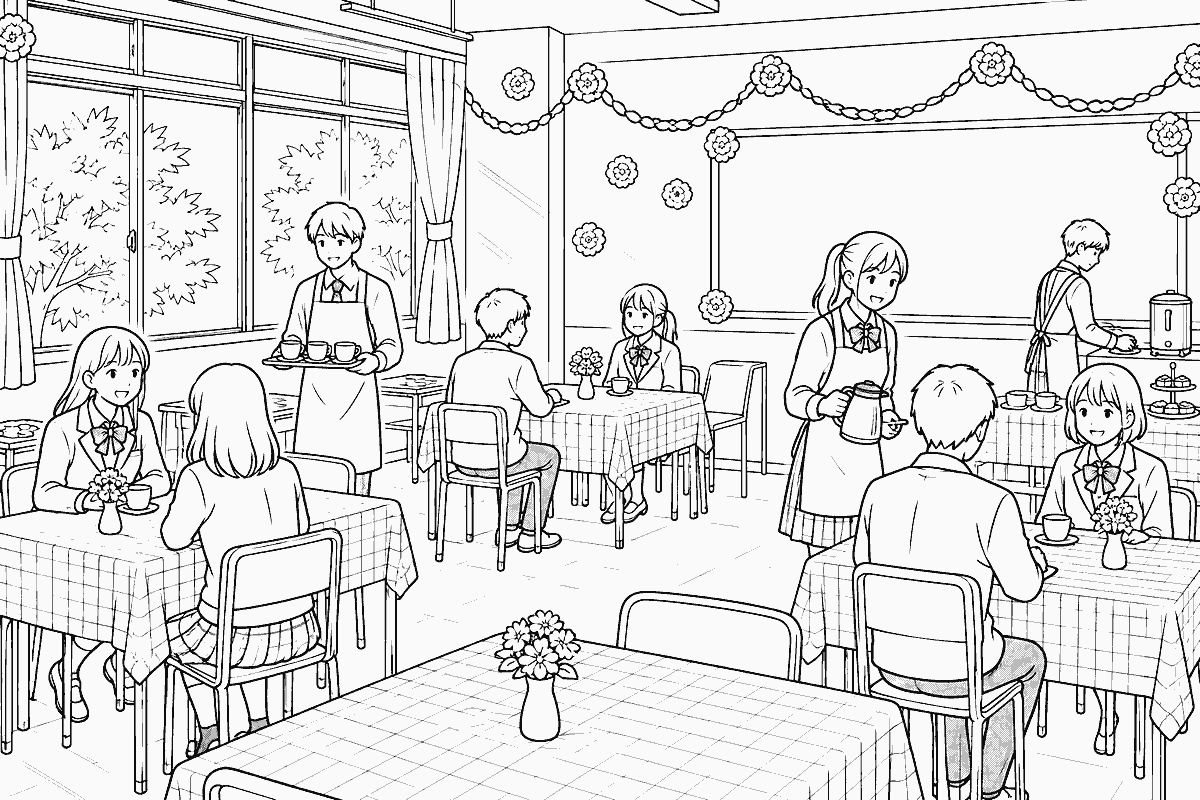
文化祭が女子高生の「楽しんでいる行事」1位に 英語でbunkasaiを紹介しよう
Japanese High School Girls Name the School Festival Their Top Event
1The school festival tops the list of events that Japanese high school girls enjoy during the year, according to a survey released in August. The survey was carried out by SHIBUYA109 lab., a youth research group at the company that runs the SHIBUYA109 fashion building in Tokyo. In July, it asked 484 women aged 15 to 24 online about the events they enjoy over the year. All of them live in Tokyo, Kanagawa, Saitama or Chiba.
2Among the high school students, 70.5 percent chose the school festival, known in Japanese as bunkasai. Sports day was second at 65.0 percent, followed by school trips and camps at 62.3 percent. University students gave different answers. Christmas and the holiday season topped their list at 58.0 percent. Valentine's Day came second at 45.8 percent, and the school festival ranked third at 45.1 percent.
3The lab also interviewed seven students, including four high school girls. One said she had made T-shirts and other items by hand with friends for the festival. A student also said she had used TikTok to pick a theme for matching outfits. The lab said motivation for events tends to grow in autumn and winter, with school festivals, school trips and Halloween all coming in autumn.
4Japan's national curriculum guidelines list cultural events as one type of school event. Through them, students show what they have learned in class and take part in arts and culture. In a 2023 survey of 2,672 high school students by the company behind the study app Studyplus, almost all said their school held a festival that year. About 60 percent said it took place in September. Exhibits were the most common activity. About 80 percent said their school had food stalls, up from 35.4 percent the year before, when COVID-19 rules were stricter.
5The 2026 survey asked only girls and young women, so it does not show how boys rank the festival.
Words 単語
| releasedA2 | 動 | 発表された、公開されたmade public so that people can see it |
| carried outA1 | 熟 | 行った、実施したdid a planned piece of work |
| followed byA2 | 熟 | 続いて~、そのあとに~with another thing coming next after it |
| toppedA1 | 動 | ~の1位になったwas first or highest on a list |
| rankedB1 | 動 | (~位に)位置した、ランクされたhad a certain place on a list |
| motivationB1 | 名 | やる気、意欲the feeling of wanting to do something |
| curriculum guidelinesB2 | 名 | 学習指導要領official rules about what schools should teach |
| exhibitsB2 | 名 | 展示(物)things that are shown for people to look at |
| food stallsB1 | 名 | 食べ物の屋台、模擬店small stands that sell food at an event |
| stricterA1 | 形 | よりきびしい(strict の比較級)having more rules that people must follow |
単語のレベル:CEFR-J(『CEFR-J Wordlist Version 1.6』 東京外国語大学投野由紀夫研究室. (URL: https://www.cefr-j.org/download.html より 2026年8月ダウンロード))
1. Reading Quiz 本文の内容に合うものを選ぼう
Who carried out the 2026 survey?
A. A university in OsakaB. SHIBUYA109 lab.C. The Japanese governmentD. A TV station
Where do the people who answered the survey live?
A. All over JapanB. In Osaka and KyotoC. In Tokyo, Kanagawa, Saitama or ChibaD. Outside Japan
Where did university students rank the school festival?
A. ThirdB. FirstC. SecondD. Fifth
According to the lab, why does motivation for events grow in autumn?
A. Summer vacation starts.B. Schools have fewer tests.C. The weather gets hotter.D. School festivals, school trips and Halloween all come in autumn.
What did the 2023 survey find about food stalls?
A. They were not allowed at any school.B. About 80 percent said their school had them.C. They were the most common activity.D. Only boys ran them.
2. True or False 正しければ T、違っていれば F
( ) The 2026 survey asked 484 women aged 15 to 24.
( ) Valentine's Day was the top event for university students.
( ) In the 2023 survey, exhibits were the most common activity.
( ) The 2026 survey shows how boys rank the school festival.
3. Fill in the Blanks 下の語から選んで空らんをうめよう(形を変えずに)
Exhibitsmotivationstrictertoppedreleasedranked
Valentine's Day came second at 45.8 percent, and the school festival _____ third at 45.1 percent.
About 80 percent said their school had food stalls, up from 35.4 percent the year before, when COVID-19 rules were _____.
The school festival tops the list of events that Japanese high school girls enjoy during the year, according to a survey _____ in August.
_____ were the most common activity.
Christmas and the holiday season _____ their list at 58.0 percent.
The lab said _____ for events tends to grow in autumn and winter, with school festivals, school trips and Halloween all coming in autumn.
4. Word Order 語を並べかえて正しい文にしよう
( students / answers / University / gave / different ) .
( lab / seven / including / girls / school / high / four / The / also / interviewed / students, ) .
( September / took / it / About / place / 60 / percent / said / in ) .
5. Think and Write 英語で答えてみよう
Should school festivals be open to everyone, including people from outside the school? Give your reasons.(文化祭は、学校の外の人もふくめてだれでも入れるようにするべきだと思いますか。理由も答えましょう。)
Which school event do you enjoy most, and why?(あなたがいちばん楽しんでいる学校行事は何ですか。その理由も答えましょう。)
Answers 解答
1. (1) B (2) C (3) A (4) D (5) B
2. (1) T (2) F (3) T (4) F
3. (1) ranked (2) stricter (3) released (4) Exhibits (5) topped (6) motivation
4.
- University students gave different answers.
- The lab also interviewed seven students, including four high school girls.
- About 60 percent said it took place in September.
全文訳
1日本の女子高校生が1年の中で楽しんでいる行事のリストで、文化祭が1位になったことが、8月に発表された調査でわかりました。調査をしたのは、東京のファッションビル「SHIBUYA109」を運営する会社の若者研究機関、「SHIBUYA109 lab.」です。7月に、15〜24歳の女性484人に、1年を通して楽しんでいる行事をインターネットで聞きました。回答者は全員、東京・神奈川・埼玉・千葉に住んでいます。
2高校生では、70.5%が文化祭を選びました。2位は体育祭で65.0%、続いて修学旅行・合宿が62.3%でした。大学生の答えは、これとはちがいました。大学生の1位はクリスマス・年末年始で、58.0%でした。2位はバレンタインデーで45.8%、文化祭は45.1%で3位でした。
3研究所は、女子高校生4人をふくむ7人の学生にもインタビューをしました。そのうちの1人は、友だちと文化祭のためにTシャツなどを手作りしたと話しました。おそろいの服のテーマを、TikTokを使って決めたと話す生徒もいました。研究所によると、イベントへのやる気は秋から冬にかけて高まる傾向があります。秋には文化祭や修学旅行、ハロウィンが続くからです。
4日本の学習指導要領は、学校行事の種類の1つとして「文化的行事」を挙げています。生徒たちは、こうした行事を通して授業で学んだことを発表し、文化や芸術にふれます。勉強アプリ「Studyplus」の運営会社が2023年に高校生2672人に行った調査では、ほぼ全員が「その年、自分の学校で文化祭があった」と答えました。そのうち約6割が、9月に開かれたと答えました。いちばん多かった出し物は展示でした。約8割が「学校で食べ物の模擬店があった」と答えました。新型コロナ対策がもっときびしかった前の年の35.4%から増えています。
52026年の調査で聞いたのは女性だけなので、男子が文化祭を何位にするかはわかりません。
文法ポイント:過去分詞の後ろからの修飾(名詞 + 過去分詞 ~)
過去分詞のかたまりが後ろから名詞を説明して「~された(名詞)」の意味になる。本文の a survey released in August は「8月に発表された調査」、the school festival, known in Japanese as bunkasai は「日本語で bunkasai として知られる文化祭」という意味。
出典:PR TIMES(株式会社SHIBUYA109エンタテイメント)、株式会社SHIBUYA109エンタテイメント、Studyplusトレンド研究所(スタディプラス株式会社)、文部科学省 ほか(記事は原田英語の時事英語ジュニアのオリジナル)|https://www.haradaeigo.com/jijieigo-junior/news/2026-10-13-school-festival-bunkasai/