原田英語の時事英語ジュニア|英語ニュース ワークシート(高校生レベル)
Class ____ No. ____ Name ____________________
犬は人の表情を見分ける?“怖がる顔”と“怒った顔”で脳の反応がちがった
Dog Brains Separate Fear From Anger and Sadness
1Brain scans suggest that dogs may be able to tell a fearful human face from an angry or sad one. The study was led by researchers at the University of Vienna in Austria. It was published in August in the journal iScience. The team said the findings are the first evidence that dogs can distinguish between specific negative facial expressions.
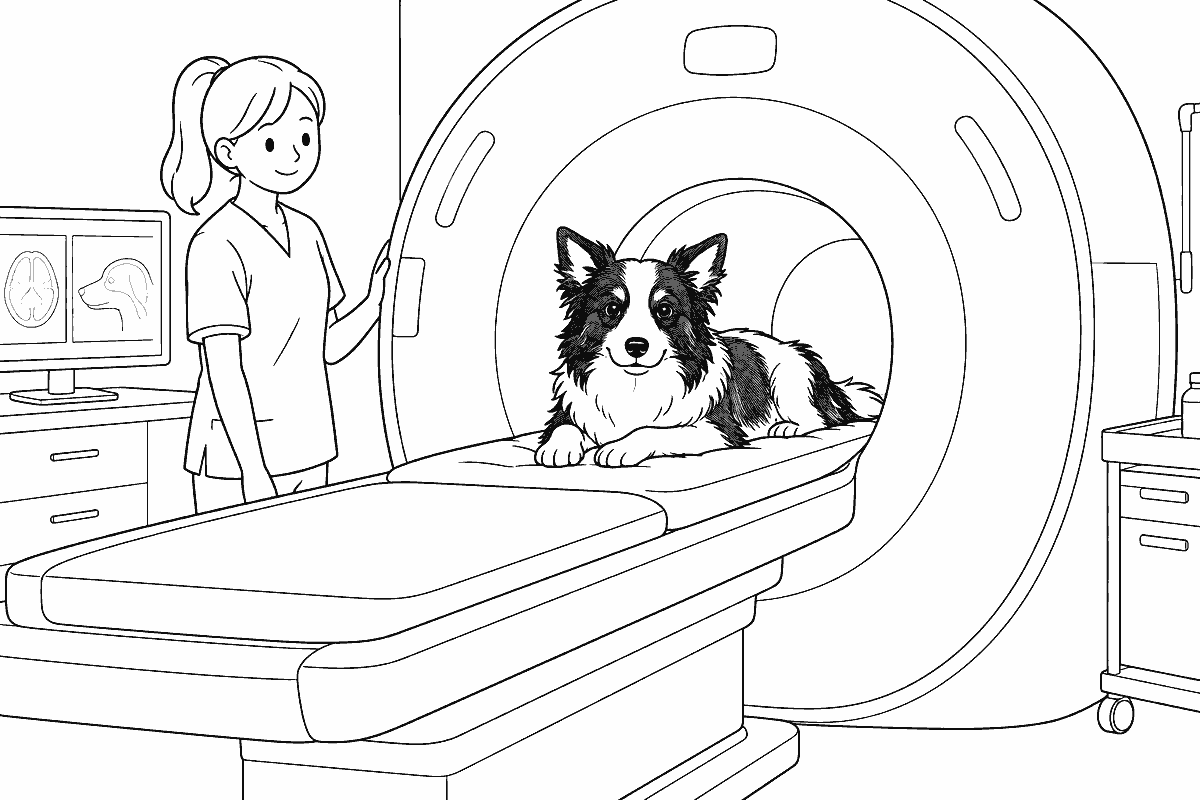
2The researchers worked with trained family dogs. The dogs lay still and awake inside an MRI scanner while they looked at photos of human faces. The scanner recorded which parts of their brains became more active.
3In the first experiment, eight dogs viewed photos of unfamiliar people with happy or neutral expressions. Happy faces caused stronger activity than neutral faces in the temporal cortex and the caudate nucleus. The caudate nucleus is a brain area linked to reward. The researchers said this suggests that smiling faces may carry real emotional meaning for dogs.
4In the second experiment, 12 dogs saw faces showing happiness, anger, fear and sadness. The researchers then used machine learning to look for patterns in the brain activity. The patterns for fear differed from those for anger and sadness. However, the scans did not clearly separate anger from sadness.
5The authors said the results do not necessarily mean that dogs experience emotions as people do. The study used only still photos of faces. In daily life, dogs also rely on body language and tone of voice. The team plans to compare how dogs and humans process the same emotional signals.
Words 単語
| evidenceA2 | 名 | 証拠facts that show something is true |
| distinguishB1 | 動 | 見分ける、区別するto see how two things are different |
| awakeA1 | 形 | 目が覚めて、起きてnot sleeping, with your eyes open |
| unfamiliarB2 | 形 | 見知らぬ、なじみのないnot known to you |
| neutralB1 | 形 | (表情が)無表情の、感情を表さないshowing no strong feeling |
| rewardB1 | 名 | 報酬、ごほうびsomething good you get for doing something |
| machine learningB2 | 名 | 機械学習a way for computers to learn from lots of data |
| separateA2 | 動 | 分ける、区別するto keep things apart from each other |
| necessarilyB2 | 副 | (not と使って)必ずしも~ではないin every case |
| relyB1 | 動 | (rely on で)~に頼るto need and trust something to help you |
単語のレベル:CEFR-J(『CEFR-J Wordlist Version 1.6』 東京外国語大学投野由紀夫研究室. (URL: https://www.cefr-j.org/download.html より 2026年8月ダウンロード))
1. Reading Quiz 本文の内容に合うものを選ぼう
Where do the researchers who did the study work?
A. At a hospital in JapanB. At the University of ViennaC. At a pet shopD. At a zoo in Austria
What did the dogs look at inside the scanner?
A. Photos of human facesB. Videos of their ownersC. Pictures of other dogsD. Moving toys
Which part of the brain is linked to reward?
A. The noseB. The eyesC. The heartD. The caudate nucleus
What did the researchers use to look for patterns in the second experiment?
A. A microscopeB. A survey of dog ownersC. Machine learningD. Dog treats
Which two expressions did the scans NOT clearly separate?
A. Happiness and fearB. Fear and angerC. Anger and sadnessD. Happiness and sadness
2. True or False 正しければ T、違っていれば F
( ) The study was published in the journal iScience.
( ) The dogs were asleep during the scans.
( ) In the first experiment, the dogs saw photos of people they did not know.
( ) The authors said the results prove that dogs feel emotions just like people.
3. Fill in the Blanks 下の語から選んで空らんをうめよう(形を変えずに)
neutralseparateevidenceawakeunfamiliarreward
The caudate nucleus is a brain area linked to _____.
In the first experiment, eight dogs viewed photos of _____ people with happy or neutral expressions.
The team said the findings are the first _____ that dogs can distinguish between specific negative facial expressions.
However, the scans did not clearly _____ anger from sadness.
The dogs lay still and _____ inside an MRI scanner while they looked at photos of human faces.
Happy faces caused stronger activity than _____ faces in the temporal cortex and the caudate nucleus.
4. Word Order 語を並べかえて正しい文にしよう
( study / faces / still / used / of / photos / The / only ) .
( area / reward / caudate / is / The / to / nucleus / a / linked / brain ) .
( differed / The / patterns / fear / and / those / from / for / sadness / for / anger ) .
5. Think and Write 英語で答えてみよう
Do you think animals can understand human emotions? Give an example from your own experience.(動物は人の感情を理解できると思いますか?自分の経験から例を挙げて答えよう。)
The study used only still photos. How would you change the study to make it closer to real life? Explain your idea.(この研究では静止画だけが使われました。もっと実際の生活に近づけるには、研究をどう変えますか?考えを説明しよう。)
Answers 解答
1. (1) B (2) A (3) D (4) C (5) C
2. (1) T (2) F (3) T (4) F
3. (1) reward (2) unfamiliar (3) evidence (4) separate (5) awake (6) neutral
4.
- The study used only still photos of faces.
- The caudate nucleus is a brain area linked to reward.
- The patterns for fear differed from those for anger and sadness.
全文訳
1脳のスキャンから、犬は人のおびえた顔を、怒った顔や悲しい顔と見分けられるかもしれないことがわかりました。この研究は、オーストリアのウィーン大学の研究者たちが中心となって行いました。研究は8月に学術誌『アイサイエンス』に掲載されました。研究チームは、犬がネガティブな表情の種類を見分けられることを示す、初めての証拠だと話しました。
2研究者たちは、訓練を受けた家庭の犬たちと研究を進めました。犬たちは起きたままMRIの中でじっと寝そべり、人の顔の写真を見ました。MRIは、脳のどの部分の働きが強まったかを記録しました。
31つ目の実験では、8匹の犬が、知らない人のうれしそうな顔や無表情の顔の写真を見ました。うれしそうな顔を見ると、無表情の顔のときより、側頭皮質と尾状核という部分の活動が強まりました。尾状核は、報酬(ごほうび)に関わる脳の部分です。研究者たちは、笑顔が犬にとって本当に感情的な意味をもっている可能性がある、と話しました。
42つ目の実験では、12匹の犬が、喜び、怒り、おびえ、悲しみを表す顔を見ました。研究者たちは次に、機械学習を使って脳の活動にパターンがあるかを調べました。おびえた顔のパターンは、怒った顔や悲しい顔のパターンとちがっていました。ただし、怒りと悲しみは、スキャンでははっきり区別できませんでした。
5論文の著者たちは、この結果は犬が人と同じように感情を感じていることを必ずしも意味しない、と話しました。研究で使ったのは、顔の静止画だけでした。ふだんの生活では、犬は体の動きや声の調子にも頼っています。チームは今後、犬と人が同じ感情のサインをどう処理するかを比べる予定です。
文法ポイント:くり返しをさける those(= the+複数名詞)
同じ名詞を2回使わないために、複数形の名詞を those で受ける。本文の The patterns for fear differed from those for anger and sadness. では、those = the patterns。「おびえのパターンは、怒りや悲しみのパターンとちがっていた」という意味になる。単数なら that を使う。
出典:Science News Explores、ScienceDaily(Cell Press の発表)、VIENNA.AT ほか(記事は原田英語の時事英語ジュニアのオリジナル)|https://www.haradaeigo.com/jijieigo-junior/news/2026-10-13-dogs-read-human-faces/