原田英語の時事英語ジュニア|英語ニュース ワークシート(中学生レベル)
Class ____ No. ____ Name ____________________
犬は人の表情を見分ける?“怖がる顔”と“怒った顔”で脳の反応がちがった
Can Dogs Read Our Faces?
1Scientists in Austria have studied how dogs' brains react to human faces. They found that dogs may be able to tell a scared face from an angry face.
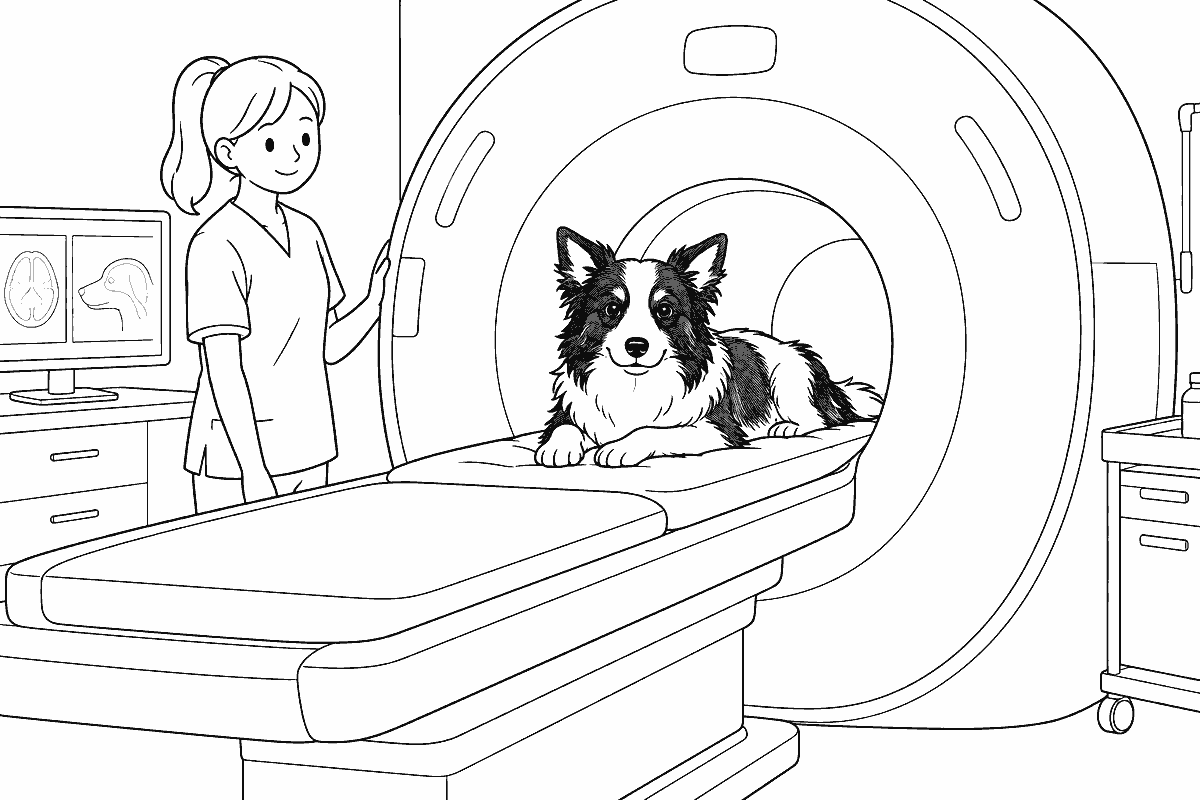
2The dogs in the study were family pets. They were trained to lie still in an MRI scanner while they were awake. Inside the scanner, they looked at photos of people's faces.
3First, eight dogs saw happy faces and neutral faces. The happy faces made one part of the brain more active. This part of the brain is linked to rewards.
4Next, 12 dogs saw happy, angry, sad and scared faces. A computer looked for patterns in their brain activity. The patterns for scared faces were different from those for angry and sad faces. But the patterns for angry and sad faces were not clearly different.
5The scientists said this does not mean dogs feel emotions the same way people do. In daily life, dogs also pay attention to our voices and body language.
Words 単語
| reactB1 | 動 | 反応するto do or feel something because of something else |
| trainedA1 | 動 | 訓練された(train の過去分詞)taught to do something by practicing many times |
| stillA1 | 形 | じっとして動かないnot moving at all |
| awakeA1 | 形 | 目が覚めて、起きてnot sleeping, with your eyes open |
| neutralB1 | 形 | (表情が)ふつうの、気持ちを表さないshowing no strong feeling |
| activeB1 | 形 | 活発な、よく働いているbusy and working a lot |
| rewardsB1 | 名 | ごほうび(reward の複数形)good things you get for doing well |
| patternsB1 | 名 | パターン、決まった形(pattern の複数形)ways that things happen again and again |
単語のレベル:CEFR-J(『CEFR-J Wordlist Version 1.6』 東京外国語大学投野由紀夫研究室. (URL: https://www.cefr-j.org/download.html より 2026年8月ダウンロード))
1. Reading Quiz 本文の内容に合うものを選ぼう
What did the dogs look at in the scanner?
A. Videos of other dogsB. Pictures of foodC. Photos of people's facesD. Their favorite toys
How many dogs saw happy faces and neutral faces first?
A. EightB. TwoC. TwelveD. One hundred
Which faces had brain patterns different from angry and sad faces?
A. Neutral facesB. Happy facesC. Sleepy facesD. Scared faces
What else do dogs pay attention to in daily life?
A. Our phonesB. Our voices and body languageC. The weatherD. Our homework
2. True or False 正しければ T、違っていれば F
( ) The dogs were asleep in the scanner.
( ) The happy faces made one part of the brain more active.
( ) The patterns for angry and sad faces were clearly different.
( ) The dogs in the study were family pets.
3. Fill in the Blanks 下の語から選んで空らんをうめよう(形を変えずに)
activerewardstrainedneutralreactpatterns
They were _____ to lie still in an MRI scanner while they were awake.
The happy faces made one part of the brain more _____.
First, eight dogs saw happy faces and _____ faces.
This part of the brain is linked to _____.
A computer looked for _____ in their brain activity.
Scientists in Austria have studied how dogs' brains _____ to human faces.
4. Word Order 語を並べかえて正しい文にしよう
( dogs / pets / were / study / the / in / family / The ) .
( part / rewards / linked / This / brain / is / of / the / to ) .
( brain / for / patterns / computer / in / A / their / activity / looked ) .
5. Think and Write 英語で答えてみよう
Can you tell how your friends feel from their faces? How?(友だちの気持ちを顔から読み取れますか?どうやってわかりますか?)
Do you think pets understand our feelings? Why do you think so?(ペットは私たちの気持ちがわかっていると思いますか?そう思うのはなぜですか?)
Answers 解答
1. (1) C (2) A (3) D (4) B
2. (1) F (2) T (3) F (4) T
3. (1) trained (2) active (3) neutral (4) rewards (5) patterns (6) react
4.
- The dogs in the study were family pets.
- This part of the brain is linked to rewards.
- A computer looked for patterns in their brain activity.
全文訳
1オーストリアの科学者たちが、人の顔を見たときに犬の脳がどう反応するかを調べました。その結果、犬はこわがっている顔と怒っている顔を見分けられるかもしれないことがわかりました。
2この研究に参加した犬たちは、家族と暮らすペットでした。犬たちは、起きたままMRIという機械の中でじっと寝そべっていられるように練習しました。そして機械の中で、人の顔の写真を見ました。
3まず、8ぴきの犬が、うれしそうな顔と、ふつうの顔を見ました。うれしそうな顔を見ると、脳のある部分がより活発に働きました。それは、ごほうびに関係のある部分です。
4次に、12ひきの犬が、うれしそうな顔、怒った顔、悲しそうな顔、こわがっている顔を見ました。コンピューターが、犬の脳の働き方にパターンがあるかを調べました。こわがっている顔を見たときのパターンは、怒った顔や悲しそうな顔のときとちがっていました。でも、怒った顔と悲しそうな顔のパターンには、はっきりしたちがいがありませんでした。
5科学者たちは、これは犬が人と同じように気持ちを感じているという意味ではない、と話しました。ふだんの生活では、犬は私たちの声や体の動きにも注意を向けています。
文法ポイント:受け身(be動詞 + 過去分詞)
be動詞 + 過去分詞で「~される」。本文の They were trained to lie still は「犬たちは、じっと寝そべるように訓練された」という意味。過去のことなので be動詞は were になっている。
出典:Science News Explores、ScienceDaily(Cell Press の発表)、VIENNA.AT ほか(記事は原田英語の時事英語ジュニアのオリジナル)|https://www.haradaeigo.com/jijieigo-junior/news/2026-10-13-dogs-read-human-faces/