原田英語の時事英語ジュニア|英語ニュース ワークシート(中学生レベル)
Class ____ No. ____ Name ____________________
アルテミス2号が月を回って帰還 人類が最も遠くまで行った新記録
Back from the Moon
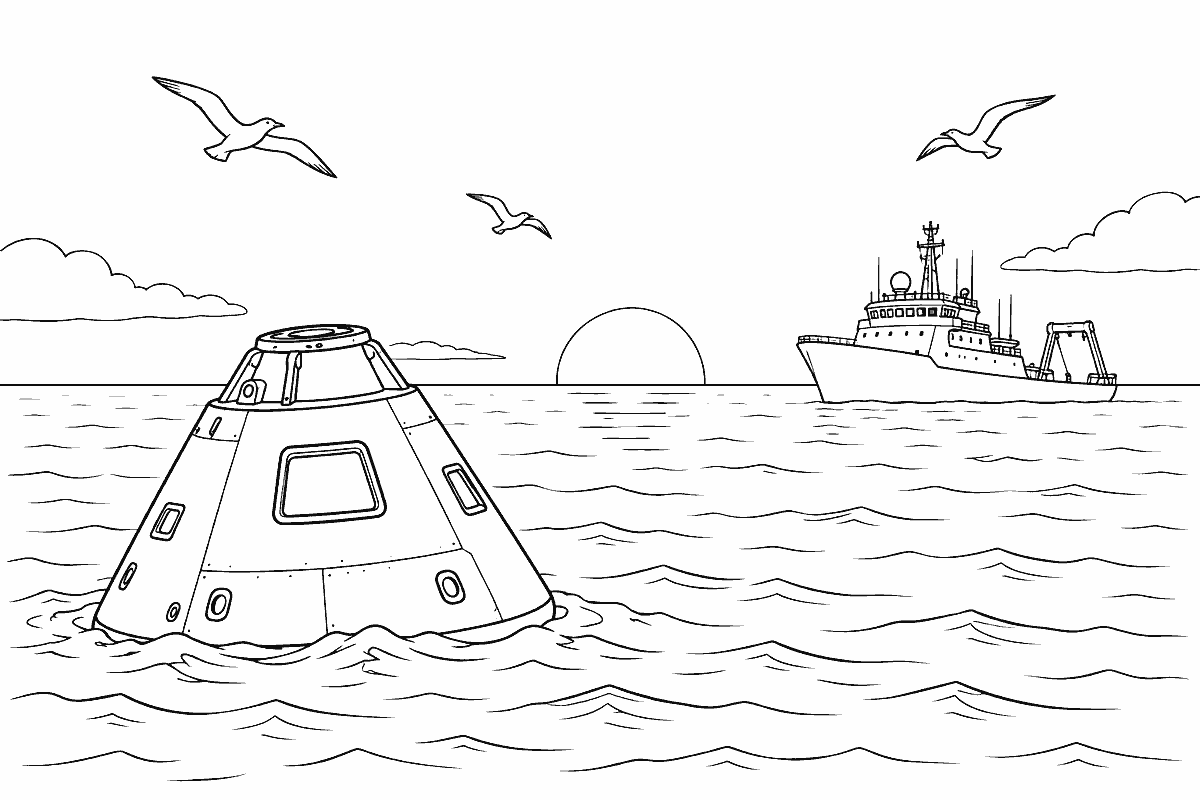
1Four astronauts came back to Earth on April 10, 2026, after a trip around the Moon. Their spacecraft landed in the Pacific Ocean near San Diego, California. The mission was called Artemis II.
2It was the first time in more than 50 years that people flew to the Moon. The rocket left Florida on April 1, and the trip took almost 10 days.
3On April 6, the crew went farther from Earth than any people before them. At the farthest point, they were about 406,000 kilometers from Earth. They also saw parts of the far side of the Moon with their own eyes.
4The crew had three Americans and one Canadian. Christina Koch became the first woman to fly around the Moon. NASA is now aiming to land astronauts on the Moon in 2028.
Words 単語
| astronautsA2 | 名 | 宇宙飛行士people who travel into space |
| tripA1 | 名 | 旅行、旅a journey to a place and back |
| oceanB1 | 名 | 海、大洋a very large area of salt water |
| missionB1 | 名 | 任務、ミッションan important job or flight with a clear goal |
| crewB2 | 名 | 乗組員the people who work together on a ship or spacecraft |
| fartherB1 | 副 | もっと遠くへ(far の比較級)to a place that is more distant |
| far sideA2 | 名 | (月の)裏側the side of the moon we cannot see from Earth |
| aimingB1 | 動 | めざしている(aim の ing 形)trying hard to reach a goal |
単語のレベル:CEFR-J(『CEFR-J Wordlist Version 1.6』 東京外国語大学投野由紀夫研究室. (URL: https://www.cefr-j.org/download.html より 2026年8月ダウンロード))
1. Reading Quiz 本文の内容に合うものを選ぼう
Where did the spacecraft land?
A. In FloridaB. In the Pacific Ocean near San DiegoC. On the MoonD. In Canada
How long did the trip take?
A. Almost 10 daysB. About 50 daysC. One dayD. About six months
What happened on April 6?
A. The rocket left Florida.B. The crew landed on the Moon.C. The crew went farther from Earth than any people before them.D. The spacecraft landed in the ocean.
Who became the first woman to fly around the Moon?
A. A Canadian astronautB. A Japanese astronautC. No oneD. Christina Koch
2. True or False 正しければ T、違っていれば F
( ) Four astronauts went on the Artemis II mission.
( ) The astronauts walked on the Moon.
( ) The crew saw parts of the far side of the Moon.
( ) All four astronauts were from the United States.
3. Fill in the Blanks 下の語から選んで空らんをうめよう(形を変えずに)
aimingcrewtripmissionastronautsOcean
NASA is now _____ to land astronauts on the Moon in 2028.
The rocket left Florida on April 1, and the _____ took almost 10 days.
The _____ was called Artemis II.
Their spacecraft landed in the Pacific _____ near San Diego, California.
On April 6, the _____ went farther from Earth than any people before them.
Four _____ came back to Earth on April 10, 2026, after a trip around the Moon.
4. Word Order 語を並べかえて正しい文にしよう
( was / Artemis / The / mission / called / II ) .
( crew / one / Americans / three / The / and / Canadian / had ) .
( woman / the / to / the / around / Moon / fly / first / became / Koch / Christina ) .
5. Think and Write 英語で答えてみよう
Would you like to travel around the Moon? Why or why not?(月を回る旅をしてみたい?その理由は?)
What would you take with you on a 10-day trip in space?(10日間の宇宙の旅に、何を持っていく?)
Answers 解答
1. (1) B (2) A (3) C (4) D
2. (1) T (2) F (3) T (4) F
3. (1) aiming (2) trip (3) mission (4) Ocean (5) crew (6) astronauts
4.
- The mission was called Artemis II.
- The crew had three Americans and one Canadian.
- Christina Koch became the first woman to fly around the Moon.
全文訳
12026年4月10日、4人の宇宙飛行士が月を回る旅から地球に帰ってきました。宇宙船は、アメリカ・カリフォルニア州サンディエゴ沖の太平洋に着水しました。このミッションの名前は「アルテミス2号」です。
2人が月まで飛んだのは、50年以上ぶりのことでした。ロケットは4月1日にフロリダ州から飛び立ち、旅は10日近くかかりました。
34月6日、乗組員はこれまでのだれよりも地球から遠くへ行きました。いちばん遠いところでは、地球から約40万6000キロメートルはなれていました。月の裏側の一部も、自分たちの目で見ました。
4乗組員は、アメリカ人3人とカナダ人1人でした。クリスティーナ・コックさんは、月を回った初めての女性になりました。NASAはいま、2028年に宇宙飛行士を月に着陸させることをめざしています。
文法ポイント:比較級 + than any ~(どの~よりも…)
「比較級 + than any + 名詞」で「どの~よりも…」と、実質的に「いちばん」を表す。本文の went farther from Earth than any people before them は「それまでのどの人たちよりも地球から遠くへ行った」という意味。
出典:NASA、Al Jazeera、Universe Today、NBC News (via NBC10 Philadelphia) ほか(記事は原田英語の時事英語ジュニアのオリジナル)|https://www.haradaeigo.com/jijieigo-junior/news/2026-04-11-artemis-ii-crew-returns/