原田英語の時事英語ジュニア|英語ニュース ワークシート(高校生レベル)
Class ____ No. ____ Name ____________________
ノーベル賞に坂口志文さんと北川進さん 制御性T細胞とMOFってなに?
Japan Celebrates Two Nobel Laureates in One Week
1Two Japanese researchers won Nobel Prizes within three days in October 2025. On October 6, Shimon Sakaguchi, a 74-year-old professor at Osaka University, was named one of three winners of the prize in physiology or medicine. Two days later, Susumu Kitagawa of Kyoto University, also 74, shared the chemistry prize with two other scientists.
2Sakaguchi's work explains why the immune system usually does not attack the body's own tissues. In the 1980s, he found that certain T cells from healthy mice could protect other mice from this kind of attack. In 1995, he identified a marker for these cells, which became known as regulatory T cells. Many scientists doubted the idea at first.
3Sakaguchi shared the prize with Mary Brunkow and Fred Ramsdell of the United States, who found a key gene called Foxp3. Sakaguchi later showed that this gene is essential for regulatory T cells. A member of the Nobel committee said more than 200 clinical trials now involve these cells, including work on autoimmune diseases, cancer and organ transplants.
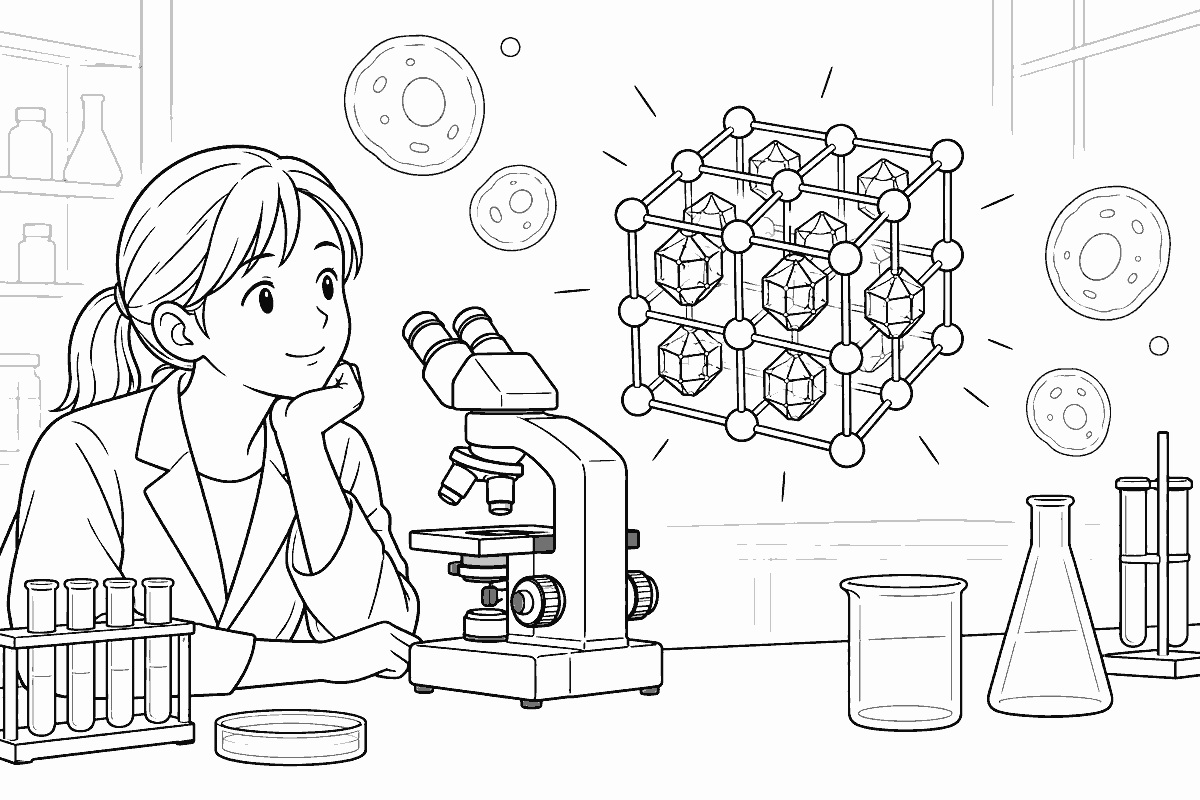
4Kitagawa was honored for developing metal-organic frameworks, or MOFs, together with Richard Robson of the University of Melbourne in Australia and Omar Yaghi of the University of California, Berkeley. In these crystals, long molecules made mainly of carbon join metal ions together and leave large empty spaces inside. Gases and other substances can move through these gaps. Kitagawa said it was hard work to make the frameworks both stable and flexible.
5Since then, chemists have made tens of thousands of kinds of MOFs. They are being tested to pull water from desert air, capture carbon dioxide, store hydrogen, and remove harmful chemicals from water. Kitagawa is the ninth Japanese winner of the chemistry prize and the first since Akira Yoshino in 2019. Each prize was worth 11 million Swedish kronor, shared equally by the three winners.
Words 単語
| researcherB1 | 名 | 研究者a person who studies something to find new facts |
| tissueB1 | 名 | (体の)組織a group of cells that make up body parts |
| autoimmune diseaseB1 | 名 | 自己免疫疾患an illness in which the body attacks itself |
| identifiedB2 | 動 | 特定した、見分けたfound and showed what something is |
| doubtedA2 | 動 | 疑ったdid not believe something was true |
| essentialB1 | 形 | 欠かせない、不可欠なvery important and really needed |
| clinical trialB2 | 名 | 臨床試験a test of a new treatment on people |
| honoredA2 | 動 | たたえられる、表彰される(honor の過去分詞)given praise or a prize for good work |
| flexibleB2 | 形 | しなやかな、柔軟なable to bend or change easily |
| captureB1 | 動 | とらえる、回収するto catch and hold something |
単語のレベル:CEFR-J(『CEFR-J Wordlist Version 1.6』 東京外国語大学投野由紀夫研究室. (URL: https://www.cefr-j.org/download.html より 2026年8月ダウンロード))
1. Reading Quiz 本文の内容に合うものを選ぼう
How many days apart were the two announcements?
A. One dayB. Two daysC. One weekD. One month
What did Sakaguchi identify in 1995?
A. A new planetB. A cancer drugC. A marker for regulatory T cellsD. A gene called Foxp3
How did many scientists react to Sakaguchi's idea at first?
A. They doubted it.B. They gave him a prize at once.C. They copied it.D. They ignored the mice.
What joins the metal ions together in MOFs?
A. Steel wiresB. Water dropsC. Glass tubesD. Long molecules made mainly of carbon
Who was the last Japanese chemistry winner before Kitagawa?
A. Akira YoshinoB. Omar YaghiC. Richard RobsonD. Fred Ramsdell
2. True or False 正しければ T、違っていれば F
( ) Sakaguchi and Kitagawa were both 74 years old.
( ) Brunkow and Ramsdell are from Australia.
( ) Fewer than ten kinds of MOFs have been made.
( ) The prize money was shared equally by the three winners.
3. Fill in the Blanks 下の語から選んで空らんをうめよう(形を変えずに)
identifiedtissuesdoubtedhonoredessentialresearchers
Two Japanese _____ won Nobel Prizes within three days in October 2025.
Kitagawa was _____ for developing metal-organic frameworks, or MOFs, together with Richard Robson of the University of Melbourne in Australia and Omar Yaghi of the University of California, Berkeley.
Sakaguchi later showed that this gene is _____ for regulatory T cells.
Sakaguchi's work explains why the immune system usually does not attack the body's own _____.
In 1995, he _____ a marker for these cells, which became known as regulatory T cells.
Many scientists _____ the idea at first.
4. Word Order 語を並べかえて正しい文にしよう
( first / scientists / at / doubted / idea / the / Many ) .
( gaps / these / other / move / and / Gases / substances / through / can ) .
( chemists / have / of / kinds / made / of / thousands / of / MOFs / then, / tens / Since ) .
5. Think and Write 英語で答えてみよう
Sakaguchi's idea was doubted at first. Why is it important to keep going when others doubt you?(坂口さんの考えは最初は疑われていました。人に疑われてもやり続けることが大切なのはなぜでしょう?)
Which use of MOFs do you think is most important for the future? Explain your choice.(MOFの使い道のうち、未来にとっていちばん大切だと思うのはどれですか?理由を説明しよう。)
Answers 解答
1. (1) B (2) C (3) A (4) D (5) A
2. (1) T (2) F (3) F (4) T
3. (1) researchers (2) honored (3) essential (4) tissues (5) identified (6) doubted
4.
- Many scientists doubted the idea at first.
- Gases and other substances can move through these gaps.
- Since then, chemists have made tens of thousands of kinds of MOFs.
全文訳
12025年10月、日本の研究者2人が3日のうちに相次いでノーベル賞に選ばれました。10月6日、大阪大学の坂口志文教授(74)が、生理学・医学賞の3人の受賞者の1人に選ばれました。その2日後には、同じく74歳の京都大学の北川進教授が、ほかの2人の科学者とともに化学賞に選ばれました。
2坂口さんの研究は、免疫のしくみがふだん自分の体の組織を攻撃しない理由を説明するものです。1980年代、坂口さんは、健康なマウスから取ったある種のT細胞が、別のマウスをこうした攻撃から守れることを見つけました。1995年にはこの細胞の目印を特定し、その細胞は制御性T細胞として知られるようになりました。最初は、多くの科学者がこの考えを疑っていました。
3坂口さんは、カギとなる遺伝子Foxp3を見つけたアメリカのメアリー・ブランコウさんとフレッド・ラムズデルさんと共同で受賞しました。坂口さんはその後、この遺伝子が制御性T細胞に欠かせないことを示しました。ノーベル賞の選考委員の1人によると、自己免疫疾患やがん、臓器移植の研究など、200を超える臨床試験でこの細胞が使われています。
4北川さんは、オーストラリアのメルボルン大学のリチャード・ロブソンさん、アメリカのカリフォルニア大学バークレー校のオマー・ヤギーさんとともに、金属有機構造体(MOF)の開発で評価されました。この結晶では、炭素を中心とする長い分子が金属イオンどうしをつなぎ、内部に大きなすき間をつくります。気体などの物質が、そのすき間を通り抜けられます。北川さんは、この構造を安定させ、しかもしなやかにするのは大変だったと話しました。
5それ以来、化学者たちは何万種類ものMOFをつくってきました。砂漠の空気から水を取り出したり、二酸化炭素を回収したり、水素をためたり、水から有害な化学物質を取り除いたりする使い道が試されています。北川さんは化学賞を受賞した9人目の日本人で、2019年の吉野彰さん以来の受賞です。それぞれの賞金は1100万スウェーデン・クローナで、3人の受賞者で等しく分けられました。
文法ポイント:現在進行形の受け身(be being + 過去分詞)
「~されているところだ」を表す。本文の They are being tested to pull water from desert air. は「砂漠の空気から水を取り出すために試されているところだ」という意味。
出典:STAT、Jiji Press(Adnkronos 転載)、Physics World、Jiji Press(Adnkronos 転載) ほか(記事は原田英語の時事英語ジュニアのオリジナル)|https://www.haradaeigo.com/jijieigo-junior/news/2025-10-08-japan-two-nobel-prizes/