原田英語の時事英語ジュニア|英語ニュース ワークシート(高校生レベル)
Class ____ No. ____ Name ____________________
「ドラゴンマン」の正体はデニソワ人!ナゾの人類の顔がついに判明
How Ancient Tooth Tartar Solved a Human Puzzle
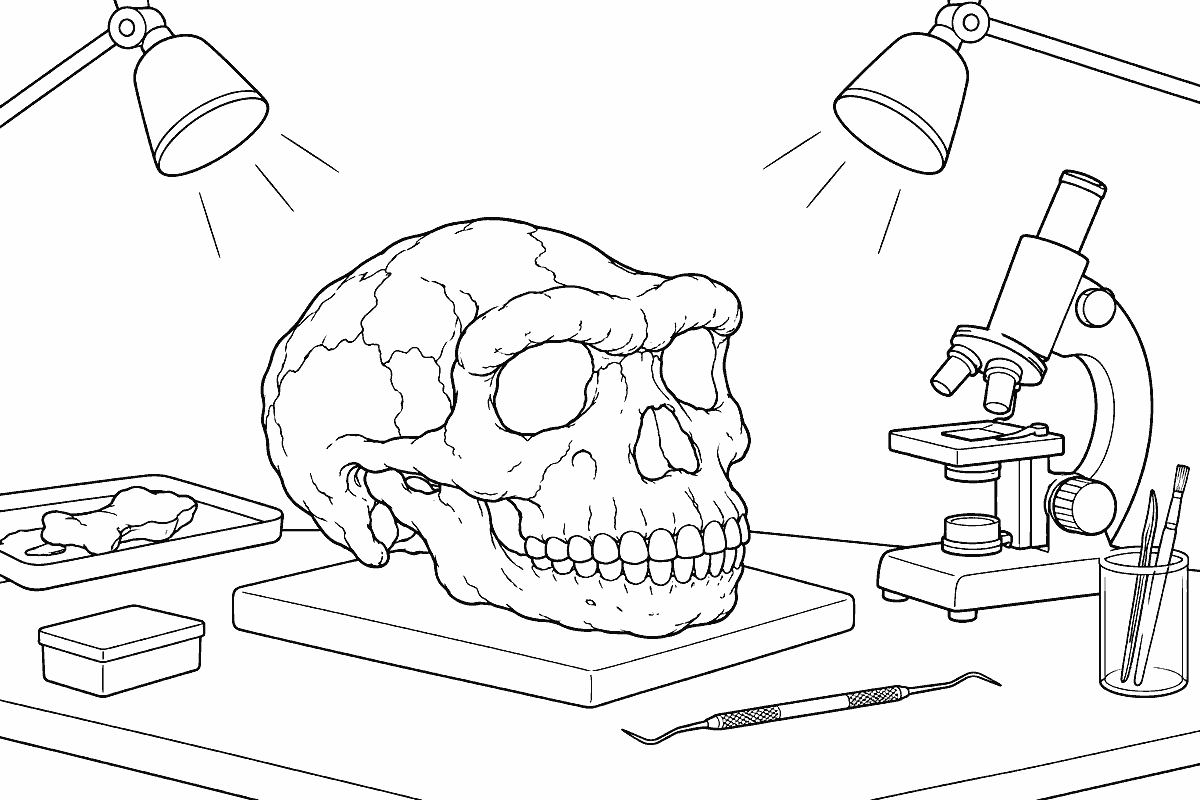
1Chinese scientists said in June 2025 that a nearly complete skull found in Harbin, in northeast China, belonged to a Denisovan. The finding gives this little-known group of ancient humans a face for the first time. The team, led by paleogeneticist Fu Qiaomei, published two studies in the journals Science and Cell.
2Scientists first identified Denisovans more than a decade ago from DNA in a tiny finger bone from a Siberian cave. They later learned that Denisovans mixed with our own species. However, only a few small fossils, such as a jawbone and a rib, had been linked to the group. Protein studies had connected two jawbones to the Denisovans, one from the Tibetan Plateau and one from the sea floor near Taiwan.
3The Harbin skull is at least 146,000 years old and is nicknamed Dragon Man. It was found almost a century ago and was later described as a new species, Homo longi. Getting DNA out of the bone itself proved impossible, so the researchers tried two other routes. First, they extracted ancient proteins and found three variants known only in Denisovans. Second, they recovered genetic material from hardened tartar on the teeth, which matched an early Denisovan line from Siberia.
4The results suggest that Denisovans lived across a huge area. Their range stretched from Siberia to northeast China. One outside expert wants more protein evidence. He also worries that modern DNA from people handling the skull could have mixed in.
Words 単語
| belongedA2 | 動 | (~の)ものだったwas part of a certain group |
| identifiedB2 | 動 | 特定した、確認したfound out and showed what something is |
| speciesB2 | 名 | 種(しゅ)a group of living things of the same kind |
| nearly completeA2 | 句 | ほぼ完全なalmost whole, with very few parts missing |
| fossils外 | 名 | 化石very old remains of animals or plants kept in rock |
| extractedB2 | 動 | 取り出した、抽出したtook something out with special tools or methods |
| variants外 | 名 | 変異、変わった型forms that are a little different from others |
| tartar外 | 名 | 歯石a hard material that builds up on teeth |
| suggestA2 | 動 | (~ということを)示すto show that something is probably true |
| evidenceA2 | 名 | 証拠facts or signs that show something is true |
単語のレベル:CEFR-J(『CEFR-J Wordlist Version 1.6』 東京外国語大学投野由紀夫研究室. (URL: https://www.cefr-j.org/download.html より 2026年8月ダウンロード))
1. Reading Quiz 本文の内容に合うものを選ぼう
How were the Denisovans first identified?
A. From cave paintingsB. From DNA in a finger boneC. From a complete skeletonD. From stone tools
What was the Harbin skull described as before this study?
A. A NeanderthalB. A modern humanC. A new species, Homo longiD. An ape
Why did the researchers try other routes?
A. Getting DNA from the bone itself was impossible.B. The skull was too heavy to move.C. They did not have permission.D. The teeth were missing.
According to the results, where did Denisovans live?
A. Only in one small caveB. Only in AfricaC. On islands in the PacificD. Across a huge area from Siberia to northeast China
What does one outside expert worry about?
A. The skull may be fake.B. Modern DNA may have mixed in.C. The journals made printing mistakes.D. The teeth were too clean.
2. True or False 正しければ T、違っていれば F
( ) The two studies were published in Science and Cell.
( ) The Harbin skull was discovered only last year.
( ) The team found three protein variants known only in Denisovans.
( ) Every expert accepts the results without question.
3. Fill in the Blanks 下の語から選んで空らんをうめよう(形を変えずに)
extractedidentifiedfossilstartarbelongedspecies
They later learned that Denisovans mixed with our own _____.
Second, they recovered genetic material from hardened _____ on the teeth, which matched an early Denisovan line from Siberia.
However, only a few small _____, such as a jawbone and a rib, had been linked to the group.
Chinese scientists said in June 2025 that a nearly complete skull found in Harbin, in northeast China, _____ to a Denisovan.
First, they _____ ancient proteins and found three variants known only in Denisovans.
Scientists first _____ Denisovans more than a decade ago from DNA in a tiny finger bone from a Siberian cave.
4. Word Order 語を並べかえて正しい文にしよう
( evidence / One / protein / expert / outside / wants / more ) .
( mixed / our / species / with / Denisovans / They / later / that / own / learned ) .
( area / huge / results / across / The / suggest / a / Denisovans / lived / that ) .
5. Think and Write 英語で答えてみよう
Our species once shared the Earth with other kinds of humans. Why do you think only we survived?(私たちの種は、かつて別の種類の人類と地球をいっしょに使っていました。なぜ私たちだけが生き残ったと思いますか?)
Should new fossil discoveries change the names that scientists have already given? Explain your view.(新しい化石の発見によって、科学者がすでにつけた名前を変えるべきでしょうか?あなたの考えを説明しよう。)
Answers 解答
1. (1) B (2) C (3) A (4) D (5) B
2. (1) T (2) F (3) T (4) F
3. (1) species (2) tartar (3) fossils (4) belonged (5) extracted (6) identified
4.
- One outside expert wants more protein evidence.
- They later learned that Denisovans mixed with our own species.
- The results suggest that Denisovans lived across a huge area.
全文訳
12025年6月、中国の科学者たちが、中国北東部のハルビンで見つかったほぼ完全な頭骨はデニソワ人のものだったと発表しました。この発見によって、あまり知られていないこの古代人類のグループに、初めて「顔」が与えられました。古遺伝学者の付巧妹(フー・チャオメイ)さんが率いるチームは、学術誌「サイエンス」と「セル」に2本の研究を発表しました。
2科学者が初めてデニソワ人を確認したのは10年以上前のことで、シベリアの洞窟で見つかった小さな指の骨のDNAからでした。その後、デニソワ人が私たちの種と交わっていたこともわかりました。しかし、このグループのものとされていた化石は、あごの骨やあばら骨など、小さなものがわずかにあるだけでした。タンパク質の研究から、チベット高原で見つかったあごの骨と、台湾近くの海底から引き上げられたあごの骨の2つが、デニソワ人のものとされていました。
3ハルビンの頭骨は少なくとも14万6000年前のもので、「ドラゴンマン」と呼ばれています。100年近く前に見つかり、のちに新しい種「ホモ・ロンギ」として発表されていました。骨そのものからDNAを取り出すことはできなかったため、研究者たちはほかに2つの方法を試しました。まず、古代のタンパク質を取り出し、デニソワ人にしか知られていない3つの変異を見つけました。次に、歯にこびりついた歯石から遺伝物質を取り出したところ、シベリアの初期のデニソワ人の系統と一致しました。
4この結果は、デニソワ人がとても広い地域に住んでいたことを示しています。その範囲はシベリアから中国北東部にまで広がっていました。研究に加わっていない専門家の1人は、タンパク質の証拠がもっと必要だと考えています。頭骨にさわった現代人のDNAが混じった可能性も心配しています。
文法ポイント:過去分詞の後置修飾(名詞 + 過去分詞 ...)
過去分詞のかたまりが後ろから名詞を説明し、「~された…」の意味になる。本文の a nearly complete skull found in Harbin は「ハルビンで見つかったほぼ完全な頭骨」。the team, led by ... も同じ形。
出典:Science News、Chinese Academy of Sciences ほか(記事は原田英語の時事英語ジュニアのオリジナル)|https://www.haradaeigo.com/jijieigo-junior/news/2025-06-18-harbin-skull-denisovan/