yakuza
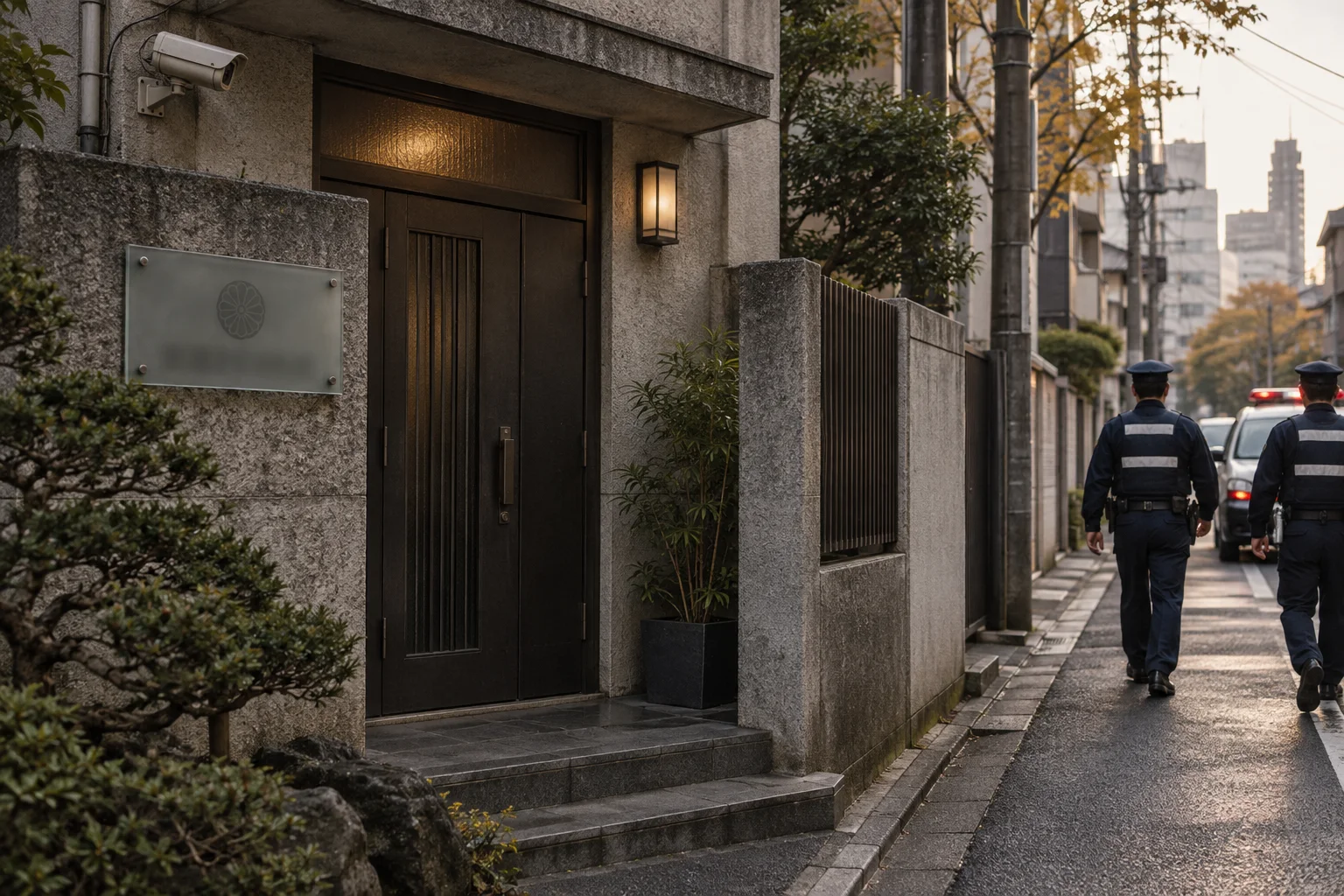
organized crime in Japan, and why the offices have nameplates
ヤクザ(やくざ)
In one line
The shortest answer that works
Japan's organized crime groups, which are not banned outright but are designated by name and restricted by law.
日本の組織犯罪の集団です。非合法とされているのではなく、名指しで指定され、法律で規制されています。
In 30 seconds
The standard explanation
The legal term is boryokudan; yakuza is the everyday word. Unlike a mafia elsewhere, belonging to one is not in itself a crime, so the groups have offices, nameplates and business cards. Since 1992 the police designate the main groups by name and restrict what they may do, and since around 2011 prefectural ordinances have made it an offense for ordinary businesses to pay them. Police figures show membership falling for about two decades.
法律上の言葉は暴力団で、ヤクザは日常の言い方です。よその国の犯罪組織と違い、所属すること自体は犯罪ではありません。ですから事務所があり、表札が出ていて、名刺もあります。1992年から警察が主な団体を名指しで指定して活動を制限し、2011年ごろからは各都道府県の条例で、一般の事業者が金を払うこと自体が違反になりました。警察の統計では、構成員は20年ほど減り続けています。
As a short speech
A full paragraph you can read aloud
The thing foreign visitors find hardest to believe about the yakuza is that the groups are not illegal. Belonging to one is not in itself a crime, so the main organizations have headquarters with a nameplate on the door, and members have historically carried business cards. What Japan did instead of banning them was to name them and restrict them.
A law that took effect in 1992 lets the police designate the major groups, and once designated, demanding protection money or forcing a business deal becomes separately punishable. Then, by around 2011, every prefecture had an exclusion ordinance, which flipped the pressure onto the rest of society: it became an offense for a company or a citizen to pay them or provide a benefit.
That is why banks will not open accounts, landlords will not rent, and contracts routinely include a clause about it. The effect is measurable. At the peak in 1963 the police counted about 184,000 members and associates. At the end of 2024 the figure was 18,800, the twentieth straight annual fall, with full members under ten thousand for the first time.
外国から来た人がヤクザについて最も信じがたいのは、団体そのものが違法ではないという点です。所属すること自体は犯罪ではありません。ですから主な組織には表札の出た本部があり、構成員が名刺を持っていた時代もありました。日本が取ったのは、禁止するかわりに、名指しして規制するやり方でした。1992年に施行された法律で、警察は主な団体を指定できます。
指定されると、みかじめ料を求める、取引を強いるといった行為が、それ自体として処罰の対象になります。さらに2011年ごろまでに、すべての都道府県が暴力団排除条例を持ちました。これは圧力の向きを社会の側に変えるものでした。企業や個人が金を払ったり便宜を図ったりすること自体が違反になったのです。
銀行が口座を開かず、大家が部屋を貸さず、契約書にたいていその条項が入るのは、このためです。効果は数字に出ています。最も多かった1963年、警察の数えた構成員と準構成員はおよそ18万4千人。2024年末は1万8,800人で、20年続けての減少、構成員は初めて1万人を割りました。
Questions people actually ask
And how to answer them.
Will I run into them as a tourist?
Very unlikely. They do not usually approach ordinary visitors, and violence involving members is mostly directed at other members.
まずありません。ふつうの旅行者に近づいてくることはほとんどなく、暴力は主に組織どうしのあいだで起きています。
Why are they allowed to exist at all?
Japan has no law banning membership of a criminal organization as such. The approach has been to designate groups, restrict what they can do, and make it illegal for society to do business with them.
日本には、犯罪組織に属すること自体を禁じる法律がありません。団体を指定し、できることを制限し、社会の側が取引すること自体を違法にする、というやり方を取ってきました。
Is this why onsen ban tattoos?
It is one of the main reasons usually given: large tattoos were associated with organized crime, so many baths excluded them, and some also cite other guests' discomfort. Many facilities are now relaxing the rule, but it is still wise to check in advance.
よく挙げられる主な理由の一つです。大きな入れ墨が暴力団と結びつけられていたため、多くの浴場が断ってきました。ほかの客が不安に思うことを理由に挙げる施設もあります。いまは規則を緩める施設が増えていますが、事前に確かめるのが無難です。
A common misunderstanding
MYTHThe yakuza are a criminal organization outlawed like a foreign mafia.
FACTMembership is not in itself a crime in Japan. Groups are designated by name and constrained by law, and offices with nameplates exist openly.
Phrases you can use
- Belonging to one isn't a crime in itself here.日本では所属すること自体は犯罪ではありません。
- That's why the offices have nameplates on the door.だから事務所に表札が出ています。
- The police designate the main groups by name.警察が主な団体を名指しで指定します。
- It's illegal for a business to pay them.事業者が金を払うこと自体が違反です。
- Their numbers have been falling for about twenty years.人数は20年ほど減り続けています。
Words you need
- organized crime group暴力団
- designated group指定暴力団
- exclusion ordinance暴力団排除条例
- protection moneyみかじめ料
- leaving the organization離脱
Watch
From YouTubeBackground (Japanese)
警察庁の統計では、暴力団構成員・準構成員等は1963年(昭和38年)の約18万4千人をピークに減り続け、2024年末は1万8,800人で20年連続の減少、構成員は初めて1万人を割った。暴力団員による不当な行為の防止等に関する法律(暴対法)は1991年に成立し1992年に施行、指定暴力団の制度を設けた。暴力団排除条例は2010年から2011年にかけて全都道府県で施行され、東京都と沖縄県が2011年10月で最後だった。組織を離れた人が銀行口座を作れないなど、社会復帰の難しさが課題として指摘されている。