onsen to tatu
why tattoos can get you refused at a bath
温泉とタトゥー(おんせんとたとぅー)
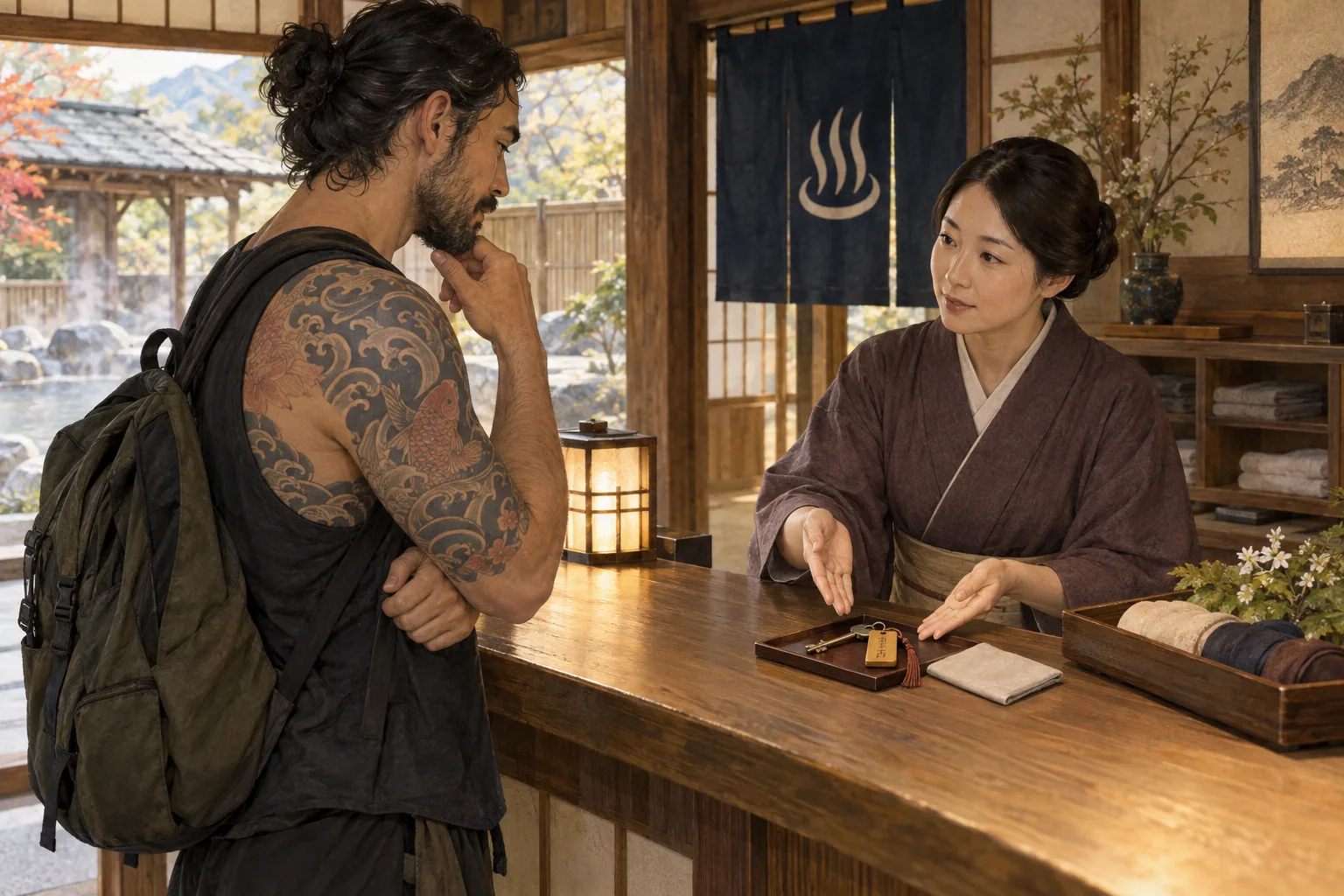
In one line
The shortest answer that works
Onsen to tatu, or hot springs and tattoos, is an issue: many baths refuse tattoos, long linked to organized crime.
温泉とタトゥーとは、入れ墨が長く暴力団と結びついていたため、多くの浴場がタトゥーのある人を断っている問題です。
In 30 seconds
The standard explanation
Signs at hot springs, public baths, pools and gyms often say no tattoos. The main reason usually given is historical: in Japan, full-body tattoos have been strongly associated with organized crime, and a tattoo rule was a simple way to keep those groups out. The rule now also affects tourists with small tattoos; some people see this as too broad, while some operators say other guests still feel uneasy. Policies are slowly changing.
温泉・銭湯・プール・ジムには「タトゥーお断り」の掲示がよくあります。よく挙げられる理由は歴史的なもので、日本では全身の入れ墨が暴力団と強く結びついており、入れ墨を断る決まりは、そうした団体を遠ざける簡単な方法でした。今はそれが小さなタトゥーの旅行者にも及んでおり、範囲が広すぎるという意見がある一方、ほかの客がいまも不安に思うと話す施設もあります。方針は少しずつ変わりつつあります。
As a short speech
A full paragraph you can read aloud
If you have a tattoo, know this before visiting a Japanese bath. Many hot springs, public baths, swimming pools and gyms display a sign saying that people with tattoos may not enter. Visitors often assume this is aimed at foreigners, and it is not.
In Japan, large tattoos have long been associated with organized crime, and because staff cannot tell who belongs to such a group, a tattoo rule became a simple way to keep them out. Many people feel this is too broad for a tourist with a small design on their shoulder, while some operators say other guests still feel uneasy.
The rule is loosening: some places allow tattoos covered with a patch, some offer a private bath, and some have dropped the rule. Check the website before you go, or ask at the front desk.
タトゥーがあるなら、日本の風呂に行く前にこれを知っておいてください。多くの温泉・銭湯・プール・ジムに「入れ墨のある方はご遠慮ください」という掲示があります。外国人向けの規則だと思われがちですが、違います。
日本では大きな入れ墨が長く暴力団と結びつけられてきました。誰がそうした団体に属しているかを受付では見分けられないため、入れ墨を断る決まりが、遠ざけるための簡単な方法になったのです。
肩に小さな図柄がある旅行者にまで及ぶのは広すぎるという意見がある一方、ほかの客がいまも不安に思うと話す施設もあります。規則はゆるみつつあり、シールで隠せば入れる施設、貸切風呂を案内する施設、規則をやめた施設もあります。行く前にサイトで確認するか、受付で聞いてください。
Questions people actually ask
And how to answer them.
Is this discrimination against foreigners?
It is not aimed at foreigners. The rule applies to Japanese people with tattoos as well and grew out of concerns about organized crime, although critics say a blanket ban cannot tell a gang member from a tourist.
外国人を狙ったものではありません。日本人のタトゥーにも同じ規則が適用され、暴力団への警戒から生まれたものです。ただ、一律に禁じると組員と旅行者を区別できない、という批判もあります。
Will a cover-up sticker work?
At many places, yes. Waterproof patches are sold at convenience stores and pharmacies. Some facilities state on their website that covered tattoos are acceptable.
多くの施設で通ります。防水シールはコンビニや薬局で買えます。隠せば可、とサイトに明記している施設もあります。
Is anything changing?
Slowly. The Japan Tourism Agency has asked operators to consider accepting tattooed visitors, and some hotels and onsen towns have changed their policy, while opinion among Japanese customers remains mixed.
少しずつ変わっています。観光庁が受け入れの検討を呼びかけ、方針を変えたホテルや温泉地もありますが、日本の利用客の意見はさまざまです。
A common misunderstanding
MYTHJapan bans tattoos because Japanese people find them ugly.
FACTThe rules grew mainly out of links with organized crime, though some operators also cite other guests' discomfort. Japan also has a long tattoo tradition, and its tattoo artists are well known abroad.
Phrases you can use
- Some baths don't allow tattoos — it's worth checking first.タトゥー不可の浴場もあるので、先に確認したほうがいいです。
- At many places you can cover it with a waterproof patch.多くの施設では、防水シールで隠せば大丈夫です。
- This rule isn't aimed at foreigners.この規則は外国人を狙ったものではありません。
- A private bath is the easiest solution.貸切風呂がいちばん簡単な解決です。
- More and more places are relaxing it.規則をゆるめる施設が増えています。
Words you need
- tattooタトゥー、入れ墨
- organized crime暴力団、組織犯罪集団
- refuse entry入場を断る
- cover-up patch隠すためのシール
- blanket ban一律の禁止
Watch
From YouTubeBackground (Japanese)
日本の刺青の技法「彫物」は江戸時代に町人文化として発展し、浮世絵と結びついた図柄は世界的に評価が高い。一方で明治政府は1872年に入れ墨を禁止し(1948年に解禁)、その後は暴力団との結びつきが強まった。観光庁は2016年に入浴施設に対し、タトゥーのある外国人旅行者の受け入れを検討するよう求める通知を出している。近年はシールで覆えば可とする施設、時間帯を分ける施設、方針を撤回する施設が増えた。なお2020年、最高裁は医師免許のない彫り師の施術が医師法違反にあたらないとする判断を示し、彫り師の営業が法的に整理された。